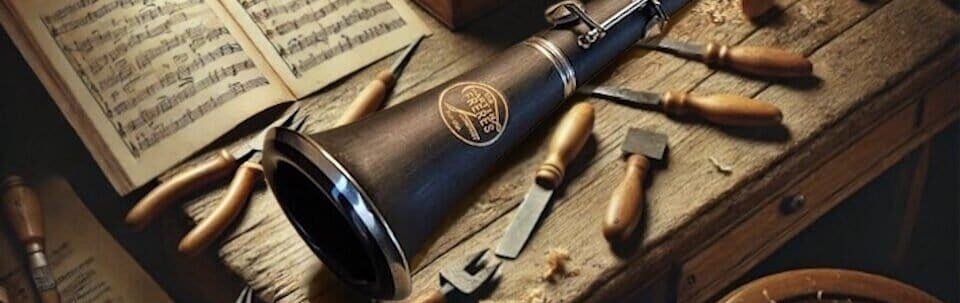
The clarinet in Chicago-style jazz emerged in the 1920s as a leading melodic instrument that combined New Orleans ensemble roots with Northern solo-focused improvisation; its bright, flexible tone and virtuosic soloing shaped the genre through players like Pee Wee Russell and Benny Goodman.
The Clarinet's Role in Chicago-Style Jazz
In Chicago-style jazz, the clarinet sits at the center of the front line, weaving agile lines above trumpet and trombone. Compared with New Orleans ensemble clarinet, Chicago players take longer, more virtuosic solos, often driving the band with edgy, penetrating tone, rhythmic bite, and adventurous harmony that anticipates swing and early bebop language.
From the early 1920s, clarinetists in Chicago bands shifted from purely collective improvisation to a soloist model. The instrument became a bridge between hot dance music and small-group jazz. Its wide range, quick articulation, and flexible dynamics allowed players to cut through noisy clubs, studio sessions, and radio broadcasts with a distinctive personal voice.
Between 1923 and 1930, over 200 commercially released Chicago-style jazz sides prominently featured clarinet, with at least 40 led or co-led by clarinetists such as Benny Goodman and Frank Teschemacher.
Chicago clarinetists often doubled as section players in dance orchestras and as featured soloists in small combos. This dual role encouraged a style that could move from tight written passages to explosive choruses. The result was a clarinet approach that balanced discipline and wildness, precision and risk, within a compact 3-minute recording format.
Roots and Evolution of Chicago-Style Jazz (1920s-1930s)
Chicago-style jazz grew from the migration of New Orleans musicians and the rise of the Chicago recording industry. Around 1915-1920, players such as King Oliver, Johnny Dodds, and Louis Armstrong moved north, bringing New Orleans ensemble traditions into a city with larger dance halls, recording studios, and a growing white middle-class audience.
By 1923, labels like Gennett, Okeh, and Paramount were recording New Orleans bands in Chicago. Clarinetists including Johnny Dodds and Jimmie Noone documented a hot, blues-inflected style with strong collective improvisation. Their sound laid the foundation for a younger generation of Chicago-born musicians who pushed the clarinet toward more daring solos and harmonic exploration.
Between 1917 and 1935, Chicago hosted more than 20 active recording studios and produced thousands of jazz and dance band sides, making it one of the top 3 U.S. jazz recording centers of the era.
By the late 1920s, musicians such as Frank Teschemacher, Pee Wee Russell, and a young Benny Goodman were reshaping the clarinet role. They absorbed New Orleans phrasing but favored sharper articulation, more angular lines, and a brighter, more projecting sound. This evolution paralleled changes in social life: larger dance venues, Prohibition-era speakeasies, and audiences hungry for both hot jazz and polished dance music.
During the early 1930s, the Chicago clarinet style influenced the emerging swing era. Benny Goodman carried Chicago techniques into his big band work in New York, while Pee Wee Russell and others kept a more small-group, experimental approach. The result was a lasting Chicago clarinet legacy that connected New Orleans roots with national swing and later traditional jazz revivals.
Distinctive Musical Characteristics and Tone for Chicago Clarinet
Chicago-style clarinet tone is bright, focused, and slightly edgy, with enough core to project over a full band. Compared with New Orleans clarinet, which often favors a woody, covered sound, Chicago players tend to use more mouthpiece, firmer embouchure, and a more direct airstream to create a penetrating voice that cuts through brass and drums.
Rhythmically, Chicago clarinet lines sit slightly ahead of the beat, giving a feeling of urgency and drive. Phrasing often combines 8-bar and 4-bar ideas with off-beat accents, triplet figures, and syncopated pickups. Players use strong swing eighths but may lean into straight sixteenth-note runs during climactic choruses, especially on up-tempo tunes.
Harmonically, Chicago clarinetists explore more upper chord tones and passing chromaticism than many early New Orleans players. You will hear frequent use of 9ths, 11ths, and 13ths, plus altered approach tones into chord tones. However, the language still stays rooted in blues shapes, arpeggios, and clear voice leading through chord changes.
Vibrato in Chicago-style clarinet is usually narrower and faster than in New Orleans playing. It is applied selectively, often on longer notes at phrase ends or emotional peaks. Many players use jaw vibrato, which allows quick control and a vocal quality that suits both lyrical ballads and intense up-tempo choruses.
Chicago vs New Orleans vs Swing Clarinet Sound
New Orleans clarinet often emphasizes collective improvisation, a darker timbre, and more continuous obbligato lines. Chicago clarinet shifts toward featured solos, brighter projection, and more angular phrasing. Later swing clarinet, as heard in Benny Goodman or Artie Shaw, refines the Chicago approach with cleaner articulation, smoother legato, and more polished, arranged contexts.
For a player, this means Chicago style sits between raw New Orleans energy and smoother swing elegance. Your sound should be assertive but not shrill, flexible enough for both dense ensemble textures and exposed solo lines, with articulation that can snap or flow depending on the chorus.
Notable Chicago-Style Clarinetists and Key Recordings (archival guide)
Several clarinetists define the Chicago-style sound across the 1920s and 1930s. Each offers a different angle on tone, phrasing, and improvisation. Listening deeply to their recordings is the fastest way to internalize the style and build a historically grounded vocabulary for your own playing.
Frank Teschemacher (1906-1932)
Frank Teschemacher was a central figure in the Austin High Gang, a group of young white Chicago musicians inspired by New Orleans bands. His playing is raw, intense, and harmonically adventurous, with a biting tone and daring rhythmic ideas. Despite his short life, his recordings left a strong mark on Chicago clarinet language.
Key listening: “China Boy” (McKenzie & Condon's Chicagoans, 1929, Okeh), “Sugar” (1927, Brunswick), and “Nobody's Sweetheart” (1927, Brunswick). Listen for his driving lead lines, bright sound, and risk-taking chromatic runs that still outline the chord progression clearly.
Pee Wee Russell (1906-1969)
Pee Wee Russell developed one of the most individual voices in jazz clarinet. Although associated with Chicago-style and later traditional jazz, his phrasing and note choices often anticipate modernism. His tone can be reedy and vocal, with unexpected intervals, broken phrases, and a sense of storytelling that goes beyond stock licks.
Important tracks: “Jazz Me Blues” (Bix Beiderbecke & His Gang, 1927, Okeh), “Riverboat Shuffle” (1927, Okeh), and later small-group sides from the 1930s. Focus on his use of space, his unpredictable melodic turns, and how he balances rough edges with lyrical moments.
Benny Goodman (1909-1986)
Benny Goodman grew up in Chicago and absorbed the local style before becoming a national swing star. His early recordings show a blend of Chicago heat and classical-influenced precision. The tone is centered and brilliant, articulation is clean, and lines are tightly constructed, pointing toward the big band era while rooted in small-group Chicago jazz.
Early examples: “Clarinetitis” (Benny Goodman & His Boys, 1928, Brunswick), “Room 1411” (Benny Goodman & His Boys, 1928, Brunswick), and sides with Ben Pollack's orchestra. Listen for his control of register shifts, balanced vibrato, and how he shapes solos in clear, logical arcs.
Other Important Voices
Jimmie Noone, though often associated with New Orleans, recorded extensively in Chicago and influenced many local clarinetists with his smooth, lyrical style. Johnny Dodds, another New Orleans transplant, brought a powerful, bluesy sound that younger Chicago players both admired and reacted against, pushing toward a more angular approach.
Martin Freres archival research includes surviving Chicago-area concert programs from the late 1920s listing clarinet features by Frank Teschemacher and Benny Goodman on mixed dance and jazz bills. These documents show how clarinet solos were marketed as special attractions, confirming the instrument's rising star status in the Chicago scene.
Listening Timeline: Key Chicago Clarinet Recordings
For a structured study, follow this approximate timeline: 1923-1925: Johnny Dodds with King Oliver and Louis Armstrong; 1926-1928: Jimmie Noone Apex Club Orchestra; 1927-1929: Frank Teschemacher with McKenzie & Condon's Chicagoans; 1927-1930: Pee Wee Russell with Bix Beiderbecke; 1928-1933: early Benny Goodman sides.
As you listen, transcribe 4-8 bars at a time. Note where clarinetists place phrases within the bar, how they enter and exit choruses, and how their tone changes between ensemble passages and solos. This will guide your own decisions on phrasing and sound in the Chicago style.
Clarinet Technique and Improvisation Strategies for Chicago Jazz
To play clarinet in Chicago-style jazz, focus on strong time feel, clear articulation, and melodic improvisation that balances blues language with arpeggios and chromatic approach tones. Your goal is to sound rooted in the 1920s-1930s vocabulary while still personal and flexible enough for modern contexts.
Time Feel and Articulation
Chicago clarinetists often play slightly ahead of the beat, especially in up-tempo tunes. Practice with a metronome on beats 2 and 4, aiming to place your notes just in front of the click without rushing. Use a mix of tongued and slurred notes, with clear accents on off-beats and syncopated figures to create forward motion.
Articulation syllables like “tah” and “dah” help shape different attacks. Use “tah” for sharper, driving figures and “dah” for more legato lines. Practice 8-bar phrases of eighth notes, alternating between mostly slurred and mostly tongued patterns, to gain control over how your articulation affects the groove.
Melodic Vocabulary and Phrasing
Core materials include chord arpeggios, blues scales, and simple motifs that you can develop across a chorus. For a typical 32-bar tune, aim for 4-bar ideas that evolve: start with a simple motif, then sequence it, invert it, or extend it rhythmically. Chicago solos often build intensity through repetition and variation rather than constant new ideas.
Work on connecting guide tones (3rds and 7ths) between chords. For example, on a II-V-I in Bb (Cm7-F7-Bb), practice lines that move smoothly from the 3rd of Cm7 (Eb) to the 7th of F7 (Eb) to the 3rd of Bb (D). Then add chromatic approach notes above or below these targets to create a Chicago-flavored, slightly edgy sound.
Registers and Dynamic Shape
Chicago clarinet solos often climb from chalumeau and throat tones into the clarion register for climaxes. Practice long tones across the break, then scale patterns that cross from A to B and from Bb to C smoothly. Aim for a consistent tone color, even as you increase intensity and volume in the upper register.
Shape your solos dynamically. Start a chorus at mezzo-forte, build to forte or fortissimo by the last 8 bars, then either drop down for contrast or hand off to another soloist. This dynamic contour mirrors many classic Chicago recordings and keeps your improvisation feeling purposeful.
Practice Etudes Inspired by Chicago Recordings
Create short etudes based on transcribed phrases from Teschemacher, Russell, or Goodman. For example, take a 4-bar lick from “China Boy” and transpose it through all keys at 80-120 bpm. Then write an 8-bar etude that starts with that lick and develops it using sequences and rhythmic variation.
Set a metronome at 96 bpm and practice 12-bar blues in F using only quarter notes and eighth notes, focusing on swing feel and clear articulation. Once that feels solid, add triplets and grace notes, keeping the style anchored in the Chicago vocabulary you hear on 1920s-1930s recordings.
Instrument Anatomy and Setup for the Chicago Sound
Clarinet setup has a major impact on your ability to produce a Chicago-style tone. While personal preference matters, certain aspects of bore, barrel, mouthpiece, and ligature tend to support the bright, projecting sound and flexible articulation that characterize this style.
Bore and Bell
The bore is the internal diameter and taper of the clarinet. A slightly larger or more open bore often gives a broader, more powerful sound, which can help in loud jazz settings. However, too open a bore can make control difficult. For Chicago-style playing, many clarinetists prefer a medium to medium-large bore that balances projection and focus.
The bell influences low-register response and overall resonance. A bell with a well-shaped flare can help the chalumeau register speak clearly and support strong low notes in ensemble passages. Since Chicago clarinet often jumps between registers, you want a bell that keeps the low end stable even when you are pushing air aggressively.
Mouthpiece Facing and Chamber
Mouthpiece facing length and tip opening affect resistance and flexibility. A medium or medium-open tip with a medium facing length often works well for Chicago jazz, allowing you to shape the tone from warm to edgy with embouchure and air. The chamber size and shape influence darkness or brightness of sound.
For a Chicago tone, many players favor a medium chamber that keeps enough core in the sound while allowing brightness when pushed. Very small chambers can become too piercing, while very large chambers may feel too spread and hard to project in a band setting.
Ligature and Reed Position
The ligature holds the reed and affects how freely it vibrates. A secure but not overly tight ligature helps the reed respond quickly, which is important for fast articulation and register changes in Chicago solos. Position the reed slightly below the tip of the mouthpiece, with equal margins on both sides, to balance response and stability.
Experiment with small adjustments of reed height. A slightly higher reed can increase brightness and sensitivity, helpful for cutting through a band, while a slightly lower reed can mellow the sound. Make changes in tiny increments and test with Chicago-style phrases at performance volume.
Barrel Length and Tuning
The barrel affects tuning and response. Shorter barrels generally raise pitch and can increase focus, while longer barrels lower pitch and may add warmth. In Chicago-style contexts, where bands often play slightly sharp, a barrel that allows you to tune comfortably to A=440-442 while maintaining a centered tone is ideal.
Carry at least two barrels of slightly different lengths. This allows quick adjustment for different pianos, brass sections, or recording environments. Test both barrels with your typical Chicago repertoire, checking how each affects intonation in the upper clarion and throat tones.
Bb vs A Clarinet in Chicago Jazz
Most Chicago-style jazz clarinet playing uses the Bb clarinet. Its brighter timbre and familiar fingerings suit hot dance tempos and classic repertoire. The A clarinet, with its slightly darker sound and lower pitch, appears more often in classical and some swing contexts than in early Chicago recordings.
If you own both, you can experiment with A clarinet on slower, more lyrical Chicago tunes for a warmer color. However, for authenticity and practicality, focus your Chicago-style setup and practice on the Bb clarinet, optimizing mouthpiece, reed, and barrel for that instrument.
Choosing Mouthpieces, Reeds and Registers – Practical Recommendations
Your mouthpiece and reed setup is the most immediate tool for shaping a Chicago-style jazz sound. The goal is a configuration that gives quick response, clear articulation, and enough resistance to support a strong air column without feeling tight or stuffy.
Mouthpiece Characteristics for Chicago Tone
Look for a mouthpiece with a medium or medium-open tip opening and a facing that allows comfortable control in the upper register. A slightly more open setup than a typical classical mouthpiece can help you produce the brighter, more flexible tone associated with Chicago clarinet, especially at higher dynamic levels.
A medium chamber often provides the best balance. When you test mouthpieces, play Chicago-style phrases at performance volume, including leaps across the break and fast articulation. Avoid judging only on soft, slow playing, since the style demands power and clarity at real-world gig levels.
Reed Strength and Cut
Reed strength affects resistance and response. Many jazz clarinetists favor a slightly softer reed than they would use for classical playing, such as moving from a 3.5 to a 3 or from a 3 to a 2.5. This allows easier bends, subtone, and quick attacks, which are important in Chicago-style improvisation.
Choose a reed cut that responds quickly and supports a centered tone. Test several reeds from the same box and mark the ones that feel best for Chicago playing. Rotate reeds to extend their life, especially if you are gigging frequently, and adjust with light sanding or clipping only when necessary.
Register Balance and Long-Tone Work
Chicago clarinet solos often rely heavily on the clarion register, with frequent register crossings. To keep your sound consistent, practice long tones from low E to high C, matching color and intensity across registers. Use a tuner to check pitch tendencies, especially on throat tones and upper clarion notes.
Spend time on interval exercises that jump from chalumeau to clarion, such as low F to high C, low G to high D, and low A to high E. Aim for clean attacks, no cracks, and a tone that stays bright but not harsh. This work will pay off when you push the instrument hard in a Chicago band.
Maintenance Steps for Jazz Clarinetists (gig-ready care)
Regular maintenance keeps your clarinet reliable for frequent gigs and recording sessions. Chicago-style playing often involves strong air support, wide dynamic range, and long sets, which can stress pads, corks, and keywork. A clear routine reduces on-stage problems and preserves your tone.
Daily Care Checklist
After each playing session, swab the bore thoroughly from bell to barrel to remove moisture. Use a separate small swab or cigarette paper for the register vent and tone holes that feel sticky. Wipe the outside of the instrument with a clean cloth to remove fingerprints and moisture.
Apply cork grease sparingly to tenon corks as needed to ensure smooth assembly without excessive force. Store the clarinet in its case when not in use, avoiding extreme temperatures or humidity. Keep reeds in a ventilated reed case so they dry evenly and last longer under gig conditions.
Weekly Checks
Once a week, inspect pads visually for discoloration, fraying, or deep impressions. Gently test keywork for excessive wobble or noise by moving keys side to side. Lightly oil key pivot points if you have been trained to do so, using a very small amount of appropriate key oil.
Check spring tension by pressing and releasing keys, ensuring they return quickly and evenly. Play slow scales and arpeggios to listen for leaks, dead notes, or uneven response. Address small issues early before they become major problems during a performance.
Monthly Setup Review
Each month, examine tenon corks for compression or cracking. Replace or have them replaced if joints feel loose or too tight. Inspect the mouthpiece table and rails for chips or warping, and clean the facing with a soft cloth and mild solution if residue builds up.
Evaluate your pads more closely, especially on heavily used keys like throat tones and upper clarion notes. If you notice persistent leaks, intonation problems, or difficulty speaking notes at normal air pressure, schedule a visit with a qualified repair technician for adjustment or pad replacement.
Pre-show Quick Checklist
Before each gig, run a short checklist: confirm all joints fit smoothly, test each key for free movement, and play a chromatic scale from low E to high C to check for leaks. Test your tuning with a reference pitch, adjusting barrel position as needed for the venue temperature.
Play a few Chicago-style licks at performance volume to ensure reeds respond well and the instrument speaks clearly. Carry a small kit with swab, cork grease, cigarette paper, a spare reed, and a small screwdriver for emergency adjustments between sets.
Troubleshooting Common Clarinet Problems in Live and Recording Contexts
Even with good maintenance, issues can arise during gigs or sessions. Chicago-style playing, with its strong air support and aggressive articulation, can reveal small setup problems quickly. Knowing how to diagnose and respond under pressure keeps your performance on track.
Squeaks and Cracked Notes
Squeaks often result from reed problems, embouchure instability, or minor leaks. On stage, first check that the reed is centered and not chipped. If squeaks persist, switch to a fresh reed you have already tested. Focus on steady air and slightly firmer lower lip support, especially when crossing the break.
If specific notes always crack, you may have a pad leak or misaligned key. Use lighter finger pressure and ensure you are not lifting fingers too high. After the gig, have a technician check pad seating and key heights. Persistent cracking on throat tones often points to register key or vent issues.
Tuning Instability and Temperature Effects
Clarinet pitch rises as the instrument warms. In hot clubs or under bright lights, you may start flat and end sharp. Begin with the barrel slightly pulled out, then push in or out as needed after a few minutes of playing. Use your embouchure and voicing to adjust individual notes without overcompensating with barrel position.
In cold rooms, the instrument may play flat and respond sluggishly. Warm the clarinet gently with your hands and breath before tuning. Avoid rapid temperature changes that can stress wood and cause cracks. In recording sessions, ask for a few minutes of warm-up before final tuning checks.
Response Problems and Sticky Pads
Sticky pads can cause delayed response or unwanted noise. On a gig, use cigarette paper or pad paper under the sticking pad: close the key lightly, then pull the paper out to remove residue. Do not press hard, which can damage pads. Repeat if necessary between tunes.
If certain notes feel resistant, check for loose tenon joints or misaligned bridge keys. Gently twist joints to ensure proper alignment. If resistance persists, especially in the throat or upper clarion, schedule a professional adjustment. Do not attempt major screw or spring changes mid-gig unless you are trained.
Gig-Day Triage Flow
When a problem appears during a performance, follow a quick decision path: 1) Check reed and ligature; 2) Check joint alignment and obvious leaks; 3) Adjust embouchure and air; 4) Use on-the-spot fixes like cigarette paper for sticky pads; 5) If unresolved, simplify your lines and avoid problem notes until the break.
After the gig, write down what happened and which notes or registers were affected. This record helps you and your technician pinpoint causes. Over time, you will recognize patterns and prevent many issues before they appear on stage or in the studio.
The Chicago Jazz Community: Venues, Scenes and Passing Traditions
Chicago-style clarinet developed in a specific community of venues, bands, and informal teaching. Early hotspots included South Side dance halls, North Side cabarets, and downtown ballrooms where mixed audiences heard both hot jazz and popular dance tunes. Clarinetists learned by sitting in, copying solos, and trading ideas on and off the bandstand.
Historic venues such as the Lincoln Gardens (with King Oliver's Creole Jazz Band), the Apex Club (with Jimmie Noone), and various Loop ballrooms provided steady work and chances for experimentation. Young players like Benny Goodman absorbed the style by hearing older New Orleans musicians live, then adapting it to their own technical strengths and musical curiosity.
Tradition passed largely by ear. Clarinetists shared fingerings, alternate fingerings for tricky passages, and practical advice about reeds and mouthpieces. Today, that tradition continues in jam sessions, university jazz programs, and traditional jazz festivals where Chicago-style repertoire remains central and clarinetists still trade choruses much as they did in the 1920s.
Archival Sources, Data Points and Listening Guide
To study clarinet in Chicago-style jazz seriously, combine active listening with archival research. Original recordings, session logs, and contemporary reviews reveal how clarinetists were heard in their own time. Many early Chicago sides are now available through national libraries, university archives, and reissue labels.
Archival discographies list over 150 Chicago-area recording sessions between 1923 and 1930 that include clarinet, spanning labels such as Gennett, Okeh, Brunswick, Paramount, and Vocalion.
Key resources include published jazz discographies, library catalogs of 78 rpm collections, and digitized newspapers that reviewed performances. Search by artist name, band name, and venue to uncover lesser-known sides featuring clarinet solos. Compare multiple takes when available to hear how players varied their improvisations within the constraints of early recording technology.
Suggested Listening Sequence
Start with Johnny Dodds on King Oliver's 1923 Gennett recordings to hear New Orleans roots in Chicago. Move to Jimmie Noone's Apex Club Orchestra sides from 1928-1929 for smoother, more melodic clarinet. Then study Frank Teschemacher and Pee Wee Russell recordings from 1927-1929 for the core Chicago sound.
Finally, listen to early Benny Goodman small-group recordings from 1928-1933 to hear how Chicago techniques fed into swing. As you listen, keep a notebook of favorite phrases, tone qualities, and articulation patterns. Turn these into practice material so the historical style becomes part of your own voice.
Key Takeaways
- Chicago-style jazz clarinet blends New Orleans ensemble roots with a brighter tone, stronger projection, and more solo-focused improvisation.
- Players like Frank Teschemacher, Pee Wee Russell, and Benny Goodman defined the style through distinctive tone, phrasing, and risk-taking lines.
- A medium-open mouthpiece, slightly softer reeds, and careful barrel choice help create a flexible, projecting Chicago sound.
- Regular maintenance and quick troubleshooting routines keep your clarinet reliable for frequent gigs and recording sessions.
- Focused listening, transcription, and style-specific etudes translate historic Chicago clarinet language into authentic contemporary improvisation.
FAQ
What is Clarinet in Chicago-style Jazz?
Clarinet in Chicago-style jazz refers to the way clarinet was played in Chicago-centered bands of the 1920s and 1930s. It features a bright, projecting tone, strong rhythmic drive, and improvisation that blends New Orleans ensemble roots with more advanced harmony and extended solo choruses.
How did the clarinet become prominent in Chicago-style jazz?
The clarinet became prominent in Chicago-style jazz as New Orleans musicians brought their ensemble traditions north and younger Chicago players pushed the instrument into a lead solo role. Recording studios, dance halls, and radio exposure in Chicago gave clarinetists a platform to develop and showcase a distinct, virtuosic style.
Which clarinetists defined the Chicago-style sound and what recordings should I listen to?
Key clarinetists include Frank Teschemacher, Pee Wee Russell, Benny Goodman, Jimmie Noone, and Johnny Dodds. Important recordings include “China Boy” and “Nobody's Sweetheart” (Teschemacher), “Jazz Me Blues” and “Riverboat Shuffle” (Russell with Bix Beiderbecke), and early Benny Goodman sides like “Clarinetitis” and “Room 1411.”
What mouthpiece, reed strength and setup work best for a Chicago-jazz clarinet tone?
A mouthpiece with a medium or medium-open tip and medium facing, paired with slightly softer reeds than classical setups, often works well. Aim for a responsive setup that supports a bright, focused tone and quick articulation. Use a barrel length that lets you tune comfortably while maintaining projection and stability across registers.
How do I maintain my clarinet for frequent gigs and recording sessions?
Swab the bore after every session, keep tenon corks lightly greased, and store the instrument in a stable environment. Weekly, check pads and keywork for leaks or looseness. Monthly, inspect corks, pads, and mouthpiece condition. Before each gig, run a quick scale check, test tuning, and carry a small kit for on-the-spot fixes.
How does improvisation in Chicago-style differ from New Orleans or Swing clarinet approaches?
Chicago-style improvisation moves away from constant collective obbligato toward longer, more featured solos. Lines are often more angular and harmonically adventurous than New Orleans playing, yet less polished and arranged than later swing solos. The feel is driving and slightly ahead of the beat, with strong use of blues language and chromatic approaches.
Where can I find archival recordings and primary sources on Chicago-style clarinetists?
Look for digitized 78 rpm collections at national libraries, university archives, and specialized jazz collections. Published discographies list Chicago sessions by label and date. Historical newspapers and music magazines provide contemporary reviews and advertisements that mention clarinet features, giving context to the recordings and performances.
Related Posts: