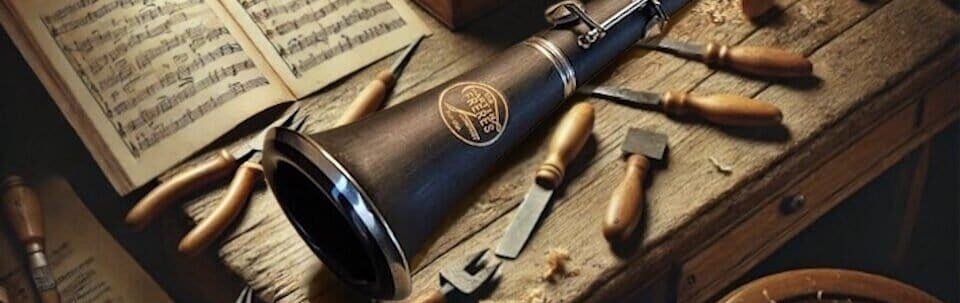
The clarinet played a central role in early jazz radio, and its warm, vocal-like tone defined New Orleans ensembles and swing-era broadcasts. Figures like Benny Goodman and Artie Shaw brought the instrument to national prominence on radio from the 1920s through the 1940s, shaping both jazz style and mass listening habits.
Overview: The Clarinet in Jazz Radio History
The clarinet in jazz radio history refers to the way this single-reed woodwind helped define the sound of jazz on air from the 1920s onward. Its flexible range, vocal quality, and agility made it ideal for early microphones, big band arrangements, and live network broadcasts that reached millions of listeners worldwide.
From New Orleans pioneers like Sidney Bechet and Johnny Dodds to swing-era stars such as Benny Goodman and Artie Shaw, the clarinet became a signature radio voice. Network shows on NBC, CBS, and Mutual carried clarinet-led bands into homes, dance halls, and overseas military bases, turning soloists into national celebrities and shaping jazz taste for decades.
Over time, bebop and small-group modern jazz shifted focus toward the saxophone and trumpet, reducing clarinet visibility on mainstream radio. Yet the instrument never disappeared. It resurfaced in cool jazz, traditional jazz revivals, Third Stream projects, and later in world-jazz and fusion, often supported by public radio and specialty programs that valued its unique color.
By the late 1930s, Benny Goodman broadcasts on NBC reportedly reached audiences estimated at 5 to 7 million weekly listeners across the United States.
Today, the clarinet continues to appear in radio and streaming formats, from historical reissues and archive projects to new recordings by artists who draw on early jazz, klezmer, and contemporary improvisation. Understanding its radio history helps players, scholars, and producers make informed choices about sound, repertoire, and instrument care.
Early Years: New Orleans, the Clarinet, and 1920s Radio
The clarinet was a core voice in early New Orleans jazz, long before radio spread the music nationwide. Players like Sidney Bechet, Johnny Dodds, and Jimmie Noone used the instrument to weave countermelodies around cornet and trombone, creating the polyphonic texture that defined early ensemble jazz in Storyville and Chicago.
Commercial radio began in the early 1920s, just as jazz gained national attention. Stations like KDKA (Pittsburgh), WJZ (Newark), and later WGN (Chicago) and WNYC (New York) aired dance bands and variety programs that sometimes featured clarinetists. However, much of the earliest jazz on air was undocumented or poorly logged, making primary sources difficult to verify.
By the mid-1920s, network radio and electrical recording technology improved enough to capture the clarinet's full range more reliably. The instrument's penetrating yet warm tone cut through primitive microphones better than some brass instruments, which could overload early equipment. This technical advantage helped clarinetists secure solos and featured spots on live broadcasts.
Sidney Bechet's work with Clarence Williams and later his 1920s recordings in Europe influenced how producers and engineers thought about reed instruments on air. Johnny Dodds, heard indirectly through his recordings with Louis Armstrong's Hot Five and Hot Seven, set a template for radio-friendly clarinet phrasing: clear attacks, strong upper-register lines, and expressive vibrato.
By 1925, more than 500 U.S. radio stations were on the air, giving jazz and clarinetists an unprecedented potential audience compared to local dance halls alone.
Although many early broadcasts are lost, researchers often cross-reference newspaper radio listings, station logs, and surviving transcription discs. Libraries such as the Library of Congress Recorded Sound Research Center and university archives hold scattered examples of 1920s clarinet performances captured for syndication or sponsor libraries.
The Swing Era: Benny Goodman and the Carnegie Hall Moment
The swing era placed the clarinet at the center of jazz radio history, largely through Benny Goodman. Born in 1909 in Chicago, Goodman rose from local dance bands to national prominence through a series of radio appearances, including the influential NBC program “Let's Dance,” which began in late 1934 and aired coast to coast.
“Let's Dance” broadcast Goodman's band in late-night slots that reached young listeners across time zones. Arrangements by Fletcher Henderson and solos by Goodman showcased the clarinet as a lead instrument, not just a section voice. Radio exposure turned previously regional swing styles into a national craze, culminating in the famous Palomar Ballroom engagement in 1935, heavily promoted and echoed on air.
The landmark moment for clarinet in jazz radio history came with the Benny Goodman Orchestra concert at Carnegie Hall on January 16, 1938. Although the performance itself was not a regular live network broadcast, it was recorded on transcription discs and later issued commercially, becoming one of the most famous jazz documents in history.
Selections like “Sing, Sing, Sing” and “One O'Clock Jump” from the Carnegie Hall concert circulated widely on radio and later on LP reissues, reinforcing the clarinet's status as a symbol of swing. The Carnegie Hall program, preserved in the Carnegie Hall Archives and referenced by the Library of Congress, provides a detailed snapshot of repertoire and personnel that radio audiences associated with Goodman.
The 1938 Carnegie Hall concert recording, first widely issued in 1950, reportedly sold over 1 million copies, extending the impact of Goodman's clarinet far beyond the original audience of about 2,700 attendees.
Goodman's regular radio work included the “Camel Caravan” show on CBS and later NBC programs that featured his big band and small groups. These broadcasts standardized a clarinet-forward sound for swing: bright, centered tone, crisp articulation, and virtuosic runs that still read clearly through the limited bandwidth of AM radio.
Big Band Radio, Artie Shaw, and Broadcast Arrangements
While Benny Goodman became the “King of Swing” in popular press, Artie Shaw offered a contrasting clarinet voice on radio. Shaw's tone was often described as more liquid and lyrical, and his band leaned toward sophisticated arrangements that blended strings, woodwinds, and jazz rhythm sections, ideal for sponsored network shows.
Shaw's breakthrough came with his 1938 recording and subsequent radio performances of “Begin the Beguine.” Broadcasts on programs like “Melody and Madness” and other network slots brought his clarinet sound into homes nationwide. His arrangements often placed the clarinet in both lead and obbligato roles, weaving through vocal features and ensemble passages.
Big band radio required arrangements tailored to the medium. Clarinet parts had to project clearly at lower broadcast volumes and through small household speakers. Arrangers such as Jerry Gray, Eddie Sauter, and others wrote clarinet lines that sat in ranges less likely to distort on air, often favoring the clarion register for clarity.
Other clarinetists, including Woody Herman and his “Herds,” also benefited from radio exposure. Herman's bands, featured on shows like “The Woodchopper's Ball” broadcasts and various sponsored programs, used the clarinet as both a solo voice and a key color in reed sections that mixed saxophones and clarinets for a distinctive timbre.
Network radio schedules in the late 1930s and early 1940s were dense with big band remotes from ballrooms, hotels, and theaters. Clarinetists often had to adapt quickly to different acoustics and microphone setups, shaping their tone and articulation so that signature riffs and solos translated well to listeners in distant cities.
Mid-Century Shifts: Bebop, Decline, and Revival on the Airwaves
After World War II, jazz styles shifted toward bebop, cool jazz, and modernist experiments that favored the alto and tenor saxophone. Clarinet in jazz radio history entered a quieter phase, though it never disappeared. The instrument's association with swing and big band dance music made it seem old-fashioned to some programmers and younger listeners.
Clarinetists such as Buddy DeFranco embraced bebop vocabulary, performing with small groups and appearing on radio and early television. However, the rapid, chromatic lines of bebop often sat more comfortably on saxophone, and many bandleaders and producers followed that trend. Radio playlists reflected this change, with fewer clarinet-led bands in prime slots.
At the same time, traditional jazz and Dixieland revivals kept clarinet on the air. Musicians like Edmond Hall and George Lewis appeared on specialty programs, local radio shows, and overseas broadcasts, especially through the BBC and European state broadcasters that documented festival performances and club sessions.
Public radio and educational broadcasters played a key role in the clarinet's mid-century and late-century revival. Programs that focused on jazz history, such as series produced by National Public Radio in the United States or the CBC in Canada, often used classic Goodman, Shaw, and Bechet recordings as teaching examples, keeping the clarinet's legacy audible for new generations.
By the 1970s and 1980s, clarinetists like Paquito D'Rivera and Eddie Daniels brought the instrument into Latin jazz, fusion, and crossover projects that received airplay on jazz and classical stations. Their work, documented on studio albums and live broadcasts, demonstrated that the clarinet could adapt to electric rhythm sections and modern production values.
Instrument Anatomy: What Makes the Clarinet Sing on Radio
The clarinet's anatomy plays a major role in how it sounds on radio. The most common jazz instruments are the B-flat clarinet and, for some repertoire, the A clarinet and bass clarinet. Each has a cylindrical bore, single reed, and key system that together shape tone, response, and projection under microphones.
The mouthpiece and reed form the sound's starting point. Harder reeds and more open mouthpieces can produce a brighter, more projecting tone that cuts through a band, which was useful in early swing broadcasts. Softer reeds and more closed mouthpieces tend to sound warmer and darker, often preferred for close-miked studio work where subtle dynamics matter.
The barrel and bore diameter influence focus and intonation. Narrower bores often yield a compact, centered tone that records cleanly, while larger bores can feel more flexible but may require careful voicing to stay in tune across registers. Many swing-era clarinetists favored instruments with relatively small bores that matched the recording technology of their time.
The body and bell material, usually grenadilla wood, affects resonance and color. Wooden clarinets provide a complex spectrum of overtones that microphones capture as warmth and depth. Metal or plastic clarinets, sometimes used in marching or outdoor contexts, can sound brighter and more direct, which may or may not suit a given radio mix.
Keywork and pad condition influence mechanical noise, a critical factor in studio and close-mic situations. Loose keys or hard pads can click audibly on sensitive condenser microphones. Well-regulated keywork with soft but sealing pads helps keep mechanical noise below the threshold of typical radio compression and limiting.
Maintenance Steps for Vintage and Studio Clarinets
Clarinet maintenance is important when preparing for radio or studio work, especially with vintage instruments. Daily care starts with swabbing the bore after every session to remove moisture, which protects pads, tone holes, and the wooden body from warping or cracking under changing humidity.
Cork grease should be applied sparingly to tenon corks to ensure smooth assembly without excessive wear. For vintage clarinets, dry or crumbling corks must be replaced before any broadcast work, since air leaks at joints can cause unstable pitch and unreliable response under microphone scrutiny.
Pad care is critical. Inspect pads for discoloration, fraying, or compression rings that indicate poor sealing. A clarinet intended for live radio should have pads that seal reliably at very soft dynamics, since microphones will reveal any hiss or instability in quiet passages. Regular leak checks with a feeler gauge or light test help identify issues early.
Reeds should be rotated and broken in gradually. For recording, many players choose slightly softer reeds than they use on loud stage gigs, prioritizing control and even response over maximum projection. Keep several adjusted reeds ready, since a warped or waterlogged reed can sabotage an otherwise ideal take.
Seasonal humidity control matters for wooden clarinets. Use a case humidifier in dry climates and avoid rapid temperature changes between outdoor travel and air-conditioned studios. Annual or semiannual checkups with a qualified technician are recommended, and for heavily used broadcast instruments, a full overhaul every 3 to 5 years keeps the mechanism quiet and stable.
From Martin Freres archival research: Surviving early 20th-century clarinets often show heavy wear on keywork and tenon joints from constant assembly for touring and broadcasts. Historical instruments intended for display can differ significantly from those restored for modern performance, where pad sealing and mechanical quietness must meet current recording standards.
When vetting a vintage clarinet for radio use, examine the bore for cracks, check that tone holes are level, and confirm that replacement parts respect the original design. Poorly executed restorations, such as oversized tone-hole undercutting or mismatched pads, can create intonation and noise problems that are difficult to correct under studio pressure.
Troubleshooting Common Performance and Recording Issues
Live radio and studio sessions often expose clarinet issues that may go unnoticed in casual playing. Squeaks are among the most common problems. They usually result from reed imbalance, embouchure instability, or register key leaks. Switching to a more stable reed, adjusting ligature placement, and checking the register key pad can resolve many on-air squeaks quickly.
Intonation drift is another frequent concern, especially under hot studio lights or in crowded bandstands. As the clarinet warms, pitch tends to rise. Players can pull out slightly at the barrel, use alternate fingerings for sharp notes, and monitor tuning against a reference tone between takes. Engineers should avoid over-compressing clarinet tracks, which can exaggerate perceived pitch issues.
Key noise becomes a problem when microphones are placed very close to the instrument. To reduce clicks, players can lighten finger pressure, and technicians can apply appropriate lubrication and adjust spring tensions. In some cases, moving the microphone a few inches farther away or slightly off-axis reduces mechanical noise without sacrificing clarity.
Microphone bleed, especially from drums and brass, can muddy the clarinet sound. Directional microphones, careful placement, and strategic use of gobos or baffles help isolate the instrument. Ribbon microphones often flatter the clarinet's upper register, while small-diaphragm condensers capture detail; dynamic mics can be useful in loud big band settings.
For quick on-air fixes, both engineers and performers benefit from a checklist. Confirm reed condition, check that joints are fully assembled, verify that the register key is not sticking, and listen for leaks on low E and F. Engineers should confirm gain staging, EQ settings around 3 to 6 kHz (where brightness and key noise live), and any compression thresholds before the broadcast starts.
Archival Recordings, Data Points and Timeline of Key Broadcasts
Researchers studying clarinet in jazz radio history rely on a mix of surviving recordings, broadcast logs, and institutional archives. The Library of Congress, the Institute of Jazz Studies at Rutgers University, and the Carnegie Hall Archives hold key materials, including transcription discs, concert programs, and network documentation.
Below is a representative timeline of milestone broadcasts and recordings that highlight the clarinet's role on radio and related media. Dates and details are drawn from published discographies, archival catalogs, and historical studies commonly cited in jazz scholarship.
Date
Event
Clarinetist
Notes
Aug 1923
King Oliver's Creole Jazz Band recordings issued and later broadcast
Johnny Dodds
Early New Orleans clarinet style reaches wider audiences via radio play of discs.
1925
Electrical recording adopted by major labels
Various
Improved fidelity allows clarinet subtleties to translate better on radio.
1934
Start of NBC “Let's Dance” program
Benny Goodman
National exposure for Goodman's band; clarinet becomes a prime-time lead voice.
Aug 1935
Palomar Ballroom broadcasts from Los Angeles
Benny Goodman
Radio remotes help ignite the swing craze across the United States.
Jan 16, 1938
Carnegie Hall jazz concert recorded
Benny Goodman
Later issued widely; clarinet-centered swing becomes a canonical reference.
1938
Artie Shaw's “Begin the Beguine” hits and radio features
Artie Shaw
Clarinet ballad style gains huge popularity through sponsored broadcasts.
Early 1940s
Woody Herman radio shows and remotes
Woody Herman
Clarinet-led big band sound documented in numerous network appearances.
Late 1940s
Bebop small-group broadcasts
Buddy DeFranco
Clarinet adapts to bebop language on radio and early television.
1950
Release of Benny Goodman Carnegie Hall LP
Benny Goodman
Radio and record replays cement clarinet's swing-era legacy.
1960s
Traditional jazz revival broadcasts in Europe and U.S.
George Lewis, Edmond Hall
Clarinet remains central in trad and Dixieland programming.
1970s-1980s
Public radio jazz documentaries
Various
Historic clarinet recordings used as examples in educational series.
1990s-2000s
Paquito D'Rivera and Eddie Daniels broadcasts
Paquito D'Rivera, Eddie Daniels
Clarinet appears in Latin jazz, fusion, and crossover on modern radio.
Researchers seeking primary-source audio should consult catalog entries at the Library of Congress, the National Archives, and institutional collections like the Carnegie Hall Archives. Many holdings list broadcast titles, sponsors, and network affiliations, providing solid data points for liner notes and academic work.
The Clarinet Today: Radio, Fusion, and Listener Outcomes
In contemporary jazz and related genres, the clarinet occupies a more specialized but still meaningful place on radio and streaming platforms. Artists integrate it into world music, klezmer-influenced jazz, chamber ensembles, and electronic projects, all of which find homes on public radio, internet stations, and curated playlists.
Modern recording technology allows engineers to capture the full dynamic range and color of the clarinet with far greater accuracy than early broadcasters could achieve. High-resolution digital formats, stereo imaging, and careful mixing let listeners hear subtle breath noise, micro-dynamics, and timbral shifts that earlier generations could only imagine.
For players, understanding clarinet in jazz radio history offers practical career benefits. Knowing how Goodman, Shaw, Bechet, and later innovators shaped their sound for microphones helps contemporary musicians craft tones that translate well in studio and broadcast contexts. Consistent maintenance and troubleshooting skills reduce technical surprises during high-pressure sessions.
For listeners, the clarinet's presence on radio shapes perception of jazz's emotional range. Its ability to sound both intimate and exuberant makes it ideal for programs that move between historical retrospectives and new recordings. Curators and producers who include clarinet-focused tracks help preserve a key part of jazz's sonic identity.
As archives continue to digitize historic broadcasts, more clarinet performances from the 1920s through the 1950s are becoming accessible to scholars, students, and enthusiasts. This expanding access deepens our understanding of how the instrument functioned in real-time performance, not just in carefully edited studio sessions.
Key Takeaways
The clarinet was a defining voice of early jazz and swing-era radio, with Benny Goodman and Artie Shaw turning clarinet-led bands into national phenomena.
Technical factors, including bore size, mouthpiece choice, and careful maintenance, strongly influence how the clarinet translates on microphones and radio mixes.
Although its mainstream prominence declined with bebop, the clarinet has remained important through traditional jazz revivals, public radio histories, and modern fusion projects.
Archival resources at institutions like the Library of Congress and Carnegie Hall provide verifiable dates and documentation for key clarinet broadcasts.
Modern players who master maintenance and troubleshooting can achieve reliable, expressive clarinet sound in both live radio and studio environments.
FAQ
What is clarinet in jazz radio history?
Clarinet in jazz radio history refers to the evolving role of the clarinet in jazz performances broadcast over radio and related media from the 1920s onward. It covers early New Orleans styles, swing-era big bands, mid-century shifts, and modern revivals, along with the technical and musical factors that shaped how the instrument sounded on air.
Why was the clarinet so prominent on jazz radio in the 1920s-40s?
The clarinet was prominent because its clear, vocal-like tone worked well with early microphones and AM radio bandwidth. Bandleaders like Benny Goodman and Artie Shaw built their ensembles around clarinet leads, and network programs gave them prime exposure. The instrument's agility and expressive range made it ideal for both dance music and featured solos.
Which radio broadcasts and recordings are important for studying the clarinet's jazz legacy?
Key documents include Benny Goodman's 1934-1935 “Let's Dance” broadcasts, the 1935 Palomar Ballroom remotes, the 1938 Carnegie Hall concert recording, and Artie Shaw's late-1930s radio features on tunes like “Begin the Beguine.” Later materials include Woody Herman radio remotes, Buddy DeFranco bebop broadcasts, and public radio jazz history series that highlight Sidney Bechet and Johnny Dodds.
How should I maintain a vintage clarinet intended for live radio or studio work?
Have the instrument fully evaluated by a qualified technician, with special attention to bore condition, pad sealing, and key noise. Swab after every use, maintain stable humidity, and replace worn corks and pads. Use quiet, well-regulated keywork and keep several well-adjusted reeds ready. Schedule regular checkups and consider a full overhaul every few years if the clarinet sees heavy broadcast use.
What common problems arise when recording a clarinet for radio, and how are they fixed?
Common issues include squeaks, intonation drift, key noise, and microphone bleed. Solutions involve selecting a stable reed, checking for leaks, adjusting embouchure, and using appropriate mic placement and types. Engineers can reduce key noise by moving mics slightly off-axis and controlling compression, while players can lighten finger pressure and confirm instrument setup before sessions.
Who were the clarinetists that most influenced radio-era jazz and where can I hear their broadcasts?
Influential radio-era clarinetists include Benny Goodman, Artie Shaw, Woody Herman, Sidney Bechet, Johnny Dodds, and Buddy DeFranco. Their work appears on commercial releases drawn from broadcasts, archival compilations, and historical box sets. Many recordings are preserved in institutions such as the Library of Congress, the Institute of Jazz Studies, and the Carnegie Hall Archives, and are frequently featured on jazz radio retrospectives.