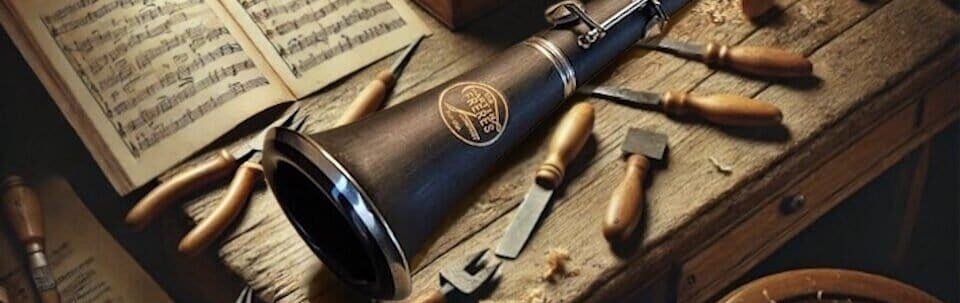
How to mic a clarinet: Use a ribbon mic (for example RCA 44 style) about 2 ft from the bell for warmth, a condenser slightly farther to capture room space, a dynamic (such as SM57/58) closer for edge, or a clip-on mic for mobility. Adjust angle and distance to balance bell focus, key-noise, and reed brightness.
The evolution of clarinet amplification: acoustic tricks to electrical solutions
Clarinet amplification techniques began long before electricity, with players and architects using rooms as natural amplifiers. Curved walls, concave ceilings, and stone columns helped project clarinet sound toward listeners. Later, electrical microphones and loudspeakers replaced these acoustic tricks, but the same goal remained: carry a clear, warm clarinet tone through a dense ensemble or large hall.
Early clarinetists in Paris, Vienna, and Prague learned to play into reflective surfaces to gain projection. Outdoor military bands used building facades and archways as giant reflectors. When electrical recording arrived, engineers adapted these ideas, placing clarinetists in reflective studio corners to boost presence before heavy equalization was possible.
Historic benchmark: By the 1930s, many studios placed a ribbon microphone roughly 60 cm to 70 cm (about 2 ft) from the clarinet bell to balance warmth and articulation with minimal key noise.
Big band and early jazz recordings in New York and Chicago relied on a single shared microphone or a small cluster of ribbons. Clarinetists learned to move closer for solos and step back for section playing. That physical mic technique, developed in the 1930s and 1940s, still informs how modern players work live with a single main microphone.
As amplification systems grew louder in the rock and fusion eras, clarinetists faced new problems: feedback, harsh upper register, and loss of natural room sound. Clip-on microphones and better stage monitors helped, but the core challenge stayed the same. You must respect how the clarinet radiates sound from the bell, tone holes, and reed, then place microphones to capture a natural blend.
Historic physical modifications and horn-based amplifiers (gramophone-era techniques)
Before reliable microphones, some makers experimented with physical clarinet modifications to increase projection. These included flared metal bells, detachable horn attachments, and additional resonating chambers. The goal was to couple the clarinet more strongly to the surrounding air, much like a gramophone horn couples a record needle to the room.
Players sometimes aimed the bell directly into small wooden or metal horns placed on stands. These horn-based amplifiers worked a bit like miniature PA systems, focusing midrange energy toward the audience. The tradeoff was a narrower sweet spot and a slightly honky tone compared to the natural acoustic sound in a good hall.
Instrument anatomy played a large role in these experiments. The clarinet bell radiates much of the low and low-mid energy, while the tone holes and keys radiate much of the mid and upper register. Horn attachments that only coupled to the bell often boosted low notes but left the upper register unchanged, creating an uneven response.
Martin Freres field note: Archival photos from early 20th century European salons show Martin Freres clarinets used with small wooden reflector boards behind the player. These boards acted as passive amplifiers, reflecting sound toward the audience in intimate rooms without electrical support.
Gramophone-era studios sometimes placed clarinet bells directly into recording horns for acoustic discs. Players had to adjust embouchure and dynamics aggressively, since the horn favored certain frequencies. When electrical recording arrived, engineers quickly shifted to microphones, but the idea of directing the bell toward a focused pickup zone survived in modern mic placement habits.
Microphone types and tonal characteristics (ribbon, condenser, dynamic, clip-on)
Modern clarinet amplification relies on microphone choice as much as placement. Each microphone type interacts differently with clarinet anatomy: the bell, tone holes, and reed. Understanding these tonal tendencies helps you choose the right tool for each musical situation, from chamber music to amplified jazz or klezmer.
Ribbon microphones: classic warmth and smooth highs
Ribbon microphones, such as RCA 44 or modern equivalents from AEA and Royer, are known for warm midrange and gentle treble. Their figure-8 polar pattern picks up sound from front and back while rejecting the sides. On clarinet, this usually means a smooth, vintage tone with less brittle reed noise, ideal for swing and ballads.
Placed about 2 ft from the bell, slightly off-axis, a ribbon captures a balanced mix of bell resonance and side radiation from the tone holes. The figure-8 pattern also picks up some room sound, which can be beautiful in a good hall but problematic in noisy clubs. Ribbons are usually better suited to controlled stages and studios.
Condenser microphones: detail, presence, and room capture
Condenser microphones from makers like Neumann, AKG, and Audio-Technica offer high sensitivity and extended frequency response. On clarinet, a small-diaphragm condenser slightly above and in front of the instrument captures crisp articulation and air detail. This works well for classical repertoire and modern studio work where clarity is critical.
Large-diaphragm condensers can give a more rounded tone but may emphasize room reflections. Their cardioid or supercardioid patterns help reject off-axis noise, yet they can still pick up stage bleed if placed too far away. Careful positioning and good stage layout are important when using condensers in live amplification.
Dynamic microphones: rugged, focused, and feedback-resistant
Dynamic microphones like the Shure SM57 or SM58 are staples in live sound. They handle high sound pressure levels, reject off-axis noise well, and are physically strong. On clarinet, a dynamic mic placed 6 to 12 inches from the bell gives a focused, punchy tone with more edge and less room ambience.
This setup suits loud ensembles, rock-influenced groups, and situations where feedback risk is high. The tradeoff is reduced subtlety in soft dynamics and less natural blend of bell and key-hole radiation. Many engineers pair a dynamic close mic with a more distant ribbon or condenser in the studio to combine punch and warmth.
Clip-on microphones: mobility and consistent level
Clip-on microphones from brands like DPA, Audio-Technica, and AMT attach directly to the clarinet bell or barrel. They provide consistent distance and level regardless of player movement, which is ideal for roaming on stage or in marching situations. Most clip-ons are miniature condensers with cardioid or supercardioid patterns.
Because clip-ons sit very close to the instrument, they capture a strong direct signal with minimal room sound. This helps with feedback control but can exaggerate key noise and reed brightness. Careful EQ and placement angle are important to keep the tone natural while enjoying the mobility benefits.
Practical range: Clip-on clarinet mics typically sit 3 cm to 10 cm from the bell edge. Small angle changes of 10 to 20 degrees can significantly alter the balance of bell resonance versus key and reed noise.
Measured placement recipes: where to place mics for different results
Clarinet sound radiates from three main areas: the bell, the tone holes along the body, and the reed/mouthpiece. Effective amplification balances these sources. The following measured placement recipes give repeatable starting points for different tonal goals. Always adjust by ear for the player, room, and repertoire.
Warm vintage tone: ribbon at 2 ft
For a classic swing or ballad sound, place a ribbon mic about 60 cm to 70 cm (roughly 2 ft) in front of the bell, slightly above the bell axis by 10 to 20 cm. Angle the mic down toward the midpoint between bell and upper joint. This captures bell warmth while including side radiation from the tone holes.
Have the clarinetist stand still or move only within a 10 to 15 cm radius to keep level consistent. In a studio, add a second room mic 2 m to 3 m away to capture ambience. For live use, keep the ribbon as the main pickup and rely on subtle reverb to simulate space.
Present classical tone: small-diaphragm condenser at 1 to 1.5 ft
For classical or contemporary chamber music, place a small-diaphragm condenser 30 cm to 45 cm (1 to 1.5 ft) above the clarinet, aimed down toward the upper joint around the left-hand keys. This position captures a balanced spectrum across the instrument, with less direct bell dominance.
Rotate the mic slightly off-axis, about 15 to 30 degrees, to soften harshness in the upper register. In stereo setups, pair this with a spaced or ORTF room pair to capture ensemble blend. This approach respects the natural acoustic balance that classical clarinetists expect.
Punchy jazz or amplified folk: dynamic at 6 to 12 inches
For jazz clubs or amplified folk bands, place a dynamic mic 15 cm to 30 cm (6 to 12 inches) in front of the bell, slightly off-axis by 20 to 30 degrees. Aim across the bell opening rather than straight into it. This reduces boominess and key thumps while keeping strong presence.
Ask the player to treat the mic like a jazz vocalist: step in 5 to 10 cm for solos, then back off for comping lines. This physical interaction gives dynamic control without constant fader moves at the console. Use a high-pass filter around 80 to 120 Hz to clean up low-frequency rumble.
Maximum mobility: clip-on placement on bell or barrel
For roaming or high-mobility situations, attach a clip-on mic to the bell rim or just above it on the lower joint. Position the capsule 3 cm to 8 cm from the bell edge, angled 20 to 40 degrees across the bell opening rather than straight in. This reduces harshness and key noise.
Alternate placement is on the barrel, with the capsule aimed down toward the left-hand keys at a distance of 5 cm to 10 cm. This emphasizes midrange and key-hole radiation, often giving a more even tone across registers. Experiment with small angle changes and record short samples to compare.
Multi-mic setups: When using 2 mics on clarinet, keep them at least 3 times farther from each other than each is from the instrument (3:1 rule) to reduce phase problems and comb filtering.
Live performance technique: movement, mic interaction, and ensemble blending
Amplification is not only about gear. Player movement and on-stage habits strongly affect clarinet sound in the PA. Historically, big band clarinetists learned to work a single mic with careful steps and body angles. Modern players can apply the same techniques while balancing with drums, guitar amps, and monitors.
With a stand-mounted mic, treat the pickup zone as a small acoustic window. For solos, step forward 5 to 15 cm and aim the bell more directly toward the mic axis. For background lines, step back or rotate slightly so the mic sees more side radiation and less direct bell energy. This creates natural dynamic shading.
In loud ensembles, coordinate with the sound engineer on monitor levels and stage layout. Keep loudspeakers and wedges aimed away from the clarinet mic's most sensitive direction. Cardioid mics reject sound from the rear, so place monitors slightly behind and to the side of the mic rather than directly in front.
Clarinetists should practice playing with a fixed mic at home or in rehearsal. Record a short session while deliberately varying distance and angle. Listen back to how 5 cm changes in position affect tone and level. This builds the same mic awareness that singers and horn players in historic studios developed over years.
Recording studio workflows: capturing warmth, space, and presence
Studio recording allows more controlled clarinet amplification techniques than live work. The goal is usually a mix of warmth, clarity, and believable space. Engineers can combine multiple mics, use room acoustics creatively, and apply subtle processing to shape the final sound without losing the instrument's character.
Single-mic workflow: simple and natural
For many projects, a single high-quality mic is enough. Choose a ribbon or small-diaphragm condenser, place it 40 cm to 70 cm from the clarinet as described earlier, and adjust height until the registers feel balanced. Record several takes while moving the mic a few centimeters each time to find the sweet spot.
Use gentle compression with a slow attack (15 to 30 ms) and medium release to preserve transients while controlling peaks. Apply a high-pass filter around 60 to 90 Hz to remove rumble, and a subtle presence boost around 3 to 5 kHz if the clarinet needs more definition in the mix.
Multi-mic workflow: blend of body and space
For richer productions, combine a close mic with a room or ambient mic. Place the close mic 30 cm to 50 cm from the clarinet for definition, then add a room mic 1.5 m to 3 m away at ear height. Time-align the room track if needed by nudging it a few milliseconds earlier to tighten the sound.
Check phase between the two mics by listening in mono and flipping polarity on one channel. Choose the polarity that gives the fullest low-mid response. Blend the room mic to taste, usually between 10 and 40 percent of the close mic level, depending on genre and arrangement density.
Historic color: emulating early studio tones
To evoke early swing or traditional jazz recordings, favor ribbon mics and minimal processing. Place a ribbon at about 2 ft, use a gentle roll-off above 12 kHz, and add a small bump around 200 to 400 Hz for body. Slight saturation or tape emulation can mimic the harmonic character of vintage equipment.
Some engineers also recreate the shared-mic approach by placing a single ribbon or large-diaphragm condenser for a small ensemble, then having the clarinetist move closer for solos. This method captures natural balance and interaction, similar to historic sessions where clarinet, saxophone, and trumpet shared a single RCA ribbon.
Common issues and troubleshooting (feedback, muddiness, brittle highs)
Clarinet amplification often runs into three main problems: feedback, muddy tone, and brittle upper register. Each issue has specific causes related to mic choice, placement, EQ, and stage layout. A stepwise troubleshooting approach helps you fix problems quickly during soundcheck or recording.
Feedback: finding and breaking the loop
Feedback occurs when amplified sound from speakers re-enters the clarinet mic and loops. Start by lowering monitor and main levels, then slowly raise them while sweeping a narrow EQ boost to identify problem frequencies. Once found, cut those frequencies by 3 to 6 dB with a narrow Q.
Reposition speakers so they point away from the mic's most sensitive direction. For cardioid mics, keep speakers in the null area behind the mic. If using a clip-on, consider moving the player farther from loud drum kits or guitar amps. Sometimes a 0.5 m shift in position can significantly reduce feedback risk.
Muddiness: clearing low-mids and bell boom
Muddiness often comes from excess low-mid energy around 200 to 400 Hz, especially when miking close to the bell. Apply a gentle high-pass filter at 80 to 120 Hz and experiment with a 2 to 4 dB cut around 250 to 350 Hz. Listen carefully so you do not thin out the sound too much.
If the clarinet still sounds cloudy, move the mic slightly higher or farther from the bell to capture more tone-hole radiation. In ensembles, check that other instruments are not crowding the same frequency range. Sometimes cutting low-mids on piano or guitar helps the clarinet sit more clearly without drastic EQ on the clarinet channel.
Brittle highs: taming reed noise and harshness
Brittle or piercing highs usually come from very close condenser placement near the mouthpiece or from aggressive EQ boosts above 5 kHz. Start by reducing any high-shelf boosts and consider a gentle cut around 5 to 8 kHz. A de-esser can also help control harsh transients in the upper register.
Physically, move the mic slightly off-axis and a few centimeters farther from the reed area. If using a clip-on, angle the capsule more toward the bell and less toward the mouthpiece. Ribbon mics naturally smooth the top end, so switching from a bright condenser to a ribbon is another effective solution.
Phase and multi-mic issues
When using multiple mics, phase problems can cause hollow or inconsistent tone. If the clarinet sounds thin when both mics are on, mute one mic at a time to identify the culprit. Try flipping polarity on one channel and listen for fuller low-mids. Adjust distances to respect the 3:1 rule whenever possible.
In recording, zoom in on waveforms and align transients if needed. Small timing shifts of 0.2 to 1 ms can tighten the combined sound. Always check the result in mono, since many live systems and mobile devices effectively collapse stereo signals.
Practical maintenance notes for amplified setups and clip-on mics
Reliable clarinet amplification depends on well-maintained microphones, cables, and mounts. Poor connections or dirty clips can cause noise, dropouts, or even instrument damage. A simple maintenance routine before each performance or session keeps your amplified setup consistent and trouble free.
For clip-on mics, regularly inspect the clamp surfaces that contact the bell or barrel. Make sure any rubber pads are clean and free of grit that could scratch the finish. Wipe them with a soft, slightly damp cloth and dry thoroughly. Avoid harsh solvents that might damage lacquer or plating.
Check cable terminations by gently flexing near the connectors while listening for crackles. Replace or repair any noisy cables before they fail on stage. Use strain relief loops and secure cables to the clarinet body or stand with soft ties so accidental tugs do not pull on the mic capsule or instrument.
For vintage ribbons and condensers, store them upright in padded cases and avoid strong air blasts directly into the grille. Clarinet bell bursts can be intense at close range, so use a bit more distance with fragile vintage models. Periodically test phantom power supplies, as unstable voltage can cause noise in condenser mics.
Before shows, run a quick checklist: confirm mic polarity, verify phantom power where needed, set initial gain so forte playing peaks around -10 dB on the console, and do a short soundcheck in each register. Adjust placements in small increments of 2 to 5 cm rather than big moves, and note successful setups for future reference.
Key takeaways
- Clarinet amplification builds on historic acoustic tricks and early studio habits, with modern microphones refining rather than replacing those core ideas.
- Mic choice and placement must respect clarinet anatomy: bell for warmth, tone holes for clarity, and reed for articulation, balanced by angle and distance.
- Live and studio success comes from small, deliberate adjustments, clear troubleshooting steps, and consistent maintenance of clip-ons, cables, and vintage mics.
FAQ
What is clarinet amplification techniques?
Clarinet amplification techniques are the methods used to capture and increase clarinet sound with microphones and sound systems. They include historical acoustic tricks, modern mic choices, precise placement distances, EQ and dynamics processing, and on-stage habits that keep the amplified tone clear, warm, and free from feedback.
What mic should I use for a warm, vintage clarinet sound?
For a warm, vintage clarinet sound, use a ribbon microphone such as an RCA 44 style or a modern equivalent. Place it about 60 cm to 70 cm (around 2 ft) from the bell, slightly off-axis and above the instrument, to capture smooth highs, rich mids, and a natural blend of bell and tone-hole radiation.
How do I mic a clarinet for a live jazz performance?
For live jazz, a dynamic mic like an SM57 or SM58 placed 15 cm to 30 cm (6 to 12 inches) in front of the bell works well. Aim slightly across the bell, not straight in, and ask the player to move closer for solos and back for comping. Use a high-pass filter and moderate EQ to control boom and harshness.
Why does my amplified clarinet sound muddy or feedback-prone?
Muddiness usually comes from too much low-mid energy and very close bell miking, while feedback results from speaker sound re-entering the mic. Apply a high-pass filter around 80 to 120 Hz, cut 200 to 400 Hz if needed, reposition speakers relative to the mic pattern, and reduce monitor levels at problem frequencies.
Can I use a clip-on mic without losing tone quality?
Yes, you can use a clip-on mic without losing tone quality if you place and EQ it carefully. Position the capsule a few centimeters from the bell or barrel, angled slightly off-axis, then use gentle EQ to tame key noise and brightness. High-quality clip-ons combined with thoughtful placement provide good tone and excellent mobility.
Related Posts: