There is a moment every December when a clarinet suddenly sounds like home. Someone shapes that first bright A on the Bb clarinet, the line skips up, and before you even name the tune your ear smiles: Deck the Halls has arrived. This simple carol has carried winter light through drawing rooms, concert halls, jazz clubs, and school band rooms for generations.
Receive a free PDF of the chart with clarinet fingering diagrams for every note!
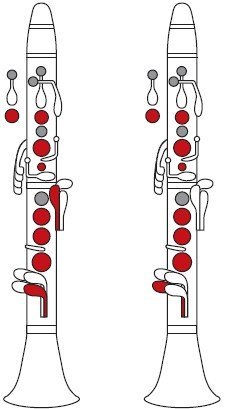
A Deck the Halls clarinet fingering chart is a visual guide that shows every note and fingering needed to play the carol on Bb clarinet. It helps beginners and advancing players learn the melody quickly, memorize clean finger patterns, and perform the tune confidently for holiday concerts and family gatherings.
The story behind Deck the Halls on clarinet
Deck the Halls began as a 16th century Welsh tune, “Nos Galan,” long before the modern clarinet had its ring keys, Boehm system, or even its familiar bell shape. Yet the melody feels as if it was written for the modern Bb clarinet: nimble arpeggios, a comfortable range, and a bright, lyrical line that sits beautifully around the clarion register B, C, D, and E.
When you play it, you are quietly joining a chain of players: from salon musicians in Paris with early Martin Freres clarinets in the 19th century, to jazz players in New York holiday radio broadcasts, to school clarinet sections warming up for winter concerts with band directors who still hum along while checking reed alignment on student mouthpieces.
How famous clarinetists breathed life into this carol
Few clarinetists built their reputations on Christmas albums, yet many of them have passed through Deck the Halls in one form or another. Benny Goodman and Artie Shaw did not leave famous recordings of the carol itself, but their holiday radio shows in the 1940s often featured adaptations of carols in swing medleys. The bright upper register style they pioneered, with crisp articulation and effortless leaps, is exactly what makes a clarinet version of Deck the Halls sparkle.
Imagine Goodman's famous 1938 Carnegie Hall Concert tone dropped into a holiday arrangement: the same ringing clarion register, the same clear altissimo A and B, just applied to a carol instead of a standard like “Stompin' at the Savoy.” The way he shaped phrases in the Benny Goodman Orchestra is a perfect model for how to lift the repeating “fa la la” lines without letting them feel automatic.
In the classical world, players like Sabine Meyer and Martin Frost have recorded Christmas albums and live concerts where the clarinet becomes the warm center of familiar carols. When Meyer plays arrangements of traditional tunes with the Berliner Philharmoniker, her sound on the upper clarinet notes around written C and D is both bell-like and tender. That color is ideal for Deck the Halls: bright, but never harsh; clear, but still vocal.
Martin Frost often programs lighter seasonal encores with chamber groups, pairing Brahms or Mozart with carol arrangements. Listen to the freedom in his breath between short phrases and you will hear how to treat the tiny rests in Deck the Halls not as dead space, but as miniature inhales of excitement.
On the more folkloric side, klezmer artists like Giora Feidman and David Krakauer have shown how a single reed instrument can turn a simple tune into a personal story. While they might be playing “Yidl Mitn Fidl” or “Der Heyser Bulgar” rather than Deck the Halls, the ecstatic slides, playful ornaments, and crying clarion register are exactly the same tools you can bring into a holiday carol. Swap in a small grace note before a written G or A, add a tiny portamento in the upper register, and suddenly Deck the Halls feels like your own improvisation rather than a printed exercise.
Where Deck the Halls shows up: from salons to soundtracks
Deck the Halls has slipped into nearly every musical corner: formal choral concerts, brass quintets, woodwind ensembles, jazz trios, and glossy film soundtracks. Clarinet has often been the color that connects those different settings, sitting between strings and voices with a human warmth that feels perfect for a winter melody.
In many school and community bands, the first winter concert part most young clarinetists play is a simplified Deck the Halls arrangement. You will see it programmed right next to a transcription of Mozart's “Sleigh Ride” from his German Dances, or Leroy Anderson's famous “Sleigh Ride” with its woodblock horse hooves and trumpet whinny. Your clarinet line often carries the main carol melody, while flutes add high shimmer and low brass provide the stomping harmony underneath.
Wind ensemble arrangements by writers like Alfred Reed and Robert W. Smith often tuck Deck the Halls into medleys. Clarinet sections in groups such as the “President's Own” United States Marine Band and the Royal Concertgebouw wind players treat those measures with the same care they give to more serious repertoire: shaped crescendos, breath marks planned like phrases in a Brahms symphony, clean finger coordination on the written C to A arpeggios.
In film and television, orchestrators often use clarinet to introduce or decorate Deck the Halls because of its chameleon tone. In a cozy living room scene, a single clarinet line around middle C with a soft dynamic can sound like a voice humming in the next room. In a cartoon, bright clarinet runs in the upper register can turn the same melody into something playful and mischievous, especially when paired with bassoon or xylophone.
Jazz and swing bands frequently quote Deck the Halls during holiday gigs. Clarinetists influenced by Buddy DeFranco or Eddie Daniels might slip the “fa la la” pattern into a bebop line over a ii-V-I progression, using the familiar stepwise pattern as a springboard to altissimo riffs. Listen to how Daniels balances classical control with jazz inflection in recordings of standards and you will have a blueprint for a more advanced, harmonically rich Deck the Halls solo version.
Range spotlight: written G below the staff to C above
This typical Deck the Halls range keeps you in the comfortable chalumeau and clarion registers. It is perfect for refining throat tone fingerings, voice breaks across the register key, and clear intonation without pushing into extreme altissimo.
From Welsh New Year song to clarinet holiday classic
The melody we call Deck the Halls started life as “Nos Galan,” a Welsh New Year carol from the 1500s. At that time, early single reed instruments such as chalumeaux and primitive clarinets lacked modern key systems. Players navigated the tune mostly with open holes and a handful of keys, closer to a recorder than a modern Boehm clarinet.
As the clarinet evolved through the work of makers like Johann Christoph Denner and later 19th century French builders, including the workshops that would give birth to Martin Freres instruments, the tune slowly shifted from folk dance melody to salon favorite. Arrangers stitched it into sets of variations, similar in spirit to how composers treated popular themes by Mozart or Paganini.
By the Romantic era, clarinetists such as Heinrich Baermann and his son Carl were dazzling audiences with Weber concertos and chamber music that stretched the instrument's lyrical power. A tune like Deck the Halls, with its repeated pattern and clear phrases, became perfect material for teaching phrasing, articulations like legato and staccato, and tasteful ornamentation. It could sit in a lesson book next to an excerpt from Weber's Concerto No. 1 and still teach the same breath control.
In the late 19th and early 20th centuries, publishers in London, Paris, and New York began printing Christmas collections that paired piano with melody instruments. Clarinet parts for Deck the Halls started to appear with simple fingerings in the chalumeau and lower clarion registers. By the time jazz grew in New Orleans and Chicago, young reed players might have grown up hearing the carol at home on harmonium or violin, then later flipping it into a playful swing tune on clarinet or saxophone.
Field Note: In the Martin Freres archives, there are late 19th century Christmas booklets that pair simple Deck the Halls melodies with fingering suggestions for early French-system clarinets. Several markings show alternate fingerings for throat A and B, proof that teachers were already using this carol to train smooth register transitions long before modern method books.
Why Deck the Halls feels so good on Bb clarinet
Part of the magic comes from how the melody sits in your hands. The tune rides over familiar notes around written A, B, C, and D, which are some of the first clarion register tones students truly sing on. The repeated “fa la la” figures invite light, dancing tongue strokes and easy finger motion between the left-hand and right-hand positions.
Emotionally, Deck the Halls carries a sense of shared ritual. It is not a private, introspective carol like “Silent Night.” It is extroverted. On clarinet, that translates to a forward, ringing sound, a bit more vibrato or gentle color in longer notes, and a willingness to lean into crescendos as if you are inviting the room to sing along. When you crescendo up to the phrase that lands on the high written C, it feels like throwing open the door to guests.
For many players, the first time they hear their own clarinet sound cut through a full band or choir on this carol is the moment they start to love performance. Deck the Halls gives you clear cadences to breathe with, repetition to relax into, and just enough technical spice to feel satisfying without stress. It is a tune that rewards both a raw beginner and a conservatory graduate, each in different ways.
What this carol teaches you as a clarinetist
Learning Deck the Halls with a clear clarinet fingering chart is about far more than preparing for a December concert. The tune quietly trains fundamentals you will use in Mozart, Brahms, and even Coltrane.
Skill
How Deck the Halls builds it
Where you use it later
Smooth register shifts
Moves between chalumeau and clarion using the register key on repeated phrases
Mozart Clarinet Concerto, Brahms Sonatas Op. 120
Light articulation
Short repeated figures that encourage a gentle, controlled tongue
Weber Concertino, Debussy Rhapsodie
Phrasing and breath
Predictable 4-bar phrases that train smart breathing spots
Orchestral solos in Ravel, Tchaikovsky, Shostakovich
Jazz clarinetists can also treat the tune as a miniature standard. The simple harmony often follows I – IV – V patterns. Practicing improvisation over a backing track or a piano using Deck the Halls teaches you how to decorate a melody with passing tones, neighbor tones, and altissimo embellishments, just as you would on “All of Me” or “Autumn Leaves.”
For intermediate and advanced players, phrasing Deck the Halls as if it were a slow movement from a Brahms clarinet sonata can be surprisingly challenging. Can you give every repeated note a slightly different shade of color using embouchure, reed placement, and air speed through the barrel and upper joint? That question turns a simple carol into a tone study.
A few clarinet fingering tips for Deck the Halls
The free Deck the Halls clarinet fingering chart lays everything out visually, note by note, but a few ideas can help the line feel easy in your hands. Most arrangements sit in a friendly key such as concert Bb or F, so you will often play written C, D, E, F, and G in the middle of the staff with only 1 or 2 accidentals. Keep your left-hand position relaxed, fingers hovering close to the tone holes on the upper joint.
When the melody jumps up to clarion register A, B, or C, think of blowing slightly warmer air through the mouthpiece and barrel, and prepare the register key early with your left thumb. For tricky throat tones like written A and Bb, experiment with alternate fingerings that use the right-hand F key to stabilize pitch. You will see these options notated in some Martin Freres-era method books and in many modern fingering charts.
Start by playing the melody on a comfortable slow tempo, watching the fingering chart for every new note.
Add simple dynamics: soft on the opening phrase, a swell into the “fa la la” patterns, then relax.
Once the fingers feel easy, lift your eyes from the page and play from memory while listening to your tone.
Simple practice routines to make Deck the Halls sing
Short, focused sessions beat marathon practice for this kind of tune. Here is a light routine that fits into any day, whether you are a beginner with a plastic student clarinet or a pro with a grenadilla Bb clarinet and custom mouthpiece.
Session part
Time
Focus
Warm up
5 minutes
Long tones on G, A, B, C in the staff, checking reed response and embouchure.
Melody focus
10 minutes
Use the fingering chart to isolate hard measures, repeat slowly, then connect phrases.
Musical play
5 minutes
Change dynamics, articulations, and try little ornaments or simple improvisations.
Try recording yourself once a week, even if it is just on a phone. Listen to how your clarinet bell projects the last notes of each phrase. Are the high notes around written C and D centered and singing, or slightly thin? Tiny adjustments in air support from the diaphragm and voicing in your oral cavity can turn a shy line into a confident one.
Troubleshooting common Deck the Halls clarinet problems
Even a friendly carol can reveal small leaks in technique. Here are a few quick fixes that often help clarinetists feel secure on Deck the Halls, whether they play a modern Boehm instrument or an older Martin Freres clarinet from a family attic.
Problem
Likely cause
Quick fix
Squeaks on upper notes
Late register key, biting the reed, or leaky left-hand fingers
Check left thumb position, relax jaw, and practice slow octave slurs from open G to clarion D.
Uneven “fa la la” patterns
Tense right hand fingers or heavy tongue strokes
Practice without tongue first, then add very light articulation on just one note per group.
Thin tone on throat A and Bb
Over-open jaw, weak air, or only standard fingerings
Use alternate fingerings with right-hand F key, blow more firmly, and angle the clarinet slightly toward you.
Key Takeaways
Use the Deck the Halls clarinet fingering chart to learn the melody slowly, then focus on tone and phrasing, not just notes.
Listen to great clarinetists in classical, jazz, and folk styles, and borrow their articulation and color for this carol.
Treat Deck the Halls as a small laboratory for breath control, register changes, and joyful musical storytelling.
Frequently Asked Questions
What is Deck the Halls clarinet fingering chart?
A Deck the Halls clarinet fingering chart is a visual guide that shows the exact finger positions for every note in the carol on Bb clarinet. It helps beginners learn the melody accurately, supports teachers in lessons and band rehearsals, and gives advancing players a quick reference for alternate fingerings and smooth register transitions.
What level of clarinet player can learn Deck the Halls?
Deck the Halls suits players from late beginner through advanced. A student who can comfortably play from low E to clarion C with simple rhythms can handle a basic version. More experienced clarinetists can add ornaments, jazz inflections, and dynamic shaping to turn the same tune into a polished performance piece.
Which clarinet register does Deck the Halls use most?
Most Bb clarinet arrangements sit mainly in the chalumeau and lower clarion registers, from written G below the staff to C or D above. This range feels comfortable on almost any mouthpiece and reed setup, making the carol ideal for developing warm low tones and clear, ringing upper notes without extreme altissimo demands.
How often should I practice Deck the Halls before a concert?
Short, regular sessions work best. Practicing 10 to 15 minutes, three to five times per week, is usually enough to feel confident. Use the fingering chart at first, then move toward memory. Alternate between slow, focused runs on tricky spots and full playthroughs where you concentrate on phrasing and expressive dynamics.
Can I play Deck the Halls with other instruments?
Yes. Deck the Halls adapts easily to duets and ensembles with flute, alto saxophone, violin, or voice. Many band and orchestra arrangements have Bb clarinet on the main melody. Matching pitch and blend with others is a great way to refine embouchure, listening skills, and intonation across the entire clarinet body, from barrel to bell.