There is a special moment every December when a clarinetist plays the opening phrase of “Hark the Herald Angels Sing” and the whole room seems to breathe in at once. The car horns outside, the metronome ticks, even the squeaks from the practice room next door all fade, and that bright, noble melody floats out of the bell of a humble Bb clarinet as if it has been waiting there all year.
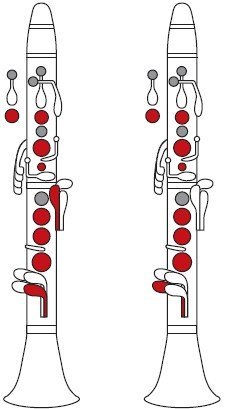
Receive a free PDF of the chart with clarinet fingering diagrams for every note!
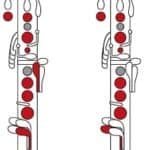
The Hark the Herald Angels Sing clarinet fingering chart is a visual guide to every note of this carol on Bb clarinet that shows which keys to press, the range used, and suggested alternates, so players can focus on phrasing, tone, and musical expression with confidence.
The long journey of a carol that loves the clarinet
“Hark the Herald Angels Sing” started its life in the 18th century long before the modern Boehm-system clarinet existed. The melody we know is usually linked to Felix Mendelssohn, whose bright, fanfare-like theme was later paired with Charles Wesley's text. While Mendelssohn was writing oratorios like “Elijah” and string symphonies, the clarinet was still finding its voice through players like Anton Stadler, the friend who inspired Mozart's Clarinet Concerto in A major.
Imagine those early classical clarinetists, holding boxwood instruments with simple keywork, playing Christmas services in echoing churches. Even if they were not yet playing this exact carol, they were breathing the same kind of singing lines into hymns and chorales. That tradition carried straight into the 19th century, when clarinetists such as Heinrich Baermann turned church melodies and chorales into little vocal arias on the instrument, smoothing every connection between open and covered holes, just as you will when you phrase “Hark the Herald” tonight.
By the time modern clarinets with metal keys and silver-plated ligatures appeared, the carol had become part of Christmas in London cathedrals, German town squares, and American small churches. Clarinets joined brass choirs, town bands, and school ensembles, often doubling soprano voices or filling the balcony with warm harmony under stained glass windows.
How great clarinetists have carried this carol
Even if you never see “Hark the Herald Angels Sing” printed on a concert program with Sabine Meyer or Martin Frost, the melody lives inside their sound. Listen to Sabine Meyer's recording of the Weber Clarinet Concerto No. 2 in E flat major. The broad, majestic themes have the same bright, ringing quality as a Christmas hymn sung by a full congregation, and her legato ideas transfer perfectly to the carol's opening leap from tonic to dominant.
Martin Frost on stage with the Swedish Radio Symphony Orchestra often shapes slow chorales as if they were carols. In concerts featuring Bach arrangements or Arvo Part's “Spiegel im Spiegel,” you hear the same type of glowing, centered tone you want for the lines “Hark the herald angels sing” and “Glory to the newborn King.” His control of dynamics from soft chalumeau notes to radiant clarion tones is a masterclass for playing this melody in a small church, a school auditorium, or a living room with a blinking tree in the corner.
Richard Stoltzman, known for his singing approach to Brahms and Debussy, recorded Christmas albums where his clarinet practically tells a story on its own. Even if he's playing carols like “Silent Night” or “O Come, All Ye Faithful,” the style is the same: open, vocal phrasing, careful breath planning, easy glissandi through register breaks, and a bell-like top register. Take that sound image and wrap it around your own performance of “Hark the Herald Angels Sing” and the fingering chart becomes a set of stepping stones rather than a puzzle.
Jazz clarinet legends brought Christmas tunes into smoky clubs and joyful radio broadcasts. Benny Goodman and Artie Shaw did not always record this specific carol, but their Christmas broadcasts often included hymns and seasonal standards. Their approach to a simple melody in “Stardust” or “Body and Soul” is a guide for how to bend and shade “Hark the Herald” without losing its dignity. Buddy DeFranco's liquid runs over holiday medleys show how easily a clarinet can move from hymn-like statements to jazz-inflected variations.
Klezmer icons such as Giora Feidman and David Krakauer also offer a surprising bridge to this carol. Listen to Feidman turning a Hasidic nigun into a slow, prayerful song, or Krakauer transforming a simple folk tune with ornaments, sighing bends, and subtle vibrato. That same expressive toolkit fits naturally onto “Hark the Herald Angels Sing” when you hold a note like “angels” just a little longer, or lean gently on the top of a phrase before relaxing into the cadence.
Where you have heard this melody without even thinking about it
“Hark the Herald Angels Sing” sneaks into musical life the way a clarinet sneaks into a symphony: quietly at first, then suddenly you cannot imagine the sound without it. The carol appears in traditional choral collections from composers like David Willcocks and John Rutter, whose Christmas arrangements feature woodwind lines that practically beg for a clarinetist to join.
In many church orchestras, Bb clarinet replaces or doubles soprano or alto lines, creating a luminous layer over pipe organ and trumpet. If you have ever sat in a wooden pew and heard a single clarinet line floating the melody above the choir on Christmas Eve, you already know how powerful that blend of reed and human voice can be.
Film composers have borrowed this carol too. In holiday movies, it often appears in street scenes, school pageants, or snowy finales. Orchestration books point out that clarinet in its clarion register is ideal for warm, optimistic chorale melodies, which is exactly what this carol needs. Even when a soundtrack does not feature the clarinet prominently, arrangers often sketch clarinet doublings in their scores because of the instrument's ability to blend with violins, flutes, and French horns.
Wind band arrangements by writers like Alfred Reed and Robert W. Smith regularly weave “Hark the Herald Angels Sing” into Christmas medleys. In many of these scores, the first clarinet part carries the tune in the upper chalumeau and clarion registers, right where a student or amateur player practicing your fingering chart will eventually live. The melody sits comfortably around written C above the staff, passing through the throat tones and over the break, which makes it both rewarding and a bit thrilling to play cleanly.
This 2.5 octave span covers chalumeau, throat tones, and clarion registers, giving students a real-world chance to smooth over the break while still staying in a singable, comfortable range.
Why this melody feels so good on a Bb clarinet
There is something about the way “Hark the Herald Angels Sing” is built that seems tailor-made for the clarinet. The intervals are mostly steps and thirds, with a few bold leaps that feel like someone throwing open a window on a winter morning. When you play the opening on a Bb clarinet, the air column inside the instrument practically wants to ring out on its own.
The carol moves between moments of shining proclamation and gentle conversation. The line “Hark the herald angels sing” feels like brass fanfare territory, but on clarinet you can shade it from mezzo piano to a glowing forte rather than blasting it. Then a phrase like “peace on earth and mercy mild” invites soft, floating legato in the chalumeau register, where the reed and mouthpiece can whisper instead of shout.
For many players this song also carries a personal story. Maybe you remember squeaking your way through it in your first school Christmas concert, fingers shaking over the register key. Or perhaps you played it later, with a new Vandoren or Rico reed carefully broken in, and realized you could actually shape phrases instead of just surviving the notes. The fingering chart in front of you is not just a diagram, it is a map of all those memories waiting to happen again in new places and with new listeners.
From cathedral balconies to YouTube: clarinetists keeping it alive today
Modern clarinetists across styles still turn to this carol because it is simple enough to invite improvisation and rich enough to reward careful phrasing. A classical soloist like Andreas Ottensamer, often heard with the Berlin Philharmonic, shapes chorales by Brahms and Mahler with the same glowing, centered sound that fits perfectly over an organ prelude of “Hark the Herald Angels Sing.” His work in chamber groups can give you ideas for blending with flute, oboe, or violin on this tune.
College clarinet choirs arrange Christmas carols every year, dividing the melody and harmony between E flat clarinet, Bb clarinet, alto clarinet, and bass clarinet. In those settings, the main line of “Hark the Herald” often goes to the principal Bb clarinet, who has to balance with the darker chalumeau of the bass clarinet and the bright sparkle of the E flat clarinet. Listening to recordings of university clarinet choirs can give you phrasing and balance ideas for your own small ensembles.
On the jazz and crossover side, clarinetists record Christmas EPs that mix swing rhythms with traditional hymns. Some will start with a straight version of “Hark the Herald Angels Sing,” then slide into blue notes, ornament the cadence with triplets, and quote lines from standards like “Have Yourself a Merry Little Christmas.” Watching how they pull this off can show you how much rhythmic and harmonic freedom still fits within a sacred melody.
Then there are the countless amateur and semi-professional clarinetists who share their playing on social media each December. A single player in a small apartment, with a Martin Freres or Buffet clarinet resting on a kitchen chair, can create a video of this carol that reaches thousands of people. The fingering chart you are reading might one day be the starting point for a recording that becomes part of someone else's seasonal ritual.
What mastering this carol gives you as a clarinetist
“Hark the Herald Angels Sing” is more than a seasonal tune. It is a compact training ground for air support, register changes, and phrasing that transfers directly to big repertoire. The same control you practice on the soft clarinet entries in this carol will help you in the slow movement of the Mozart Clarinet Concerto or the famous solo in Rachmaninoff's Symphony No. 2.
Because the melody moves through chalumeau, throat tones, and clarion register, learning it cleanly will improve your work on scale studies, arpeggios, and technical pieces like the Weber Concertino. It also gives you a safe place to experiment with vibrato, dynamic swells, and even a touch of portamento in the style of Richard Stoltzman or Giora Feidman.
| Skill | How the carol helps | Piece that benefits |
|---|---|---|
| Register crossing | Melody often crosses over the break between A and B | Mozart Clarinet Concerto, 1st movement |
| Legato phrasing | Long phrases mirror vocal lines in choirs | Brahms Clarinet Sonata in E b major, Op. 120 No. 2 |
| Dynamic control | Soft verses and strong climaxes train breath support | Mahler Symphony No. 1, opening solo lines |
On a more personal level, this carol gives you a piece you can share with almost anyone. You can pull your Bb clarinet out at a family gathering, in a care home, at a church service, or on a street corner with a brass quintet. The fingering chart means you do not have to worry about remembering each note under pressure; you can focus on eye contact, breath, and the feeling of giving music away.
A few friendly words about the fingering chart
The “Hark the Herald Angels Sing” clarinet fingering chart that accompanies this article keeps things compact. Most arrangements sit in a key such as concert F or concert G, which for Bb clarinet becomes written G or A major. That means you will use plenty of left-hand ring finger work and keep the register key close by for those soaring phrases on words like “glory” and “king.”
As you follow the chart, pay special attention to any notes that cross the break between throat A and written B or C. Use relaxed fingers, keep the right-hand down when possible to stabilize the instrument, and listen to how clarinet greats smooth similar shifts in the slow movements of Weber and Brahms. The diagrams show you which keys to press; your breath and imagination turn them into lines that sound like a choir of clarinets singing together.
Simple practice plan for “Hark the Herald Angels Sing”
| Session part | Time (minutes) | What to focus on |
|---|---|---|
| Warm up on scale | 5 | Play the key scale slowly with long tones, using tuner and steady air. |
| Phrase by phrase | 10 | Use the fingering chart to isolate 4-measure phrases, tongue only the first note of each slur. |
| Register crossings | 5 | Loop any spots that move over the break, using very slow air and relaxed right hand. |
| Full performance | 5 | Play the whole carol for an imaginary audience, focusing on emotion instead of perfection. |
Quick troubleshooting table
| Problem | Likely cause | Simple fix |
|---|---|---|
| Squeaks on high notes | Biting the mouthpiece, tense throat, or loose fingers over tone holes | Relax jaw, use more mouthpiece, keep fingers close to keys, practice soft long tones on high G and A. |
| Break sounds uneven | Right hand not down, air support dropping at the shift | Keep right hand on the instrument, blow through the change, practice slurred A to B slowly. |
| Tone is too harsh on loud phrases | Overblowing, stiff embouchure, or reed too hard | Think “warm air,” loosen corners slightly, experiment with a slightly softer reed for carols. |
Key Takeaways
- Use the Hark the Herald Angels Sing clarinet fingering chart as a safety net so you can focus on phrasing, tone, and emotion.
- Listen to great clarinetists in concertos, chorales, and jazz ballads to shape your own sound on this carol.
- Treat every performance of this melody as a short story you are telling, whether you are in a cathedral, a classroom, or your living room.
Frequently Asked Questions
What is the Hark the Herald Angels Sing clarinet fingering chart?
The Hark the Herald Angels Sing clarinet fingering chart is a visual guide showing which keys to press for every note of the carol on Bb clarinet. It covers the range, common alternate fingerings, and register changes so you can learn the melody more quickly and focus on musical expression.
What level of clarinet player can use this chart?
The chart works well for late beginners through advanced players. If you can play in the keys of G or A major and are starting to cross the break, you can use it comfortably. Intermediate and advanced clarinetists can use the same chart to polish phrasing, dynamics, and intonation.
Which clarinet register is most used in Hark the Herald Angels Sing?
Most arrangements of Hark the Herald Angels Sing for Bb clarinet use the low chalumeau register from written G to B, the throat tones, and the lower clarion register up to about written C or D above the staff. This range keeps the melody singing and lets you blend well with choir and organ.
How should I practice this carol with the fingering chart?
Start by playing the key scale slowly with a tuner, then use the chart to work phrase by phrase at a comfortable tempo. Focus on clean connections over the break, even air support, and singing tone. Once the notes feel comfortable, put the chart aside and play for a friend or record yourself.
Can I improvise on Hark the Herald Angels Sing on clarinet?
Yes. Many jazz and folk clarinetists decorate the melody with grace notes, passing tones, and simple variations. Learn the basic version securely using the fingering chart, then experiment with small rhythmic changes, turns, and slides, always respecting the carol's clear, hymn-like character.
For more clarinet stories, fingering guides, and historical notes, wander through other articles on MartinFreres.net that explore Bb clarinet scales, classic repertoire, and the rich legacy of Martin Freres instruments in bands and orchestras across generations.