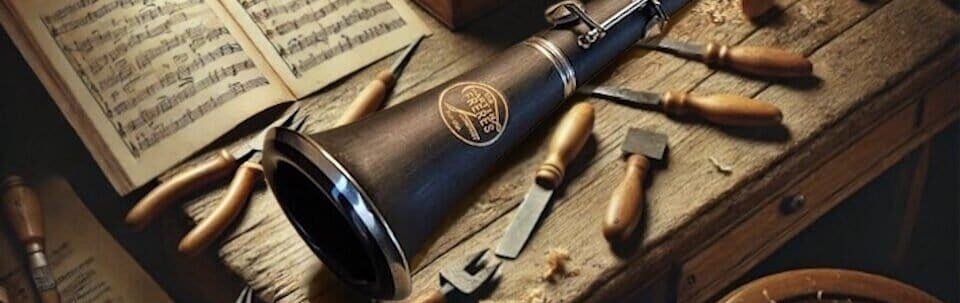
Ornamentation on a Martin Freres clarinet refers to trills, mordents, turns and grace notes used to embellish melodies. Begin by isolating each ornament at a slow tempo, use steady breath support, focus on even finger substitution for clarity, and gradually increase speed while maintaining rhythmic precision.
Introduction to Martin Freres Clarinet Ornamentation
Ornamentation on a Martin Freres clarinet combines historical style with the specific feel of French-made instruments. Players use trills, mordents, turns and grace notes to enrich melodic lines while respecting period practice. The goal is a smooth blend of finger fluency, stable tone and stylistic accuracy that suits both the repertoire and the instrument.
For intermediate and advanced clarinetists, ornamentation often exposes weaknesses in setup, finger coordination and air support. On vintage Martin Freres instruments, slightly different keywork and bore design can make ornaments either beautifully fluid or frustratingly uneven. This guide connects historical context, instrument anatomy and concrete practice plans so your ornaments sound intentional, not accidental.
Practice benchmark: Aim for even 2-note trills at ? = 120 in 4 weeks, expanding to 3-note turn figures at ? = 96 by week 8 with stable pitch and tone.
On a Martin Freres clarinet, the main ornaments mirror those in Classical and Romantic woodwind writing: trills, mordents, turns and grace notes. Each has a clear rhythmic and melodic function. Understanding the basic pattern and fingering options on your specific instrument is the first step toward reliable, expressive use in performance.
Trills on Martin Freres clarinets
Trills alternate rapidly between a written note and its neighbor, usually a step above. On Martin Freres instruments, certain trills benefit from auxiliary keys or specific finger substitutions that differ from modern Boehm layouts. The priority is even rhythm, consistent tone color and stable pitch, especially across throat tones and the break.
Start with half-note trills at slow tempos, counting subdivisions aloud. Focus on minimal finger motion and identical finger height for both notes. On older French systems, experiment with alternate fingerings for throat B flat, C and side keys to find the smoothest motion. Record yourself to check that the trill stays centered in pitch.
Mordents and inverted mordents
Mordents are quick oscillations around a principal note. A lower mordent moves principal-lower-principal, while an inverted mordent moves principal-upper-principal. On clarinet, these often use the same finger pairs as trills but compressed into a very short rhythmic value, usually a fraction of a beat or a small grace-like gesture.
On Martin Freres clarinets with slightly smaller toneholes and lighter key action, mordents can sound very crisp if the fingers stay close to the keys. Practice them as slowed-down three-note groups first, then compress them rhythmically while keeping the air steady. Avoid accenting the auxiliary note; the ear should hear a decorated main pitch.
Turns and their variants
Turns outline the note above, the principal note, the note below and a return to the principal. In Classical and early Romantic music, turns often sit over a long note or at cadences. On clarinet, the challenge is to keep the pattern legato and rhythmically clear while managing cross-fingerings and register changes.
On some Martin Freres models, the upper note of a turn may require a side key or fork fingering that changes tone color. Practice turns in isolation on each scale degree in several keys, especially around throat tones and the break. Aim for even spacing of the four notes and a clear sense of where the beat falls within the pattern.
Grace notes and appoggiaturas
Grace notes are quick notes that lead into a main note, either crushed before the beat or placed on the beat depending on style. Appoggiaturas are longer, expressive leaning notes that borrow time from the main note. Both are central to expressive phrasing on Martin Freres clarinets, especially in French and Italian repertoire.
Use a light, fast finger motion for short grace notes and a generous, singing air stream for appoggiaturas. On vintage instruments, the slightly more flexible response can make appoggiaturas particularly vocal if you avoid biting and let the reed vibrate freely. Always decide whether the grace note belongs before or on the beat based on the style period.
Historical Context and the Martin Freres Legacy
Ornamentation practice for clarinet grew out of 18th century treatises by figures such as Johann Joachim Quantz and C.P.E. Bach, even though they wrote mainly for flute and keyboard. Their ideas about trills, appoggiaturas and cadential embellishments shaped early clarinet methods and the expectations of Classical composers like Mozart and Weber.
By the 19th century, clarinet-specific tutors from Paris and other European centers described detailed trill fingerings and expressive ornaments. Players were expected to add tasteful embellishments on repeats, slow movements and cadenzas. French makers, including Martin Freres, responded by refining keywork to support smoother trills and more agile passagework.
Martin Freres archive note: Surviving Martin Freres catalogues from the late 19th and early 20th centuries highlight “facilité de trille” (ease of trilling) as a selling point. Several models feature auxiliary trill keys around the throat and upper joint, clearly aimed at performers who needed agile ornaments in salon and orchestral repertoire.
Martin Freres originated in France in the 19th century and produced clarinets through much of the 20th century. Their instruments often reflect French tonal ideals: focused core, flexible response and relatively light keywork. These traits can favor fluid ornamentation when the instrument is well set up and paired with an appropriate reed and mouthpiece.
Collectors and historically informed performers value Martin Freres clarinets for their connection to French conservatory traditions. When playing Classical and Romantic repertoire on these instruments, many musicians adapt ornamentation practices described in early French methods, balancing written ornaments with tasteful improvised embellishments that suit the instrument's response.
Instrument Anatomy: How Keywork, Bore and Toneholes Affect Ornamentation
The physical design of a Martin Freres clarinet strongly shapes how ornaments feel and sound. Bore profile, tonehole placement, keywork ergonomics and register venting all influence trill reliability, finger substitution options and timbral consistency. Understanding these factors helps you choose efficient fingerings and adjust your technique to the instrument.
Bore profile and response
Many Martin Freres clarinets use a relatively narrow, French-style bore that favors a focused tone and quick response. This can make light ornaments speak easily at soft dynamics. However, the same design may reveal any instability in embouchure or air when executing wide-interval trills or ornaments that cross the break between registers.
Test your instrument by playing slow trills between long tones in both registers. Notice where the response feels instant and where it hesitates. On some Martin Freres models, throat tones and upper clarion notes may need slightly more air support during ornaments to keep the sound centered and avoid pitch sag.
Tonehole placement and cross-fingerings
Tonehole size and placement affect the ease of cross-fingerings, which are common in ornaments. On vintage French instruments, some cross-fingerings produce a slightly darker or covered tone. This can be beautiful in lyrical ornaments but may require careful voicing to keep the pitch stable in fast trills and mordents.
Map out alternate fingerings for problematic trills, such as between throat B flat and A, or between clarion E and F sharp. On a Martin Freres clarinet, an alternate fingering that slightly darkens the tone may still be preferable if it yields a smoother, more even trill. Keep a small fingering chart in your practice journal for reference.
Keywork ergonomics and spring tension
Martin Freres keywork often feels light and nimble when correctly regulated. This can be ideal for ornaments that require rapid finger alternation or multiple side keys. If spring tension is uneven or keys are misaligned, ornaments will feel inconsistent, with some notes speaking late or producing mechanical noise that distracts from the musical line.
Pay special attention to side keys, trill keys and the throat B flat mechanism. These are heavily used in ornamentation and must move freely without wobble. If one trill key feels heavier or slower than its neighbor, ask a qualified technician to balance spring tension and key height so finger motion can stay minimal and relaxed.
Register venting and throat area
The throat area and register vent are critical for ornaments that move between chalumeau and clarion registers. On some Martin Freres instruments, the throat tones are particularly sweet but can be sensitive to embouchure pressure. Ornaments here require a stable, open oral cavity and consistent voicing to avoid pinched or sagging pitch.
Practice slow portamento-like connections between throat notes and their clarion counterparts before adding trills or turns. Once the basic connection feels secure, introduce simple two-note ornaments that cross the register break. Keep the jaw relaxed and think of voicing the upper note slightly higher in the mouth to support clean response.
Setup check: A well-regulated clarinet should allow clean, even trills between common pairs (e.g., C-D, D-E) at ? = 100 within 1 mm of equal key height on both notes.
Technical Exercises and Progressive Practice Plans
To master ornamentation on a Martin Freres clarinet, you need a structured practice plan that moves from slow isolation to performance tempo. The goal is measurable progress: faster, cleaner trills and ornaments that stay in tune and in time. A 4 to 12 week plan works well for most intermediate and advanced players.
Week 1-4: Foundation and slow control
Start with two-note trill patterns in quarter notes at ? = 60. Use a metronome and sustain each note for two beats before switching. Focus on identical finger height, relaxed hand position and steady air. Work through all major scales, adding trills on each scale degree within a comfortable range.
Next, practice three-note mordent patterns as triplets: principal-lower-principal or principal-upper-principal. Keep the rhythm even and the dynamic stable. Limit yourself to one or two keys per day to avoid fatigue. Record short excerpts and listen for any accent on the auxiliary note, then adjust finger weight as needed.
Week 5-8: Expanding speed and complexity
Increase trill speed gradually by 4 bpm every few days, aiming for ? = 96 to 120 on eighth-note trills. Introduce turns in both simple and inverted forms, first as written rhythms, then as compressed ornaments over longer notes. Alternate between legato and lightly articulated versions to build flexibility.
Begin applying ornaments to short phrases from Mozart, Weber or French Romantic repertoire. Choose one phrase per session and experiment with different trill starting notes, turn placements and grace note options. Keep a practice log noting which ornaments feel natural on your Martin Freres instrument and which require alternate fingerings.
Week 9-12: Performance integration
By this stage, aim to execute even two-note trills at ? = 120 and clean four-note turns at ? = 96 in context. Practice full movements or etudes, marking in your chosen ornaments. Use a variety of dynamics, from piano to forte, to ensure your technique holds up under expressive demands.
Simulate performance conditions by playing through entire sections without stopping, then review recordings to evaluate clarity and stylistic fit. Adjust any ornaments that sound rushed, heavy or out of character with the piece. On a Martin Freres clarinet, listen especially for how ornaments affect the characteristic French timbre.
Timeline goal: Many players can reach stable, stylistically appropriate ornaments in 8-12 weeks with 10-15 focused minutes of ornament practice per day.
Breath, Articulation and Finger Technique for Clean Ornaments
Even on a well-set-up Martin Freres clarinet, ornaments will only sound clean if breath, articulation and finger technique work together. Air provides the foundation, articulation shapes the attack and release, and fingers execute the pattern. Any weakness in one area will show up immediately in trills, mordents and turns.
Breath support and air direction
Use a steady, pressurized air column for all ornaments, even very short ones. Think of blowing through the entire figure rather than at each note. On vintage French instruments, this approach helps maintain a singing tone and prevents the sound from thinning during rapid alternations or cross-register ornaments.
Practice long tones with embedded ornaments: sustain a note for four beats, insert a two-beat trill in the middle, then return to the sustained tone. The dynamic and color should remain consistent. If the sound collapses during the ornament, increase abdominal support and reduce jaw pressure.
Articulation choices for different ornaments
Most trills and turns in Classical and Romantic styles are slurred, relying on finger motion alone. Grace notes can be either slurred or lightly tongued, depending on style and tempo. On a Martin Freres clarinet, a very light, fast tongue stroke can help clarify grace notes without making them percussive.
Practice pairs of notes with different articulation patterns: slur, light single tongue, and ghosted articulation where the tongue barely touches. Apply these to grace note plus main note figures. Listen for the cleanest, most stylistic option in each repertoire context, and note any differences in response specific to your instrument.
Finger substitution and minimal motion
Clean ornamentation depends on minimal, efficient finger motion. Finger substitution, where you change which finger holds a note to prepare for an upcoming ornament, is especially useful on clarinet. On Martin Freres keywork, some substitutions may feel more natural due to ring placement and key height.
Identify common ornaments in your repertoire and experiment with alternate fingerings that reduce motion. For example, using side keys instead of full-hole fingerings for certain trills can shorten travel distance. Practice slow alternations while watching your fingers in a mirror to ensure they stay close to the keys and move only as much as needed.
Incorporating Ornamentation in Different Styles (Classical, Romantic, Jazz)
Stylistic awareness is important when ornamenting on a Martin Freres clarinet. The same trill or grace note can sound appropriate in one style and out of place in another. Historical context, phrasing and harmonic function all guide your choices, whether you play Mozart, Brahms or jazz-influenced repertoire.
Classical style ornamentation
In Classical repertoire, such as Mozart and early Beethoven, ornaments are often notated but can also be added tastefully on repeats. Trills usually start on the upper auxiliary note, and appoggiaturas often fall on the beat, resolving expressively. Clarity, balance and elegance are more important than sheer speed.
On a Martin Freres clarinet, use the instrument's focused tone to shape clear, singing trills and turns. Avoid overloading phrases with extra ornaments; instead, highlight cadences, long notes and repeated sections. Study period treatises and early clarinet methods to align your practice with historically informed expectations.
Romantic and late Romantic styles
Romantic composers like Weber, Brahms and French salon writers often notate expressive ornaments, including sighing appoggiaturas and sweeping turns. Here, rubato and dynamic nuance play a larger role. Ornaments may stretch slightly in time, especially in solo passages, as long as the harmonic rhythm remains clear.
Martin Freres instruments, with their flexible response, can emphasize the vocal quality of Romantic ornaments. Use varied vibrato (where stylistically appropriate), dynamic swells and subtle timing adjustments to shape these figures. Keep the underlying pulse in mind so rubato feels organic rather than arbitrary.
Jazz and popular styles on Martin Freres clarinets
Some players use Martin Freres clarinets in early jazz, swing or popular styles. Ornamentation here includes scoops, falls, grace notes, turns and blues-inflected bends. The rhythmic placement is often more syncopated, and ornaments interact closely with the groove and articulation patterns of the ensemble.
Experiment with short, accented grace notes before the beat, ghosted notes and subtle pitch bends achieved through embouchure and voicing. The focused French tone can cut through a band texture if you maintain strong air support. Listen to early jazz clarinetists and adapt their ornament vocabulary to the response of your specific instrument.
Maintenance Steps to Preserve Ornamentation Response
Even the best technique cannot compensate for a clarinet that leaks, has sluggish keys or uses an unsuitable reed. For Martin Freres instruments, careful maintenance is especially important, since age and wear can significantly affect ornament clarity. A simple, regular routine helps preserve fast response and even tone.
Pad seating and leak checking
Leaky pads are a primary cause of uneven trills and unclear ornaments. Test for leaks by playing soft long tones and slurred intervals at pianissimo. If a note breaks, fuzzes or refuses to speak reliably, suspect a leak. You can also use a feeler gauge or thin paper strip under pads to check for incomplete closure.
On older Martin Freres clarinets, original pads may have hardened or shrunk. Replacing them with modern, well-fitted pads can dramatically improve ornament response. Always have pad work done by a technician familiar with vintage French instruments to respect original tonehole geometry and keywork.
Key regulation and spring tension
Uneven key heights and inconsistent spring tension make ornaments feel lumpy. Have a technician check that all linked keys close together and that trill keys return quickly without excessive resistance. Slight adjustments in spring tension can transform a sluggish trill into a clean, responsive gesture.
Pay attention to the feel of side keys and throat mechanisms during practice. If one key consistently feels heavier or slower, note it and mention it during your next service appointment. Balanced regulation lets your fingers move with confidence and reduces unnecessary effort during fast ornaments.
Cork, tenon and joint maintenance
Loose or overly tight tenon corks can affect alignment and response. If joints wobble, toneholes may not line up perfectly, affecting tuning and resonance in ornaments. If joints are too tight, assembling the instrument can stress the keywork, leading to misalignment over time.
Keep tenon corks lightly greased and replace them when they compress excessively. Check that the bridge key aligns correctly when assembling your Martin Freres clarinet, as misalignment can interfere with upper joint response, especially in fast ornaments that cross the break.
Reed and mouthpiece choices
Reed and mouthpiece setup has a direct impact on ornament clarity. A reed that is too soft may chirp or spread in fast figures, while one that is too hard can respond sluggishly. Many players find that a medium-strength reed with a balanced tip and heart works well for detailed ornamentation on vintage French instruments.
Test reeds by playing soft trills and mordents across the range. A good reed will respond evenly without extra effort or noise. Mouthpieces with a moderate tip opening and a facing curve suited to French-style bores often complement Martin Freres clarinets for articulate, centered ornaments.
Troubleshooting Common Ornamentation Problems
When ornaments on a Martin Freres clarinet sound uneven, out of tune or sluggish, it helps to diagnose the problem systematically. Separate variables: player, reed, instrument. Address the simplest, most reversible factors first, then move toward more involved adjustments or professional repair as needed.
Uneven trills and inconsistent rhythm
If your trills speed up, slow down or feel lopsided, start by practicing them with a metronome at a very slow tempo. Count subdivisions aloud and aim for identical finger motion in both directions. Often, one finger lifts higher or presses harder than the other, creating rhythmic imbalance.
If the problem persists only on certain note pairs, check for mechanical issues such as sticky pads or misaligned keys. On a Martin Freres clarinet, older springs may have weakened unevenly, causing one key to return slower than its partner. A technician can rebalance tension and free up motion.
Sluggish response during ornaments
Sluggish response can stem from a reed that is too hard, a dry or warped reed, or leaks in the instrument. First, swap to a fresh reed of similar strength and test the same ornaments. If response improves, adjust your reed rotation and break-in process.
If a new reed does not solve the issue, perform leak tests at soft dynamics, especially around the notes that feel slow. Check for sticky pads by gently tapping keys while fingering the problematic notes. On older Martin Freres clarinets, a full mechanical overhaul may be needed to restore original agility.
Pitch instability in trills and turns
Pitch that wobbles or sags during ornaments often indicates embouchure tension or voicing issues. Practice the same intervals as slow, sustained slurs, focusing on stable pitch and consistent resonance. Once that feels secure, reintroduce the trill or turn while maintaining the same internal vowel shape and jaw position.
If instability occurs only with certain alternate fingerings, reassess your fingering choices. On some Martin Freres models, specific alternates may be slightly out of tune. Choose the option that balances intonation and ease of motion, and adjust voicing subtly to center the pitch.
Mechanical noise and key clatter
Excessive mechanical noise during ornaments distracts from musical clarity. It usually comes from loose keywork, worn corks or heavy finger impact. Ask a technician to check for side play in key rods and to refresh bumper corks or felt where needed.
On the player side, practice ornaments at slow tempos while consciously using lighter finger pressure. Imagine the keys as hot surfaces you barely touch. Over time, this reduces impact noise and makes fast ornaments feel more effortless on your Martin Freres clarinet.
Archive References, Recordings and Further Resources
Studying historical sources and recordings helps you align your ornamentation on Martin Freres clarinets with period practice. While clarinet-specific treatises from the 18th century are rare, general ornamentation guides by Quantz and C.P.E. Bach, along with early 19th century clarinet methods, offer valuable insight into trill starts, appoggiaturas and cadential embellishments.
Explore recordings of French clarinetists associated with the Paris Conservatoire tradition, especially those who played on French-made instruments. Listen closely to how they handle trills, grace notes and expressive turns in Classical and Romantic repertoire. Compare their approach to modern interpretations to refine your own stylistic choices.
Martin Freres archival materials, including catalogues and surviving instruments in collections, reveal design priorities such as ease of trilling and balanced keywork. When possible, examine or play restored examples to feel how original spring tension, pad materials and bore design support ornaments. Document your observations in a practice journal for future reference.
For structured study, combine historical reading with modern clarinet method books that include detailed ornament exercises. Adapt the written drills to your Martin Freres instrument, noting where alternate fingerings or voicing adjustments improve clarity. Over time, this integrated approach builds both technical fluency and historical awareness.
Key Takeaways
Ornamentation on a Martin Freres clarinet depends on both historical style and the specific response of French-designed keywork and bore.
Structured practice from slow isolation to performance tempo over 4 to 12 weeks yields measurable improvements in trill speed and clarity.
Regular maintenance, including pad seating, key regulation and appropriate reed choice, is important for clean, reliable ornaments.
Stylistic choices differ across Classical, Romantic and jazz-influenced repertoire, so align your ornaments with period expectations and recordings.
Systematic troubleshooting that separates player, reed and instrument factors helps resolve common problems like uneven trills and sluggish response.
Frequently Asked Questions
What is Martin Freres clarinet ornamentation?
Martin Freres clarinet ornamentation refers to trills, mordents, turns, grace notes and related embellishments played on clarinets made by the Martin Freres firm. It combines general woodwind ornament practices with the specific response and keywork of these French instruments, aiming for clear, stylistically appropriate decorations in Classical, Romantic and other repertoire.
How do I practice trills and mordents on the clarinet?
Practice trills and mordents slowly with a metronome, starting at about ? = 60. Focus on minimal finger motion, steady air and even rhythm. Isolate two-note pairs, then expand to three-note mordent patterns. Gradually increase tempo while keeping tone and pitch stable. On a Martin Freres clarinet, test alternate fingerings to find the smoothest motion.
Does clarinet setup affect my ability to play clean ornaments?
Yes. Pad leaks, uneven key heights, inconsistent spring tension and unsuitable reeds all degrade ornament clarity. A well-regulated clarinet with balanced keywork and an appropriate reed responds quickly and evenly to fast finger motions. This is especially important on vintage instruments, including Martin Freres models, where age-related wear can impact agility.
Which ornamentation styles are appropriate for Classical vs. Romantic repertoire?
Classical repertoire favors clear, elegant ornaments, often with trills starting on the upper note and appoggiaturas on the beat. Romantic music allows more expressive, sometimes rubato ornaments, including longer appoggiaturas and sweeping turns. In both cases, study period sources and recordings, then adapt your choices to the response of your instrument.
What maintenance steps help preserve a clarinet's ornament response?
Key steps include regular leak checks, timely pad replacement, careful key regulation, balanced spring tension and proper tenon cork care. Pair this with a consistent reed rotation and a mouthpiece that matches your clarinet's bore. For Martin Freres instruments, periodic professional servicing is important to maintain the light, agile key action needed for clean ornaments.
How can I troubleshoot uneven trills or sluggish finger response?
Start by slowing the trill with a metronome and checking finger symmetry. Then test a fresh reed to rule out response issues. If problems persist only on certain notes, look for leaks or sticky pads and listen for mechanical noise. On older instruments, including Martin Freres clarinets, a technician may need to adjust spring tension or key alignment.