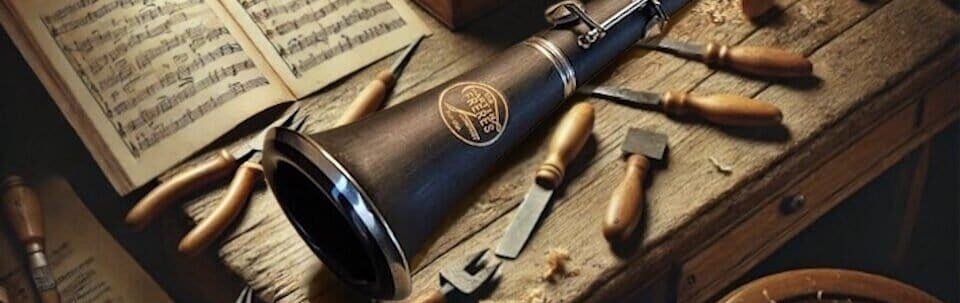
Martin Freres, LaMonte, Coudet, Jean Martin Brand Clarinets and Other Woodwinds
Martin Freres Clarinet Projection: Techniques, Setup & Testing Guide
Clarinet projection is how well your sound carries. Improve projection with five steps: (1) focused breath support, (2) optimized embouchure and mouthpiece alignment, (3) appropriate reed and barrel pairing, (4) good posture and instrument positioning, and (5) regular maintenance and setup checks.
The Art of Clarinet Projection: What It Is and Why It Matters
Clarinet projection is the ability of your sound to carry clearly through a room or ensemble without strain. It is not just volume. Good projection combines focused tone, stable pitch, and a spectrum of overtones that help the ear locate your sound, even at softer dynamics and in complex textures.
For intermediate and advanced players, projection affects auditions, chamber music balance, and solo presence. A clarinet that projects well lets you play with more nuance, because you do not need to force. Understanding how projection works on your instrument, including historic models, turns guesswork into predictable results.
Projection snapshot: Many advanced clarinetists can increase their average forte long-tone level by 3 to 6 dB at 1 meter after 4 to 6 weeks of focused projection practice and minor setup adjustments.
How Projection Works: Acoustics and Sound Physics
Clarinet projection comes from how efficiently the instrument turns your air into organized vibration. The bore, tone holes, and bell shape the fundamental and overtones. Your embouchure and reed control the stability of the vibration. The room then reinforces or absorbs certain frequencies that help your sound travel.
From an acoustics point of view, a projecting clarinet sound has a strong, stable fundamental plus clear upper partials around 1 to 4 kHz. These frequencies help the sound cut through an orchestra or wind band. If the reed or bore damp these frequencies, you may feel you are playing loudly but still cannot be heard at a distance.
Frequency focus: Clarinet sounds that carry well often show 6 to 10 dB stronger energy in the 1.5 to 3 kHz band compared with dull or covered tones, when measured with basic spectrum analysis.
Projection also depends on directionality. The clarinet radiates different frequencies from different parts of the body. Higher partials tend to radiate more from the upper and middle tone holes, while the bell favors lower components. How you angle the instrument changes how those frequencies reach the listener.
Martin Freres and the Legacy of Projecting Clarinets
Martin Freres instruments developed a reputation for clear, singing projection in European salons and small halls. Surviving catalogs from the late 19th and early 20th centuries highlight models described as “puissante” and “sonorité pénétrante,” terms that point directly to projection and carrying power rather than sheer loudness.
Workshop practices favored carefully graduated bores and tone hole undercutting that balanced warmth with clarity. Compared with some contemporaries, many Martin Freres clarinets used slightly more open throat tone designs, which helped the upper clarion register project without becoming shrill. This made them attractive to soloists and military band players.
Field note from the archives: A French-language Martin Freres catalog from c.1905 describes a “modèle de concert” with “percement étudié pour la portée du son dans les grandes salles” (bore studied for sound reach in large halls). This confirms that projection was a deliberate design goal, not an accidental side effect.
Today, players who own restored Martin Freres clarinets often remark on their direct, vocal quality. While modern large-hall playing may demand different equipment, understanding how these historical instruments were voiced can guide your expectations when setting up a vintage Martin Freres for chamber music, period performance, or recording.
Instrument Anatomy: Parts That Influence Projection
Every major part of the clarinet affects projection: bore profile, tone holes, barrel, mouthpiece, and bell. Historical Martin Freres designs show how small changes in these areas shaped their characteristic carrying sound. Knowing what each part does lets you make targeted adjustments instead of chasing random gear changes.
Bore profile and internal taper
The bore profile is the internal shape of the clarinet from barrel to bell. Slight variations in cylindrical diameter and subtle tapers control impedance and how energy moves through the air column. Many projecting instruments use a bore that supports strong resonance in the clarion and altissimo without over-darkening the chalumeau.
Some Martin Freres clarinets used a slightly narrower upper joint bore with gentle undercutting at key tone holes. This combination helped focus the sound and stabilize pitch. If your instrument feels stuffy, a technician can check for bore wear, swelling, or roughness that may be damping projection, especially in the upper joint.
Tone hole size, placement, and undercutting
Tone holes act as vents that shape resonance and radiation. Larger or more aggressively undercut holes can increase brightness and projection, but too much can destabilize pitch or make the tone edgy. Historical workshop notes often mention careful hand-finishing of tone holes to balance clarity with warmth.
On older clarinets, worn or uneven tone hole rims can cause micro-leaks that reduce projection even if the pads appear to seal. A skilled repairer can level tone holes and adjust undercutting to restore lost energy. This is especially important on vintage Martin Freres instruments that have seen decades of use.
Barrel length and internal design
The barrel sets the starting impedance and helps match the mouthpiece to the rest of the bore. Shorter barrels generally raise pitch and can brighten the response; longer barrels lower pitch and can darken the sound. Internal tapers and reverse tapers influence how easily the clarinet “speaks” and how centered the tone feels.
Experimenting with 1 to 2 mm differences in barrel length can noticeably change projection. Many players keep two barrels: one that favors compact, focused projection for solo or orchestral work, and another that allows a slightly broader, more blending sound for chamber music.
Mouthpiece chamber, facing, and baffle
The mouthpiece is the most powerful projection control you can change easily. Chamber size, baffle height, and facing curve determine how the reed vibrates and which harmonics are emphasized. A slightly higher baffle and medium chamber often increase presence and projection, while very large chambers can sound warm but distant.
When pairing a mouthpiece with a vintage Martin Freres clarinet, choose a design that complements the original bore concept. A very aggressive modern mouthpiece can overpower the instrument's natural balance, while a moderate, well-focused design can bring out its characteristic singing quality.
Bell flare and lower joint design
The bell and lower joint influence how lower frequencies radiate and how evenly the scale responds. A well-designed bell flare can help the lowest notes project without booming and can smooth the transition into the chalumeau. Subtle internal shaping near the bell throat also affects how the instrument responds at different dynamics.
On older clarinets, damage or warping near the bell ring can disturb this balance. If your low E and F feel weak or die off quickly, have a technician inspect the bell and lower tenon fit. Restoring proper geometry often improves projection in the entire low register.
Quick reference table: parts and projection
Part
Acoustic effect
Practical adjustment
Bore profile
Controls resonance strength and focus
Check for wear/swelling; professional bore cleaning and light polishing
Tone holes
Shapes brightness and radiation
Level rims, correct leaks, refine undercutting on problem notes
Barrel
Sets impedance and response
Test different lengths and tapers in 1-2 mm steps
Mouthpiece
Controls harmonic content and ease
Match facing and chamber to reed strength and bore
Bell
Influences low register projection
Inspect for cracks, warping, and tenon fit; adjust or replace if needed
Player Technique: Embouchure, Breath, Posture, and Positioning
Even a historically well-voiced Martin Freres clarinet will not project if the player starves it of air or collapses the embouchure. Technique and setup work together. Focus first on controllable fundamentals: air, embouchure, posture, and how you angle the instrument into the room.
Breath support and air focus
Projection starts with steady, pressurized air, not brute force. Think of supporting from the lower ribs and abdomen while keeping the throat open, like a singer. Practice long tones at mezzo forte and forte, aiming for absolutely even sound and pitch from start to finish of the breath.
Use a practice target: at 1 meter, aim for about 78 to 82 dB on a sustained G in the staff at mezzo forte, and 86 to 90 dB at forte, measured with a phone SPL app. The goal is consistency and tonal richness, not just higher numbers.
Embouchure stability and mouthpiece alignment
A stable embouchure lets the reed vibrate freely while keeping the sound centered. Roll in just enough lower lip to cushion the reed, keep corners firm but not pinched, and avoid biting. If the reed is choked, projection drops even if you blow harder.
Align the mouthpiece so the reed faces straight up when you are in playing position. Small rotations can change how the reed seals and vibrates. On some older mouthpieces paired with Martin Freres clarinets, a very slight inward rotation improves seal and focus, but always test this carefully with long tones.
Posture and body alignment
Good posture keeps the air column open. Sit or stand tall with relaxed shoulders, balanced head, and a natural curve in the lower back. Avoid collapsing the chest or craning the neck forward. Imagine the air traveling in a straight, unobstructed path from lungs to bell.
Many players gain 2 to 3 dB of projection simply by fixing posture and avoiding slouching. Record yourself from across the room while alternating between slouched and aligned posture to hear the difference in clarity and presence.
Instrument angle and projection direction
The angle of the clarinet controls where your sound goes. Too close to the body and much of the sound projects into the floor. Too far out and you may lose control and embouchure stability. A typical angle is about 30 to 40 degrees from the body, adjusted for comfort and facial structure.
In ensemble settings, experiment with small angle changes so more of the sound radiates toward the audience or conductor. With a historically voiced Martin Freres clarinet, a slightly more open angle often helps the characteristic core sound reach the back of the hall without extra effort.
Reeds, Mouthpieces, and Barrels: Matching Gear for Projection
Gear choices can either unlock or block your clarinet's natural projection. The goal is a setup where the reed, mouthpiece, barrel, and bore cooperate. This is especially important when pairing modern accessories with older instruments, including vintage Martin Freres models.
Choosing reeds for balanced projection
Reeds that are too soft may sound bright up close but collapse at higher dynamics and at distance. Reeds that are too hard can sound covered and resistant, which also hurts projection. Aim for a strength where you can play a comfortable pianissimo while still having headroom at forte.
Test projection by playing a middle G and clarion C at forte with different reeds, recording from 3 to 5 meters away. Listen for which reed keeps the tone centered and ringing, not just which one feels easiest under the fingers.
Mouthpiece facings that support projection
A medium to medium-open facing with a balanced curve often gives the best mix of flexibility and focus. Extremely closed facings can feel easy but may limit color and projection. Very open facings demand more air and embouchure control than many players can sustain consistently.
When using a vintage Martin Freres clarinet, avoid assuming that only period mouthpieces will work. Many modern designs pair well, but choose one known for a centered, ringing core rather than extreme darkness or brightness. Work with a teacher or technician who can hear you in a hall, not just in a practice room.
Barrel experiments: length and taper
Small barrel changes can yield big projection differences. Keep at least two barrels differing by 1 to 2 mm in length. Test them in the same room, on the same day, with the same reed. Listen for which barrel allows the sound to “leave the bell” most easily while keeping pitch stable.
Some players find that a slightly shorter, more focused barrel helps a warmer clarinet, including some Martin Freres models, speak more clearly in large ensembles. Others prefer a slightly longer barrel for chamber music, where blend matters more than raw presence.
Maintenance and Setup: Preserving Your Instrument's Projection
Even the best-designed clarinet loses projection if leaks, worn pads, or swollen bore sections interfere with vibration. A clear, projecting tone depends on airtight sealing and stable geometry. This is especially true for older wooden instruments that have experienced decades of climate changes.
Daily maintenance for consistent projection
After every playing session, swab the bore thoroughly from bell to barrel. Remove moisture from tone holes with a clean, lint-free cloth or cigarette paper under the pad, especially in the upper joint. Store the clarinet in a stable environment, avoiding rapid humidity or temperature swings that can affect wood and pads.
Visually inspect the reed and ligature each day. A warped or chipped reed kills projection immediately. Make sure the ligature is centered and not pinching the reed in a way that restricts vibration.
Monthly checks: pads, corks, and tenon fit
Once a month, perform a simple leak check. Gently press each key while shining a small light into the bore and look for light escaping around pads. Feel for any spongy or delayed key response that might indicate worn pads or weak springs, both of which can reduce projection.
Check tenon corks for dryness or compression. Loose joints leak and wobble, which disrupts resonance. Apply a small amount of cork grease as needed, but if the joint still feels loose, have a technician replace or build up the cork.
Annual service and bore care
Plan a full professional service at least every 12 to 18 months if you play regularly. Ask the technician to focus on pad sealing, tone hole leveling, and bore condition. On older instruments, including Martin Freres clarinets, careful bore cleaning and inspection for hairline cracks are important to preserve projection.
Never attempt aggressive bore sanding or reaming on a historical instrument. Small changes can permanently alter the original voicing that gives a Martin Freres its characteristic projection. Always work with a repairer experienced in vintage clarinets.
Technician checklist for projection-focused service
Check and correct pad sealing on all tone holes
Inspect tone holes for chips, uneven rims, or warpage
Evaluate tenon fit and replace corks where needed
Examine bore for swelling, roughness, or deposits
Test response and projection across all registers
Troubleshooting Projection Problems: Diagnostics and Fixes
When projection is weak, you need to know whether the cause is you, the instrument, or the room. A clear diagnostic process saves time and money. Use simple tests to isolate variables before investing in new equipment or major repairs.
Step 1: Quick player check
Start with a basic long-tone test on open G and clarion C. Record yourself at 1 meter and again at 4 meters, using the same dynamic and air support. If the tone sounds centered and ringing up close but disappears at distance, suspect either equipment or room acoustics.
Next, play the same notes on a friend's clarinet with your own mouthpiece and reed. If your projection improves immediately, your technique is likely fine and your instrument or setup needs attention.
Step 2: Reed and mouthpiece swaps
Keep your clarinet constant and swap reeds of different strengths and cuts. If one reed clearly improves projection without extra effort, your main problem may be reed choice or consistency. Then, try at least one other mouthpiece on your clarinet to see if projection changes dramatically.
If every mouthpiece and reed combination feels dull, the instrument itself may be leaking or acoustically compromised. This is common on older instruments that have not been serviced recently, including many attic-found Martin Freres clarinets.
Step 3: Leak and seal checks
Use the suction test: assemble the clarinet, cover all tone holes, and gently suck air from the mouthpiece. The instrument should hold suction briefly. If air rushes in immediately, you have leaks that will hurt projection. This test is not perfect but can confirm the need for professional work.
Also test individual keys by fingering notes and gently moving each key while sustaining a long tone. If the sound wavers or thins when you touch a key, the pad or mechanism may be unstable.
Step 4: Room and position effects
Play in at least two different rooms: a small practice room and a larger, more reverberant space such as a hall or church. Have a listener or recording device 6 to 10 meters away. Some rooms absorb the very frequencies that help projection, making any instrument sound dull.
Adjust your position: stand a bit farther from reflective walls, angle slightly toward the audience area, and avoid playing directly into curtains or soft furnishings. Often, small changes in position restore much of the lost projection.
Symptom-based fixes
Thin, edgy sound that still does not carry: Try slightly stronger reeds, a less extreme baffle, and more relaxed embouchure. Check for overly aggressive undercutting on certain tone holes.
Warm but distant sound: Experiment with a more focused mouthpiece, slightly shorter barrel, and more directed instrument angle.
Sound dies at higher dynamics: Suspect leaks, unstable reed, or biting. Have pads checked and work on air support with relaxed jaw.
Uneven projection across registers: Ask a technician to examine throat tone holes, register vent, and bell region for leaks or warping.
Measuring Projection: Simple Tests, SPL Targets, and Recording Tips
Objective measurements help you track progress and compare setups. You do not need laboratory gear. A smartphone SPL meter, a basic audio recorder, and a consistent routine can give you reliable data on your clarinet's projection over time.
Simple SPL tests at home
Use a phone SPL app and place the device 1 meter in front of the bell at chest height. Play long tones on G, C, and high G at mezzo forte and forte. Record the average dB for each note and dynamic. Repeat weekly with the same setup and room conditions.
Look for improvements of 2 to 4 dB over several weeks with focused practice and minor setup changes. Larger jumps may indicate a major leak fix or more optimal reed and mouthpiece pairing rather than just technique changes.
Distance tests for real-world projection
Ask a friend to hold the recorder at 4 to 6 meters, roughly audience distance in a small hall. Play a short passage at your comfortable forte and then at mezzo forte. Listen back for clarity, presence, and tone color, not just volume.
Repeat the same test after changing only one variable, such as reed, barrel, or posture. This controlled approach shows which adjustments truly help your sound carry, especially on historically voiced instruments like many Martin Freres clarinets.
Recording tips for consistent results
Use the same room, position, and mic distance each time
Aim the bell roughly toward the microphone, not directly into it
Note reed brand, strength, and age in a practice log
Label recordings with date, setup, and any changes made
Practice benchmark: Many players see a 10 to 20 percent reduction in projection variability across days (measured as dB spread on long tones) after 3 to 4 weeks of consistent measurement and targeted adjustments.
Practice Routines and Exercises to Improve Projection
Projection improves when you train both your body and your ear. Regular, focused exercises build the habits that let your clarinet, whether modern or a restored Martin Freres, speak with clarity in any space. Integrate these routines into your daily practice in short, consistent blocks.
Long-tone ladder with dynamic control
Start on low E and play a 10-second long tone, crescendoing from piano to forte and back to piano without changing pitch or tone color. Move chromatically up to high C. Focus on keeping the sound centered and ringing at every dynamic, especially at the softest and loudest points.
Record this exercise weekly. Over time, you should hear more stable tone and smoother dynamic transitions, which directly support better projection at all volumes.
Projection-focused articulation drills
Play a simple scale in quarter notes at mezzo forte, then repeat at forte, keeping the same air support and only changing tongue motion. Each note should have a clear, ringing core from start to finish. Avoid “pecking” with the tongue, which breaks the air column and weakens projection.
For extra challenge, practice in a large room and listen for how much of the articulation detail reaches the far wall. Adjust tongue lightness and air speed until the line remains connected and present.
Register connection and resonance exercises
Play slurred intervals from throat tones to clarion (for example, A to clarion E, B flat to clarion F). Aim for identical tone quality and projection in both notes. If the throat tone sounds dull or the clarion note pops out too aggressively, adjust embouchure and voicing to balance them.
On many older clarinets, including some Martin Freres models, throat tones can be naturally more open. Use voicing (slightly higher tongue position) and focused air to keep them as resonant as the rest of the scale.
Hall simulation practice
If you do not have access to a large hall, simulate distance by recording from another room or down a hallway. Play excerpts at performance dynamics and listen for whether the musical line, not just the sound, carries. Adjust phrasing and dynamic contrast to help important notes project.
Over time, this trains you to think of projection as musical communication, not just loudness. This mindset fits well with the historically vocal, singing character associated with many Martin Freres clarinets.
Key Takeaways
Clarinet projection depends on focused air, stable embouchure, and a setup that supports clear overtones, not just raw volume.
Instrument anatomy, especially bore, tone holes, and mouthpiece-barrel pairing, strongly shapes how well your sound carries.
Regular maintenance and simple SPL and recording tests help you diagnose problems and track measurable improvements over time.
Historical Martin Freres clarinets were intentionally voiced for clear, singing projection, which you can preserve with careful setup and technique.
Frequently Asked Questions
What is Martin Freres clarinet projection?
Martin Freres clarinet projection refers to how clearly and strongly a Martin Freres clarinet's sound carries through a room or ensemble. Historical models were voiced for a singing, penetrating tone that reaches listeners without harshness. Modern players can enhance this natural character through focused technique, careful mouthpiece and reed pairing, and good maintenance.
How can I improve my clarinet projection quickly?
For a fast improvement, focus on three things: stronger, steadier air support, a stable embouchure that does not bite, and a well-sealing instrument. Do daily long tones at mezzo forte and forte, check for leaks or worn reeds, and record yourself from 3 to 5 meters away to confirm that the sound remains clear at distance.
How do I know if projection problems are caused by my reed or mouthpiece?
Keep the clarinet constant and change only the reed or mouthpiece. If a different reed or mouthpiece immediately improves clarity and presence at distance, the issue is likely setup related. If every combination feels dull, suspect leaks, bore issues, or technique rather than just the reed or mouthpiece.
How often should I service my clarinet to maintain optimal projection?
For regular players, a full professional service every 12 to 18 months helps maintain projection. This should include pad and tone hole checks, tenon cork inspection, and bore evaluation. Heavy use, frequent travel, or an older wooden instrument may require more frequent checkups to prevent leaks and warping.
Do Martin Freres clarinets project better than other brands?
Many historical Martin Freres clarinets were designed for clear, singing projection in the performance spaces of their time. Whether a specific instrument projects better than another brand depends on its condition, setup, and how well it matches your playing style. A well-maintained Martin Freres can offer excellent projection, especially in chamber and small-hall settings.
Crafting Your Signature Sound: Next Steps and Resources
Clarinet projection is a blend of instrument design, setup, and daily playing habits. Whether you play a modern clarinet or a restored Martin Freres, the most reliable improvements come from methodical testing, careful maintenance, and focused practice that trains both your ear and your air.
Use simple SPL and recording tests to track changes, work with a trusted teacher or technician on mouthpiece and barrel choices, and schedule regular services that prioritize sealing and bore health. Over time, you will develop a signature sound that not only feels good under your fingers but also reaches every listener in the room.