How the clarinet is used in jazzcore: a summary Clarinet in jazzcore works as a melodic lead, a textural noise source, and a cutting ensemble color over dense rhythm sections. Players rely on growls, multiphonics, bends, wah-wah and overblowing, plus durable mouthpieces, stronger reeds, amplification and sometimes resin clarinets. Focus practice on extended techniques, rhythmic precision, and deep ensemble listening.
What is clarinet in jazzcore?
Clarinet in jazzcore means using the instrument inside bands that mix jazz harmony and improvisation with punk, hardcore, and noise energy. The clarinet becomes a high-intensity voice that can scream, snarl, or slice through distorted guitars and aggressive drums while still phrasing with jazz-level rhythmic and harmonic awareness.
Unlike traditional jazz, jazzcore favors extreme dynamics, sudden metric shifts, and dense textures. Clarinetists must project over amplified instruments, use extended techniques as core vocabulary, and treat sound color as important as pitch. The goal is not polite swing but a flexible, expressive voice that can move from lyrical lines to abrasive soundscapes within a single set.
In a typical jazzcore mix, peak drum transients can hit 115-120 dB SPL at the kit, while an unamplified clarinet often tops out around 95-100 dB SPL at close range. Thoughtful amplification and focused tone production are important to be heard.
For bandleaders and educators, clarinet in jazzcore opens new ensemble colors. It bridges early jazz timbres with contemporary experimental scenes, giving students and professionals a path to apply their jazz skills in cross-genre projects, from club gigs to festival stages.
A brief history: clarinet from early jazz to avant-garde and jazzcore
Clarinet entered jazz history in New Orleans with players like Johnny Dodds and Sidney Bechet, whose 1920s recordings with Louis Armstrong and others set a template for piercing lead lines over rhythm sections. Benny Goodman later brought clarinet to mainstream swing in the 1930s, with landmark recordings like the 1938 Carnegie Hall Concert.
Postwar modernists expanded the instrument's role. Jimmy Giuffre explored chamber-like textures and free forms on albums such as “Fusion” (1961) and “Free Fall” (1962). Tony Scott, Buddy DeFranco, and others pushed bebop and modal language on clarinet, proving it could handle the same harmonic complexity as saxophones and trumpets.
By the 1960s and 1970s, avant-garde and free jazz clarinetists like Perry Robinson, John Carter, and later Don Byron embraced multiphonics, microtones, and extended timbres. Their work paralleled the rise of energy music in groups associated with the Association for the Advancement of Creative Musicians and the New York loft scene, where clarinet often cut through dense, high-volume textures.
These developments laid the groundwork for jazzcore aesthetics. As punk and hardcore emerged in the late 1970s and 1980s, some improvisers began pairing free jazz intensity with distorted guitars and blast-beat drumming. While saxophones were more common, clarinetists gradually entered these circles, especially in experimental scenes in New York, Chicago, and the Bay Area.
Ben Goldberg, for example, has navigated avant-garde jazz, klezmer, and experimental rock contexts since the 1990s, demonstrating how clarinet can thrive in amplified, cross-genre bands. Contemporary projects that blend math rock, noise, and jazz often feature clarinet as a contrasting color to guitar distortion, using extended techniques that trace back to free jazz pioneers.
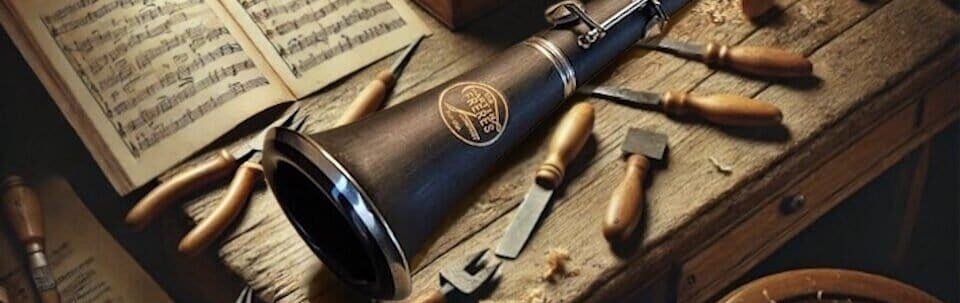
Field Note: Martin Freres archive insight Archival Martin Freres clarinets from the early 20th century show bore and keywork designs optimized for projection in dance halls and early jazz bands. Comparing these instruments with modern clarinets highlights how historical builders already prioritized cutting power, a trait that jazzcore clarinetists still seek in contemporary setups.
Researchers and players can find early clarinet jazz recordings in collections like the Smithsonian's jazz archives and the Library of Congress National Jukebox. Studying these documents alongside later avant-garde recordings provides a clear timeline from acoustic dance bands to the amplified, hybrid ensembles where jazzcore clarinet now lives.
Anatomy and setup: modifying your clarinet for jazzcore environments
Clarinet anatomy directly affects how well you survive in a jazzcore mix. The cylindrical bore and small bell focus projection into a narrow beam. This can be an advantage if you aim your sound toward a microphone, but it also means that small setup changes in mouthpiece, reed, and ligature have a big impact on power and stability.
Mouthpiece facing and tip opening are critical. A medium-open to open tip with a balanced facing curve often gives the best mix of projection and control. Larger tip openings can produce more volume and flexibility for bends and growls, but they demand stronger embouchure and more air support, especially with harder reeds.
Chamber shape also matters. A more focused chamber can help your sound cut through guitars and cymbals, while a larger chamber may give a darker, thicker tone that blends with distorted textures. Many jazzcore players prefer a focused, slightly brighter setup so that extended techniques remain clear in the mix.
Reed cut and strength are a trade-off between power and flexibility. Slightly harder reeds (for example, moving from 2.5 to 3) can add stability at high volumes and reduce unwanted squeaks when overblowing. Unfiled cuts often feel punchier, while filed reeds can offer quicker response for delicate passages between loud sections.
Many advanced clarinetists find their ideal jazzcore setup around a tip opening of 1.05-1.15 mm with reed strengths in the 2.5-3.5 range, adjusted for embouchure strength and desired resistance.
Non-destructive modifications include swapping ligatures, adding a neck strap, and experimenting with bells. A firm, evenly tightening ligature helps reeds respond predictably under heavy articulation. A neck strap or harness reduces fatigue during long, high-energy sets and stabilizes embouchure for extended techniques.
Material choice also matters on loud, hot stages. Resin clarinets can be more resistant to temperature and humidity swings than grenadilla, with less risk of cracking. Some players use metal bells or barrels to alter projection and brightness. These changes do not replace good technique, but they can make the instrument more reliable in harsh touring conditions.
Extended techniques and effects for jazzcore (growls, multiphonics, bends, wah-wah)
Extended techniques are central to clarinet in jazzcore, not just special effects. Growls, multiphonics, bends, and wah-wah articulations create textures that can compete with distortion, feedback, and aggressive drumming while still responding to harmonic movement and rhythmic cues.
Growls combine vocalization with clarinet tone. To start, play a sustained note in the middle register and hum or growl a low pitch in your throat. Adjust the sung pitch until you hear a clear distortion-like interference. Practice moving between clean tone and growl on the same note, then apply it to riffs and improvised lines.
Multiphonics produce multiple pitches at once. Begin with known fingering charts for stable multiphonics, then adapt them to your setup. Use very steady air and experiment with small embouchure adjustments. In jazzcore, multiphonics can function as chords, noise bursts, or climactic textures over drum blasts and guitar feedback.
Bends and pitch inflections help your lines feel closer to guitar and vocal phrasing. Use a combination of embouchure relaxation, voicing changes (tongue position), and half-holing with the left-hand fingers. Start with semitone bends on long notes, then integrate quick scoops and falls into fast lines or unison riffs with guitars.
Wah-wah effects use hand or bell manipulation to filter the sound. On B-flat clarinet, you can cup and open your right hand around the bell while sustaining a note, timing the motion with rhythmic subdivisions. Combined with overblowing and dynamic swells, wah-wah gestures can mimic pedal effects and interact with drum accents.
Overblowing and altissimo are also important. Practice controlled overblows on throat tones and clarion notes to access squeals and screams that match the intensity of high-gain guitars. Work with a tuner to stabilize altissimo pitches so that even your wildest sounds can land on chord tones or tension notes when needed.
A focused 10-15 minutes per day on a single extended technique can yield noticeable control gains within 2-3 weeks, especially when recorded and reviewed after each session.
To make these techniques musically effective, practice them in context: over backing tracks, with a metronome accenting odd groupings, or in duo sessions with a drummer or guitarist. The goal is to treat each effect as a flexible tool for phrasing, not a one-off trick.
Ensemble roles, improvisation strategies, and rhythmic integration
In jazzcore, clarinet can shift roles rapidly: lead melody, counterline, textural layer, or rhythmic driver. Understanding these roles helps you choose when to play dense lines, when to leave space, and how to interact with distortion-heavy ensembles without getting buried or overcrowding the mix.
As a melodic lead, focus on concise motifs that cut through. Short, rhythmically strong phrases with clear contour often work better than long bebop lines. Use register contrasts, such as jumping between low growls and high altissimo, to stay audible over guitars and cymbals while signaling structural points in the music.
In a textural role, think like a second guitarist or noise artist. Sustain multiphonics, trills, and air sounds that align with the harmonic center or create deliberate tension. Coordinate with the drummer and bassist so your textures support, rather than obscure, rhythmic hits and dynamic shifts.
Improvisation strategies should adapt to the band's harmonic language. Some jazzcore compositions use complex changes, while others rely on modes, pedal points, or free structures. Learn the underlying frameworks, then decide when to outline harmony, when to emphasize rhythm, and when to focus on timbre and density.
Rhythmic integration is important. Practice locking in with kick and snare patterns, not just the ride or hi-hat. Use odd groupings, displaced accents, and polyrhythms to interact with mathy guitar riffs. Recording rehearsals helps you identify where your lines either reinforce or fight the groove.
Communication with bandmates is as important as technique. Agree on cues for transitions, climaxes, and dropouts. Clarinet can be the instrument that signals a shift from structured sections to free improvisation, or from noise walls back to tight unison figures, simply by changing register, articulation, or texture.
Gear and amplification: mouthpieces, reeds, resin clarinets, mics and pedals
Gear choices shape how effectively your clarinet functions in a high-volume jazzcore setting. Mouthpieces and reeds determine your acoustic foundation, while microphones, amplification, and pedals translate that sound into the amplified mix without losing clarity or control.
For mouthpieces, look for models designed for projection and flexibility. A slightly more open tip with a medium-long facing often supports both traditional tone and aggressive extended techniques. Test several options with your typical reeds at band volume, not just in a quiet practice room, to hear how they respond under stress.
Reed selection should balance durability and nuance. Synthetic reeds can be attractive for touring because they handle temperature and humidity swings, but some players prefer cane for its complex response in multiphonics and subtle dynamics. Rotate at least 4-6 reeds in active use to avoid sudden failures during gigs.
Resin clarinets are worth serious consideration for jazzcore. They are less sensitive to rapid temperature changes, more resistant to cracks, and often slightly brighter, which can help projection. Many professionals keep a resin instrument as their primary touring horn or as a backup for outdoor and festival shows.
Microphone choice and placement are critical. Clip-on condensers offer mobility and consistent distance from the bell, while a stationary dynamic mic on a stand can provide better feedback resistance. Position the mic slightly off-axis from the bell, 5-15 cm away, to capture warmth without excessive key noise or wind blasts.
Pedals and effects can extend your sonic range. Common choices include reverb, delay, overdrive, octave, and loopers. Use a preamp or impedance-matching device if your mic requires it, and keep a simple, reliable signal chain. Start with subtle settings that enhance your natural sound before experimenting with more extreme processing.
Monitor placement also affects performance. Ask for a dedicated monitor mix with enough clarinet and drums so you can phrase accurately. In-ear monitors can protect hearing and improve pitch stability, but make sure you still feel connected to the room's energy and the acoustic sound of your instrument.
Practice routines and building a jazzcore clarinet vocabulary
Building a jazzcore clarinet vocabulary means combining solid fundamentals with targeted work on extended techniques, rhythmic precision, and stylistic listening. A structured routine helps you progress efficiently while staying ready for demanding rehearsals and gigs.
Start with 10-15 minutes of tone and air support work at the beginning of each session. Long tones across registers, with gradual crescendos and decrescendos, build the control needed for both clean and distorted sounds. Add slow register shifts to stabilize throat tones and altissimo, which are often exposed in jazzcore textures.
Next, devote focused blocks to specific extended techniques. For example, spend one day emphasizing growls, another on multiphonics, and another on bends and wah-wah. Use a metronome and record yourself. Aim to execute each technique at multiple dynamic levels and in several rhythmic patterns, not just as isolated effects.
Rhythmic drills are important. Practice scales, patterns, and short motifs over metronome clicks that omit beats (for example, click only on 2 and 4, or only on beat 1 of every two bars). Then, work with drum loops that reflect jazzcore grooves, such as blast beats, half-time breakdowns, and odd-meter patterns.
Transcription and imitation also matter. Transcribe short phrases from saxophonists, guitarists, and vocalists in jazzcore or related genres. Adapt their articulations and inflections to clarinet, then rework them using your extended techniques. This builds a personal language that still connects to the band's overall aesthetic.
Finally, rehearse with amplification. At least once a week, practice with your full live rig: mic, pedals, and monitor or amp. Work on feedback control, dynamic shaping, and quick adjustments to knobs or settings between tunes. This reduces surprises on stage and makes your gear feel like part of your instrument.
Maintenance steps for high-volume gigs and touring
High-volume gigs and touring put unusual stress on your clarinet. Sweat, rapid temperature changes, and frequent setup and teardown can accelerate wear. A clear maintenance plan keeps your instrument stable and responsive, even under harsh conditions and tight schedules.
Daily care starts with thorough swabbing after every session or show. Use a clean, absorbent swab that passes easily through the bore, and avoid yanking it around tight bends. Wipe the outside of the instrument with a soft cloth to remove sweat and grime, especially around keywork and tenons.
Apply cork grease sparingly to tenons every few days or whenever joints feel tight. Over-greasing attracts dirt, which can lead to leaks or stuck joints. Check that the barrel and bell fit smoothly, especially if you switch between resin and wood instruments in varying climates.
Pad care is important for reliability. After particularly sweaty or humid gigs, gently vent each pad by inserting a clean cigarette paper or pad paper under the key and lightly closing it to absorb moisture. Avoid pressing hard, which can deform pads. Watch for sticky keys, especially on low E and F, and address them before the next show.
Schedule periodic keywork checks with a qualified technician, ideally before long tours. Ask them to inspect spring tension, rod alignment, and pad seating. A small leak that might be tolerable in a quiet jazz combo can become a serious problem when you need instant response at high volume.
Reed maintenance includes rotation and storage. Keep reeds in a ventilated case and mark dates of first use. Rotate at least 4 reeds per active setup, retiring any that show chips, warping, or inconsistent response. For synthetic reeds, clean them regularly with mild soap and water, then dry thoroughly.
Do not neglect microphone and pedal maintenance. Check cables for intermittent connections, label your signal chain, and carry at least one spare cable. Clean mic grills and bodies with appropriate wipes, and store pedals in a padded case to prevent damage during transport.
Before each gig, run a quick pre-show checklist: swabbed bore, freely moving joints, no obvious pad leaks, functional reeds, working mic and cables, pedals powered and tested, and a backup reed and ligature in your pocket. This routine can prevent many onstage emergencies.
Troubleshooting common tone, intonation, and feedback problems
Jazzcore clarinetists often face three main categories of problems: weak projection or thin tone, unstable intonation under stress, and feedback or noise issues with amplification. Systematic troubleshooting helps you diagnose and fix these issues quickly, both in practice and on stage.
Weak projection may stem from reed and mouthpiece mismatch, leaks, or air support. First, try a slightly harder reed or adjust ligature placement to sit just above the vamp. If the sound still feels small, check for leaks by playing low E and F at soft dynamics. Persistent resistance or fuzziness suggests a need for pad adjustment.
Thin or nasal tone at high volume can result from over-tight embouchure or excessive mic EQ cuts. Experiment with relaxing your jaw and increasing air speed while keeping corners firm. Ask the sound engineer to reset EQ to flat, then make small adjustments, cutting only problematic frequencies rather than scooping large ranges.
Intonation drift under stage conditions often occurs when you overblow or clamp down in loud sections. Practice playing with a tuner while simulating gig dynamics, including growls and multiphonics. Mark barrel pull positions for different environments, and check tuning after soundcheck, not just in a quiet green room.
Feedback issues usually involve mic placement, gain staging, or monitor position. If you hear ringing or howling, first step slightly off-axis from your monitor and angle the bell away from speakers. Lower preamp gain and increase master volume if possible, and reduce reverb or delay, which can feed back more easily.
Pedal noise or signal loss can come from bad cables or power supplies. Swap cables one at a time to find the culprit. Use isolated power supplies for pedals to reduce hum. Keep your signal chain as short as practical, avoiding unnecessary devices that add noise without clear musical benefit.
On a gig, quick fixes matter. If you suddenly squeak or lose control, immediately check reed alignment and moisture. If a reed fails mid-set, switch to your backup without hesitation. For persistent problems across multiple shows, schedule a full instrument check and re-evaluate your setup and practice routine.
Listening list, archives, and pioneers to study
Studying clarinet in jazzcore means listening across eras: early jazz, avant-garde, free improvisation, and contemporary cross-genre projects. Each stage offers models for projection, timbre, and ensemble interaction that translate directly to modern high-energy settings.
Start with early clarinetists like Sidney Bechet and Johnny Dodds on 1920s recordings with Louis Armstrong and King Oliver. Their cutting tone and assertive phrasing show how clarinet can lead a band acoustically. Benny Goodman's swing recordings from the 1930s and 1940s demonstrate clarity, articulation, and dynamic control in large ensembles.
Move to mid-century innovators such as Jimmy Giuffre, whose albums “Fusion” (1961) and “Free Fall” (1962) explore chamber-like textures and free forms, and Tony Scott, who bridged bebop and modal approaches. John Carter's 1980s works, including the “Roots and Folklore: Episodes in the Development of American Folk Music” series, show extended timbral exploration within structured compositions.
For avant-garde and free jazz contexts, listen to Perry Robinson, Don Byron, and European improvisers who brought clarinet into high-intensity settings. Their use of multiphonics, overblowing, and extreme dynamics anticipates many jazzcore techniques, even when the surrounding instrumentation differs.
Contemporary players like Ben Goldberg and others in experimental scenes offer direct models for clarinet in amplified bands. Seek out recordings where clarinet interacts with electric guitars, effects, and aggressive drums, paying attention to how players balance traditional tone with noise-based vocabulary.
Archives such as the Smithsonian Institution and the Library of Congress hold early jazz recordings and documents that contextualize clarinet's role in ensemble evolution. Major label discographies from labels like Blue Note, ECM, and Impulse include important clarinet-led or clarinet-featured sessions that bridge mainstream and avant-garde traditions.
Complement listening with scores and lead sheets. Analyze how clarinet parts are written in mixed ensembles, noting register choices, articulation markings, and dynamic contours. Then adapt those ideas to your own jazzcore projects, adjusting for distortion levels, drum density, and the specific personalities in your band.
Key takeaways
Clarinet in jazzcore relies on strong acoustic fundamentals plus extended techniques like growls, multiphonics, bends, and wah-wah, all integrated into real ensemble roles.
Gear choices, including mouthpiece, reed strength, possible resin clarinet, and a reliable mic and pedal setup, are important for projection and stability in loud, distortion-heavy bands.
Consistent maintenance, targeted practice routines, and deep listening across jazz history and contemporary experimental scenes help clarinetists thrive in high-volume jazzcore environments.
FAQ
What is clarinet in jazzcore?
Clarinet in jazzcore is the use of clarinet in bands that mix jazz harmony and improvisation with punk, hardcore, and noise intensity. The instrument serves as a cutting melodic lead, textural noise source, and ensemble color, using extended techniques and amplification to stay audible over distorted guitars and aggressive drums.
How can I make my clarinet heard in a loud jazzcore band?
Combine a projecting mouthpiece and appropriate reed strength with focused air support and a reliable microphone setup. Use a clip-on or close dynamic mic placed slightly off-axis from the bell, manage gain to avoid feedback, and practice playing at performance volume so your tone, intonation, and extended techniques stay controlled.
Which extended clarinet techniques are most effective in jazzcore?
Growls, multiphonics, bends, wah-wah effects, and controlled overblowing are especially effective. Growls and overblows mimic distortion, multiphonics create dense textures, bends connect to guitar and vocal phrasing, and wah-wah articulations add rhythmic color. Practice each technique with a metronome and in ensemble contexts to make them musically useful.
Is a resin clarinet better for jazzcore performances?
Resin clarinets are often more stable for jazzcore because they handle temperature and humidity changes better and resist cracking. They can be slightly brighter, which helps projection in loud mixes. Many players use resin instruments for touring or outdoor gigs, while some keep a wood clarinet for studio or lower-risk settings.
What maintenance steps are important for clarinetists gigging in high-volume genres?
Important steps include daily swabbing, regular cork greasing, careful pad drying after humid gigs, and periodic keywork checks by a technician. Maintain a reed rotation system, inspect your mic and cables, and use a pre-gig checklist to confirm instrument, reeds, and signal chain are all functioning before you go on stage.
Where can I find recordings and scores to study clarinet in jazzcore?
Start with early jazz and swing clarinet recordings from archives like the Smithsonian and Library of Congress, then move to avant-garde and free jazz clarinetists such as Jimmy Giuffre and John Carter. Seek out contemporary experimental and cross-genre projects featuring clarinet with electric instruments, and study available scores or lead sheets to understand how parts are written.