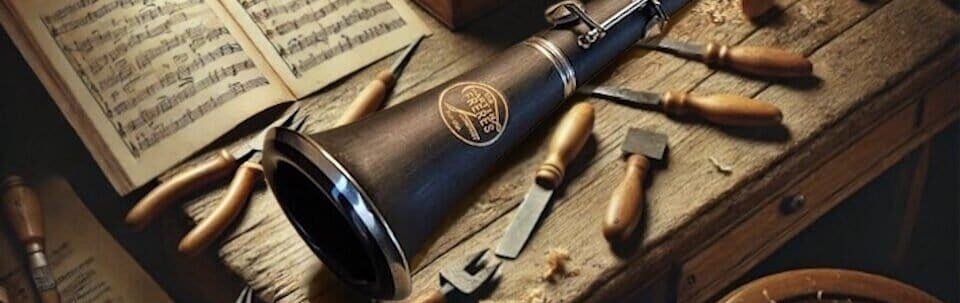
The clarinet in hard bop functions as a contrasting melodic voice that blends bebop agility with bluesy phrasing, used for distinctive solos and ensemble color on select recordings by players such as Buddy DeFranco and Don Byron. Its focused tone and flexibility let it cut through dense rhythm sections while still sounding warm and vocal.
The Clarinet in Hard Bop: A Focused Overview
Clarinet in hard bop occupies a niche but powerful role: it delivers bebop-level agility with a more vocal, piercing color than the tenor saxophone or trumpet. While not a standard frontline horn in the 1950s, it appears on key recordings where leaders wanted contrast, clarity in fast lines, and a link to swing-era timbres inside a modern harmonic language.
For advanced clarinetists, hard bop offers a laboratory for rhythmic sophistication, blues depth, and dynamic control. The style demands strong time, clear articulation at high tempos, and a tone that can project over drums and piano without sounding shrill. Understanding how a few specialists adapted the instrument to this idiom helps you build a convincing personal approach.
Historical Context: How the Clarinet Migrated from Swing/Bebop into Hard Bop
Hard bop grew from bebop and swing between roughly 1954 and 1965, with artists like Art Blakey, Horace Silver, and Clifford Brown. Clarinet had been central in swing through Benny Goodman and Artie Shaw, then partially sidelined in bebop as alto and tenor saxophones became the main voices for Charlie Parker and Dexter Gordon.
As hard bop absorbed blues, gospel, and R&B influences, the clarinet's role shifted from bandleader instrument to coloristic or specialist voice. The instrument's lighter projection and technical demands made it less common in loud, drum-forward small groups, but a handful of players carried bebop clarinet language into this new context and recorded in clearly hard bop environments.
Buddy DeFranco bridged swing, bebop, and early hard bop. His 1950s sessions for labels like Verve and Norgran show a bebop vocabulary that anticipates hard bop phrasing, especially on blues and rhythm changes. By the late 1950s, clarinet appeared occasionally in modernist settings, foreshadowing later hard bop revival and post-bop projects where the instrument re-entered the conversation.
Socio-cultural currents also shaped the clarinet's path. Hard bop emphasized African American roots, church-inflected harmony, and street-level energy. Tenor saxophone and trumpet symbolized this new sound in the public imagination. Clarinetists who stayed in the idiom often did so by aligning with small labels, European tours, or later revival projects, rather than the central Blue Note and Prestige catalogs.
Notable Clarinetists and Key Recordings (with Discography Highlights)
Because clarinet in hard bop is relatively rare, a focused discography is important. Rather than searching broadly, it helps to track specific players and sessions where the style, repertoire, and rhythm sections clearly align with hard bop aesthetics, even if the label categories vary.
Buddy DeFranco: Bebop-to-Hard-Bop Bridge
Buddy DeFranco is the most important clarinetist connecting bebop to hard bop. His tone is compact and focused, with crisp articulation and long bebop lines. While many of his recordings are labeled simply as modern jazz, several have the harmonic language, blues content, and rhythm section feel associated with early hard bop.
Key albums to study include “Cooking the Blues” (recorded 1955), where the repertoire and rhythm section reflect a harder swinging, blues-based approach. His work with Sonny Clark and Tal Farlow also shows how clarinet can ride over a driving rhythm section with a distinctly modern language while retaining clarity at fast tempos.
Don Byron and Later Hard Bop Influences
Don Byron, active from the late 1980s onward, often operates in postmodern and avant contexts, but his playing shows deep hard bop fluency. On projects where he revisits the music of Duke Ellington, Raymond Scott, or Mickey Katz, his improvising language frequently draws from hard bop phrasing and rhythmic placement, especially in blues-based tunes.
Listen for Byron's use of scoops, ghosted notes, and wide dynamic contrasts that echo the intensity of players like Jackie McLean or Lee Morgan. While some of these recordings sit outside strict 1950s hard bop, they demonstrate how clarinet can carry that vocabulary into new settings without losing stylistic authenticity.
Other Modern Clarinetists in Hard Bop Contexts
Several clarinetists have recorded in hard bop or hard-bop-adjacent settings, often doubling on saxophone. Eddie Daniels, known for both classical and jazz, has performed bebop and hard bop repertoire with a bright, projecting sound. Ken Peplowski, though often associated with swing, occasionally ventures into more modern harmonic territory with hard bop phrasing.
European players such as Gianluigi Trovesi and Louis Sclavis also incorporate hard bop language within broader avant-garde frameworks. For hard bop students, the key is to identify tracks where the rhythm section, repertoire, and phrasing clearly reflect the hard bop tradition, even if the album as a whole spans multiple styles.
Clarinet Tone and Instrument Anatomy Relevant to Hard Bop
Hard bop clarinet tone must balance projection, warmth, and flexibility. The instrument's anatomy plays a direct role: bore size, mouthpiece design, reed strength, and ligature all shape how your sound cuts through a rhythm section. Understanding these components helps you make deliberate choices instead of copying saxophone setups or classical norms.
Bore Size, Barrel, and Projection
The clarinet's cylindrical bore, especially in the upper joint, affects resistance and core. Many jazz players prefer slightly larger bores or barrels that open the sound. A slightly shorter or more open barrel can brighten the tone and improve upper-register projection, useful when competing with drums and piano in a hard bop group.
Visualize the bore as a straight tube where small variations in diameter change how air pressure and harmonics behave. A more open feel often encourages a freer, more vocal sound, but too little resistance can make fast articulation and pitch control harder. Aim for a setup that lets you play fortissimo without thinning out in the altissimo.
Mouthpiece Tip Opening and Facing
Mouthpiece design is central to hard bop tone. Jazz clarinetists often choose a slightly more open tip and longer facing than classical players. This combination allows a wider dynamic range, more flexible pitch shading, and easier growls or bends, all of which support blues-inflected hard bop phrasing.
As a general range, tip openings around 1.05 to 1.15 mm with a medium-long facing work well for many players. Pairing this with a medium-strength reed gives enough resistance for control but still responds quickly for fast bebop lines and accented offbeats.
Reeds, Ligature, and Response
For hard bop, reed choice affects articulation clarity and altissimo reliability. Many players use reed strengths between 2.5 and 3.0, sometimes filed cuts for quicker response. A reed that is too hard can choke fast lines; too soft and the sound spreads and intonation suffers at high volume.
Ligatures influence attack and focus. Metal ligatures often give a brighter, more immediate response, while fabric or leather can darken the sound slightly. In a hard bop context, prioritize even response across registers and clean articulation over marginal color differences. Test ligatures by playing rapid eighth-note lines at forte in the clarion and altissimo.
Keywork, Pads, and Mechanism Stability
Hard bop tempos and articulation patterns expose any mechanical weakness. Key heights, spring tension, and pad seating all affect how reliably the clarinet speaks in fast passages. Slightly higher key heights can increase volume and resonance but require precise finger control to avoid noise and leaks.
Work with a technician to ensure that the bridge key, throat A, and side keys seal perfectly, since these are heavily used in bebop patterns. Stable mechanism and consistent feel across the instrument let you focus on phrasing instead of fighting mechanical resistance.
Technique, Phrasing, and Dynamics for Playing Hard Bop
Hard bop clarinet technique builds on bebop fundamentals but adds stronger blues inflection, more aggressive dynamics, and deeper rhythmic placement. You need clean finger technique, flexible articulation, and a concept of line that emphasizes direction and shape, not just speed.
Articulation: From Light Bebop to Hard Bop Punch
In hard bop, articulation often feels more percussive than in swing. Use a mix of legato tonguing, ghosted notes, and accented upbeats to create forward motion. Practice tonguing only every second or third note in a line so the phrase breathes, rather than staccato on every pitch.
At faster tempos, many players use a very light tongue stroke, almost like brushing the reed. Combine this with air-driven accents so the sound stays full. Work on alternating slurred and lightly tongued eighth-note lines over ii-V-I progressions in all keys to build control.
Rhythmic Placement and Triplet Feel
Hard bop phrasing often leans slightly behind or on top of the beat, depending on the tune and drummer. Study recordings of Art Blakey's Jazz Messengers and Horace Silver groups to internalize the triplet-based swing feel that underlies the eighth notes. Even on clarinet, your lines should lock with the ride cymbal pattern.
Practice playing simple motifs (like a 3-note cell) across the bar line, shifting accents to different parts of the measure. Use a metronome on beats 2 and 4 and record yourself to hear whether your eighth notes flow or feel stiff. Aim for a relaxed, conversational time feel even at high tempos.
Blues Language, Bends, and Inflection
Hard bop clarinet must sound comfortable with blues vocabulary. Incorporate blue notes, pentatonic shapes, and call-and-response phrases into your solos. Use subtle pitch bends on approach notes, especially on the third and seventh degrees of the scale, to echo vocal and saxophone inflection.
Clarinet allows micro-bends through embouchure and voicing changes. Practice bending notes down a quarter-tone and returning to pitch without losing tone quality. Use these bends sparingly in performance to highlight emotional peaks or to answer phrases from trumpet or saxophone.
Dynamic Range and Emotional Arc
Hard bop solos often trace a clear emotional arc, from conversational openings to intense climaxes. On clarinet, this means controlling dynamics from a hushed, airy piano to a focused, projecting fortissimo. Avoid the temptation to stay at one dynamic level just to be heard over the band.
Design practice solos where you intentionally start at mezzo-piano and build over several choruses. Use register shifts, rhythmic density, and harmonic tension to support the dynamic rise. Record and listen back to check whether the arc feels organic or sudden.
Ensemble Roles: Solos, Voicings, and Interaction with the Rhythm Section
Clarinet in a hard bop ensemble usually functions as a featured color or solo voice rather than a standard frontline partner. Understanding how to blend, contrast, and interact with rhythm section players like the drummer and pianist helps you sound integrated rather than isolated in the texture.
Solo Voice and Contrast with Saxophone or Trumpet
When paired with trumpet or saxophone, clarinet often takes the role of contrasting voice. Its timbre cuts through with a more nasal, vocal quality. Use this to your advantage by choosing register and articulation that complement, rather than duplicate, the other horns' lines.
In head arrangements, try playing the melody an octave above or below the main horn, or adding simple counterlines on repeats. During solos, listen for spaces in the other players' phrasing and respond with short, conversational ideas before launching into longer lines.
Working with the Rhythm Section
Hard bop rhythm sections, especially those influenced by Art Blakey or Max Roach, are interactive and assertive. As a clarinetist, you need to lock into the ride cymbal and hi-hat patterns while also responding to comping from piano or guitar. Strong time and clear rhythmic ideas help you stay grounded.
In rehearsal, ask the drummer to play just ride and hi-hat while you practice soloing. Focus on matching the cymbal's swing feel. Then add bass and piano, listening for how your phrases sit within the harmonic rhythm. Communicate about dynamics and shout-chorus ideas to avoid cluttered textures.
Voicings, Unisons, and Background Figures
Clarinet can be very effective in background roles, playing riffs behind solos or filling in ensemble hits. Its clarity makes it ideal for tight unisons or thirds with trumpet or alto sax. Use the clarion register for most background figures to avoid getting lost below the trombone or tenor range.
When writing or arranging, keep clarinet background lines rhythmically simple but with strong accents that match the drummer's figures. Avoid overly complex lines that compete with the soloist. Think of your role as adding rhythmic and harmonic punctuation to the overall groove.
Repertoire, Transcriptions, and Practice Strategies
Because there are relatively few classic hard bop clarinet recordings, you will likely transcribe saxophone and trumpet solos as well. The goal is not to imitate their sound, but to internalize the language and then translate it idiomatically to clarinet, adjusting for range and articulation.
Core Hard Bop Repertoire for Clarinetists
Start with standard hard bop tunes that sit well on clarinet: “Moanin'” (Bobby Timmons), “Doxy” (Sonny Rollins), “Joy Spring” (Clifford Brown), and “Nica's Dream” (Horace Silver). These tunes combine strong melodies, clear harmonic structures, and blues or Latin influences that suit clarinet phrasing.
Also include blues in F and B-flat, rhythm changes in B-flat, and minor-key standards like “Minority” or “Along Came Betty.” Practice playing heads in multiple octaves and experimenting with ornamentation, such as turns, grace notes, and small fills between phrases.
Transcription Targets and Methods
For clarinet-specific models, transcribe Buddy DeFranco solos on blues and rhythm changes, focusing on how he navigates ii-V-I chains and extended chord tones. For broader hard bop language, transcribe solos by Clifford Brown, Hank Mobley, and Cannonball Adderley, then adapt them to clarinet range.
Work phrase by phrase, singing each line before playing it. Write out fingerings for tricky passages and experiment with alternate fingerings in the altissimo. Once you can play a solo comfortably, improvise new lines using the same rhythmic shapes and contour, but different notes.
Structured Practice Strategies
Organize your practice into three main blocks: tone and articulation, language and vocabulary, and repertoire integration. Spend 20-30 minutes daily on long tones, register shifts, and articulation patterns at multiple dynamics. Then devote time to learning and reworking 2-4 bar hard bop phrases in all keys.
Finally, practice improvising over backing tracks or with a metronome on 2 and 4. Set short-term goals, such as learning one new chorus of transcribed material each week, and medium-term goals, like performing a full hard bop set with a rhythm section within 6-12 months.
Maintenance and Setup Tips to Achieve a Hard Bop Sound
A reliable, responsive instrument is important for hard bop playing. Fast tempos, wide dynamics, and frequent altissimo use will expose any weakness in your setup or maintenance routine. A clear checklist helps keep your clarinet ready for demanding rehearsals and gigs.
Daily Reed and Mouthpiece Care
Rotate at least 4-6 reeds, marking dates and conditions. Before playing, soak reeds briefly in water or your mouth, then test for response and stability. After each session, wipe the mouthpiece interior, remove the reed, and store it flat in a ventilated reed case to prevent warping.
Inspect the tip and rails of your mouthpiece weekly for chips or buildup. Even small imperfections can cause squeaks during fast lines. Use a soft brush and lukewarm water to clean, avoiding harsh chemicals that might damage the facing.
Body, Pads, and Keywork Maintenance
Swab the bore thoroughly after each session, including the upper joint where condensation collects. Use a separate small cloth to gently wipe keys and remove sweat or oils. Check pads visually for discoloration or fraying, especially under frequently used keys like throat tones and side keys.
Apply cork grease sparingly to tenon corks every few days of playing to maintain a snug but not tight fit. Over-greasing can attract dust and grit, which may lead to leaks or binding joints, especially problematic when assembling quickly at gigs.
Professional Service Schedule for Gigging Players
If you are gigging regularly with hard bop groups, plan a professional checkup every 6 months, with a more thorough overhaul every 18-24 months. Ask your technician to focus on regulation, spring tension, and pad seating, since these directly affect fast articulation and even response.
Between visits, keep a simple toolkit: cigarette paper or feeler paper, a small screwdriver, and a flashlight. Use paper to test for leaks under suspect pads and only adjust screws if you are confident, otherwise note issues for your technician.
Troubleshooting Common Sound and Technical Issues
Hard bop contexts reveal specific clarinet problems: thin tone at high energy, intonation challenges with amplified instruments, and squeaks during rapid bebop lines. A targeted troubleshooting approach helps you diagnose and fix issues systematically rather than guessing mid-gig.
Thin Tone at Forte or in Altissimo
If your sound thins out when playing loud or in the altissimo, first check your air support and voicing. Use a more open oral cavity and steady, warm air, thinking of blowing through the instrument rather than at it. Avoid biting, which pinches the reed and kills resonance.
Equipment-wise, consider a slightly softer reed or a mouthpiece with a more open tip and longer facing. Test long tones at forte in the clarion and altissimo, recording yourself to hear whether adjustments improve core and stability.
Intonation with Amplified or Loud Rhythm Sections
Playing with amplified piano, guitar, or electric bass can make pitch perception difficult. Use a tuner in rehearsal to map your clarinet's tendencies in all registers, then practice against drones to internalize pitch centers. Slightly raising or lowering the barrel can help global intonation, but most work happens through voicing.
During gigs, trust your internal pitch more than stage sound when monitors are loud. Communicate with the sound engineer about monitor levels so you can hear your acoustic tone clearly enough to adjust in real time.
Squeaks and Response Problems in Fast Lines
Squeaks in bebop passages often come from finger coordination issues or small leaks rather than embouchure alone. Practice slow motion finger drills, focusing on keeping fingers close to the keys and minimizing unnecessary motion. Use rhythmic grouping exercises to build evenness.
If squeaks persist, check for loose or misaligned keys, especially in the upper joint. Test alternate fingerings for problematic notes in the altissimo and mark the ones that speak most reliably at speed. A quick visit to a technician may reveal a minor leak that only shows up under fast, high-pressure playing.
Archive and Data Points: Liner Notes, Session Dates, and Reference Sources
Because clarinet in hard bop is under-documented, primary sources like liner notes, reviews, and oral histories are especially valuable. They help confirm personnel, session dates, and stylistic context, and often include comments from the musicians about sound and repertoire choices.
Look for original LP or CD reissue liner notes from labels such as Verve, Norgran, and smaller European imprints that recorded modern clarinetists. These often mention why clarinet was chosen for a session and how the producer envisioned its role in the ensemble.
Contemporary reviews in publications like DownBeat can also shed light on how clarinetists were perceived in the hard bop era. Some reviews comment directly on tone, projection, and modernity of language, which helps you understand how audiences heard these experiments at the time.
Institutional archives, including the Library of Congress and Smithsonian Jazz Oral History Program, house interviews where players discuss equipment, influences, and stylistic shifts. When possible, cross-check discographies with these oral histories to verify dates and personnel for sessions featuring clarinet in hard bop contexts.
Player Outcomes: What Clarinetists Gain from Studying Hard Bop
Studying clarinet in hard bop yields concrete musical benefits beyond stylistic knowledge. The demands of the style sharpen your technique, deepen your rhythmic feel, and expand your expressive palette. Over time, these gains translate into broader performance and teaching opportunities.
Within 6-12 months of focused hard bop study, many clarinetists notice stronger time feel, more confident altissimo, and clearer articulation at higher tempos. Regular transcription and repertoire work also improve ear training and harmonic awareness, which carry over to other jazz styles and classical playing.
Qualitatively, hard bop immersion cultivates a more personal, emotionally direct approach to improvisation. You learn to shape solos with narrative arcs, use dynamics intentionally, and interact more deeply with rhythm sections. These skills make you a more compelling collaborator in small groups and big bands.
For educators, understanding clarinet in hard bop fills a gap in curriculum and offers students a path beyond swing-era models. You can design units around specific recordings, transcriptions, and tone concepts, helping students see the clarinet as a viable modern jazz voice, not just a historical one.
Key Takeaways
- Clarinet in hard bop is rare but powerful, offering a contrasting melodic voice with bebop agility and bluesy inflection.
- Equipment choices, especially mouthpiece, reed, and bore characteristics, directly shape your ability to project and phrase in a hard bop context.
- Focused work on articulation, rhythmic placement, and blues language over 6-12 months can transform your improvisational fluency and ensemble impact.
- A clear maintenance and troubleshooting routine keeps your clarinet reliable at hard bop tempos and dynamic extremes.
Frequently Asked Questions
What is clarinet in hard bop?
Clarinet in hard bop refers to the use of the clarinet as a solo or ensemble voice within the hard bop jazz style that flourished from roughly 1955 to 1965. It combines bebop-level technical fluency with blues, gospel, and R&B influences, using clarinet's focused tone for distinctive solos and ensemble color.
Which clarinetists are most associated with hard bop recordings?
Buddy DeFranco is the key bridge figure, bringing bebop clarinet language into early hard bop contexts. Later, Don Byron and players like Eddie Daniels and Ken Peplowski have recorded in hard-bop-influenced settings, adapting the vocabulary to clarinet even when the albums are marketed under broader modern jazz or post-bop labels.
How should I set up my clarinet to achieve a hard bop tone?
Use a mouthpiece with a slightly more open tip (around 1.05-1.15 mm) and medium-long facing, paired with reeds in the 2.5-3.0 range. Aim for a setup that allows strong projection and flexible pitch shading without sacrificing control. Ensure your instrument is well regulated so fast articulation and altissimo speak cleanly.
What practice exercises help translate bebop language to clarinet for hard bop solos?
Practice ii-V-I lines in all keys, focusing on eighth-note flow and clear articulation. Transcribe short phrases from bebop and hard bop solos, then move them through the circle of fourths. Work with a metronome on beats 2 and 4, and practice connecting 2-4 bar phrases into longer, coherent choruses over standard progressions.
Where can I find transcriptions and recordings of clarinet in hard bop?
Start with recordings by Buddy DeFranco on blues and rhythm changes, and selected modern projects by Don Byron and Eddie Daniels that feature hard bop repertoire. Many transcriptions circulate in jazz education books and online communities; search specifically for bebop and hard bop clarinet solos, then supplement with saxophone and trumpet transcriptions adapted to clarinet.
How often should I service my clarinet if I'm gigging with hard bop groups?
If you gig regularly, plan a professional checkup every 6 months and a more comprehensive overhaul every 18-24 months. Between visits, maintain a daily routine of swabbing, reed rotation, and visual pad checks, and address any response or intonation issues promptly before they affect your reliability on fast, demanding hard bop sets.
Related Posts: