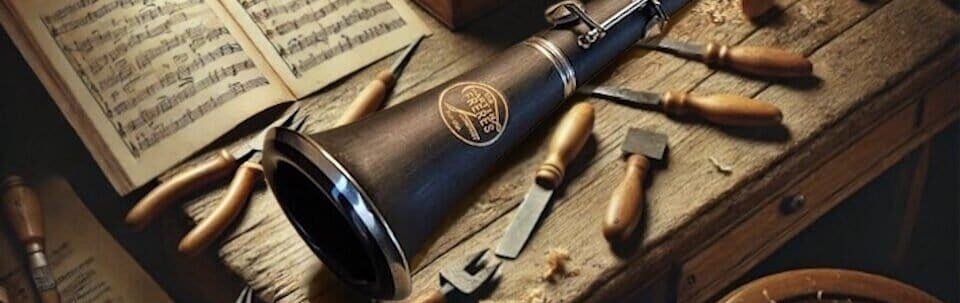
20th century clarinet music spans classical modernism, jazz, and avant-garde styles. Key moments include the rise of jazz with Benny Goodman, landmark works like Aaron Copland's Clarinet Concerto (1948), and composers such as Igor Stravinsky and Copland expanding clarinet technique with extended techniques like flutter-tonguing, microtones, and improvisation-based writing.
Evolution of the Clarinet: From Chalumeau to Modern Instrument
The story of 20th century clarinet music begins long before 1900. The clarinet evolved from single-reed folk pipes and the Baroque chalumeau into a fully chromatic orchestral instrument. Each design step, from Johann Christoph Denner's work in Nuremberg to the Boehm-system revolution, shaped how composers from Bach to Copland wrote for the instrument.
Early chalumeaux in the late 17th and early 18th centuries used a cylindrical bore, a single reed, and few keys. Their warm low register inspired composers like Antonio Vivaldi and Christoph Graupner. When Denner added a register key around 1700, the instrument gained a new upper register and the name “clarinet” from its trumpet-like clarity.
By the mid 18th century, makers in cities like Paris, Dresden, and Vienna expanded the keywork to five and then six keys. This allowed more reliable chromatic playing and encouraged composers such as Wolfgang Amadeus Mozart to explore lyrical writing in multiple registers, culminating in the Clarinet Concerto in A major, K. 622 (1791).
During the 19th century, key systems multiplied. The Müller 13-key clarinet, introduced around 1812, and later the Boehm-system clarinet (adapted from flute designs by Hyacinthe Klosé and Louis-Auguste Buffet in 1839) offered smoother fingerings and more even tone. This technical progress supported the virtuosic Romantic works of Carl Maria von Weber and Johannes Brahms.
By 1900, the modern clarinet had a sophisticated key mechanism, metal needle springs, and standardized pitch around A = 440 Hz in many orchestras. This stable platform allowed 20th century composers like Igor Stravinsky, Arnold Schoenberg, and Aaron Copland to push range, dynamics, and articulation far beyond what chalumeau-era players could imagine.
Clarinet Repertoire by Era: Baroque, Classical, Romantic, and Beyond
Understanding 20th century clarinet music is easier when you see how earlier eras shaped style and technique. Each period brought new repertoire demands, from Baroque coloristic writing to Romantic lyricism, setting the stage for jazz and modernism in the 1900s.
Baroque clarinet and chalumeau parts, such as Johann Sebastian Bach's use of clarino trumpets and early reeds in the “Brandenburg” Concertos, emphasize color and doubling. While Bach did not write solo clarinet concertos, his “Brandenburg Concerto No. 2 in F major, BWV 1047” (1721) shows how high, bright timbres inspired later clarinet brilliance.
Classical era repertoire, especially Mozart's Clarinet Concerto in A major, K. 622 (1791) and Clarinet Quintet in A major, K. 581 (1789), defines legato phrasing, balanced articulation, and clear classical form. These works, originally for basset clarinet, still guide modern players' approach to line, breath, and tonal focus.
Romantic composers expanded the clarinet's expressive range. Weber's Clarinet Concerto No. 1 in F minor, Op. 73 (1811) and Concerto No. 2 in E flat major, Op. 74 (1811) demand agility, wide leaps, and dramatic contrasts. Brahms's Clarinet Quintet in B minor, Op. 115 (1891) and Clarinet Sonatas, Op. 120 (1894) explore dark timbres and long, arching phrases.
By the late 19th century, composers like Pyotr Ilyich Tchaikovsky and Richard Strauss used clarinet as a key orchestral voice. This orchestral prominence prepared audiences for the soloistic and coloristic roles the clarinet would play in 20th century works by Stravinsky, Copland, and jazz bandleaders such as Benny Goodman and Artie Shaw.
Beyond the Romantic era, the clarinet entered new territories: Impressionism with Claude Debussy, expressionism with Schoenberg, and folk-inflected modernism with Béla Bartók. These styles directly influenced how 20th century clarinetists shaped tone, vibrato choices, and articulation in both concert halls and jazz clubs.
The Clarinet in the 20th Century: Jazz, Classical Modernism, and Avant-Garde
20th century clarinet music sits at the crossroads of jazz, classical modernism, and avant-garde experimentation. Clarinetists had to master swing phrasing, atonal lines, and extended techniques, often within the same career. This era transformed the instrument from a primarily orchestral voice into a symbol of stylistic versatility.
In early jazz and swing, the clarinet was a star. New Orleans and Chicago players like Johnny Dodds and Jimmie Noone shaped the instrument's role in small ensembles. By the 1930s, Benny Goodman and Artie Shaw led big bands where clarinet took center stage, with improvisation, glissandi, and expressive vibrato defining the sound of American popular music.
Classical modernism drew on this new sonic world while also reacting to late Romanticism. Stravinsky's “The Soldier's Tale” (1918) and “Three Pieces for Clarinet Solo” (1919) explore rhythmic complexity and coloristic effects. Schoenberg's “Pierrot Lunaire” (1912) and later chamber works use clarinet for sharp contrasts and expressionist intensity.
Mid-century composers like Copland, Paul Hindemith, and Olivier Messiaen wrote clarinet parts that demand wide dynamic range, precise rhythm, and control across the full compass. Copland's Clarinet Concerto (1948), written for Benny Goodman, merges jazz-inflected rhythms with classical form, including a cadenza that links two contrasting movements.
Avant-garde and post-war experimental music pushed clarinet technique further. Composers such as Luciano Berio, Pierre Boulez, and Karlheinz Stockhausen explored multiphonics, microtones, slap tonguing, and extreme dynamics. Their works, including Berio's “Sequenza IXa” (1980), require a scientific understanding of the instrument's acoustics and a flexible embouchure.
By the late 20th century, clarinetists were expected to move fluently between orchestral repertoire, chamber music, jazz, klezmer, and contemporary experimental works. This stylistic breadth is a defining feature of 20th century clarinet music and remains a core expectation for serious players today.
Key Works, Composers and Dates to Know (with Recommended Recordings)
Serious students of 20th century clarinet music should anchor their study around a core set of works and recordings. These pieces map the stylistic terrain from early modernism and jazz to late-century avant-garde, and they provide concrete models of tone, phrasing, and technique.
Early 20th century and modernism (1900-1930)
Important early modernist works include Stravinsky's “Three Pieces for Clarinet Solo” (1919), which explore character and rhythm without piano. Recommended recordings include performances by Sabine Meyer and Charles Neidich, both of whom highlight the music's dry wit and sharp articulation.
Another landmark is Claude Debussy's “Première Rhapsodie” (1909-1910), written for the Paris Conservatoire. Listen to recordings by Jacques Lancelot or Martin Fröst to study French-school tone, flexible rubato, and nuanced color changes. These interpretations show how Impressionist style differs from later neoclassical clarity.
Mid-century concert works (1930-1960)
Copland's Clarinet Concerto (1948) is central to 20th century clarinet repertoire. Benny Goodman's own recording with Copland conducting is historically important, while more recent versions by Sharon Kam or Richard Stoltzman offer modern perspectives on jazz-inflected phrasing and cadenza freedom.
Other key works include Paul Hindemith's Clarinet Sonata (1939), which blends neoclassical form with expressive lines, and Messiaen's “Quartet for the End of Time” (1941). The clarinet movement “Abîme des oiseaux” demands extreme control of soft dynamics and long phrases. Recordings by Karl Leister and Jörg Widmann are particularly instructive.
Jazz and swing clarinet (1920-1950)
For jazz, foundational recordings include Benny Goodman's 1938 Carnegie Hall concert, which showcases both big band and small group playing. Artie Shaw's “Begin the Beguine” (1938) and Sidney Bechet's soprano sax and clarinet work offer contrasting approaches to vibrato and phrasing.
Study Goodman's “Sing, Sing, Sing” and early New Orleans recordings by Johnny Dodds to hear how articulation, note length, and timing differ from classical style. Transcribing short solos from these recordings is one of the fastest ways to internalize 20th century jazz clarinet language.
Late 20th century and avant-garde (1960-2000)
Berio's “Sequenza IXa” (1980) is a cornerstone of extended-technique repertoire. Recordings by Alain Damiens or Ernesto Molinari demonstrate multiphonics, microtones, and rapid timbral shifts. These versions are valuable references for fingerings and pacing.
Other significant works include Boulez's “Domaines” (1968), Stockhausen's “In Freundschaft” (1977), and Elliott Carter's Clarinet Concerto (1996). Each piece demands precise rhythm and advanced control of color. Listening to multiple recordings helps you understand interpretive possibilities in complex scores.
Performance Techniques and Interpretive Practice: Legato, Staccato, Phrasing, and Extended Techniques
20th century clarinet music requires flexible technique that can adapt to Mozart, Goodman, and Berio in the same week. Mastery of legato, staccato, phrasing, and extended techniques is not optional. Each style demands specific exercises and listening habits to sound authentic and controlled.
For classical legato, practice slow scales and arpeggios with a tuner, focusing on even tone and smooth finger motion. Use long-tone intervals across the break, such as low F to throat A, to stabilize response. Listening to Karl Leister or Harold Wright helps refine ideas about line and breath pacing.
Staccato in early 20th century French and German repertoire should be light and resonant, not pecky. Practice dotted rhythms and repeated notes at mezzo-forte, then gradually shorten note length while maintaining core sound. For jazz, staccato often becomes a mix of tongued and ghosted notes, with more variation in length and accent.
Phrasing in modern works like Copland and Hindemith often follows harmonic and rhythmic tension rather than simple 4-bar units. Mark phrase goals in your score, then sing lines away from the clarinet. This helps you avoid mechanical playing in asymmetrical phrases and mixed meters.
Extended techniques such as flutter-tonguing, slap tongue, and multiphonics are central to late 20th century repertoire. For flutter-tongue, start on mid-register notes at mezzo-forte, using either tongue roll or uvular flutter, and keep air fast. For slap tongue, begin on low notes with a relaxed embouchure, focusing on clean release rather than volume.
Multiphonics require systematic experimentation. Use published fingering charts as a starting point, then adjust embouchure pressure and voicing. Record yourself to track which combinations are reliable. Many 20th century scores, including Berio and Stockhausen, expect you to refine or even invent fingerings that work on your specific instrument.
Historical Performance Practices: Sources, Ornamentation and Instrument Change
Historically informed performance helps clarify how 20th century clarinet music differs from earlier styles. Understanding Baroque and Classical practices, as documented by treatises from Johann Joachim Quantz, Leopold Mozart, and later clarinet-specific authors, informs articulation, ornamentation, and vibrato choices.
For Baroque and early Classical repertoire, sources suggest a lighter, more speech-like articulation and sparing use of vibrato. Ornaments such as trills, mordents, and appoggiaturas should reflect local practice in cities like Vienna or Paris. Studying period-instrument recordings by ensembles such as Concentus Musicus Wien can guide these decisions.
Instrument changes also matter. Mozart's clarinet works were written for basset clarinet with extended low notes. When playing them on modern B-flat or A clarinet, you must decide whether to adapt passages or use a modern basset instrument. Editions that restore original low notes can change phrase shapes and breath planning.
Romantic performance practice often includes more rubato, broader dynamic swells, and a slightly wider vibrato in some traditions. Listening to early 20th century recordings of players like Reginald Kell reveals a different concept of portamento and flexibility than many modern conservatories teach.
For 20th century works, historical practice often means respecting composers' detailed markings. Stravinsky, Messiaen, and Boulez notated dynamics, articulations, and tempo changes with great precision. Your interpretive freedom lies in color, pacing within those markings, and understanding the stylistic context rather than ignoring instructions.
Martin Freres and Clarinet Legacy: Historical Instruments and Craftsmanship
Martin Freres occupies a distinctive place in clarinet history as a maker associated with accessible yet carefully crafted instruments. While not as widely documented as some Parisian firms, surviving examples in collections and archives show how regional makers contributed to the instrument's spread in the late 19th and early 20th centuries.
Historical Martin Freres clarinets often feature wooden bodies with relatively narrow bores and keywork influenced by prevailing French designs. These instruments supported the tonal ideals of their time: clear response, centered sound, and reliable intonation for band and orchestral use in Europe and abroad.
For researchers and historically minded performers, studying Martin Freres instruments alongside contemporary makers offers insight into how non-elite brands shaped everyday music making. Many students and amateur players in the early 20th century would have encountered such instruments rather than top-tier custom models.
Documenting the provenance of a historical Martin Freres clarinet involves photographing serial numbers, keywork, and logos, then comparing them with catalog entries and surviving advertisements. This process helps date the instrument and understand its original market, whether educational, military band, or civic ensemble.
By preserving and studying these instruments, clarinetists and historians gain a fuller picture of how 20th century clarinet music sounded outside major metropolitan orchestras. The Martin Freres legacy highlights the importance of everyday craftsmanship in the broader clarinet story.
Instrument Anatomy & Setup: What Players Need to Know (bore, mouthpiece, reed considerations)
20th century clarinet music exposed every aspect of instrument anatomy. Bore design, mouthpiece choice, and reed setup all influence tone, response, and stylistic flexibility. Understanding these variables helps you match your equipment to repertoire from Mozart to Copland and beyond.
The clarinet bore is essentially cylindrical, with subtle tapers and undercut tone holes. Typical modern B-flat clarinet bore diameters range from about 14.5 mm to 15.0 mm. Narrower bores often yield a more focused, compact sound, while slightly larger bores can feel more open and powerful, useful in large symphonic settings.
You can measure bore diameter with a caliper and a smooth dowel: mark the dowel at the tenon, insert it to a consistent depth, then measure the internal diameter at several points. Recording these measurements helps when comparing instruments or diagnosing intonation and response issues across the range.
Mouthpiece tip openings typically range from about 1.00 mm to 1.20 mm on classical mouthpieces, with some jazz or klezmer setups going slightly wider. Smaller openings often pair well with slightly harder reeds, while larger openings usually require softer reeds to maintain control and response.
Reed strength selection should reflect both mouthpiece and repertoire. For classical 20th century works, many players use strengths between 3.0 and 3.5 on common reed scales. For jazz or klezmer, slightly softer reeds (2.5 to 3.0) can facilitate bends, scoops, and louder projection with a brighter edge.
Barrel length and internal shape also affect tuning and response. Shorter barrels generally raise pitch, while longer barrels lower it. Some 20th century players used multiple barrels of different lengths to adapt to varying pitch standards, such as A = 440 Hz vs A = 442 Hz, especially when touring between orchestras and regions.
Maintenance, Workshop Notes and Practical Setup Steps
Reliable performance in 20th century clarinet repertoire depends on consistent maintenance. Fast passages, extreme dynamics, and extended techniques expose even minor mechanical or setup flaws. A clear routine for daily, weekly, and seasonal care keeps your instrument stable and responsive.
Daily, swab the bore after each session, wipe keys with a soft cloth, and dry the mouthpiece with a pull-through or paper. Rotate at least 3-4 reeds, storing them in a ventilated reed case. Lightly rinse reeds in clean water and wipe the table of the mouthpiece to remove residue that can affect response.
Weekly, check tenon corks for dryness and apply a thin layer of cork grease if joints feel tight or squeak when assembled. Inspect pads for discoloration or fraying, especially on low joint keys. Gently test spring tension by lifting and releasing keys to ensure they close with enough force but not excessive stiffness.
Every few weeks, apply a small drop of key oil to pivot screws and hinge rods, using a needle oiler. Immediately wipe away excess to prevent it from reaching pads. Check screw tightness, but avoid over-tightening, which can bind keys. If you feel resistance or hear grinding, consult a repair technician.
Seasonally, monitor humidity, especially for wooden clarinets. Aim for relative humidity around 40-60 percent to reduce cracking risk. Use a case humidifier in dry climates and avoid sudden temperature changes, such as playing immediately after bringing a cold instrument into a warm room.
For historical instruments, including older Martin Freres clarinets, document condition with photos and written notes before any repair. Record serial numbers, logos, and unique features. When possible, choose reversible restoration methods so future researchers can study original craftsmanship and materials.
Troubleshooting Common Performance and Mechanical Issues
20th century clarinet music often reveals problems that simpler repertoire might hide. Systematic troubleshooting helps you distinguish between player issues, setup mismatches, and mechanical faults. Keeping a log of symptoms, adjustments, and measurements speeds up diagnosis and communication with technicians.
For squeaks and unstable response, first check reeds. Look for warping, chips, or soft spots by placing the reed on a flat glass surface. If the tip lifts unevenly, lightly sand the back with fine sandpaper. Try a different reed strength or brand before assuming a mechanical problem.
If certain notes are resistant or airy, suspect leaks. Use a leak light inside the bore in a dark room and gently close keys to look for light around pads. Alternatively, have a friend press keys while you blow air through the instrument without the mouthpiece, listening for leaks. Significant leaks require a technician.
Intonation drift can result from embouchure, barrel length, or bore issues. Use a tuner to record pitch deviation in cents at A4, throat tones, and clarion register notes. If pitch is consistently sharp or flat across the range, experiment with barrel length. If only certain notes are affected, consult a technician about tone hole or pad alignment.
Sticky pads often appear on low keys and trill keys. Place a piece of clean cigarette paper or pad paper under the pad, close the key gently, and pull the paper out to remove residue. Avoid powder papers that leave heavy deposits. If stickiness persists, a technician may need to clean or replace pads.
When extended techniques like multiphonics or slap tongue fail on certain notes, confirm that basic response is solid first. Leaks, warped reeds, or misaligned keys can make advanced effects nearly impossible. Address foundational issues before blaming your technique or the score.
Player Outcomes: Repertoire Goals, Practice Plans and Career Pathways
Effective study of 20th century clarinet music benefits from clear, measurable outcomes. Setting repertoire milestones, structured practice plans, and career-oriented goals helps advanced students and professionals track progress and prepare for auditions, recitals, and research projects.
By the end of undergraduate or early graduate study, many clarinetists aim to perform Mozart's Clarinet Concerto with stylistically appropriate legato, articulation, and cadenzas, plus at least one major 20th century concerto such as Copland or Nielsen. These benchmarks demonstrate control across classical and modern idioms.
For jazz-oriented players, a core outcome is the ability to improvise over standard progressions in swing and bebop styles. This includes executing Goodman-style bends, scoops, and swing phrasing at typical big band tempos, and transcribing and performing at least 10 classic solos from artists like Goodman, Shaw, and Buddy DeFranco.
Contemporary music specialists should aim to perform works like Berio's “Sequenza IXa” or similar extended-technique pieces, demonstrating reliable multiphonics, controlled microtones, and confident stage presence. Recording these performances provides material for grant applications, competitions, and academic portfolios.
A practical weekly practice plan for advanced players might include 20-30 minutes of tone and articulation work, 20 minutes of scales and patterns in all keys, 40-60 minutes on core repertoire (classical and 20th century), and 20-30 minutes on jazz improvisation or contemporary techniques, totaling about 2 hours per day.
Career pathways for clarinetists in 20th century repertoire include orchestral positions, chamber ensembles, military bands, jazz groups, and academic or archival research roles. Building a balanced portfolio that includes classical, jazz, and contemporary recordings can open doors in multiple directions and reflect the stylistic diversity that defines 20th century clarinet music.
Key Takeaways
- 20th century clarinet music bridges jazz, classical modernism, and avant-garde styles, demanding flexible technique and stylistic awareness.
- Understanding earlier Baroque, Classical, and Romantic practices clarifies how modern composers like Stravinsky and Copland expanded the clarinet's role.
- Instrument setup, including bore, mouthpiece, and reed choices, must align with repertoire demands and personal embouchure.
- Consistent maintenance and systematic troubleshooting are important for reliable performance in technically demanding 20th century works.
- Clear repertoire milestones and structured practice plans support career development across orchestral, jazz, and contemporary music paths.
FAQ
What is 20th century clarinet music?
20th century clarinet music includes classical modernist works, jazz and swing repertoire, and avant-garde pieces using extended techniques. It spans composers like Stravinsky, Copland, and Berio, as well as jazz icons such as Benny Goodman and Artie Shaw, and requires versatility across styles, articulation types, and sound concepts.
Which composers and works are important for 20th century clarinet repertoire?
Important 20th century works include Debussy's “Première Rhapsodie” (1909-1910), Stravinsky's “Three Pieces for Clarinet Solo” (1919), Hindemith's Clarinet Sonata (1939), Messiaen's “Quartet for the End of Time” (1941), Copland's Clarinet Concerto (1948), and Berio's “Sequenza IXa” (1980), along with key jazz recordings by Benny Goodman and Artie Shaw.
How did jazz influence clarinet technique and repertoire in the early 20th century?
Jazz introduced swing phrasing, improvisation, glissandi, and expressive vibrato to clarinet playing. Early 20th century bandleaders like Benny Goodman and Artie Shaw popularized virtuosic solos and new articulation patterns, which later influenced classical composers such as Copland, who integrated jazz rhythms and colors into concert works.
What are the most important historical performance practices for clarinetists studying earlier repertoire?
Key practices include lighter, speech-like articulation in Baroque and Classical music, restrained vibrato, stylistically appropriate ornamentation, and awareness of original instruments like chalumeau and basset clarinet. Studying period treatises and historical recordings helps clarify phrasing, tempo flexibility, and tone ideals for each era.
How should I troubleshoot common clarinet problems like sticky pads or poor response?
For sticky pads, use clean pad paper under the pad and gently close and release the key to remove residue. For poor response, first check reeds for warping or damage, then test for leaks using a leak light or listening test. Persistent issues with specific notes or registers should be evaluated by a qualified repair technician.
Related Posts: