Martin Freres, LaMonte, Coudet, Jean Martin Brand Clarinets and Other Woodwinds
Clarinet in Dixieland Jazz: History, Sound, Players and Practical Setup
The clarinet in Dixieland jazz is a lead and ensemble voice that emerged in early 20th-century New Orleans. It is prized for a wide tonal range, from a strong, powerful attack to a soft whisper. Classic Dixieland clarinet is defined by agile improvisation, collective counter-melodies, and players such as Johnny Dodds, Sidney Bechet, Barney Bigard, Acker Bilk and Artie Shaw.
What is the clarinet in Dixieland jazz?
The clarinet in Dixieland jazz is the agile, high voice that weaves around the melody, fills spaces between phrases, and often takes fiery solos. In early New Orleans and Chicago bands, it sat above trumpet and trombone, adding sparkle, blues inflection, and rapid ornamentation that helped define the sound of early jazz.
Unlike in concert band or orchestra, Dixieland clarinet is rarely a polite background color. It is a singing, vocal-like line that bends pitches, growls, and slides. Players use a wide dynamic range, from piercing shouts over the ensemble to breathy, intimate phrases, often in the clarion register and upper chalumeau.
For modern clarinetists, playing Dixieland means more than reading charts. It involves ear-based improvisation, flexible time feel, and a sound concept rooted in historic recordings. The instrument becomes a storyteller, reacting to the rhythm section and the lead horn in real time.
Between roughly 1910 and 1930, clarinet appears on over 70% of documented New Orleans and Chicago small-group jazz recordings, making it one of the most frequently featured lead instruments of the Dixieland era.
Origins and timeline: New Orleans to Chicago (early 20th century)
Dixieland clarinet began in New Orleans around 1900, where marching band, Creole dance music, blues, and ragtime mixed. Clarinetists such as Lorenzo Tio Jr. and George Baquet trained many younger players, teaching a strong classical foundation combined with flexible, ornamented phrasing suited to street parades and dance halls.
By the 1910s, bands like the Original Dixieland Jazz Band and ensembles led by King Oliver and Freddie Keppard brought clarinet into early recording studios. These sessions, often cut on acoustic equipment, required strong projection and clean articulation, which shaped how clarinetists attacked notes and shaped phrases.
As the Great Migration accelerated, many New Orleans musicians moved north. Chicago became a major jazz center in the early 1920s. Johnny Dodds, Jimmie Noone, and Barney Bigard all worked there, playing in venues along the South Side and recording with Louis Armstrong, King Oliver, and others, cementing the clarinet's role in small-group jazz.
By the 1930s, swing orchestras and the saxophone family began to dominate, but Dixieland clarinet never disappeared. It persisted in traditional jazz scenes in New Orleans, New York, and Europe, later inspiring players like Acker Bilk in the 1950s and 1960s to revive and popularize the style for new audiences.
From 1917 to 1929, Chicago-based sessions featuring Louis Armstrong, King Oliver, and related bands produced over 150 sides with prominent clarinet parts, many still studied as core Dixieland references.
The clarinet's role in ensemble vs. solo settings
In a classic Dixieland front line of trumpet, clarinet, and trombone, each horn has a clear job. The trumpet states the main melody, the trombone adds tailgate-style counter-lines and slides below, and the clarinet dances above with embellishments and answering phrases. This three-part texture is the signature Dixieland sound.
During ensemble choruses, the clarinet usually avoids the trumpet's exact melody. Instead, it plays arpeggios, scale runs, and bluesy turns that outline the harmony. The goal is to complement, not compete. Good Dixieland clarinetists leave space for the melody to breathe while still filling the upper register with motion.
When the clarinet takes a solo chorus, the role shifts. The player now carries the main melodic line, often paraphrasing the tune before moving into freer improvisation. The rhythm section responds with more dynamic support, and the trumpet may drop out or move to simple background figures so the clarinet can project clearly.
In small combos and later revival groups, clarinet sometimes shares lead duties with cornet or saxophone. Here, the clarinetist must be comfortable switching quickly between ensemble counter-melody and full melodic leadership, often within the same chorus, while keeping a consistent, vocal sound.
Johnny Dodds, active in New Orleans and Chicago, is often the first clarinetist serious Dixieland students study. His work with Louis Armstrong's Hot Five and Hot Seven shows a powerful, slightly edgy tone, strong blues inflection, and rhythmic drive. Dodds favored clear, declamatory attacks that cut through early recording technology.
Sidney Bechet, though most famous on soprano saxophone, began as a clarinetist. His clarinet playing shares the same wide vibrato, dramatic phrasing, and operatic sense of line. Bechet's approach highlights the clarinet as a passionate solo voice, stretching time and pushing against the beat for expressive effect.
Barney Bigard, a key member of Duke Ellington's orchestra and a veteran of New Orleans groups, brought a more liquid, legato style. His tone is warm and woody, with subtle vibrato and elegant phrasing. Bigard's work with Ellington shows how Dixieland roots adapted into swing while retaining blues color and flexible articulation.
Acker Bilk, a British clarinetist, helped revive traditional jazz in the 1950s and 1960s. His hit “Stranger on the Shore” (1961) features a soft, lyrical tone, restrained vibrato, and smooth phrasing that brought a Dixieland-influenced clarinet sound into popular music charts, particularly in the United Kingdom and the United States.
Artie Shaw is usually associated with swing, but his early influences included New Orleans and Dixieland players. His technical command, fluid altissimo, and nuanced dynamics show what happens when Dixieland phrasing and blues language meet advanced classical technique. Many modern players blend Shaw-like facility with Dodds-style attack.
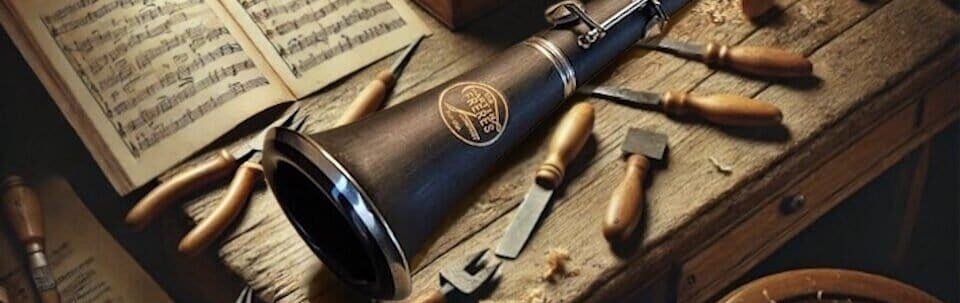
From Martin Freres archive research: surviving early 20th-century clarinets used in New Orleans and Chicago bands often show medium-large cylindrical bores and relatively open mouthpieces. These setups supported the strong, projecting sound heard on recordings by players like Johnny Dodds and his contemporaries.
Notable recordings and archival notes (one-take sessions, landmark tracks)
Several landmark recordings define the clarinet in Dixieland jazz. Johnny Dodds on “West End Blues” (Louis Armstrong, 1928) offers a model of supportive obbligato and concise soloing. His lines behind Armstrong's vocal and trumpet work show how to fill space without crowding the lead.
Dodds also shines on “Perdido Street Blues” (1927) and “Wild Man Blues” (1927). These sides, often recorded in a single take due to time and cost limits, demanded near-perfect execution. Musicians had to balance spontaneity with reliability, a mindset modern players can emulate in live and studio settings.
Sidney Bechet's early clarinet sides, such as his work with Clarence Williams and the New Orleans Feetwarmers, capture a more extroverted, soloistic approach. His recorded clarinet solos show heavy vibrato, scoops, and dramatic dynamic swells that push the expressive range of the instrument in a small-group context.
Barney Bigard's clarinet on Duke Ellington's “Mood Indigo” (1930) is not strictly Dixieland, but it reflects New Orleans roots. His low-register chalumeau work and subtle slides demonstrate how early jazz clarinet colors evolved into more orchestrated settings while retaining their blues character.
Acker Bilk's “Stranger on the Shore” (1961) is a later example of a Dixieland-influenced clarinet sound reaching a mass audience. The recording's close-miked, intimate tone contrasts with the more distant, room-heavy sound of 1920s discs, highlighting how recording technology shapes our perception of clarinet color and nuance.
Early acoustic recording sessions often allowed only 1 to 2 takes per tune, with each side limited to about 3 minutes of music. This constraint trained Dixieland clarinetists to craft concise, memorable solos under strict time limits.
Techniques for Dixieland style: improvisation, circular breathing, tonal control
Dixieland improvisation is melody centered. Rather than long scalar runs, clarinetists paraphrase the tune, add passing tones, and use blues notes. Study the original melody, then practice creating variations in rhythm, contour, and ornamentation. Listen closely to Johnny Dodds and Barney Bigard for models of tasteful paraphrase.
Rhythmic placement is important. Many Dixieland clarinetists play slightly behind the beat for a relaxed feel, then push ahead during climactic phrases. Practice with recordings, not just metronomes, to internalize the flexible swing of New Orleans and Chicago rhythm sections driven by banjo, piano, tuba, and early drum sets.
Circular breathing is not required for Dixieland, but it can help in long, flowing lines or extended trills. Start by sustaining a soft note while puffing air from your cheeks, then refilling your lungs through the nose. Gradually lengthen the circular-breathed segments until you can maintain an even tone through the transition.
Tonal control in Dixieland ranges from piercing to whisper-soft. Practice long tones in all registers, adding gentle vibrato and experimenting with subtone in the low register. Aim for a core sound that stays focused even at low volume, similar to Acker Bilk's lyrical approach but with the attack strength of early New Orleans players.
Articulation should be clear but flexible. Use a mix of legato tongue, light staccato, and ghosted notes. Many historic players used a slightly harder tongue stroke at the front of phrases to help notes speak through early recording horns, then softened articulation inside the phrase for a more vocal line.
Instrument anatomy and setup for a Dixieland sound (mouthpiece, reed, bore, keywork)
Mouthpiece choice is central to Dixieland tone. Many players favor a medium to open tip opening with a moderate facing length. This allows a wide dynamic range and easy pitch bends. A too-closed mouthpiece can sound thin and constricted, while an extremely open one may be hard to control for fast, articulated lines.
Reed strength typically falls in the 2.5 to 3 range for most modern setups, depending on brand and cut. A slightly softer reed can help with growls, bends, and quick articulation, but it must still provide enough resistance to support a focused sound in the clarion register. Experiment with different cuts to find a reed that responds quickly yet stays stable.
Bore design influences projection and color. Traditional Dixieland clarinets often had a relatively large cylindrical bore, which supports a strong, ringing sound. Modern clarinets vary, but instruments with a freer-blowing upper joint and slightly larger bore can help achieve the open, projecting quality heard on early recordings.
Barrel length and taper affect tuning and response. A slightly shorter barrel can brighten the sound and raise pitch, useful when playing with brass-heavy bands. Some players keep two barrels of different lengths to adapt quickly to varying ensemble pitch levels, especially in informal traditional jazz sessions.
Keywork should be reliable but does not need the ultra-light, high-precision feel favored by some classical soloists. Dixieland clarinet often involves fast chromatic runs and glissandi, so smooth ring keys and well-seated pads are important. Slightly higher key heights can increase volume and brightness but must be balanced with intonation.
Historically, some early jazz clarinetists used French-made instruments that later collectors associated with traditional jazz tone. When studying surviving examples, common traits include medium-large bores, relatively open mouthpieces, and durable keywork designed to withstand heavy gigging in dance halls and street parades.
Maintenance, troubleshooting and practice outcomes for players
Consistent maintenance supports reliable Dixieland performance. Daily, rotate 3 to 4 reeds, swab the bore after each session, and wipe the mouthpiece. Check that the ligature is centered and not pinching the reed. A stable setup lets you focus on improvisation and ensemble balance instead of fighting the instrument.
Weekly, clean the mouthpiece with mild soap and lukewarm water, then dry it thoroughly. Apply cork grease sparingly to tenon corks and inspect pads for moisture spots or fraying. Play slow scales in all registers to confirm even response and identify any emerging leaks or key noise that might interfere with fast passages.
Before gigs, run a short checklist: confirm reed choice and backup reeds, test tuning with the band, and play a few chorus-length improvisations on key tunes. Warm up embouchure with long tones and light articulation patterns, focusing on the clarion register where much Dixieland work happens. This routine prepares you for one-take style performances.
Common problems include thin or shrill tone, often caused by a too-hard reed, biting embouchure, or a very closed mouthpiece. Try a slightly softer reed, relax jaw pressure, and move the reed a fraction lower on the mouthpiece table. If the sound remains edgy, experiment with a different mouthpiece facing or barrel.
A stuffy sound or unstable altissimo can signal reed warping, ligature misalignment, or pad leaks. Rotate to a fresh reed, center the ligature, and check for air escaping around key cups by gently pressing keys while blowing. Persistent issues warrant a visit to a professional repair technician for pad reseating or crack inspection.
With regular maintenance and targeted practice, players can expect clear outcomes: more confident improvisation, better dynamic control from shout choruses to whispers, stronger ensemble awareness, and the ability to deliver convincing, near one-take performances in both live and studio settings, echoing the demands faced by early Dixieland clarinetists.
Key takeaways
The clarinet in Dixieland jazz serves as a high, agile voice that decorates melodies and delivers expressive solos rooted in New Orleans and Chicago traditions.
Historic players like Johnny Dodds, Sidney Bechet, Barney Bigard, Acker Bilk, and Artie Shaw offer distinct models of tone, phrasing, and improvisation to study.
An authentic Dixieland sound depends on suitable mouthpiece and reed choices, a responsive instrument, and disciplined maintenance that supports flexible tone and articulation.
Practicing melody-based improvisation, dynamic control, and reliable one-take performance skills helps modern clarinetists honor and extend the Dixieland clarinet legacy.
FAQ
What is clarinet in Dixieland jazz?
Clarinet in Dixieland jazz is the bright, agile lead and counter-melody voice in early small-group jazz. It weaves around the trumpet melody, adds bluesy ornaments, and often takes solos, using a wide dynamic range and expressive techniques like bends, growls, and flexible vibrato rooted in New Orleans and Chicago traditions.
Who were the most influential Dixieland clarinet players?
Key Dixieland clarinetists include Johnny Dodds, Sidney Bechet, Barney Bigard, Jimmie Noone, and later revival figures like Acker Bilk. Artie Shaw, though mainly a swing artist, also drew on Dixieland roots. Their recordings provide important models of tone, phrasing, and improvisation for anyone studying traditional jazz clarinet.
How did the clarinet help move jazz from New Orleans to Chicago?
Clarinetists were central to bands that migrated from New Orleans to Chicago in the 1910s and 1920s. Players like Johnny Dodds and Jimmie Noone brought New Orleans ensemble practices and clarinet styles into Chicago clubs and studios, shaping early recordings that spread the sound of jazz across the United States and beyond.
What techniques (e.g., circular breathing, phrasing) do Dixieland clarinetists use?
Dixieland clarinetists focus on melody-based improvisation, blues inflection, and flexible phrasing that plays around the beat. They use clear articulation, controlled vibrato, and dynamic contrasts. Some modern players add circular breathing to sustain long lines or trills, though historic clarinetists mostly relied on efficient breath use and concise phrases.
How should I set up my clarinet for an authentic Dixieland tone?
For an authentic Dixieland tone, use a medium to open tip mouthpiece with a responsive reed around strength 2.5 to 3. Aim for a setup that feels free blowing but still focused. A clarinet with a reasonably open bore and well-adjusted keywork helps achieve the strong, projecting sound heard on classic recordings.
Why are some historic players noted for one-take recordings and what does that mean for modern players?
Early jazz recordings were often cut in one take due to time, cost, and technology limits. Clarinetists had to deliver reliable, expressive performances on the first or second attempt. For modern players, this history suggests practicing complete choruses, building consistency, and developing the confidence to play as if every take might be the only one.