If you close your eyes and play the first few notes of “Oh My Darling, Clementine” on a Bb clarinet, you can almost hear an entire campfire come to life. Laughter, soft singing, a wooden Martin Freres clarinet glowing by the fire, and that simple, aching melody floating above it all. This song is proof that you do not need a wall of notes to break a heart or light up a memory.
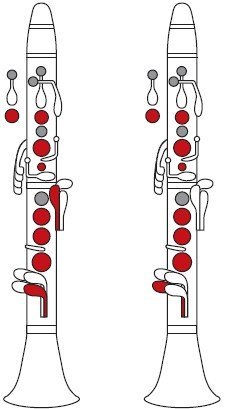
Receive a free PDF of the chart with clarinet fingering diagrams for every note!
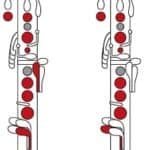
The Oh My Darling, Clementine clarinet fingering chart is a visual guide showing every note used in the song on Bb clarinet. It maps each pitch to a clear fingering pattern, so players can learn the melody faster, build muscle memory, and focus on expressive playing instead of guessing fingerings.
From gold mines to clarinet bells: the wandering life of Clementine
“Oh My Darling, Clementine” grew up in dusty mining camps, not in a conservatory. It is often linked to the California Gold Rush, with its lyrics about a miner, his daughter Clementine, and a tragedy told with a strange mix of sorrow and dark humor. Before it ever touched a clarinet mouthpiece, this melody was carried by tired voices, banjos, fiddles, and harmonicas.
By the late 19th century, clarinetists were already borrowing folk tunes for salon pieces. Players in brass bands and military wind ensembles slipped melodies like Clementine into marches and light arrangements, letting the clarinet sing above cornets and trombones. While Weber concertos and the Mozart Clarinet Concerto in A major sat proudly on music stands, tunes like Clementine were the ones people actually hummed on the way home.
As American folk music began to travel overseas, so did this song. Early European Bb clarinet players took to it quickly. The melody lies neatly in the clarinet's chalumeau and throat-tone registers, where the instrument sounds closest to the human voice. On older Martin Freres instruments, with their warm wooden bodies and slightly covered response, Clementine almost sounds like someone quietly telling a story at your ear.
How great clarinetists breathed life into simple songs
While you might not find “Oh My Darling, Clementine” on the program for a Berlin Philharmonic concert, its spirit is all over the playing of the great clarinetists. The way they treat folk melodies, spirituals, and lullabies can teach you exactly how to shape Clementine on your own instrument.
Think about Benny Goodman. On albums like “Benny Goodman Plays World Favorites,” he had a way of taking easy melodies and turning them into unforgettable clarinet stories. He might not have recorded Clementine specifically, but listen to his phrasing on tunes like “Sometimes I'm Happy.” The rise and fall of his air, his use of chalumeau for warmth and clarion for brightness, is exactly how you can color Clementine on a Bb clarinet.
Artie Shaw often slipped folk-like material into his improvisations. His tone in the Gershwin-inspired tracks, especially his recordings of “Summit Ridge Drive,” shows that you can treat a simple melodic line with the same respect as a Brahms sonata. Buddy DeFranco did something similar in the bebop world, darting through harmonies while still keeping a singing, vocal quality that suits tunes like Clementine perfectly.
On the classical side, listen to Sabine Meyer play the Mozart Clarinet Concerto or Martin Frost in the Brahms Clarinet Sonatas. They both turn simple, stepwise melodies into long, unbroken phrases of air. That skill is exactly what makes “Oh My Darling, Clementine” so rewarding. The tune mostly moves by step, just like the opening of the slow movement of the Mozart Concerto. If you can float Mozart on clarinet, you can float Clementine, and vice versa.
Klezmer players like Giora Feidman and David Krakauer bring folk songs to life with a mix of raw emotion, bends, and slides. Listen to Feidman on “The Lonely Shepherd” or Krakauer on traditional freylekhs melodies. Even though the scales and modes are different, the approach is the same: every note is a word in a story. Try stealing some of that expressive scoop or growl for the repeat of the Clementine melody, especially when you reach the higher clarion notes.
This tight range, often from written G below the staff up to A or B in the staff, lets students focus on air, tone, and phrasing instead of huge leaps. It is perfect for building confidence in the chalumeau and lower clarion registers.
From campfire song to concert hall: iconic uses of the Clementine melody
“Oh My Darling, Clementine” shows up in more places than you might expect. Old-time folk archives are full of field recordings where the melody is whistled, hummed, or played on harmonica and fiddle. Clarinetists heard those same recordings and quietly adopted the song into teaching materials and encores.
Many method books for young clarinetists, from French solfege collections to American band method series, include some version of Clementine or a close cousin. In those pages, the tune sits alongside simplified Mozart themes, little Weber-style arpeggios, and folk songs like “Aura Lee” and “Home on the Range.” Teachers use it to bridge the gap between exercises and real music.
You can also hear echoes of this melody in film scores. Composers like Elmer Bernstein and Aaron Copland often wrote clarinet lines inspired by American folk tunes. Copland's “Appalachian Spring” and “Rodeo” are packed with clarinet solos that feel related to Clementine in shape and simplicity. Even if the exact tune is not quoted, the contour of an American ballad is there, sitting in the clarinet part, waiting for a warm tone and a bit of rubato.
On the jazz side, both Benny Goodman and Artie Shaw recorded medleys that wove familiar folk tunes into swing arrangements. While specific recordings of Clementine for clarinet are less common than, say, “St. Louis Blues,” the attitude toward simple tunes is clear: take a melody everyone knows, then color it with your own sound, vibrato, and phrasing. That is exactly what your Clementine clarinet fingering chart lets you do: get the notes out of the way so personality can move in.
| Clementine setting | Typical clarinet range | Recommended tone color |
|---|---|---|
| Campfire/folk version | Low G to middle C (chalumeau) | Soft, breathy, almost like spoken voice |
| Classroom/band arrangement | Low A to E in the staff | Centered, clear, slightly brighter for ensemble blend |
| Jazz-inspired variation | Low G up to G in clarion | Flexible vibrato, expressive, a hint of growl |
Why this melody hits the heart on a Bb clarinet
On paper, “Oh My Darling, Clementine” is almost laughably simple. A few repeated notes, small steps, a gentle rise and fall. But on clarinet, that simplicity is exactly what makes it powerful. It leaves room for breath, vibrato, and color. You can lean into a low F with a little extra air, or let a high D float just above the staff like a sigh.
The clarinet, especially in the chalumeau register, carries sadness and sweetness in equal measure. Think of the opening of the second movement of the Weber Clarinet Concerto No. 1, or the slow sections of Brahms's Clarinet Quintet. That same emotional fabric is woven into Clementine. The text may be tragic, but the melody is strangely comforting, and a Bb clarinet can balance that contrast in a way few instruments can.
For many players, this song is tied to memory. Maybe you first heard it at school, sung by classmates. Maybe a grandparent hummed it in the kitchen. When you put it on a clarinet, you are not just playing notes from a chart; you are answering those memories with your own sound. Even a beginner, squeaks and all, can feel that connection after just a few phrases.
From baroque chalumeau to modern classroom: Clementine through the ages
The clarinet itself grew out of the chalumeau, a rustic reed instrument used in baroque times. Composers like Telemann and Molter wrote early concertos that already featured the dark, vocal tone that would one day carry folk songs like Clementine. Anton Stadler, Mozart's friend and clarinet muse, helped shape the clarinet into a lyrical solo instrument, perfect for singing lines that felt as natural as a folk tune.
During the classical and romantic eras, clarinetists such as Heinrich Baermann and Richard Mühlfeld inspired composers to write long, singing melodies. Weber's concertos, Spohr's clarinet concertos, and Brahms's late clarinet works all treat the clarinet like a storyteller. That same impulse shows up when a simple tune like Clementine is placed in a clarinet method book. The idea is always the same: let the clarinet speak.
By the 20th century, as jazz grew in New Orleans and New York, the clarinet moved into dance halls and radio broadcasts. Players like Sidney Bechet on soprano sax and clarinet, Benny Goodman with his big band, and Artie Shaw with his orchestra showed that a simple melodic hook could drive an entire arrangement. Folk melodies, spirituals, and popular songs were constantly reworked. A line not far from Clementine could become a riff in a swing chart or a clarinet break in a Dixieland tune.
In the classroom, teachers noticed how quickly students responded to familiar melodies. Band directors across the United States started pairing long tones and scales with short songs like Clementine, “Old MacDonald,” and “Amazing Grace.” A Martin Freres clarinet in a beginner's hands might spend the morning on long tones and the afternoon on Clementine, using the same air support and fingerings that will later tackle Mozart or Debussy.
Why learning Clementine matters for your playing
Learning “Oh My Darling, Clementine” on Bb clarinet is about much more than adding one more tune to your list. This melody trains things that are hard to practice with scales alone: breath shape, phrase length, and emotional intention. You learn how to lead a phrase up to the word “darling” and then let it fall away on “Clementine,” even when you are only playing the notes.
For beginners, the tune gives a gentle path through the chalumeau and lower clarion notes. For advancing players, it becomes an expressive study in tone control, vibrato, and dynamics. Professional players sometimes use simple songs like this to warm up, playing them as if they were the slow movement of a concerto, focusing on air and color rather than technical fireworks.
Once you feel comfortable, you can shift Clementine into a swing feel, as Benny Goodman might have done, or ornament it with slides and bends inspired by Giora Feidman. Suddenly the same fingering chart becomes a map to entirely different musical worlds: folk, jazz, klezmer, or even film-music style phrasing.
A quick word about the Clementine clarinet fingering chart
Your “Oh My Darling, Clementine” clarinet fingering chart lays out every note of the melody on Bb clarinet, usually in an easy key like F major or C major. Most versions stay within about one octave, centered around the chalumeau register with a few gentle steps into the staff. That means standard left-hand and right-hand fingerings, plus occasional use of the register key if the melody rises.
Think of the chart as a safety net, not the star of the show. Use it to check that your left-hand index finger is covering the A and G tone holes correctly, that your right-hand fingers fall naturally on F and E, and that your thumb balances the instrument without tension. Once the notes feel automatic, stop staring at the page. Close your eyes, remember the song, and let your ear guide the phrasing.
- Sing or hum “Oh My Darling, Clementine” once before you play.
- Play the melody slowly using the fingering chart, focusing on smooth air.
- Repeat the song, this time adding small dynamic swells on important notes.
- Try it once legato, once with a light tongue on each note.
- Finish by playing it from memory, without looking at the chart.
A simple Clementine practice routine for Bb clarinet
Here is an easy way to fit Clementine into a daily practice, whether you are just starting out or already working on Weber and Brahms. Use a timer if it helps, and keep everything relaxed: fingers, shoulders, and breath.
| Practice segment | Duration | Focus area |
|---|---|---|
| Long tones on notes from Clementine | 5 minutes | Warm, stable tone on low G, A, B, C, D |
| Slow melody with fingering chart | 10 minutes | Smooth finger changes, steady air, no rushing |
| Phrasing and expression | 5 minutes | Dynamics, vibrato if used, shaping each phrase like speech |
| Fun variations | 5 minutes | Try swing rhythm, soft staccato, or klezmer-style slides |
Key Takeaways
- Use the Oh My Darling, Clementine clarinet fingering chart to free your mind from note worries so you can focus on tone and phrasing.
- Treat this simple folk tune with the same care you would give Mozart, Weber, or Brahms, shaping each phrase like sung speech.
- Let Clementine be your daily warm-up song, experimenting with dynamics, style, and color inspired by jazz, folk, and klezmer clarinetists.
Frequently Asked Questions
What is Oh My Darling, Clementine clarinet fingering chart?
The Oh My Darling, Clementine clarinet fingering chart is a visual guide that shows how to play every note of the song on Bb clarinet. Each pitch in the melody is matched with a clear fingering diagram, so players can learn the tune confidently and focus on musical expression rather than guessing finger positions.
What level of clarinet player can learn Oh My Darling, Clementine?
This song fits early beginners through advanced players. The range is small and the rhythm is simple, so new players can succeed quickly, while experienced clarinetists can use it as a tone and phrasing study. Teachers often assign it within the first few months of Bb clarinet study.
Which clarinet register is used most in this song?
Most arrangements of Oh My Darling, Clementine stay mainly in the chalumeau register, from low G up to notes around middle C, with occasional steps into the lower clarion. This keeps the melody comfortable and lets you enjoy the warm, vocal quality of the Bb clarinet's lower range.
How often should I practice Oh My Darling, Clementine?
You can include Clementine in your daily practice for 10 to 20 minutes. Use it after long tones to connect breath to melody, then revisit it later for phrasing and style. Short, regular sessions help the fingerings and sound feel natural, without turning the song into a chore.
Can I play Oh My Darling, Clementine with other instruments?
Yes. Bb clarinet blends beautifully with guitar, ukulele, piano, violin, and voice on this tune. Many players use an F major or C major lead sheet so everyone can share the same chords. The clarinet often takes the main melody, while others strum or provide simple harmonies underneath.
For more clarinet stories, fingering tips, and song guides, you can explore other Martin Freres articles on Bb clarinet basics, tone development, and traditional folk melodies arranged for clarinet.