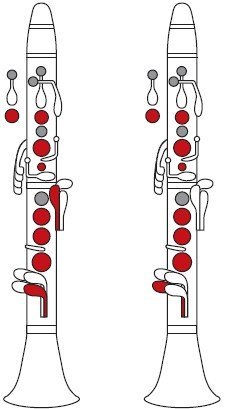
If there is one melody that feels like it was written for the Bb clarinet, it is Londonderry Air, better known as “Danny Boy.” The clarinet can sigh, whisper, and cry through this song in a way that makes time slow down and memories surface you did not know you had.
Receive a free PDF of the chart with clarinet fingering diagrams for every note!
Quick Answer: What is Londonderry Air (Danny Boy) clarinet fingering?
Londonderry Air (Danny Boy) clarinet fingering is the sequence of Bb clarinet notes and finger patterns needed to play this Irish folk melody in a clear, singing legato line. Learning it builds breath control, expressive phrasing, and tone, giving players a heartfelt solo that audiences instantly recognize and love.
Londonderry Air: The clarinet's quiet confession
Play the opening notes of Londonderry Air on clarinet and you join a long line of players who borrowed this Irish tune as a kind of musical confession. The melody floats mostly in the clarinet's chalumeau and throat tones, then rises into the clarion like a voice catching with emotion. It is no surprise that teachers, orchestras, and soloists keep returning to this song whenever they want lyric beauty without showy fireworks.
Even in a crowded rehearsal room, the first phrase of “Danny Boy” has a strange effect: brass players look up, violinists soften their bow strokes, and the timpanist suddenly taps more quietly. The contour of the tune and the way it sits under the fingers invite you to shape every bar like a spoken sentence on a single, deep breath.
The clarinet voices who carried Danny Boy
Although Londonderry Air began as an Irish folk melody, clarinetists adopted it very quickly. Early 20th century virtuosos such as Reginald Kell and Frederick Thurston used it in lessons to teach legato and expressive vibrato on German and Boehm-system clarinets. Their students recall long evenings of nothing but slow melodies and one of the favorites was always this tune.
Later, players like Richard Stoltzman brought “Danny Boy” into recital halls and recording studios. His fluid phrasing and flexible pitch shading turned the melody into something almost vocal, with the clarinet bell pointed gently toward the floor as if he were singing to a single listener. Sabine Meyer has used arrangements of similar Irish airs in encores, pairing them with Mozart and Brahms to show how a simple folk line can sit comfortably beside the biggest names in clarinet repertoire.
In the jazz world, Benny Goodman never recorded a famous version of Londonderry Air, but the way he treated ballads like “Body and Soul” and “Memories of You” gave later clarinetists a template for how to treat “Danny Boy”: free rhythm, long swells, and almost whispered high notes. Artie Shaw, known for his dark, centered tone, often transformed folk-like tunes into haunting slow numbers, and many modern clarinetists borrow his vibrato and inflection when they tackle Londonderry Air in small combos or solo features.
Klezmer artists such as Giora Feidman and David Krakauer have also touched Irish and Celtic melodies in concerts, moving seamlessly from “Der Heyser Bulgar” to tunes that share the same mixolydian and modal colors. When a player with that vocal, crying chalumeau sound approaches Londonderry Air, the piece starts to sound like a distant cousin of a Yiddish lullaby.
Field Note: In the Martin Freres archives, there is a letter from a 1930s Paris player who describes practicing Irish and Scottish airs on a Martin Freres Bb clarinet to soften his tonguing for Debussy's “Premiere Rhapsodie.” He mentions “an old Irish tune” that teachers loved for tone work, almost certainly a form of Londonderry Air.
From Irish valley to concert stage and film score
Londonderry Air itself goes back to the early 19th century in County Londonderry, collected by Jane Ross from a street musician playing a simple pipe. The melody probably existed for generations before that, passed by ear through local singers and fiddlers. When lyrics such as “Danny Boy” were later attached in the early 1900s, the story of departure and longing fit the ups and downs of the tune perfectly.
Clarinetists first met the melody in band and military arrangements. British and Irish regimental bands, loaded with Bb clarinets, used it in slow marches and ceremonial pieces. The song worked well over soft side drum and horn chorales, with clarinets carrying the line in unison or close harmony. Older Martin Freres instruments often show wear marks around the throat keys from this kind of sustained, lyrical repertoire that lives between A and high C.
By the mid 20th century, arrangers began pairing Londonderry Air with full symphony orchestras. Clarinet solos cropped up in film scores and light music suites. Composers who loved modal colors, like Ralph Vaughan Williams and Ernest Moeran, wrote works that feel like cousins of this tune, full of flowing clarinet lines over string drones. While they did not always quote “Danny Boy” directly, the phrasing and intervals feel closely related.
Film composers later used the melody as a shorthand for loss, memory, or home. In soundtracks with military or Irish themes, the clarinet often doubles the main tune with the flute or oboe, or carries a plaintive countermelody in the chalumeau register under strings. The long notes give players an excuse to show off control over registers, from low E to high G, on instruments from Buffet to older Martin Freres models.
Range spotlight: about 1.5 octaves
Most Londonderry Air clarinet arrangements sit roughly between low G and high D on Bb clarinet. That compact range lets intermediate players focus on breath, tone, and phrasing instead of extreme finger stretches or altissimo gymnastics.
Iconic clarinet moments and recordings of Londonderry Air
Dozens of clarinet recordings of Londonderry Air exist, often hidden as bonus tracks or live encores. Richard Stoltzman has performed it in recital programs alongside Copland and Gershwin, often using a warm vibrato and subtle glissandi that show what a modern Boehm-system clarinet can do with just air and embouchure. His phrasing on sustained high A and B natural in the clarion register has inspired many students to work on long-tone exercises specifically so they can hold those notes with the same intensity.
On the classical side, several European chamber ensembles have recorded arrangements for clarinet and string quartet or clarinet and harp. When the clarinet enters after a soft guitar or harp introduction, the effect is almost like a singer taking the stage after the orchestra. Players like Martin Frost, known for bringing theatrical energy to his performances, have used similar Celtic or folk melodies as encores to balance intense modern works like Anders Hillborg's “Peacock Tales.” Even when the exact tune is different, the emotional world is basically the same as Londonderry Air: personal, fragile, direct.
Jazz clarinetists often weave “Danny Boy” into ballad medleys. Buddy DeFranco, who blended bebop vocabulary with a warm, controlled tone, was known to quote Irish or folk melodies in solos, treating them with the same respect he gave standards like “Stardust.” Contemporary players such as Anat Cohen or Ken Peplowski sometimes introduce similar folk tunes in intimate club sets, letting soft brush drums and double bass support a clarinet line that feels like a conversation with the audience.
In folk and world music, clarinetists working with Celtic bands or ensembles like The Chieftains have occasionally picked up the clarinet for slow airs usually given to uilleann pipes or fiddle. Even though pipes use a different fingering system and scale layout, the Bb clarinet can mimic that steady, reedy sound with careful breath pressure and subtle use of the register key. Londonderry Air works particularly well when the clarinet imitates the long, held notes of the chanter.
Setting
Clarinet role
Typical style
Symphony or wind band
Solo over strings or soft brass
Pure legato, controlled vibrato, wide dynamic range
Jazz combo
Ballad feature
Free rubato intro, scoops, blues coloring
Folk / Celtic group
Voice-like lead or counter-melody
Pipe-inspired phrasing, gentle ornamentation
Why Londonderry Air hurts so good on clarinet
Every clarinetist has that first moment where a note unexpectedly vibrates the chest instead of just the mouthpiece. Londonderry Air is full of those moments. The leaps from low B or C to notes around open G, the climactic rise into the clarion around high B or C, and the soft return to the lower register all line up perfectly with the clarinet's natural overtones.
Emotionally, the song is about letting go: sending someone away, saying what you cannot quite say in words. When you play it on clarinet, that feeling lives in how gently you change from register key on to register key off, how slowly you press a side key, how carefully you taper a note to silence. The piece teaches patience, listening, and respect for silence as much as it teaches finger control.
That is why teachers from conservatories in Paris and Vienna to community band directors in small towns keep using Londonderry Air in their lessons. It does not demand pyrotechnics like Weber's concertos or sprinting fingers like the last movement of the Mozart Concerto in A major, yet it asks for something harder: honesty in every bar.
What playing Londonderry Air does for your clarinet playing
Spend a month living with Londonderry Air on Bb clarinet and you will notice changes everywhere. The slow breath phrases help you manage air in the Brahms Clarinet Sonatas, especially in the long lines of the second movement of the E flat major Sonata, Op. 120 No. 2. Your throat tones between low E and A become smoother, which makes Debussy's “Premiere Rhapsodie” feel less like a technical obstacle and more like language.
Jazz and improvising players find that the song helps with ballad control. If you can sustain the gentle arc of “Danny Boy,” you can transfer that to tunes like “My Funny Valentine” or “Misty.” The finger patterns in the melody also show up frequently in Irish reels and jigs, so folk players benefit twice: tone work plus familiar shapes for faster tunes later.
For younger students, especially those on intermediate Martin Freres or Buffet student clarinets, the piece serves as a first introduction to real emotional phrasing. They learn that the difference between a good and unforgettable performance often lives in a half-decibel change at the end of a note, or a fraction of a second of rubato before a high entry.
Practice focus
Benefit in Londonderry Air
Benefit in other pieces
Long tones in chalumeau
Stable low notes and warm intro phrases
Better control in Brahms and orchestral excerpts
Smooth register changes
Seamless climb to the emotional climax
Easier altissimo entries in concertos
Soft dynamics
Whispered endings that still project
More expressive chamber music playing
A light touch on fingerings: reading the chart
The free Londonderry Air (Danny Boy) clarinet fingering chart that goes with this article keeps things friendly. Most arrangements sit in concert B flat or concert F, which puts the Bb clarinet part in C major or G major on the staff. That means a lot of comfortable open G, long tone A, B, and C in the staff, and a few expressive dips into low F and E.
You will see standard Boehm-system fingerings throughout: no exotic alternate fingerings are required, just clean half-hole and throat tone coordination. The only slightly tricky spots are the gentle shifts between throat A, A key plus register key, and B natural in the clarion. The chart shows these clearly, so you can spend your practice time on legato and breath instead of guessing where to put your left-hand fingers.
Sing or hum the first phrase away from the clarinet so the contour is in your ear.
Play the same phrase using only air and finger motion, no tongue, to connect notes.
Add the lightest possible articulation, almost like saying “du” on the reed.
Simple Londonderry Air practice routine
Exercise
Time
How often
Long tones on low G to C
5 minutes
Every practice day
First 8 bars of Londonderry Air, very slowly
10 minutes
3 to 4 times per week
Full melody with dynamic shaping
10 minutes
2 to 3 times per week
Making Londonderry Air your own story
Every clarinetist eventually personalizes Londonderry Air. Some play it with a touch of vibrato like Sabine Meyer in a romantic slow movement, others keep the tone pure and straight, closer to a pipe or recorder. Some players choose supple Vandoren reeds and a dark mouthpiece setup to emphasize warmth; others lean into brightness for more projection in a band setting.
You might connect the melody with a grandparent, a friend who moved away, or simply a quiet bus ride home after rehearsal. When you stand in front of an audience with your Bb clarinet and play “Danny Boy,” they do not hear fingerings or breath counts. They hear your story carried on a tune that has already survived almost two centuries of change.
If you want more lyrical clarinet adventures after this piece, look for arrangements of Irish and Scottish airs, and for clarinet features in Vaughan Williams's works or even the slow movements of the Weber Concertos. Each of those pieces lets you continue the same conversation with your clarinet that Londonderry Air begins.
Key Takeaways
Use the Londonderry Air (Danny Boy) clarinet fingering chart to free your mind from mechanics so you can focus on tone and phrasing.
Listen to great clarinet ballad players like Richard Stoltzman and Benny Goodman for ideas on shaping this melody.
Return to this tune regularly as a “tone check” and emotional reset in your daily practice.
Frequently Asked Questions
What is Londonderry Air Danny Boy clarinet fingering?
Londonderry Air Danny Boy clarinet fingering is the sequence of notes and standard Bb clarinet finger patterns used to play the Irish melody usually called “Danny Boy.” Most arrangements stay between low G and high D, using familiar Boehm-system positions so players can focus on legato, dynamics, and expressive phrasing rather than hard technical passages.
What level of clarinet player can learn Londonderry Air?
An advancing beginner or early intermediate player can learn Londonderry Air comfortably. If you can read notes up to high C or D, play a simple C or G major scale on Bb clarinet, and hold a long tone for 6 to 8 seconds, you are ready. More experienced players use it as a tone and phrasing study.
Which clarinet register is most used in this piece?
The melody mostly lives in the chalumeau and throat tone area, from low G to A, with key moments rising into the lower clarion, around written B to high D. This balance lets you work on blending the registers so there is no obvious “break” between throat tones and clarion entries in lyrical passages.
How should I practice breath control for Londonderry Air?
Practice long tones on the main notes of the melody, such as G, A, B, and C in the staff, holding each for 8 counts at a soft dynamic. Then connect pairs of notes in one breath, using very slow bow-like air. Aim to play complete phrases without gasping so the line feels like a single spoken thought.
Can I use vibrato on Londonderry Air for clarinet?
Yes, light vibrato can be beautiful on Londonderry Air if your basic tone is already stable. Many players use gentle jaw or breath vibrato on longer notes near the climax of the melody. Keep it slow and narrow, more like a singer's vibrato than a string player's, so the style stays tasteful and expressive.