If you close your eyes and play slowly around the F major pentatonic scale on a Bb clarinet, you start hearing stories: a gospel choir humming in the background, a blues band winding down after midnight, a film score holding its breath before the hero speaks. This little 5-note collection has comfort, hope, and quiet courage baked right into it.
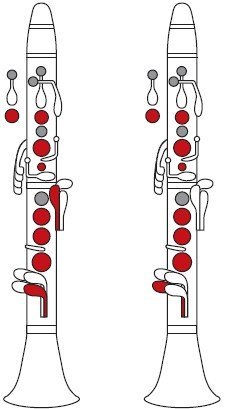
Receive a free PDF of the chart with clarinet fingering diagrams for every note!
Quick Answer: What is the F major pentatonic scale on Bb clarinet?
The F major pentatonic scale on Bb clarinet is a 5-note pattern using F, G, A, C, and D written for the clarinet. It removes the two most tense notes from F major and gives players an easy, lyrical sound that fits gospel, jazz, folk, and film music with very few wrong-note risks.
The F major pentatonic sound: a gentle spotlight on the clarinet
On Bb clarinet, the F major pentatonic scale sits in one of the instrument's sweetest registers. Those written notes F, G, A, C, and D (sounding one whole step lower) line up with the chalumeau and throat tones, right where the clarinet can whisper, smile, or sing without effort. Think of the way a clarinet glows at the start of Gershwin's “Rhapsody in Blue” or the mellow phrases in Aaron Copland's “Appalachian Spring”. That same warmth lives right inside this scale.
Clarinetists from every style have leaned on this sound when they wanted simplicity with depth. You can hear pentatonic flavors in the way Benny Goodman slides through bluesy fills, in Artie Shaw's smoother choruses, and in Richard Stoltzman's singing tone on Copland and Bernstein recordings. When the harmony softens and the clarinet wants to speak gently, the F major pentatonic scale is often hiding in plain sight.
5 notes, endless melodies
F, G, A, C, and D give you a complete melodic palette on Bb clarinet without any written B or E that might clash. Fewer notes means more freedom to focus on tone, breath, and phrasing.
From chalumeau to jazz club: a short history of this gentle scale
Long before the modern Bb clarinet took shape, the chalumeau and early clarinets used simple finger-hole systems that favored straightforward patterns like pentatonic scales. Players did not call it “F major pentatonic” yet, but folk tunes and dances in F and C on early instruments by makers such as Jacob Denner and early Martin Freres style workshop instruments often moved around the same five notes.
By the time Anton Stadler was working closely with Mozart, the clarinet was firmly established in the orchestra. Listen closely to the slow movements of the Clarinet Concerto in A major and you will hear phrases that almost fall into pentatonic shapes, especially when the line soars simply above the strings. Heinrich Baermann, who inspired Weber's clarinet concertos, also favored melodic patterns that gently circle around 5-note frames. The idea was always the same: make the instrument sing like a human voice, not show off every key at once.
In the Romantic era, composers like Brahms and Schumann gave the clarinet long, hymn-like lines that often skim the F major pentatonic color, especially in inner phrases. The slow movement of Brahms's Clarinet Sonata in F minor has passages that feel like pentatonic sighs, even when the harmony is more complex underneath.
Then jazz arrived, and the pentatonic scale became a favorite color, especially for clarinetists who straddled big band and small-group traditions. Benny Goodman would often soften a hot chorus by slipping into a pentatonic frame, playing simple, bell-like ideas in F or B b, letting the rhythm section do the talking while his clarinet floated above. Buddy DeFranco later took that same concept into bebop, often starting with pentatonic outlines before twisting them into longer, chromatic lines.
Famous clarinet voices who lived inside this scale
Different players use the F major pentatonic scale differently, but the emotional core stays the same: warmth, clarity, and a little bit of homesickness.
Sabine Meyer, in her recordings of Mozart and Carl Stamitz, shows how a lyrical clarinet line often rests on pentatonic-like fragments. Listen to the way she shapes simple stepwise notes in the chalumeau register; you will hear the same notes you find on your F major pentatonic fingering chart, just colored with vibrato and breath control.
Martin Frost does something similar in contemporary pieces. In works like Anders Hillborg's Peacock Tales, when the chaos settles, Frost sometimes returns to surprisingly simple note choices. Stripped of extended techniques, the clarinet comes back to basic pentatonic shapes that sound almost like folk songs, especially curled around F and C.
On the jazz side, listen to Benny Goodman playing ballads such as “Body and Soul” or “Memories of You”. Even when the tune is not strictly pentatonic, his fills often lean on those 5-note shapes in comfortable keys for the clarinet: F, B b, and C. The fingers remain relaxed while the right hand keys, the register key, and the throat A key help him spin soft, floating answers to the vocalist or trumpet.
Artie Shaw, particularly in his recording of “Stardust”, uses pentatonic lines to step away from the chord changes and just sing. When the clarinet hangs on a held note and then climbs through G, A, C, and D, he is essentially caressing the F major pentatonic without announcing it as such.
In klezmer, Giora Feidman and David Krakauer both use pentatonic shapes as launching pads. On tunes like “Shabbes in Nign” or Krakauer's interpretations with the Klezmatics, the clarinet often begins in a simple, almost childlike pentatonic zone before exploding into ornaments, bends, and slides using the left-hand ring keys and right-hand pinky keys for expressive glissandi.
Field Note: In the Martin Freres archives, several late 19th-century clarinet method pages in French include pentatonic-style “chant” exercises in F written for Bb clarinet. The authors never label them as pentatonic, but the five-note patterns match the F major pentatonic scale exactly, suggesting teachers instinctively trusted these tones for building a warm, centered sound.
Iconic pieces and recordings where this color shines
You will not always see “F major pentatonic scale” printed in a score, but you will hear it everywhere once your ear tunes into it.
In classical works, listen to:
The middle sections of the slow movement in Mozart's Clarinet Concerto, where the clarinet gently outlines F-like pentatonic shapes over simple string harmonies.
The lyrical phrases in Weber's Clarinet Concerto No. 2, where the clarinet often skips the more dissonant scale degrees and hovers around something very close to pentatonic motion.
The clarinet passages in Copland's “Appalachian Spring” and “Quiet City”. Even when written in other keys, the melodic simplicity and shape feel like an F major pentatonic idea translated into orchestral colors.
Jazz and popular music offer even clearer examples:
“Summertime” when played in F by a jazz combo often leans heavily on the F major pentatonic framework in solos.
“Amazing Grace” in F is almost pure F major pentatonic, which is why it fits so naturally on clarinet in the chalumeau register.
Early Benny Goodman Trio and Quartet ballads frequently feature simple pentatonic-based fills over piano and vibraphone voicings.
Film scores also love this sound. Clarinet lines in soundtracks by John Williams and James Newton Howard often slip into pentatonic shapes when a scene needs tenderness or nostalgia. Think of a slow clarinet solo over strings in a wide countryside shot: chances are high you are hearing some version of a major pentatonic scale, often starting or resolving around F on a Bb clarinet.
Musical context
Use of F major pentatonic sound
Suggested listening
Classical concerto
Simple, singing motives built from 5-note shapes
Mozart Clarinet Concerto, slow movement (Sabine Meyer)
Jazz ballad
Melodic fills and gentle solos in F
Benny Goodman on “Body and Soul”
Klezmer song
Opening phrases before ornamentation
Giora Feidman live concert recordings
If you are browsing Martin Freres articles on clarinet tone, practice routines, or beginner scales, keep F major pentatonic in mind as your “song-writing scale”. It is friendly enough for day one, but musical enough to appear on world-class recordings.
How the F major pentatonic scale feels under your fingers and in your heart
There is something disarming about this scale. On Bb clarinet, it sits in a register where the left-hand index, middle, and ring fingers hardly move out of their comfort zone. The right-hand fingers and pinky keys join in gently, with no gymnastic leaps across altissimo. This physical ease ends up shaping the mood: relaxed hands usually mean relaxed sound.
Emotionally, F major pentatonic often suggests any of these:
Soft hope, like the beginning of a hymn on pipe organ and clarinet
Childhood, because so many early songs and folk tunes live inside this 5-note pattern
Gentle blues, when you bend or slide into the notes using embouchure and throat tones
Spiritual calm, common in gospel and spirituals that clarinetists arrange for church or concert hall
Play the scale slowly from low F up to D and back while focusing on long tones, and it starts feeling like a quiet conversation with yourself. Many teachers use this exact pattern at the start of lessons to reset the embouchure, ligature setup, and breath support before moving into faster material.
Why this scale matters for your musical story
For students and professionals alike, the F major pentatonic scale is a creativity shortcut. Because it avoids the most unstable notes in F major, you can improvise simple melodies without worrying too much about clashing with piano chords or guitar voicings. That confidence frees your imagination.
If you are working through pieces like the Rose 32 Etudes or simpler studies from Baermann, you will start noticing how often passages reduce to pentatonic fragments. Practicing your F major pentatonic fingering chart means you recognize those patterns instantly and play them more musically, not just mechanically.
For composers and arrangers, especially those writing for school bands or small clarinet ensembles, the F major pentatonic palette is a safe, beautiful choice. You can write simple clarinet choir lines around F, G, A, C, and D and still sound polished. Many educational pieces featured in Martin Freres teaching materials quietly rely on this structure because it works for both young players and experienced performers.
A quick, musical practice routine with the fingering chart
Once you have the free BB clarinet F major pentatonic scale fingering chart in front of you, try treating it not as a warmup, but as a tiny songbook. Here is a light practice plan:
Exercise
Time
Focus
Slow scale up and down (F to D)
3 minutes
Even air, pure tone on every note
Make-your-own melody using only the 5 notes
5 minutes
Phrase shape, dynamics, breath control
Call-and-response: low register, then middle
5 minutes
Smooth register transitions, throat tone tuning
If you like structured routines, pair this with other guides on Bb clarinet scale practice and long tone exercises so the pentatonic work feeds your entire practice session, not just a warmup slot.
Fingerings in one glance: let the chart do the work
Technically, the F major pentatonic notes on written Bb clarinet are F, G, A, C, and D. All of these live comfortably on standard fingerings using the left-hand index, middle, and ring fingers on the main tone holes, the right-hand keys for C and D, and the thumb on the register key only if you move into the clarion register later.
Instead of memorizing every detail here, rely on the clarinet fingering diagrams in the chart. Treat that image as your visual map. Look for patterns: how many notes share almost the same fingering, how the right-hand pinky keys change from C to D, when the register key joins the party. Within a few days of slow, relaxed practice, your hands will remember the pattern for you.
Start on written low F with full, steady air.
Climb stepwise through G, A, C, and D, watching your finger motion stay close to the keys.
Pause on each note to listen for tuning and color.
Come back down just as slowly, still breathing like a singer.
Key Takeaways
Use the F major pentatonic scale as your “safe zone” for warm, simple melodies on Bb clarinet.
Listen to clarinetists like Benny Goodman, Sabine Meyer, and Giora Feidman to hear how this 5-note sound appears in many styles.
Practice slowly with the fingering chart, focusing on tone and phrasing more than speed or theory.
Frequently Asked Questions
What is Bb clarinet F major pentatonic scale fingering?
The Bb clarinet F major pentatonic scale fingering is the pattern of keys used to play the five notes F, G, A, C, and D written for Bb clarinet. It mostly uses standard chalumeau fingerings, with comfortable left-hand tone-hole coverage and simple right-hand motions, making it ideal for lyrical practice and easy improvisation.
Why does the F major pentatonic scale sound so smooth on clarinet?
It avoids the two most unstable notes of the F major scale, written B and E, so every note feels consonant against common chords. On clarinet, these five tones sit right in the most resonant part of the chalumeau register, which means the bore, mouthpiece, and reed all cooperate to produce a warm, rounded sound.
How often should I practice the F major pentatonic scale?
Short, frequent sessions work best. Five to ten minutes a day is plenty, especially if you combine slow scale runs, simple improvised melodies, and call-and-response between low and middle registers. Regular exposure helps your fingers memorize patterns and your ear recognize the sound instantly in pieces and solos.
Can I use the F major pentatonic scale for improvising on clarinet?
Yes. The F major pentatonic scale is ideal for improvisation over songs in F, B b, and related keys, especially ballads, hymns, and bluesy tunes. Because all five notes blend well with basic chords, you can focus on rhythm, tone, tonguing patterns, and dynamics instead of worrying about wrong notes.
Is the F major pentatonic scale good for beginners on Bb clarinet?
It is excellent for beginners. The fingerings are simple, the register stays comfortable, and the musical payoff is immediate. New players can create real-sounding melodies within their first weeks, which builds confidence and supports everything else they learn, from articulation to breath control.