If you learned clarinet in a school band room, there is a good chance that your first real “song” was “My Bonnie Lies Over the Ocean.” This simple folk melody has sailed through centuries of singers, clarinetists, and arrangers, and it still sits beautifully under the fingers of a Bb clarinet today.
Receive a free PDF of the chart with clarinet fingering diagrams for every note!
Behind that catchy rising line of “My Bonnie” is a story of sailors, dance halls, jazz clarinet solos, and generations of students discovering what it feels like when a clarinet finally sings instead of squeaks.
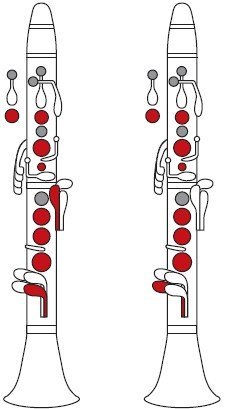
The My Bonnie Lies Over the Ocean clarinet fingering chart is a note-by-note Bb clarinet guide to this traditional folk song that shows exactly which keys to press, which register key to use, and how the melody fits on the staff, so players can focus on musical expression and confident tone.
A melody older than your clarinet case
Long before a single clarinet key was plated in nickel or silver, “My Bonnie Lies Over the Ocean” was already passing from voice to voice in Scottish and Irish folk circles. The tune floated through 19th century pubs and parlors, often sung a little too loudly over fiddles, simple flutes, and early clarinets that barely resembled the Boehm-system instruments we hold today.
By the time makers like Martin Freres were building French clarinets in the late 1800s, this melody had crossed the Atlantic. It showed up in American songbooks, on early wax cylinder recordings, and later in school music collections. Every time it moved to a new country, someone adjusted the key, the rhythm, or the accompaniment, but the aching lift of the opening phrase stayed the same.
Field Note: In early Martin Freres workshop ledgers, simple folk tunes are mentioned alongside scale studies as common test pieces for new clarinets. Short, stepwise melodies like “My Bonnie” were favored because they exposed leaks, tuning quirks, and response in both chalumeau and clarion registers without exhausting the player.
So when you play this on a modern Bb clarinet with a Vandoren reed and a well-balanced ligature, you are connecting to a melody that once lived on wooden simple-system clarinets, whistles, and unaccompanied voices in dimly lit rooms.
How famous clarinetists turned a folk tune into a playground
Most legendary clarinetists did not record “My Bonnie Lies Over the Ocean” as a straight folk song, but its shape pops up everywhere in their phrasing, ornaments, and variations.
Think of Benny Goodman in his live recordings of swing standards like “Body and Soul” or “Stompin' at the Savoy.” That rising sixth leap at the start of “My Bonnie” is a cousin to the wide, vocal opening shapes Goodman loved. In rehearsals, bandleaders often warmed up with familiar folk tunes, then bent them into swing lines. You can almost hear “My Bonnie” hiding inside some of those clarinet intros.
Artie Shaw was another master of turning simple tunes into something hypnotic. His famous recording of “Begin the Beguine” shows the same kind of phrasing arc you get when you take “My Bonnie” and add grace notes, scoops, and a hint of rubato. Teachers still use this folk melody as a starting point for students who want to improvise in a swing style without jumping straight into complex tunes.
On the classical side, players like Sabine Meyer and Martin Frost have recorded Brahms clarinet sonatas and folk-inspired works that echo this same emotional space. Listen to Meyer in the Brahms Clarinet Sonata in F minor, Op. 120 No. 1. The way she spins those long, arching lines is exactly how you want to carry the phrase of “My Bonnie” from the first G to the peak of the phrase without losing the air column.
Richard Stoltzman often programs arrangements of spirituals and folk tunes alongside Copland and Bernstein. His tone on tracks like “Amazing Grace” or Appalachian-infused pieces has that open, human quality that fits perfectly with “My Bonnie.” Many teachers encourage students to study his legato as they learn this folk song, copying his bow-like phrasing with the tongue and breath.
In klezmer, clarinetists such as Giora Feidman and David Krakauer thrive on turning simple melodies into deeply personal statements. Even if they are not playing “My Bonnie” specifically, the same kind of stepwise line with leaps and turns appears in their freylekhs and horas. If you add a few klezmer ornaments and slides to your “My Bonnie” line, you suddenly step into that expressive world.
Where “My Bonnie” hides in concert halls, jazz clubs, and film scores
This melody is like a musical chameleon. It may not always appear by name, but its shape and spirit weave through many clarinet favorites.
Mozart Clarinet Concerto in A major, K. 622 has those sighing, rising phrases in the Adagio that feel like a cousin to “My Bonnie.” Anton Stadler, Mozart's clarinet muse, was no stranger to folk-like tunes that carried a bittersweet smile.
Carl Maria von Weber's Clarinet Concerto No. 1 gives the soloist moments where the line leaps up and then steps back down, just like the “Bring back, bring back” section of the song.
Johannes Brahms Clarinet Quintet in B minor, Op. 115 sings through folk-scented themes. In the slow movement, the clarinet often traces shapes that mirror the contour of “My Bonnie,” just drenched in Brahms harmony.
In jazz, “My Bonnie Lies Over the Ocean” popped up in early swing arrangements, sometimes treated almost like a novelty tune, then twisted into bluesy versions. Small dance bands would quote it in medleys between numbers. A clarinetist might toss a bar of “My Bonnie” over a rhythm section vamp as a playful nod to listeners.
Film composers have also leaned on this melody. There are arrangements in seafaring scenes, school band moments, and childhood flashbacks, often given to a clarinet or oboe for that nostalgic, slightly wistful color. The shape of the tune is perfect for slow, close-mic recording, where you can hear every pad touch and key click.
Approx. range of “My Bonnie” on Bb clarinet: 1 octave + 1 step
This compact range makes it perfect for early players, yet still rich enough for expressive vibrato, phrasing, and ornamentation for advanced clarinetists.
Arrangers often use “My Bonnie” in graded clarinet collections. You might see it share a page with “Scarborough Fair,” “Greensleeves,” or simple movements from Handel sonatas, because it balances easy finger patterns with a sophisticated phrase line.
From folk song to clarinet lesson to concert encore
The story of this tune follows the story of the clarinet itself. Early chalumeau-style instruments joined folk ensembles in central Europe, playing dance tunes in G major and D major. By the baroque era, clarinet pioneers like Johann Melchior Molter were writing the first concertos, while village players still used simple melodies like “My Bonnie” for dances and gatherings.
In the classical period, with Heinrich Baermann inspiring Weber and Stadler inspiring Mozart, the clarinet became both a virtuosic solo voice and a storyteller. Folk melodies often found their way into variations, sets of dances, and chamber music, even if their original titles were never printed on the page.
By the romantic era, composers like Brahms and Schumann wove folk-flavored tunes into clarinet pieces regularly. At the same time, traveling wind bands played arrangements of popular songs, including “My Bonnie Lies Over the Ocean,” in parks and town squares. A clarinet soloist might ornament the melody wildly on a simple outdoor concert while the bass drum thumped the beat.
The 20th century brought recordings. You can hear “My Bonnie” in early vocal records, then as a children's song, then in jazz and big band contexts. Clarinetists such as Buddy DeFranco and later Eddie Daniels grew up with these folk melodies in the air, even as they pushed bebop harmony and advanced technique.
Today, you might encounter “My Bonnie Lies Over the Ocean” in a modern clarinet method book, a film score, a school concert, or a nostalgic encore. It is common in community band programs, where adult beginners sit next to retired professionals, all breathing into the same familiar tune.
What “My Bonnie” feels like from inside the clarinet
For a Bb clarinet player, this melody is like standing on a gentle swing. The notes move mostly by step, so your fingers feel relaxed, but the leaps pull your air upward. It invites you to sing through the mouthpiece instead of just surviving the notes.
The opening line has a built-in story arc. It starts stable, reaches up in hope, then comes back home with a slightly heavier heart. That shape trains your ear to think in phrases, not isolated notes. It pushes you to decide where to lean, where to whisper, and where to sigh with the bell of the clarinet almost resting on your knee.
Emotionally, this song sits in that bittersweet space that clarinet does so well. It is not a tragic lament, but it is not pure cheer either. It feels like waiting on a harbor, reed slightly damp, not sure whether the ship will actually appear on the horizon.
Why learning this tune matters for you
You can play pages of scales and long tones, but a short tune like “My Bonnie Lies Over the Ocean” is where all of that practice suddenly has a purpose. It connects breath, fingers, and imagination into one line that you can share with another person in under a minute.
For beginners, this song gently introduces:
Crossing between chalumeau notes like low G and A and clarion notes like middle B and C
Smooth tongue placement for legato in a simple time signature
Basic dynamics that actually fit the story of the melody
For intermediate and advanced players, it becomes a laboratory. You can experiment with vibrato, rubato, jazz-inflected rhythms, klezmer ornaments, or even multiphonics if you are adventurous. The structure is so clear that every little color change shows immediately.
Version
Main Focus
Artistic Benefit
Straight folk version
Stable tone and clean finger changes
Reliable sound for ensemble playing
Jazz-inflected version
Swing feel and light articulation
Improvisation-friendly phrasing
Klezmer-inspired version
Ornaments and expressive slides
Strong personal voice on the clarinet
Learning this tune with a clear fingering chart also builds confidence with reading. Notes stop being abstract dots and start being part of a story you can hum while you walk down the street with your clarinet case.
A brief word about the Bb clarinet fingering chart
The “My Bonnie Lies Over the Ocean” clarinet fingering chart you can download here lays out the melody in a player-friendly key, typically concert F major, which means G major on Bb clarinet. You will move mostly between low G, A, B, C, D, and then up into middle E and F using the register key.
Think of it less as a technical puzzle and more as a map of breath and emotion. The fingerings are standard Boehm-system positions: left hand covering the upper tone holes for A, B, C, and right hand guiding you through D, E, and F. With the chart in front of you, your eyes and hands can relax, leaving your ears and heart free to shape the line.
Scan the chart once without playing, humming the melody.
Play slowly with a metronome set around 60 bpm, focusing on gentle finger movement.
Repeat at the same tempo, adding dynamic swells on each phrase.
Increase to 80 bpm and experiment with lighter articulation.
A simple practice plan to keep the song afloat
Here is a compact routine that uses the fingering chart to build real musical skills instead of just note accuracy.
Session Part
Time
Focus
Warmup long tones (G to D)
5 minutes
Even air, stable embouchure, use tuner if possible
Slow “My Bonnie” from chart
8 minutes
Clean fingerings, connect notes with soft tongue
Phrase shaping
7 minutes
Add crescendos, decrescendos, and breaths in musical spots
Creative version
5 minutes
Try jazz swing, klezmer ornaments, or a rubato intro
This melody also pairs nicely with simple clarinet studies in G major and with folk-like excerpts from beginner arrangements of the Mozart concerto or Weber concertino. Using the same finger region in different musical contexts reinforces comfort on the instrument.
Key Takeaways
Use the “My Bonnie Lies Over the Ocean” clarinet fingering chart to connect clear fingerings with expressive phrasing, not just note accuracy.
Let recordings by clarinetists like Benny Goodman, Sabine Meyer, and Giora Feidman inspire how you shape this simple folk melody.
Practice the tune in short, focused sessions, experimenting with jazz, classical, and folk colors to find your own voice.
Frequently Asked Questions
What is My Bonnie Lies Over the Ocean clarinet fingering chart?
The My Bonnie Lies Over the Ocean clarinet fingering chart is a note-by-note guide for Bb clarinet that shows which keys and the register key to use for every pitch in the song. It helps players focus less on guessing fingerings and more on tone, phrasing, and musical story.
What level of clarinet player is “My Bonnie Lies Over the Ocean” for?
This melody works well for late beginners through advanced players. New players use it to practice simple finger patterns in G major, while advanced players use it for phrasing, style experiments, and improvisation. The range is comfortable, yet expressive enough for serious musical work.
Which key is “My Bonnie Lies Over the Ocean” usually in for Bb clarinet?
Most Bb clarinet arrangements of “My Bonnie Lies Over the Ocean” use G major, which sounds as concert F major. This key keeps the tune between low G and middle E or F, so it sits easily in both chalumeau and lower clarion registers and avoids extreme fingerings.
How can I make “My Bonnie Lies Over the Ocean” sound less like a beginner tune?
Focus on long, singing phrases, varied dynamics, and gentle vibrato on sustained notes. Listen to clarinetists such as Richard Stoltzman or Martin Frost and imitate their legato style. You can also add jazz swing, grace notes, or klezmer-style ornaments to give the melody a more personal voice.
Can I use this song for ear training and improvisation on clarinet?
Yes. Start by learning the melody from the fingering chart, then try to play it by ear in the same key. Once it feels automatic, improvise simple variations by changing rhythms, adding passing tones, or echoing the opening leap. This builds listening skills and creative confidence.