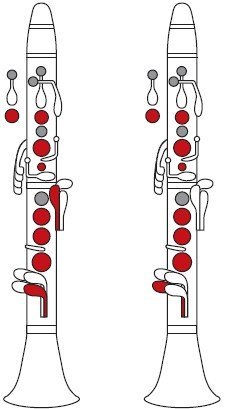
If you have a Bb clarinet and a heart that lights up for simple folk tunes, “Oh Susannah” is one of those songs that can turn a living room into a little concert hall. Before you worry about fingerings and embouchure, just remember this: generations of clarinetists have started exactly here, singing through their mouthpieces with this humble, joyful melody.
Receive a free PDF of the chart with clarinet fingering diagrams for every note!
An Oh Susannah clarinet fingering chart is a visual guide that shows exactly which keys to press on a Bb clarinet for every note in the song. It helps beginners learn the tune faster, improve tone on simple finger patterns, and enjoy playing this classic folk melody with confidence.
The long road to Oh Susannah on clarinet
Long before a clarinetist ever played “Oh Susannah,” the song was already traveling. Stephen Foster wrote it in 1848, and it spread by riverboat, campfire, and dusty parlor upright piano. But as wind bands grew across the United States, clarinet sections started to carry this tune through brass and percussion, giving it that clear, reedy shimmer only a Bb clarinet can bring.
Picture a town band at the end of the 19th century: battered music stands, a conductor with a frayed baton, and a row of clarinetists playing simple arrangements of American songs. “Oh Susannah” would often sit right next to marches by John Philip Sousa and transcriptions of European waltzes. The same fingers that reached for tricky runs in a Weber transcription relaxed into the easy swing of this folk melody.
By the time clarinet legends like Benny Goodman and Artie Shaw were rewriting what jazz clarinet could do, tunes like “Oh Susannah” were already in their bones. They may not have recorded formal versions of it, but their childhood band books were filled with the same type of folk tunes, in the same keys, with the same comfortable mid-range notes you see on your Oh Susannah clarinet fingering chart today.
How great clarinetists grew up on songs like Oh Susannah
Every clarinet giant started with simple melodies. Sabine Meyer did not begin on the Mozart Clarinet Concerto; she began on folk tunes and easy songs that trained her ear and fingers. Martin Frost did not jump straight into Klezmer Dance by Goran Frost; his first clarinet lines were nursery songs, hymns, and folk melodies with the same kind of stepwise motion you see in “Oh Susannah.”
Think of Anton Stadler, Mozart's clarinet muse. In late 18th century Vienna, Stadler played popular songs and street tunes between more serious pieces. The clarinet had a smaller key system then, so simple melodies in comfortable keys were the training ground. Your Oh Susannah clarinet fingerings, mostly in the middle register with open holes and core keys, echo that same tradition of starting close to the heart of the instrument.
Heinrich Baermann, a Romantic-era virtuoso who inspired Carl Maria von Weber, was famous for his singing tone. Weber wrote the Clarinet Concerto No. 1 and Concertino for him, full of lyrical lines that sound like expanded folk songs. If you slow down the lyrical sections of the Concertino and strip away the orchestra, they feel related to “Oh Susannah” in spirit: direct, tuneful, and meant to be whistled on the street.
Jazz greats too had this foundation. Benny Goodman learned from the Kopprasch-style method books and band charts that mixed marches, waltzes, and folk songs. Buddy DeFranco told stories about grinding through simple tunes until the clarinet felt like an extension of his voice. Artie Shaw, famous for “Begin the Beguine” and his lush tone on the Boehm system clarinet, grew up hearing American folk melodies that shaped his phrasing long before bebop lines took over his improvisations.
Klezmer masters like Giora Feidman and David Krakauer also pass through this doorway. Although their core repertoire includes freygish modes and traditional tunes like “Der Heyser Bulgar,” they understand that a simple melody, played with conviction and color, carries the same emotional charge as a virtuoso solo. Play Feidman's version of “Shir haLechem” and then hum “Oh Susannah”; you will feel how a clarinet can cry, laugh, and sing even with the easiest note patterns.
Field Note: In the Martin Freres archive, there are early 20th century Bb clarinets that came with tiny handwritten booklets of tunes. Alongside Schubert waltzes and simple polkas, there is almost always at least one American or French folk song. Those players were doing exactly what you are doing now: opening a case, taking a breath, and turning simple tunes into their first real music.
From campfire song to concert hall: iconic uses of Oh Susannah
“Oh Susannah” might sound like a campfire tune, but it has wandered into some unexpected places where clarinetists quietly shine.
Band arrangers for school ensembles often tuck clarinet features into American song medleys. Listen to a middle school concert version of a piece like “American Folk Rhapsody” or “Frontier Trails” and you will often hear the clarinet section floating the melody of “Oh Susannah” or a close cousin over low brass drones and snare drum rolls. The clarinet's chalumeau register gives the verses warmth, while the clarion register adds sparkle to the refrain.
Film composers too love this tune. In period films set around the Gold Rush or early American settlements, you will sometimes hear a clarinet doubling or gently ornamenting “Oh Susannah” in the score, especially in scenes with fiddles and acoustic guitar. The wooden color of the Bb clarinet, sitting between the flute and oboe, adds a conversational voice that fits the frontier mood without sounding stiff.
On the folk and bluegrass side, clarinetists have joined fiddle bands and jug bands to give a different color to these songs. Alexis Ciesla, known for his folk-influenced clarinet works, has arranged similar American and French tunes where the clarinet bends notes and imitates the slide of a fiddle or the drawl of a singer. While not every album lists “Oh Susannah” by name, the same swing eighths, pentatonic turns, and simple Bb major shapes keep showing up.
Range focus: low E to C in the staff
Most Oh Susannah clarinet arrangements sit between low E and C on the staff, with only a few notes above. This keeps fingers relaxed on the main tone holes and lets beginners focus on air support and tone color instead of complicated pinky stretches.
Klezmer and Eastern European clarinetists sometimes quote American folk tunes in encores or playful improvisations. A player like David Krakauer might slip a fragment of a familiar tune into a high-energy bulgar as a joke to the audience, bending the notes with pitch slides and expressive vibrato. “Oh Susannah” is exactly the kind of melody that can hide in those moments, recognizable even when it is twisted and reharmonized.
A brief historical journey: Oh Susannah and clarinet through the ages
To understand why an Oh Susannah clarinet fingering chart belongs on your stand next to Mozart and Weber, it helps to look at how this kind of tune moved through history.
In the baroque era, the chalumeau, an ancestor of the clarinet, played simple melodies in church and court settings. Composers like Johann Melchior Molter wrote early concertos that sound almost like folk tunes dressed up in fancy clothes. When the modern clarinet emerged with more keys and better intonation, these graceful, stepwise melodies stayed at the center of playing.
By the classical period, Mozart and Stadler were showing what a clarinet could do in the Clarinet Concerto in A major and the Clarinet Quintet with string quartet. Underneath those lush phrases lies the same DNA as “Oh Susannah”: scales, arpeggios, and small melodic leaps. If you strip down the opening of the Mozart Concerto, it is not far from a folk song in its simplicity.
In the Romantic era, Weber, Spohr, and Brahms expanded the clarinet's emotional palette. The Clarinet Quintet in B minor by Brahms, especially in the second movement, sings like an old song remembered by a tired traveler. Brahms collected German folk melodies and wove their spirit into his chamber music. That is the same instinct that keeps “Oh Susannah” alive: a tune that ordinary people can hum, dressed in richer harmony and texture.
Jump to jazz and early 20th century bands: clarinetists like Sidney Bechet, Jimmy Noone, Benny Goodman, and Artie Shaw filled dance halls with American melodies, blues lines, and popular songs. The technique they used for tougher swing charts came from hours of playing easier tunes with rock-solid rhythm, not from endless exercises alone.
Today, you will find “Oh Susannah” in beginner books, clarinet choir arrangements, and creative solo collections alongside pieces by composers like Paul Harris and James Rae. Those modern writers understand that a student who can shape a simple folk melody with beautiful air and fingers that move like silk is ready for bigger challenges: Debussy's Rhapsodie, Poulenc's Sonata, or Copland's Clarinet Concerto.
Why Oh Susannah matters emotionally on clarinet
There is a reason “Oh Susannah” refuses to fade away. On the clarinet, it feels like a song written for our instrument's favorite colors. The opening phrase sits in the throat tones and chalumeau register, where the sound is warm and human, close to a singing voice. When the melody lifts, the clarion register adds brightness, like a smile at the end of a sentence.
For a beginner, that first clear note on open G or low E feels like a small miracle. Tie a few of those notes together in “Oh Susannah” and suddenly you are not just practicing long tones; you are telling a story. The lyrics talk about travel, longing, and a slightly silly sense of optimism. The clarinet picks that up and turns it into something wordless but just as clear.
For an advanced player, this tune is a chance to strip everything back. No multiphonics, no extended techniques, no Mahler-sized emotional weight. Just breath, reed, mouthpiece, and simple intervals. It invites the same kind of honesty you need in the slow movement of the Mozart Concerto or the opening of the Brahms Clarinet Sonata in F minor. If you can make “Oh Susannah” sound alive with color, you can trust yourself on anything.
Why learning Oh Susannah matters for you
So why spend time with an Oh Susannah clarinet fingering chart when there are virtuosic concertos waiting? Because this is where real playing grows: in simple tunes that ask for sincerity and control instead of fireworks.
On a practical level, this song trains your core skills:
Steady air on repeated notes like G, A, and B natural
Clean finger coordination between E, F, and G on the left hand
Good pitch in common key signatures like C major or F major concert
Articulation control with easy, speech-like rhythms
Once you feel comfortable, you can start to play with phrasing, just like the greats do in more advanced repertoire. Try a gentle crescendo into the phrase “Oh Susannah” and then relax on the answer. Add a little rubato in the last bar, as if you are telling a joke. This is the same musical thinking you will use in pieces by Jean Francaix or Leonard Bernstein.
Teachers know this. Many will pair a beginner's first scales with a tune like “Oh Susannah,” then gradually move toward more complex pieces: an easy arrangement of the Mozart Clarinet Concerto theme, a simple movement from a Stamitz concerto, or a jazz etude inspired by Lester Young and Coleman Hawkins. Your fingers start here, but your imagination does not stop here.
Quick fingering notes for Oh Susannah on Bb clarinet
Your Oh Susannah clarinet fingering chart already does the heavy lifting, but a few quick ideas can make the notes feel more natural under your fingers. Most beginner arrangements are in C major for the Bb clarinet, so you will live on these notes: low E, F, G, A, B natural, C, and D above the staff line.
Melody segment
Typical notes
Fingering focus
“Oh Susannah” opening
G – E – G – A
Smooth left-hand shifts and stable throat tones
Middle phrase
A – B – C – B – A
Secure ring finger and clear coordination
Final line
G – E – F – G
Even air as you move between chalumeau notes
Keep the left thumb relaxed on the register key, even if you are not using it for most of the tune. A loose thumb helps the rest of the hand stay comfortable. Let your right-hand fingers gently cover the lower tone holes, ready for the occasional lower note so there is no sudden grab that disturbs the sound.
Start by singing the entire melody once, without the clarinet.
Finger along silently while looking at your Oh Susannah clarinet fingering chart.
Play the song with whole notes only, one pitch per measure.
Add the real rhythm once your fingers feel relaxed.
Finally, experiment with dynamics: soft verse, stronger refrain.
Simple practice plan with the Oh Susannah fingering chart
To keep this tune fresh and useful, a small, consistent routine works better than a single long session. Think in short, musical bursts.
Session part
Time
Focus
Warm-up
3 minutes
Long tones on G, A, B, C using steady air
Melody work
7 minutes
Slow Oh Susannah with your fingering chart visible
Style play
5 minutes
Experiment with dynamics and articulation styles
If you stay with this little routine 3 days per week, you will feel the same finger patterns showing up everywhere: in your first scale studies, in pieces from the Rose 32 Etudes, and even in the opening phrases of the Mozart or Weber concertos when you reach them.
Key Takeaways
Treat your Oh Susannah clarinet fingering chart as a doorway to expressive, songful playing, not just as a set of notes.
Use this simple tune to refine air support, finger coordination, and phrasing that will carry into Mozart, Weber, and jazz standards.
Return to Oh Susannah occasionally as a musical checkup: if you can make it sing, your core clarinet playing is in good shape.
Frequently Asked Questions
What is Oh Susannah clarinet fingering chart?
An Oh Susannah clarinet fingering chart is a visual guide for Bb clarinet that shows which keys to press for every note in the melody. It keeps the tune mostly in an easy range, so beginners can focus on sound, rhythm, and expression while learning a familiar, uplifting folk song.
Is Oh Susannah good for beginner clarinet players?
Yes. Oh Susannah is ideal for beginners because it uses common notes like E, F, G, A, B, and C in the middle register. The rhythm is catchy but not overwhelming, so students can develop tone and timing while enjoying a recognizable tune that feels like real music from the start.
Which key is Oh Susannah usually in for Bb clarinet?
Most beginner arrangements place Oh Susannah in C major for Bb clarinet, which sounds in concert Bb. That keeps fingerings simple, avoids awkward pinky combinations, and makes it easy to connect the song to early scale work in C major and G major patterns in method books.
How often should I practice Oh Susannah on clarinet?
Short sessions a few times per week work best. Spend about 10 to 15 minutes with Oh Susannah around your normal practice, focusing on smooth finger changes and expressive phrasing. Rotate it with other tunes so it stays fresh and fun instead of feeling like a drill.
Can I use Oh Susannah to learn improvisation on clarinet?
Absolutely. Once you can play the melody confidently, change the rhythm, add passing notes, or vary the ending of each phrase. Many jazz clarinetists start improvisation by decorating simple songs like Oh Susannah, building confidence before moving to chord-heavy standards and faster tempos.