Martin Freres, LaMonte, Coudet, Jean Martin Brand Clarinets and Other Woodwinds
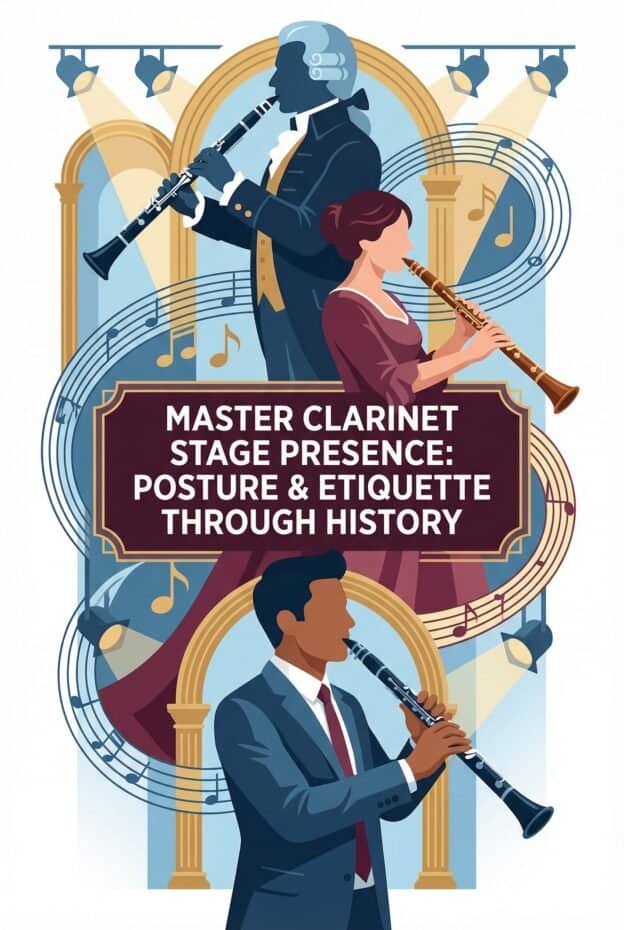
Historical Clarinet Performance Etiquette: Posture, Stage Manners, and Attire Across the Eras
Historical clarinet performance etiquette covers era-specific conventions for posture, stage movement, entrances and exits, ensemble blending versus solo prominence, and concert attire from the Baroque through the 20th century. It translates social expectations and instrument capabilities of each period into practical guidelines for modern historically informed clarinet performance.
Overview: What Is Historical Clarinet Performance Etiquette?
Historical clarinet performance etiquette is the set of social, musical, and visual expectations that shaped how clarinetists behaved on stage in different eras. It includes posture, gestures, entrances and exits, tuning rituals, interaction with colleagues, and concert attire. For clarinetists, it connects instrument history with period-appropriate stage presence and audience expectations.
From early chalumeau-like instruments in intimate courts to the powerful late Romantic clarinet in large public halls, etiquette evolved with venue size, social class, and musical style. Understanding these shifts helps performers choose how much to recreate, adapt, or modernize while still honoring Baroque, Classical, Romantic, or early 20th-century traditions in a convincing way.
Approximate timeline: Baroque 1600-1750, Classical 1750-1820, Romantic 1820-1910, early 20th century 1910-1950. That is roughly 350 years of changing clarinet etiquette and attire.
Baroque Era (c. 1600-1750): Etiquette and Attire
In the Baroque era, clarinet ancestors such as chalumeau-like instruments appeared in courts and small churches. Etiquette followed aristocratic codes: deference to patrons, minimal movement, and controlled facial expression. Players typically stood still, feet close together, with the instrument held relatively low, blending visually with other wind and string players.
Stage entrances were discreet. Musicians often were already seated or standing when patrons entered, and bows were directed more to the ensemble leader or patron than to the general audience. Applause etiquette was limited; performers did not acknowledge every response but maintained a dignified, almost servant-like presence during court entertainments.
Attire reflected court fashion rather than a separate “concert dress.” Male clarinetists in European centers such as Vienna or Dresden would appear in powdered wigs, embroidered coats, waistcoats, knee-breeches, stockings, and buckled shoes. Fabrics were rich but etiquette discouraged ostentatious display that might compete visually with nobility or featured singers.
Female wind players were rare in public contexts, but where they appeared in salons they followed the same social code: modest, structured gowns, covered shoulders, and limited jewelry. For modern historically informed performances, players often adapt with simplified wigs or hair styling, a plain embroidered coat or gown, and shoes that suggest the silhouette without strict museum-level accuracy.
Musically, Baroque etiquette emphasized blend and hierarchy. Chalumeau-like instruments often doubled inner parts or provided color rather than solo display. Clarinetists were expected to listen closely to violins and continuo, avoiding aggressive projection. Ornamentation was expressive but not theatrical in body language, so the sound carried the rhetoric more than visible gesture.
Classical Era (c. 1750-1820): Poise, Entrances, and Costume Shifts
By the Classical era, the clarinet had gained more keys and a clearer solo identity in works by Wolfgang Amadeus Mozart, Carl Stamitz, and others. Etiquette shifted toward a poised, balanced stage presence that reflected Enlightenment ideals of clarity, proportion, and restraint. Players stood with a stable, open stance and a more upright instrument angle.
Entrances became more formalized as public concerts expanded. Solo clarinetists often entered after the orchestra was seated, acknowledging the concertmaster and sometimes the keyboard continuo or conductor. A small bow to the audience was acceptable but still modest. Excessive flourish or exaggerated gestures were considered vulgar in polite society.
Concert attire evolved with late 18th-century fashion. Powdered wigs remained common, but coats became slightly less ornate. Darker, more unified colors appeared, especially in public concert series in cities like Vienna and Paris. The goal was elegant uniformity among players, with soloists distinguished more by placement and repertoire than by costume extravagance.
For modern performers, Classical etiquette suggests a calm, symmetrical posture, minimal swaying, and controlled facial expression. Articulation and phrasing should appear effortless, so any physical movement should support clear breathing and ensemble communication, not individual showmanship. Eye contact with colleagues is subtle but important for cueing in chamber music and early orchestral works.
As clarinet concertos emerged, soloists were expected to project personality through sound rather than large gestures. Cadenzas could be expressive, but body movement remained contained. When adapting this today, players can use slightly more modern expressiveness while preserving the sense of balanced poise that defines Classical visual style.
In many Classical-era orchestras, wind players stood or sat in smaller groups of 4-8 musicians, compared with modern sections of 10-20, which shaped expectations for subtle, chamber-like etiquette.
Romantic Era (c. 1820-1910): Expressive Freedom, Dress, and Stage Presence
The Romantic era expanded the clarinet's emotional and dynamic range in works by Carl Maria von Weber, Johannes Brahms, and Richard Wagner. Etiquette responded to a culture that valued individual expression and dramatic narrative. Clarinetists were now expected to embody more visible emotion, though still within the bounds of taste for each venue.
Stage presence became more soloistic. Clarinetists in opera pits remained relatively hidden, but in concert halls they might step slightly forward for solos, turn more toward the audience, and use gentle body motion to mirror phrasing. Romantic etiquette allowed deeper facial expression, especially in lyrical passages, as long as it supported the music rather than distracting from it.
Attire shifted toward darker, more standardized concert dress. For men, black tailcoats, waistcoats, and white shirts became common by the late 19th century, replacing the brighter embroidered coats of earlier periods. For women entering professional ensembles, dark full-length dresses or skirts with modest necklines aligned with decorum in cities like Berlin and London.
Costume details such as cravats, gloves, and polished shoes signaled professionalism and respect for the audience. Some virtuoso soloists adopted slightly more luxurious fabrics, but the overall silhouette remained formal. For historically informed Romantic performances today, a standard black tailcoat or long black dress already approximates period expectations quite well.
Musically, Romantic etiquette encouraged more flexible tempo, rubato, and dynamic contrast. Clarinetists could lean physically into climaxes, shift weight between feet, or slightly raise the bell in intense passages. However, continuous large motion would have been considered theatrical excess outside of opera. The ideal was passionate but dignified expressivity.
20th Century: Practicality, Comfort, and Modern Concert Norms
In the early 20th century, social changes and the growth of professional orchestras led to more standardized, practical etiquette. Clarinetists in ensembles led by conductors such as Arturo Toscanini or Serge Koussevitzky followed strict rehearsal discipline, unified bowing of heads for acknowledgments, and minimal unscripted movement on stage.
Concert attire settled into the familiar modern patterns: black tails or tuxedos for men, and later black dresses or pantsuits for women. Powdered wigs and embroidered coats disappeared from mainstream stages, replaced by a focus on clean lines and comfort for demanding programs by composers like Igor Stravinsky and Béla Bartók.
Stage manners became more democratic. Musicians bowed collectively to the audience, and soloists received specific calls. Clarinetists were expected to show attentive posture when not playing, avoid casual conversation on stage, and manage page turns or instrument changes discreetly. The visual emphasis moved from social hierarchy to professional unity.
For historically informed performances of early 20th-century works, modern concert etiquette already aligns closely with period practice. The main differences involve subtle details such as slightly more restrained gesturing, less visible water key emptying, and a more formal approach to tuning rituals compared with some contemporary casual norms.
Today, clarinetists often blend historical awareness with contemporary expectations. For example, a player might use Baroque-inspired stillness in a Bach transcription on a modern clarinet, then adopt Romantic-era expressive posture for Brahms, all while wearing standard modern concert black that nods to, but does not exactly copy, historical dress.
Instrument Context: Early Chalumeau-like Instruments and Their Impact on Etiquette
Early chalumeau-like instruments of the late 17th and early 18th centuries had limited keywork, often just one or two keys, and a narrower usable range. This constrained their role to inner parts, drones, or simple melodic lines. Etiquette followed: players were expected to blend into the ensemble texture rather than claim visual or sonic prominence.
The posture for these instruments often involved a slightly lower instrument angle, with the bell closer to the body. This supported softer dynamics and a more intimate sound suited to small court rooms and chapel galleries. Ensemble placement was typically near other soft winds or strings, reinforcing the idea of subtle contribution rather than solo display.
As keyed clarinets developed through makers like Johann Christoph Denner and later 5-key and 6-key models, the instrument's agility and range expanded. Etiquette gradually allowed clarinetists to stand more centrally, face more toward the audience, and take visible responsibility for solos. The instrument's anatomy directly shaped expectations for posture and stage position.
By the Classical era, the clarinet's extended upper register encouraged a more upright stance to support breath and projection. In Romantic orchestras, larger bores and more keys enabled powerful dynamics, which justified a more forward stage presence. Understanding these anatomical changes helps modern players match visual etiquette to the historical instrument they use.
Typical early chalumeau-like instruments had a practical range of about 1.5 octaves, compared with more than 3 octaves on a modern clarinet. This difference strongly influenced historical ensemble roles and etiquette.
Practical Techniques: Posture, Movement, Entrances/Exits, and Ensemble Blending
To apply historical clarinet etiquette today, start with posture. For Baroque and early Classical works, use a narrower stance, minimal swaying, and a slightly lower bell angle. For Romantic repertoire, adopt a broader, grounded stance with room for small expressive motions that follow phrase shapes and harmonic tension.
Movement should always trace the music. In Classical concertos, let the torso subtly follow crescendos and diminuendos without large arm gestures. In Romantic solos, allow slightly more visible breathing and weight shifts during climaxes. Avoid continuous motion, which would look anachronistic for all eras and distract from the sound.
Entrances and exits can be tailored by era. For Baroque programs, consider entering with the ensemble already in place, acknowledging the leader rather than the audience. For Classical and Romantic concertos, walk onstage with calm, measured steps, acknowledge the orchestra and conductor first, then offer a brief bow to the audience.
Ensemble blending etiquette depends on role. In Baroque and early Classical works, aim to match articulation and tone color with oboes, bassoons, or strings, keeping vibrato minimal and dynamics slightly under the principal melodic line. In Romantic symphonies, project more confidently when carrying solos, but return quickly to a blended sound afterward.
Modern clarinetists can rehearse these behaviors by recording video of practice sessions, checking that physical motion supports phrasing and historical style. Small adjustments in stance, bell angle, and eye contact can significantly change how historically appropriate the performance appears, even on a contemporary stage.
Costume Guidance: Sourcing, Adapting, and Recreating Period Attire
Period-appropriate attire helps audiences understand historical context instantly. For Baroque programs, look for garments that suggest powdered wigs, embroidered coats, waistcoats, and knee-breeches, or structured gowns with modest necklines. Exact replicas are not always necessary; silhouettes, fabrics, and color palettes often communicate the era effectively.
Classical-era costumes should soften Baroque ornamentation. Choose simpler coats, lighter colors, and less elaborate embroidery. Wigs can be smaller or replaced with carefully styled natural hair. For women, empire-line dresses or skirts with higher waistlines and lighter fabrics reflect late 18th- and early 19th-century fashion without restricting clarinet posture and breathing.
Romantic attire aligns closely with traditional modern concert dress. For men, black tailcoats, waistcoats, and white shirts are usually sufficient. For women, full-length dark dresses with long sleeves or shawls match period decorum. Small details like period-style jewelry, gloves before and after playing, or appropriate footwear add authenticity.
When sourcing costumes, consult theater costume houses, historical reenactment groups, and museum catalogs from institutions such as the Victoria and Albert Museum or the Metropolitan Museum of Art. High-resolution images of original garments provide reliable references for cut, color, and ornamentation that can be adapted by modern tailors or costume designers.
Always prioritize playability. Ensure sleeves allow full arm motion, collars do not interfere with the mouthpiece, and skirts or coats do not restrict seated posture. For educational concerts, consider partial costumes, such as period-style waistcoats with modern black trousers, which balance historical effect with comfort and budget.
From the Martin Freres archive: Several late 19th-century photographs show clarinetists in dark tailcoats with relatively narrow lapels, standing almost motionless during posed shots. These images confirm that by the Romantic period, visual uniformity and dignified stillness were central to clarinet performance etiquette in professional ensembles.
Workshop Notes: Reeds, Setup, and Performance Adjustments for Historical Instruments
Historical or replica clarinets require careful setup to support both sound and etiquette. Start with humidity control: store wooden instruments in cases with stable humidity around 45-55 percent to reduce cracking risk. Use case humidifiers or silica packs as needed, especially when traveling between modern climate-controlled halls and drier environments.
Inspect pads and corks before each rehearsal. On older or replica keywork, leaking pads can exaggerate intonation issues that already exist on historical designs. Check for loose tenon corks that might affect alignment. Apply a small amount of cork grease regularly to avoid noisy assembly on stage, which would disrupt period-appropriate decorum.
Key lubrication should be minimal and precise. Use a light synthetic oil on pivot screws and rods, applied sparingly with a needle oiler, then wipe away excess. Sticky keys can cause awkward onstage adjustments that break historical etiquette, so address mechanical issues in the workshop, not during performance.
Reed selection must match period mouthpieces. Many historical mouthpieces have smaller tip openings and different facing curves than modern designs. Choose slightly harder reeds and adjust them carefully with a reed knife or sandpaper, removing small amounts from the vamp to balance response without over-brightening the tone.
During performance, adapt expectations. Historical clarinets may have uneven intonation or weaker projection in certain registers. Plan fingerings and tuning strategies in advance, and accept a slightly softer dynamic in large modern halls. This allows you to maintain historically appropriate posture and stage manners without forcing the instrument beyond its natural character.
Research & Archives: Primary Sources, Museum Collections, and Score Evidence
Reliable historical etiquette practice depends on solid sources. Start with period etiquette manuals, such as 18th- and 19th-century guides to concert behavior, which often describe how musicians should appear and interact with patrons. Diaries and letters from composers and performers also mention expectations for dress, posture, and audience response.
Museum collections provide visual evidence. Institutions like the Victoria and Albert Museum, the Metropolitan Museum of Art, and the Musée de la Musique hold original clarinets, chalumeau-like instruments, and concert attire. Catalog entries and high-resolution images reveal how instrument design and clothing interacted in real historical contexts.
Score evidence is equally important. Dynamic markings, stage directions, and instrument placement notes in scores by Mozart, Weber, Brahms, and early 20th-century composers show how clarinetists were expected to balance, project, or blend. Opera pit diagrams and orchestral seating plans help reconstruct where clarinets sat or stood in relation to other sections.
Contemporary concert reviews from newspapers in cities such as Vienna, Paris, and London often comment on performers' appearance and manners. Descriptions of dignified stillness, tasteful expressivity, or inappropriate showmanship give concrete clues about acceptable etiquette in different decades and venues.
When possible, cross-check at least two types of sources, such as a photograph and a written review, before adopting a specific historical behavior. This triangulation helps avoid romanticized myths and keeps your performance choices grounded in verifiable historical practice that audiences and researchers can trust.
Key Takeaways
Historical clarinet performance etiquette links posture, movement, and attire to the social and musical context of each era, from Baroque courts to 20th-century concert halls.
Instrument evolution from chalumeau-like designs to modern clarinets reshaped expectations for ensemble blending, solo prominence, and stage position.
Thoughtful costume choices, careful setup of historical instruments, and research in archives and museum collections help modern clarinetists present convincing, historically informed performances.
FAQ
What is historical clarinet performance etiquette?
Historical clarinet performance etiquette is the collection of era-specific norms that governed how clarinetists stood, moved, dressed, and interacted on stage. It includes posture, entrances and exits, ensemble blending, solo behavior, and concert attire, all shaped by the social customs and instrument technology of each historical period.
How did clarinet concert attire change across musical eras?
Clarinet concert attire moved from Baroque powdered wigs and embroidered coats to simpler Classical fashions, then to dark Romantic tailcoats and full-length dresses, and finally to standardized 20th-century concert black. Each shift reflected broader social changes and the clarinet's evolving role from court servant to professional soloist and ensemble musician.
What were common stage manners for clarinetists in the Baroque era?
Baroque clarinetists and chalumeau players were expected to remain visually discreet, with minimal movement and controlled facial expression. They often entered quietly, deferred to patrons and ensemble leaders, and focused on blending with other instruments in small court or church settings rather than projecting a soloistic stage personality.
How can modern clarinetists adapt historical etiquette for contemporary performances?
Modern clarinetists can adapt historical etiquette by adjusting posture, movement, and attire to match each era while respecting current venue norms. This might mean using more stillness and blended tone for Baroque works, poised restraint for Classical pieces, and dignified expressivity for Romantic repertoire, all within modern safety and accessibility standards.
Where can I find authentic references for historical concert costumes and performance accounts?
Authentic references include museum collections with period garments and instruments, such as those at the Victoria and Albert Museum and the Metropolitan Museum of Art, as well as digitized etiquette manuals, concert reviews, letters, and diaries from the 18th to early 20th centuries. These sources provide visual and written evidence of historical clarinet performance etiquette.