Martin Freres, LaMonte, Coudet, Jean Martin Brand Clarinets and Other Woodwinds
Clarinet Posture: Complete Guide to Alignment, Comfort, and Sound
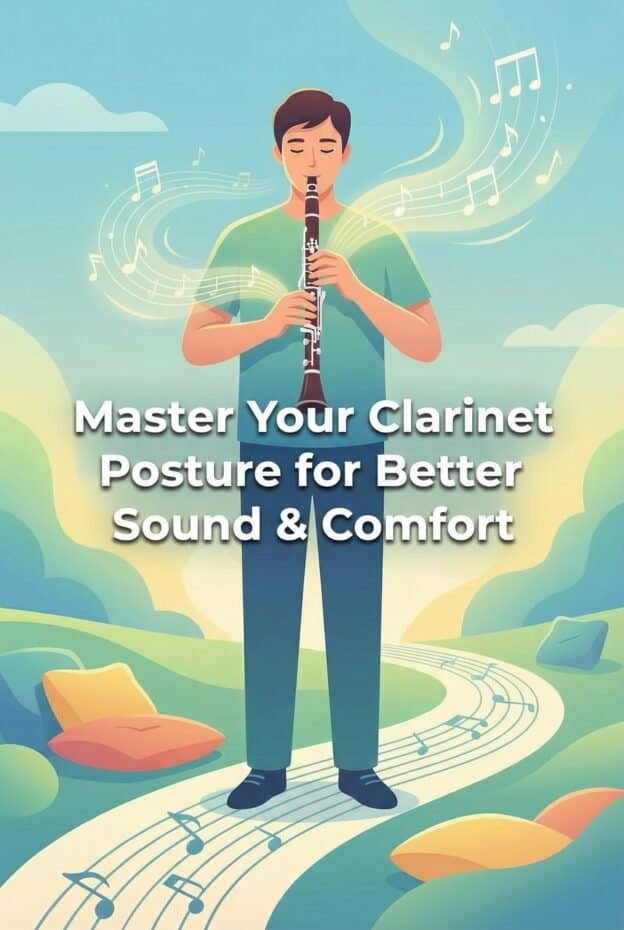
Keep a straight back with a “string pull” visualization, shoulders relaxed, feet shoulder width and flat. When sitting, keep knees at a right angle. Let the left thumb support the clarinet while fingers curve over the keys. Keep a neutral head position and use diaphragmatic inhalation. Use mirror checks, short regular breaks, and shoulder rolls to maintain this alignment.
Why Posture Matters for Clarinet Players
Clarinet posture is the way your body, head, and hands align while you play. For clarinetists, posture is not cosmetic. It shapes airflow, embouchure stability, finger reach, and how long you can play without pain. Good alignment lets the instrument and your body work together instead of fighting each other.
When posture collapses, air gets blocked, shoulders tighten, and the neck strains to reach the mouthpiece. That leads to thin tone, shaky intonation, and early fatigue. Over time, poor posture can contribute to repetitive strain in the wrists, thumbs, and upper back, especially for players who practice daily.
Clarinet students, band members, and adult learners often notice soreness before they notice sound changes. Neck and shoulder tension, tired lower back, or numb fingers are early warning signs. Addressing posture early protects your body and supports long term progress and enjoyment of the instrument.
Good posture also improves stage presence. Audiences and conductors see confidence in an aligned, balanced player. That visual confidence often loops back into better breathing and more secure musical phrasing. Posture becomes a core part of your overall clarinet technique, not an optional detail.
Most clarinetists benefit from a posture reset every 10 to 15 minutes of practice to prevent creeping tension and slouching.
Core Principles: Body Alignment, Measurements & Visualizations
Clarinet posture starts with a neutral spine. Imagine your ears, shoulders, hips, and ankles stacked in a straight line when standing, or ears, shoulders, and hips aligned when sitting. Avoid leaning back in the chair or collapsing the chest. Think of your torso as a tall, flexible column that can expand with air.
A helpful cue is the “string pull” visualization. Imagine a string gently lifting the crown of your head toward the ceiling. This lengthens the spine without stiffening. At the same time, feel your shoulders drop away from your ears. The goal is tall and relaxed, not rigid and military.
For most players, a comfortable clarinet angle is about 30 to 45 degrees from the body. The instrument should come to you, not the other way around. If you find your head jutting forward or your chin reaching, raise the clarinet slightly and bring it closer so your head can stay neutral over your shoulders.
Weight distribution matters. When standing, place feet about shoulder width apart, with slightly more weight on the balls of your feet than on your heels. Knees stay soft, not locked. When sitting, feel both sit bones on the front half of the chair, with equal weight on left and right sides.
Use simple visual checkpoints. From the side, your ear should be roughly above your shoulder, not in front of it. From the front, the clarinet should appear centered with a slight angle to the right, not pulled far to one side. These visual cues are easy to check in a mirror or video recording.
Aim for a clarinet angle of roughly 30 to 45 degrees from your body, adjusting slightly for mouthpiece shape and hand size.
Sitting vs Standing: Practical Adjustments and Exact Measurements
Clarinetists need posture that works both in rehearsal chairs and on stage. The basic alignment principles stay the same, but a few measurements help you adjust quickly. Sitting and standing each have advantages, so it is worth practicing both regularly.
When sitting, choose a flat, armless chair. Sit on the front half, not against the backrest. Your hips should be slightly higher than your knees, which usually means a chair height where your knees form about a 90 degree angle or a little more open. Feet stay flat on the floor, about hip to shoulder width apart.
Check that your thighs angle slightly downward toward your knees. If your knees are higher than your hips, your lower back is more likely to round and your diaphragm has less room to move. In that case, raise the chair or sit on a firm cushion so your hips can rise a bit above knee level.
When standing, place your feet roughly under your shoulders, with one foot slightly ahead of the other for balance. Many players prefer the left foot slightly forward. Keep knees unlocked and let your weight settle evenly. Avoid leaning onto one hip or locking into a stiff, military stance.
In both positions, bring the clarinet to your mouth without dropping or twisting your head. If you notice the bell drifting far to the right or the upper body leaning, reset your feet and hips first, then adjust the instrument angle. Consistent foot and hip placement makes it easier to reproduce a healthy posture every time.
Most players sit with knees at roughly 90 degrees and feet about 30 to 40 cm apart for stable clarinet posture.
Hand, Thumb & Instrument Positioning: Technique and Thumb-Rest Use
The way you use your hands and thumbs directly affects posture. If the clarinet feels heavy or unstable, the rest of your body will tense to compensate. A balanced hand setup lets the fingers move freely while the left thumb and right hand share the instrument's weight.
Start with the left hand. Place the left thumb on the thumb rest so the tip can rock easily between supporting the instrument and operating the register key. The thumb should be slightly bent, not locked straight. Aim for the thumb pad to contact the rest near its center, so you can pivot without strain.
Let the left hand fingers curve naturally over the tone holes. Use the pads of the fingers, not the very tips. If your wrist bends sharply or your knuckles collapse, adjust the clarinet angle slightly or bring the instrument closer to your body until the hand feels more neutral.
The right hand supports a significant portion of the clarinet's weight. The right thumb sits under the thumb rest, again with a gentle bend. Avoid pushing the thumb too far under or behind the rest, which can force the wrist into an awkward angle. Many players benefit from a thumb rest cushion or adjustable rest to improve comfort.
Check that both wrists are straight or only slightly bent, not sharply cocked. Fingers should hover close to the keys without pressing when not in use. If your fingers feel cramped or stretched, experiment with small changes in instrument angle and thumb placement until the hands feel relaxed and agile.
Breathing & Embouchure: Diaphragmatic Techniques for Tone and Endurance
Posture and breathing are inseparable for clarinetists. A tall, open torso allows the diaphragm and ribs to move freely, which supports a steady air column. Slouching compresses this system and forces the throat and shoulders to work too hard, leading to tension and shallow breaths.
Practice diaphragmatic breathing away from the clarinet first. Place one hand on your upper chest and one on your belly. Inhale through the mouth so the belly expands while the upper chest stays relatively quiet. Exhale with a gentle, steady stream as if fogging a mirror, but keep the throat relaxed.
When you add the clarinet, keep the same feeling of expansion around the lower ribs and back. Avoid lifting the shoulders on each breath. The rib cage should widen slightly in all directions, like an umbrella opening. Good posture gives this expansion room, especially around the lower back.
Embouchure also depends on posture. With a neutral head position, the jaw can drop comfortably, and the lower lip can cushion the reed without strain. If the head tilts down or forward, the jaw angle changes and the embouchure may clamp or bite, which hurts tone and endurance.
Think of the embouchure as firm at the corners and flexible at the center. Combine that with a tall, open throat and steady air from the diaphragm. When posture is right, you can maintain this setup longer with less fatigue, which leads to more consistent tone across the full range of the clarinet.
Self-Checks and Feedback: Mirror Practice, Video Recording, and Timed Breaks
Clarinet posture drifts over time, especially during difficult music. Self checks help you catch problems early. A full length mirror is one of the simplest tools. Practice long tones or scales while watching your alignment from the front and side, then adjust until you match your ideal posture cues.
Video recording adds another layer of feedback. Set your phone or camera at roughly eye level, far enough back to see your whole body and clarinet. Record a short practice segment, then review with specific questions: Is my head forward? Are my shoulders creeping up? Is the clarinet angle consistent?
Timed breaks are important. Set a timer for 10 to 20 minutes, depending on your endurance. When it rings, stop playing, put the clarinet down, and stand up if you were sitting. Use this time to reset your posture, walk a few steps, and perform a quick body scan for tension.
During each break, check three things: head position, shoulder height, and lower back comfort. If any area feels tight, address it before resuming practice. Over time, these regular resets train your body to return to healthy alignment more automatically, even during long rehearsals.
Teachers can use mirrors and video with students to build awareness. Ask the student to describe what they see before giving corrections. This builds internal cues rather than dependence on external reminders, which is important for independent practice and performance situations.
Warm-ups and Simple Mobility: Shoulder Rolls, Stretches, and Pre-practice Routines
A short mobility routine before playing prepares your body for clarinet posture. You do not need a full workout, just a few focused movements to loosen common tension spots. Target the neck, shoulders, upper back, and wrists, since these areas work hardest during clarinet practice.
Start with shoulder rolls. Stand tall with arms relaxed at your sides. Slowly roll both shoulders up toward your ears, then back and down in a smooth circle. Repeat 8 to 10 times, then reverse the direction. Keep your jaw relaxed and breathe steadily throughout the movement.
Next, gently stretch the neck. Sit or stand tall, then slowly tilt your right ear toward your right shoulder without lifting the shoulder. Hold for 10 to 15 seconds, breathing calmly, then repeat on the left side. Avoid forcing the stretch; you should feel mild lengthening, not pain.
For the upper back, clasp your hands in front of you at chest height, palms facing out. Gently reach forward while allowing your upper back to round slightly, then breathe into the space between your shoulder blades. Hold for 10 to 15 seconds, then release and reset your tall posture.
Finish with gentle wrist circles and finger shakes. Extend your arms in front of you and slowly rotate the wrists in both directions. Then shake out the hands as if flicking water from your fingertips. This prepares the small muscles that support finger agility and thumb rest contact.
Equipment & Setup: Chairs, Music Stands, Mouthpiece/Reed Alignment, and Small Aids
Equipment setup can either support good clarinet posture or fight against it. Start with the chair. Use a firm, flat, armless chair whenever possible. Soft couches or chairs that tilt backward encourage slouching and make it harder to keep the hips slightly higher than the knees.
Adjust your music stand so the top of the music is at or just below eye level. If the stand is too low, you will bend your neck and upper back to read. Too high, and your shoulders may lift. When seated, place the stand far enough away that you can see the full page without leaning forward.
Mouthpiece and reed alignment also affect posture. Align the reed centered on the flat table of the mouthpiece, with equal rails visible on each side. Then align the flat back of the mouthpiece with the register key side of the clarinet. This helps the instrument angle naturally without twisting your neck to reach the reed.
Small ergonomic aids can make a big difference. A cushioned thumb rest cover or adjustable thumb rest can relieve pressure on the right thumb and wrist. A neck strap or harness is helpful for some players, especially on heavier clarinets, but should be adjusted so it supports without pulling the instrument upward.
Before each practice session, run a quick setup checklist: chair height, stand height, reed and mouthpiece alignment, and thumb rest comfort. Consistent equipment habits reduce the number of posture adjustments your body has to make, which lowers overall tension and fatigue.
Troubleshooting Common Posture Problems and Fast Fixes
Many clarinetists share the same posture challenges. Recognizing the pattern makes it easier to apply quick fixes. Slouching is one of the most common issues. If you notice your back rounding, reset by scooting to the front of the chair, planting your feet, and imagining the string lifting your head again.
Shoulder tension often shows up as raised shoulders or a tight neck. During breaks, perform a few slow shoulder rolls and take three deep, low breaths, focusing on letting the shoulders drop with each exhale. Check that your music stand is not too low, which can cause you to hunch forward.
Neck forward posture, where the head juts toward the stand, strains the upper spine and jaw. Use a mirror or video to spot this. The fix is usually to bring the clarinet slightly closer to your body and raise the stand so your eyes, not your whole head, look down to the music.
Sore fingers or thumbs often come from gripping too hard or from an awkward thumb rest angle. Lighten your finger pressure on the keys and check that the right thumb is under the rest, not behind it. If discomfort persists, consider a thumb rest cushion or an adjustable rest to change the angle.
Breath limitations often feel like you “run out of air” too quickly. This can result from slouching or tight abdominal muscles. Stand up, take several slow diaphragmatic breaths with your hands on your ribs, and then resume playing while maintaining that expanded, open feeling in your torso.
Practice Plans to Build Posture Muscle Memory (Progressions & Session Formats)
Building reliable clarinet posture requires consistent, focused practice. Short, structured routines are more effective than occasional long corrections. Think of posture as a skill you train, just like finger technique or articulation. Over time, your body learns the positions and holds them with less conscious effort.
Begin each practice session with a 3 to 5 minute posture setup. Stand or sit in playing position without the clarinet. Check your feet, hips, spine, shoulders, and head. Add two or three deep diaphragmatic breaths. Then bring the clarinet into position, keeping your alignment unchanged.
Next, spend 5 minutes on long tones or simple scales while focusing only on posture and breathing. Use a mirror if possible. If you feel tension building, stop and reset. This dedicated block teaches your body how good posture feels when paired with sound production.
During the main part of your practice, use timed posture checks. Every 10 to 15 minutes, pause, put the clarinet down, and run through a 30 second reset: shoulder rolls, neck check, and a quick scan of your feet and spine. Then resume playing with the refreshed alignment.
Once or twice a week, record a 5 to 10 minute practice segment and review it only for posture. Take notes on recurring issues, such as head tilt or leaning on one hip. Use those notes to create one or two specific posture goals for your next session, like “keep shoulders down” or “clarinet angle consistent.”
Sample 30-minute Clarinet Posture Practice Session
A simple 30 minute format can build posture habits efficiently. Adjust times as needed for longer or shorter sessions, but keep the structure: setup, focused posture work, main practice with checks, and a brief cooldown reset.
5 minutes: Body warm up and posture setup without instrument
5 minutes: Long tones or slow scales with mirror, posture focus
15 minutes: Repertoire or technical work with 2 timed posture checks
5 minutes: Cooldown, gentle stretches, and posture reflection
Historical Context and the Martin Freres Archive (legacy instruments and posture evolution)
Clarinet posture has evolved alongside instrument design and performance practice. Early clarinetists in the 18th and 19th centuries often played with more upright, formal stances, influenced by military bands and court ensembles. Chairs were higher and straighter, and players typically stood for solos and important passages.
As clarinet design improved, including changes to keywork and bore, performers explored greater dynamic range and longer phrases. This demanded more efficient breathing and alignment. Historical photos and illustrations show a gradual shift from rigid, vertical poses to slightly more natural, balanced stances that still preserved tall posture.
Instruments from the Martin Freres legacy period reflect these changes. Key placement and thumb rest design influenced how players held the clarinet, which in turn affected wrist and shoulder angles. Studying these instruments helps modern clarinetists understand why certain posture traditions developed and how ergonomics have improved over time.
Field Note: The Martin Freres archive includes images and descriptions of clarinetists whose posture reflects their era's performance norms. Editors may wish to cross check archive dates and captions to trace how seated and standing positions, clarinet angles, and hand placement shifted as key systems and concert settings changed.
Today, posture guidance blends historical awareness with modern knowledge of anatomy and injury prevention. While the visual style of playing has relaxed compared to early concert traditions, the core principles of tall alignment, free breathing, and balanced hand support remain consistent across generations of clarinetists.
Key Takeaways
Clarinet posture starts with a tall, relaxed spine, neutral head, and stable feet, whether sitting or standing, so air and fingers can work efficiently.
Hand and thumb setup, instrument angle, and equipment choices like chair and stand height directly influence comfort and sound quality.
Regular self checks, short mobility routines, and structured practice plans build posture muscle memory, improving endurance and reducing injury risk.
Frequently Asked Questions
What is clarinet posture?
Clarinet posture is the way your body, head, and hands align while you play the instrument. Good clarinet posture keeps the spine tall, shoulders relaxed, head neutral, and hands comfortably curved on the keys. This alignment supports free breathing, steady embouchure, finger agility, and long term playing comfort.
How should I sit or stand when playing the clarinet?
When sitting, use a flat, armless chair, sit on the front half, keep hips slightly higher than knees, and place feet flat about shoulder width apart. When standing, place feet under your shoulders with one foot slightly forward, knees soft, and weight balanced. In both cases, keep a tall spine and neutral head.
How do I use my left thumb and thumb rest correctly?
Place the left thumb on the thumb rest with a gentle bend so it can both support the clarinet and reach the register key. The thumb pad should contact the rest near its center, allowing easy pivoting. Avoid locking the thumb straight or twisting the wrist; adjust the clarinet angle until the hand feels natural.
What quick exercises relieve shoulder and neck tension during practice?
Pause and put the clarinet down. Do 8 to 10 slow shoulder rolls in each direction, then take three deep, low breaths while letting the shoulders drop on each exhale. Follow with gentle neck tilts, bringing one ear toward the same shoulder for 10 to 15 seconds per side, without forcing the stretch.
How often should I take breaks, and what should I do during them?
Most clarinetists benefit from a short break every 10 to 20 minutes of focused practice. During breaks, stand up if you were sitting, walk a few steps, perform shoulder rolls, check your head and spine alignment, and take several diaphragmatic breaths. Use this time to reset posture before resuming.
Will changing my posture improve my tone and endurance?
Yes. Better posture gives your lungs and diaphragm more room to work, which supports steadier airflow and fuller tone. It also reduces unnecessary tension in the neck, shoulders, and hands, so you can play longer without fatigue. Many players notice clearer sound and improved control within a few weeks of consistent posture work.