If you learned clarinet on a plastic student horn with a slightly crooked ligature, there is a good chance your first victory song was “Yankee Doodle.” One octave, a handful of notes, and suddenly the Bb clarinet felt like a voice instead of homework. This simple tune has followed generations of clarinetists from school band stands to major concert halls.
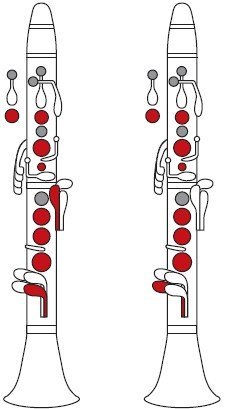
Receive a free PDF of the chart with clarinet fingering diagrams for every note!
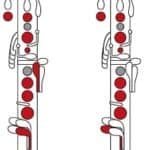
A Yankee Doodle clarinet fingering chart is a visual guide showing each note and matching Bb clarinet fingering for the entire melody. It helps beginners and advanced players learn the tune quickly, build confidence with basic finger patterns, and focus on musical expression instead of guessing note positions.
The story behind Yankee Doodle for clarinet
“Yankee Doodle” began as a marching song in the 18th century, long before the modern Boehm-system clarinet showed up in wind bands. Soldiers sang it, fifers played it on wooden flutes, and drummers punched out that square little rhythm. When the clarinet started to dominate military and town bands in the 19th century, the tune slipped naturally onto the new kid in the ensemble.
The melody fits perfectly in the clarinet's middle register: open G, first-finger A, simple tongue patterns, and friendly jumps. Bandmasters loved it because it let beginners hold their Bb clarinet with something like pride on day one. Parents heard a recognizable song, students heard applause, and teachers heard the first signs of real embouchure and breath support.
How famous clarinetists have touched Yankee Doodle
Most great clarinetists do not list “Yankee Doodle” on their concert programs, but the spirit of this little tune shows up everywhere in their phrasing, their folk inflections, and their comfort with simple, singable lines.
Imagine Anton Stadler, Mozart's clarinetist, who inspired the “Clarinet Concerto in A major, K. 622.” Stadler lived in a time when folk tunes, marches, and street songs shaped how players approached breath and ornamentation. The same ease you feel playing “Yankee Doodle” lives in those long clarinet lines floating over the orchestra in the second movement of Mozart's concerto.
Heinrich Baermann, who inspired Carl Maria von Weber's clarinet concertos, played in military and court bands where catchy marches were daily bread. A tune like “Yankee Doodle” would have felt perfectly at home to him: simple interval patterns, clear tonic and dominant movement, and a strong rhythmic spine that lets the clarinet sing even at a whisper.
Jump forward to jazz: Benny Goodman and Artie Shaw both loved to quote little American folk fragments in their solos. Listen to Goodman's live solos on tracks like “Sing, Sing, Sing” or “Don't Be That Way” and you can hear playful pentatonic snippets and marching-song gestures. They might not play “Yankee Doodle” straight, but they twist the same building blocks into bluesy, swinging lines.
Buddy DeFranco, moving bebop onto the clarinet, flipped those same childlike intervals into rapid chromatic runs. Tiny motifs like the opening of “Yankee Doodle” are exactly the kind of material jazz players re-shape, invert, or syncopate. Once you can whisper that melody cleanly on your Bb clarinet, you have raw material for improvisation.
In more folk-centered traditions, players like Giora Feidman and David Krakauer take simple, voice-like lines and stretch them into emotion-packed cries. Listen to Feidman on klezmer tunes like “Shalom Aleichem” or Krakauer on “Der Gasn Nigun” and imagine those same clarinet bells ringing out a folk version of “Yankee Doodle” in a village square. The feeling is not far off: clear melody, human breath, and storytelling over fancy finger fireworks.
Modern classical soloists like Sabine Meyer, Martin Frost, and Richard Stoltzman often program encores with folk flavor. Stoltzman has recorded spirituals and Americana, Martin Frost has played arrangements of Nordic folk songs, and Sabine Meyer has championed clarinet arrangements of dances and songs. “Yankee Doodle” belongs in that family: modest, catchy, and ready to be dressed up in any style from swing to modern minimalism.
From campfire tune to concert program: pieces that echo Yankee Doodle
“Yankee Doodle” shows up in surprising places, especially in works that celebrate American themes or play with folk material. For a clarinetist, these connections make the tune feel much bigger than a page in a beginner method book.
- Louis Moreau Gottschalk used American song fragments in piano works like “The Union” and “The Banjo” that later inspired wind arrangements including clarinet parts.
- Morton Gould's “American Salute,” built on “When Johnny Comes Marching Home,” often sits on the same concert programs as arrangements of “Yankee Doodle” for concert band and clarinet section features.
- John Philip Sousa's marches, such as “Stars and Stripes Forever,” share that same square, singable phrase structure that makes “Yankee Doodle” feel instantly at home in any American band folder.
In film music, composers love to quote the tune or twist it into minor keys. Listen for it in patriotic scenes, military parades, or tongue-in-cheek moments in older cartoons. Many studio clarinetists have recorded little snatches of this melody for soundtracks, tucked inside arrangements with clarinet, flute, and piccolo sharing the line.
On the clarinet teaching side, there are countless arrangements for Bb clarinet and piano, clarinet choir, and mixed woodwind ensembles. You will find “Yankee Doodle” tucked between arrangements of “Oh! Susanna” and “When the Saints Go Marching In” in beginner clarinet anthologies. These books often sit right next to more serious repertoire like the Mozart Concerto or Brahms “Sonatas for Clarinet and Piano” on the same music stand. That mix is part of the magic: high art and humble song sharing one instrument.
Most “Yankee Doodle” clarinet arrangements in band books sit comfortably from low G to A above the staff. This compact range lets new players focus on breath, tonguing, and fingering stability without worrying about throat-tone quirks or altissimo notes.
A historical journey: from fife lines to Bb clarinet bells
The roots of “Yankee Doodle” reach back to British and American troops singing on muddy roads. The tune traveled by voice and fife, not by clarinet yet. When the 19th century brought improved clarinet key systems, better mouthpieces, and stronger ligatures, wind bands grew, and so did their repertoire of patriotic and folk material.
Early clarinet makers like the Martin Freres workshops in France saw their instruments carried into town bands, dance halls, and outdoor pavilions. In the Martin Freres archives, there are stories of village musicians using simple clarinet marches and songs to teach young players who had never seen printed music before. A melody like “Yankee Doodle” would have been exactly the type of tune passed around from stand to stand, part of a living musical language.
As military bands turned into civic wind ensembles and school bands, “Yankee Doodle” followed. By the mid 20th century, method books for clarinet often lined it up next to basic scale patterns in C major and G major. Teachers used the tune to move students from playing exercises to playing actual music that grandparents could hum along to.
Jazz-era clarinetists borrowed that same simplicity but bent it with swing. In a Benny Goodman small-group rehearsal, it would not have been strange for the band to joke around by slipping “Yankee Doodle” into a blues, then twisting it into a minor mode. For a player, that is the path from school song to real improvisation: take a familiar melody, shift the harmony under it, add a blue third, and hear it change personality.
Why Yankee Doodle feels so good on clarinet
On the Bb clarinet, “Yankee Doodle” feels like conversation. The melody sits in the clarion and throat-tone area, where the instrument sounds closest to a singing voice. Tonguing on the reed is light, the left-hand fingers move in predictable patterns, and the bell resonates with each stepwise move up and down.
Emotionally, the tune carries a bit of childhood, a bit of marching energy, and a hint of mischief. That jump from G up to C and back has the same playful tug you hear when Richard Stoltzman shapes a simple phrase in an American song arrangement or when Martin Frost lets a folk-like motif grow into a soaring line. Simplicity is not a limitation; it is a frame.
For many players, the first time “Yankee Doodle” really locks in with a metronome click or a piano accompaniment is the moment the clarinet stops feeling like a puzzle of keys and pads and starts feeling like an instrument that can tell stories. The fingers know where to go, so the heart can start to lead.
What Yankee Doodle unlocks for your playing
Working with a Yankee Doodle clarinet fingering chart gives you more than just one tune. It gives you a safe playground for fundamentals that later show up in Mozart, Weber, Gershwin, Benny Goodman solos, klezmer freylekhs, and film-score lines.
| Skill | How Yankee Doodle helps | Where it shows up later |
|---|---|---|
| Stepwise finger patterns | Repeats simple G-A-B-C moves | Mozart Concerto slow movement |
| Tonguing clarity | Short repeated notes in easy range | Weber Concertino opening fanfares |
| Phrase shaping | 4-bar phrases, clear cadences | Gershwin “Rhapsody in Blue” themes |
Once you can play the tune without looking at your fingers, you can start to phrase it like a pro: a tiny crescendo into the high note, a gentle drop at the cadence, a little rubato on the last phrase. Those same gestures carry right into Brahms “Clarinet Sonatas,” Debussy's “Premiere Rhapsodie,” and the famous opening glissando of “Rhapsody in Blue.”
A brief look at the Yankee Doodle clarinet fingering chart
The fingering chart for “Yankee Doodle” on Bb clarinet focuses on the comfortable G to A-above-the-staff zone. You will see familiar patterns: open G, first-finger A, simple B and C fingerings, and maybe a gentle cross from middle C up to D on the register key. It is laid out so your eyes can match each written note to a clear fingering diagram.
Think of the chart as a map, not a rule book. Use it to check that your left-hand fingers are staying relaxed over the tone holes, that your right-hand is ready to support notes like low G, and that your thumb is balancing the weight near the thumb rest rather than squeezing. Once the mechanics feel easy, close the chart, hum the tune, and let the clarinet echo your voice.
- Hum the entire melody away from the clarinet.
- Play it slowly with the fingering chart in front of you.
- Repeat, each time glancing less at the chart.
- Add a metronome at a steady tempo.
- Finally, add your own dynamics and accents.
| Practice block | Time | Focus |
|---|---|---|
| Slow melody with chart | 5 minutes | Correct fingerings and clean tone |
| Memory play-through | 5 minutes | No looking at fingers or chart |
| Musical version | 5 minutes | Dynamics, clear phrases, steady tempo |
| Issue | Likely cause | Quick fix |
|---|---|---|
| Squeaks on high A | Loose embouchure or leaky fingers | Firm corners, check left-hand seal |
| Notes not connecting | Heavy tongue on reed | Touch the reed lightly, blow through |
| Rhythm feels uneven | Rushing the eighth notes | Practice with metronome on every beat |
Key Takeaways
- Use the Yankee Doodle clarinet fingering chart to master simple patterns so you can focus on phrasing and sound.
- Treat this tune like real music: shape phrases, add dynamics, and listen as if you were playing Mozart or Gershwin.
- Remember that many great clarinetists grew from the same folk-style melodies, turning them into rich, expressive playing.
Frequently Asked Questions
What is Yankee Doodle clarinet fingering chart?
A Yankee Doodle clarinet fingering chart is a visual guide that shows every note of the melody with its matching Bb clarinet fingering. It helps players move quickly from reading notes to making music, giving beginners a clear path while still supporting advanced players who want to refine sound and articulation.
What key is Yankee Doodle usually played in on Bb clarinet?
Most band and method book versions of Yankee Doodle for Bb clarinet are written in concert Bb major, which feels like C major for the clarinet. That means no sharps or flats in the key signature, easy left-hand patterns, and a very friendly way to learn tone control in the middle register.
How can I make Yankee Doodle sound more expressive on clarinet?
Think like a singer. Add small crescendos into the highest note of each phrase, soften slightly at the cadence, and breathe where a vocalist would breathe. Listen to clarinetists like Richard Stoltzman or Sabine Meyer on lyrical pieces and borrow their vibrato control, phrase shapes, and smooth legato style.
Is Yankee Doodle only for beginner clarinet players?
Not at all. Beginners use it to learn basic fingerings and rhythm, but advanced players can use the same melody to practice tone colors, articulation variants, and even improvisation. Jazz clarinetists inspired by Benny Goodman and Artie Shaw often twist simple tunes like this into creative solos and playful variations.
How often should I practice Yankee Doodle with the chart?
Short, regular sessions work best. Spend about 5 to 10 minutes a day with the Yankee Doodle fingering chart for a week, focusing first on clean notes, then on memory, then on musical phrasing. After that, revisit it occasionally as a warmup tool with different dynamics and articulations.
For more clarinet stories, charts, and practice ideas, you can explore scale guides, historical pieces, and fingering articles available across Martin Freres resources, all dedicated to helping your Bb clarinet sing as personally as possible.