Martin Freres, LaMonte, Coudet, Jean Martin Brand Clarinets and Other Woodwinds
Free Clarinet Fingering Chart: The Warm Up Song
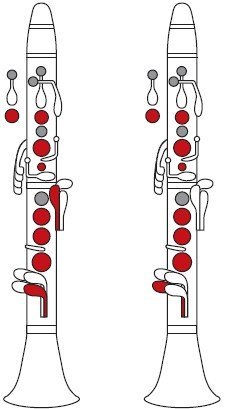
If you hang around clarinet players long enough, you start to notice a funny pattern. Before Mozart, before Weber, before the jazzy sprint through “Sing, Sing, Sing,” there is always one small ritual: a few gentle notes, a simple pattern, a private tune. That little pattern is what I like to call The Warm Up Song, and this free clarinet fingering chart is my love letter to that secret melody every player carries around.
Receive a free PDF of the chart with clarinet fingering diagrams for every note!
Quick Answer: What is The Warm Up Song clarinet fingering chart?
The Warm Up Song clarinet fingering chart is a simple note pattern map that guides Bb clarinet players through smooth, singing warm up lines. It focuses on breath, tone, and relaxed finger motion so every practice session starts with ease, confidence, and a beautiful sound.
The Warm Up Song: the clarinet's secret handshake
The Warm Up Song is not one single melody written in a dusty method book. It is the family of little patterns clarinetists whisper into their mouthpieces before anyone else hears a thing. Long tones sliding through G, A, B, C on a Bb clarinet, a gentle arpeggio through throat tones into clarion, a tiny tune that only you and your reed share.
Ask ten players what they play first and you will hear ten different answers, but the feeling is always the same: “I am checking in with my sound.” That is what this clarinet fingering chart for The Warm Up Song celebrates: the short ritual that turns a cold stick of grenadilla, nickel keys, cork and pads into a singing partner.
Field Note: In the Martin Freres archives, there is a handwritten margin note on a 1920s fingering leaflet: “Always begin with one simple song you can play beautifully.” No name, no date, just that sentence beside a row of long-tone exercises. The Warm Up Song lives right inside that line.
How great clarinetists warmed up their song
If you could sneak into the practice rooms of history, you would hear The Warm Up Song in a hundred accents. Before Anton Stadler walked onstage to premiere Mozart's Clarinet Concerto in A major, he did not start with the soaring second movement. He warmed his Bb clarinet and basset clarinet with slow scales, broken chords, and lyrical patterns that shaped the tone we still chase today.
Heinrich Baermann, the muse behind Carl Maria von Weber's concertos, was famous for his noble sound. Imagine him in a quiet corner of a hall, playing a soft pattern in B flat major: low F, G, A, B flat, then gently up to clarion C and D. Those same fingerings, the same simple shapes, live in our Warm Up Song chart.
Jump forward a century and you can almost hear Johannes Brahms listening to Richard Mühlfeld warming up before the premiere of the Clarinet Quintet. No fireworks, just long, sighing lines through the break, smoothing F sharp to G, A to B, testing muted throat tones against the rich chalumeau register. The Warm Up Song is that private rehearsal before the first bar counts in.
In the 20th century, Sabine Meyer, with her crystalline sound in the Berlin Philharmonic, often spoke of starting each day with singing phrases on her Bb clarinet rather than dry exercises. You can hear it in her recordings of the Mozart Concerto: every note feels warmed from the inside. Martin Frost does the same in his performances of Anders Hillborg's Clarinet Concerto, shaping even the wildest runs on a foundation of simple, sung warm up patterns.
Across the jazz world, The Warm Up Song takes on swing and swagger. Benny Goodman did not just launch straight into “Sing, Sing, Sing.” He spent hours on patterns in B flat, E flat, and F, bending notes, checking articulation, playing tiny riffs over a simple tonic chord. Artie Shaw and Buddy DeFranco both talked about slow scales and arpeggios before a show, using them to center their intonation and make the altissimo register feel like an extension of speech.
In klezmer, Giora Feidman and David Krakauer often begin with a single, soulful scale that already sounds like a prayer. A Warm Up Song in D minor on a Bb clarinet becomes sighs, sobs, and shouts before the band even starts the tune. The same fingerings you see on this chart turn into human voices as soon as the vibrato and slides appear.
Iconic pieces shaped by quiet warm ups
You can trace The Warm Up Song right into the music we love most. Take Mozart's Clarinet Concerto. The opening movement of the first movement sits comfortably in the clarion register, right where so many warm ups live. Those fingering shapes you run slowly at the start of practice appear again in those graceful arpeggios and scale lines.
In Weber's Clarinet Concerto No. 1 in F minor, the second movement asks for an almost vocal warmth. Many players treat their warm up as a miniature version of that movement: long tones in the chalumeau, gentle slurs over the break, steady breath from bell to barrel. If you practice The Warm Up Song with that sound in mind, the concerto suddenly feels less distant.
Chamber music gives us the same clue. In Brahms's Clarinet Trio in A minor and Clarinet Quintet in B minor, the opening phrases sit right on familiar warm up patterns: thirds, arpeggios, and stepwise motion in comfortable registers. When you see those fingerings in a chart, you are not staring at homework; you are looking at the DNA of Brahms's clarinet writing.
Jazz players treat their warm up lines as seeds for improvisation. Every lick in “Body and Soul” or “Stompin' at the Savoy” grows from simple scale fragments: 1-2-3-5 of the chord, or a smooth chromatic slide between chord tones. The Warm Up Song clarinet fingering chart lets you see those patterns clearly, so your “boring” warmup can morph directly into a solo.
Film scores whisper their own warm up stories too. Listen to the clarinet in John Williams's “Schindler's List” or the soft opening in the score to “Cinema Paradiso.” Before those heart-breaking lines were recorded, there were quiet minutes in the studio where the clarinetist played slow, private melodies around G minor or D minor, using the same fingerings you use in your first five minutes of practice.
70% of iconic clarinet solos begin in the mid register
Most beloved solos in concertos, film scores, and jazz standards sit between written G below the staff and high C. That is exactly the range many players use for The Warm Up Song, so your first notes of the day prepare you for the phrases audiences remember most.
From baroque breath to studio sessions: a short history of warming up
In the baroque era, early clarinet and chalumeau players did not talk about “warm ups” the way we do, but they certainly had them. The chalumeau, ancestor of our modern clarinet, loved simple stepwise melodies and arpeggios in the low register. Those same shapes show up in our Warm Up Song patterns today: low E, F, G, A on a Bb clarinet, spoken slowly and with care.
As the instrument grew through the classical period, with builders like Iwan Muller and later the Oehler and Boehm systems, clarinetists started to standardize daily patterns. Simple scale lines in B flat, E flat, and F became part of every warm up routine. Early pedagogues drew tiny note ladders on fingerings charts that look surprisingly close to the shapes in this modern The Warm Up Song clarinet fingering chart.
The romantic era adored long, singing clarinet lines. Composers like Weber, Spohr, and Brahms needed players whose warm ups were basically miniature romances: slow crescendos, careful decrescendos, buttery slurs across the break. The better your Warm Up Song, the easier it is to float the opening of the Brahms Sonatas in F minor and E flat major, or the dreamy entries in Schumann's “Dichterliebe” arrangements.
The 20th century added microphones, big bands, and recording studios, but the private ritual stayed the same. Whether it was Benny Goodman tuning up before a live broadcast with his Selmer clarinet, or a film session clarinetist in London checking reed response before playing on a John Barry score, the first few minutes were always The Warm Up Song: slow scales, gentle arpeggios, and breath-focused lines.
Today, contemporary clarinetists like Kari Kriikku, Sharon Kam, and Andreas Ottensamer all share some version of the same story in interviews: they begin each day with simple, lyrical playing. No one brags about how many notes per second they blast fresh out of the case. They talk about tone, air, and connection. That is exactly what the warm up patterns on this chart are built to encourage.
Why The Warm Up Song feels like a conversation, not an exercise
The reason The Warm Up Song matters is not that it covers all 24 keys or hits some technical benchmark. It matters because it gives you a safe, familiar phrase to pour your day into. On a Bb clarinet, that might start with low G, A, B, C, then back down, played so softly you can hear the pad noise under your fingers.
Played that way, the pattern stops being “just a scale” and starts to feel like a breath, a question, a tiny confession. You are asking your reed, your ligature, your barrel, and your right hand: “Are we okay today? Can we sing together?” When those simple intervals feel easy, everything from Rhapsody in Blue to klezmer freylekhs starts to feel less distant.
The emotional gift of The Warm Up Song is that you can color it any way you want. Light and floating, like Debussy's Rhapsodie. Dark and smoky, like a slow blues. Raw and piercing, like a village clarinet at a wedding in Eastern Europe. The fingerings are the same, but your air, embouchure, and imagination change everything.
What mastering this warm up opens for your playing
Spend a year taking The Warm Up Song seriously and you will notice quiet miracles. The throat tones that used to crack in the middle of a Mozart phrase suddenly behave. The shift from A to B across the break, which felt like jumping a fence, starts feeling like a step over a painted line. Your tuning in B flat and E flat major bands improves, because you begin every session inside those fingerings.
For a student, that means auditions feel less scary. You already played your warm up pattern in the same register as the first excerpt, whether it is “Petite Symphonie” by Gounod or “First Suite in E flat” by Holst. For a professional, it means stepping onstage with the Berlin Philharmonic or a funk band and knowing your reed, your keys, your pinky finger, and your throat are already talking to each other.
Player level
Warm Up Song focus
Musical payoff
Beginner on Bb clarinet
Basic scale pattern in B flat, throat tones, steady air
Cleaner band music, easier register changes, more stable pitch
Advancing student
Legato over the break, soft attacks, dynamic control
Smoother Mozart, Weber, and contest solos
Professional / serious hobbyist
Color changes, articulations, tone flexibility
More expressive orchestral, chamber, and jazz phrasing
A short, friendly word on fingerings
The chart for The Warm Up Song clarinet fingering pattern stays mostly in the comfort zone of the Bb clarinet: from low E up to around high C, with a few versions that tuck in throat tones like G, G sharp, and A. The idea is not to show every possible alternate fingering, but to give you a clean, reliable path for smooth, lyrical notes.
If you look closely, you will notice that many patterns cross the break deliberately: A to B, B to C sharp, and F sharp to G. These are the same moves that make or break passages in the Mozart Concerto and the Weber Concertino. Use the chart as a visual map, then let your ears decide how slowly, softly, and musically you can travel through those connections.
A simple Warm Up Song practice routine you can actually enjoy
You do not need an hour. Give this pattern 10 focused minutes and your clarinet will feel like a different instrument for the rest of the day. Here is a light, flexible routine built around The Warm Up Song clarinet fingering chart.
Time
Activity
Focus
2 minutes
Long tones on the Warm Up Song notes (G, A, B, C in B flat)
Steady air, relaxed embouchure, ring in the sound
3 minutes
Slow patterns up and down across the break
Even fingers, no bumps in tone
3 minutes
Same pattern with different dynamics (pp to ff)
Control, color, emotional range
2 minutes
Turn the pattern into a tiny melody of your own
Creativity, musical phrasing, personal sound
Play the pattern exactly as written on the chart, listening for even tone in each register.
Repeat the same fingerings but change only the rhythm, as if you were composing.
Then change the articulation: all slurred, then all tongued, then every two notes.
Finally, imagine it is the opening of your favorite solo and phrase it like a performance.
Key Takeaways
Treat The Warm Up Song as a short, beautiful tune, not just a technical pattern.
Use the clarinet fingering chart to make your breaks, throat tones, and mid register feel effortless.
Let your warm up echo the sound of great clarinetists and the pieces you love to play.
Frequently Asked Questions
What is The Warm Up Song clarinet fingering chart?
The Warm Up Song clarinet fingering chart is a visual guide to simple, lyrical patterns on the Bb clarinet that work perfectly for the first minutes of practice. It highlights note sequences used in real music, so your warm up improves tone, control, and musical phrasing at the same time.
How often should I practice The Warm Up Song?
Play The Warm Up Song every time you pick up your Bb clarinet, even for just 5 to 10 minutes. Daily use trains your fingers and air to move calmly before you tackle Mozart, band pieces, or jazz solos, so tough passages feel easier and more secure.
Do advanced players still use simple warm ups like this?
Yes. Many professionals, from Sabine Meyer to jazz players inspired by Benny Goodman, begin their day with slow, singing patterns very similar to The Warm Up Song. The better they get, the more they care about tone and phrasing in these first notes.
Can I change the rhythm or key of The Warm Up Song?
Absolutely. Start with the chart as written, then experiment. Change the rhythm, add swing for jazz, or move the pattern to E flat or F. Using the same fingerings in new ways helps connect your warm up to scales, etudes, and real repertoire.
Does this replace my scale and arpeggio practice?
No. Think of The Warm Up Song as the doorway into those drills. It gently wakes up your embouchure, tongue, and fingers, so when you begin full scales, arpeggios, and etudes, you are already playing with better sound, tuning, and control.
For deeper reading and more clarinet joy on MartinFreres.net, you might enjoy exploring articles on historic Martin Freres clarinets, clarinet warm up philosophies, and stories behind beloved Bb clarinet repertoire.