If you play Bb clarinet, you probably met “The Itsy Bitsy Spider” long before you met your first reed. It is that tiny melody hiding in nursery books, playgrounds, and music classrooms, waiting for the moment you pick up your clarinet and turn it into something personal and alive.
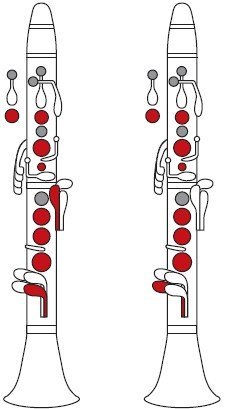
Receive a free PDF of the chart with clarinet fingering diagrams for every note!
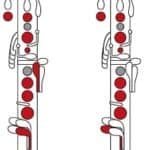
The Itsy Bitsy Spider clarinet fingering chart is a simple Bb clarinet note guide that shows which keys to press for every pitch in the melody. It helps beginners and returning players read, finger, and play the song confidently while building tone, breath control, and musical storytelling.
How The Itsy Bitsy Spider Becomes A Clarinet Story
On the surface, The Itsy Bitsy Spider is a tiny children's song. But in the hands of a clarinetist, it turns into a full little scene: raindrops, motion, struggle, and that quiet victory when the sun comes out. With a Bb clarinet in your hands and a simple fingering chart in front of you, you get to paint all of that using reed, keywork, and breath.
The melody usually sits in a comfortable range around low G, A, B, C, and D on the Bb clarinet. That puts it right where the instrument speaks easily, so even a first-year player can shape phrases the way great artists shape the Mozart Clarinet Concerto or Gershwin's Rhapsody in Blue. The scale patterns you touch here will come back later in Weber's Clarinet Concerto No. 1, Brahms' Clarinet Sonata in F minor, and even Benny Goodman's solos.
From Nursery Tune To Practice Secret Of Great Clarinetists
Many famous players quietly use simple songs like The Itsy Bitsy Spider as warmups, lyrical studies, and phrasing experiments. They might not talk about it on stage with the Berlin Philharmonic or the New York Philharmonic, but behind the scenes these tiny melodies are laboratories for sound.
Imagine Sabine Meyer in a rehearsal break with the Staatskapelle Dresden, gently lipping a children's tune to check pitch and legato on her Buffet clarinet. Or Martin Frost in a dressing room, shaping a lullaby-like phrase with soft subtone, the way he does in his recordings of “Klezmer Dance” and Anders Hillborg's Clarinet Concerto. The specific song may change, but the idea is the same: an easy melody exposes everything about tone, embouchure, and breath.
Jazz legends did this too. Benny Goodman, between big band sets at the Paramount Theatre, would noodle through nursery rhymes and folk songs to re-center his sound before leaping back into “Sing, Sing, Sing” or “Stompin' at the Savoy.” Artie Shaw could turn even the simplest line into a swing etude, adding a passing tone here, a blue note there, like a private game with his Boehm-system clarinet.
Even klezmer players such as Giora Feidman and David Krakauer talk often about taking very simple melodies and bending them until they smile, cry, or laugh. Listen to Feidman's tone in “Yiddish Mama” or Krakauer's playing with the Klezmatics: behind all the fireworks is a love for clear, singable lines. That is exactly the spirit that can transform your version of The Itsy Bitsy Spider.
A Short Journey: From Folk Melody To Clarinet Classroom
The Itsy Bitsy Spider has roots in traditional children's rhymes from late 19th and early 20th century English and American songbooks. Before it settled into the familiar words about the water spout, it floated through oral tradition as clapping games, playground chants, and lullaby fragments sung without accompaniment.
As public school music programs grew in the mid-20th century, this tune crept into beginner method books right alongside “Mary Had a Little Lamb” and “Twinkle, Twinkle, Little Star.” Clarinet teachers quickly realized that the contour of The Itsy Bitsy Spider matches very practical note patterns on the Boehm clarinet: stepwise motion, tiny leaps, and repeated notes that help students synchronize fingers with tongue.
In the same decades, classical clarinet was exploding with big solo names. Richard Stoltzman was recording Copland's Clarinet Concerto and new works by Leonard Bernstein. The Chicago Symphony was releasing fiery performances of Carl Nielsen's Clarinet Concerto. Even while audiences thrilled to those large-scale works, the students inspired by them were in school bands carefully squeaking out The Itsy Bitsy Spider, setting the first stones of the same musical road.
By the time contemporary players like Kari Kriikku and Andreas Ottensamer started commissioning flashy concertos by composers such as Unsuk Chin and Guillaume Connesson, music education had fully embraced nursery melodies as gateways into rhythm, articulation, and phrasing. Somewhere in a beginner band room, a young clarinetist was learning to slur two-note groups on The Itsy Bitsy Spider while their future heroes navigated cadenzas in modern concert halls.
How This Little Tune Connects To Big Clarinet Masterpieces
It might sound wild, but the same simple stepwise lines you use in The Itsy Bitsy Spider appear, in more grown-up form, all over the clarinet repertoire.
- Mozart's Clarinet Concerto in A major, K. 622: The second movement opens with a gentle, singing phrase mostly built from tiny steps and neighbor tones. Practice The Itsy Bitsy Spider with a round, even tone, and you are quietly preparing for that kind of lyricism.
- Weber's Clarinet Concerto No. 2 in E flat major: The famous slow movement uses simple melodic curves in the upper register. The control you build moving from low A to middle D in The Itsy Bitsy Spider helps later when you slide between written C and G in Weber.
- Brahms Clarinet Sonata in E flat major, Op. 120 No. 2: The opening melody in the first movement feels like a grown-up lullaby. Brahms leans heavily on stepwise notes, just with richer harmony underneath.
On the jazz side, you can hear the ghost of children's melodies everywhere:
- In Benny Goodman's recording of “Body and Soul,” he uses gently rising figures and repeated notes not far from what you play in The Itsy Bitsy Spider, just rhythmically stretched and harmonically colored.
- Artie Shaw's solos on “Begin the Beguine” often transform simple up-and-down patterns into fluid, dancing lines that could easily start as a nursery tune in practice.
Film and game composers have not forgotten this power either. Think of John Williams' writing for clarinet in “E.T.” or in the magical textures of “Harry Potter and the Sorcerer's Stone.” The clarinet often carries warm, childlike motifs, shaped with the same kind of breath support and legato that make your spider climb believable. In many animated films, clarinet doubles flutes and oboes to bring innocence to the soundtrack, and that same color is available to you in a living room session with The Itsy Bitsy Spider.
Most versions of The Itsy Bitsy Spider on Bb clarinet use only about 8 to 12 distinct pitches. That tiny set of notes gives you a safe space to work on vibrato experiments, breath shapes, and tone shading without getting lost in difficult fingerings.
Why The Itsy Bitsy Spider Feels So Good To Play
There is a reason teachers reach for this tune when a nervous beginner assembles a clarinet for the first time. The story is simple and deeply human: you try, you fall, you try again. On clarinet, that story feels almost physical. You feel the climb as your fingers walk upward on the tone holes, and you feel the fall in your air and your embouchure as the line returns downward.
Play it softly, and the spider sounds fragile and careful, like a pianissimo line in Debussy's “Premiere Rhapsodie.” Add a little crescendo as the spider climbs, and you are practicing the same dramatic shaping you will need for the climax of Copland's Clarinet Concerto. Hold a note just slightly longer on the word “out,” and you suddenly have character, narrative, and a tiny taste of opera phrasing.
For many adults returning to clarinet after years away, The Itsy Bitsy Spider carries a wave of nostalgia. Maybe it was the first tune you played in school band on a beat-up student clarinet. Maybe you played it for a child or grandchild. That emotional link can be as powerful as any symphony solo, and it can motivate daily practice in a way scales alone sometimes cannot.
What This Song Can Do For Your Playing Right Now
So what does all this history and sentiment actually do for you as a Bb clarinet player holding a fingering chart?
- It builds finger confidence on core notes like low G, A, B, C, and D, which show up in every band piece, from Holst's “First Suite in E flat” to film arrangements of “Pirates of the Caribbean.”
- It trains you to play simple rhythms cleanly, so later you can handle the syncopations in Gershwin's “An American in Paris” or Bernstein's “Overture to Candide.”
- It gives you a safe playground for tone work: whisper-soft long tones, accents on key words, or legato versus staccato experiments, all on notes that sit very comfortably in the chalumeau and throat tone registers.
Most importantly, it teaches you that expression does not wait until you reach the Weber Concertino or Klezmer wedding tunes. It starts here, on a melody you can memorize in a day and grow with for a lifetime.
A Quick Word On Fingerings And The Free Chart
Your free clarinet fingering chart for The Itsy Bitsy Spider lays out each note of the melody with clear diagrams for standard Boehm-system Bb clarinet. You will see common notes like low G (left-hand 1-2-3), A (1-2), B (1), C (no fingers), and middle D (register key plus 1-2-3 left hand), moving mostly by small steps.
Because the finger patterns are so gentle, you can focus on how your fingers feel on the keys, how your thumb balances the instrument on the thumb rest, and how your embouchure on the mouthpiece and reed stays relaxed. The chart is not just a roadmap for the tune; it is an invitation to slow down and really listen to the core sound of your clarinet.
| Melody Phrase | Typical Clarinet Range | What To Listen For |
|---|---|---|
| “Itsy bitsy spider climbed up the water spout” | Low G to middle D (chalumeau to throat tones) | Even finger movement, connected legato, steady air stream |
| “Down came the rain and washed the spider out” | Descending notes in the same range | Smooth decrescendo, gentle articulation, clear low register tone |
| “Out came the sun and dried up all the rain” | Return to mid register, sometimes a small leap | Warm vibrato experiments, slight crescendo into “sun” |
A Simple Practice Plan With The Itsy Bitsy Spider
You do not need hours to let this tune work for you. Try this short routine with a tuner and, if you like, a metronome on your music stand next to your fingering chart.
| Step | Time | Focus |
|---|---|---|
| 1. Sing the melody once | 1 minute | Clear pitch and phrasing, imagine the spider climbing |
| 2. Play slowly with the chart | 3 minutes | Accurate fingerings, gentle air, relaxed embouchure |
| 3. Add dynamics (soft rain, bright sun) | 3 minutes | Crescendos, decrescendos, expressive storytelling |
| 4. Play from memory | 3 minutes | Eyes closed, full focus on tone color and smooth fingers |
If you want to connect this practice to other music, you can follow it with a simple scale from your band book, an easy etude by C. Rose, or a short excerpt from Mozart K. 622. You will notice how much more singing your sound becomes after a few focused minutes with this little spider.
Troubleshooting: Common Clarinet Hiccups With This Song
Even a gentle tune can show where your setup needs a small adjustment. Use this quick reference whenever the spider slips on the water spout.
| Problem | Likely Cause | Simple Fix |
|---|---|---|
| Notes squeak on middle D | Too much jaw pressure or half-covered tone holes | Relax embouchure, check left-hand 1-2-3 coverage, keep firm but gentle air |
| Tone sounds airy and unfocused | Reed too soft, mouthpiece position too shallow | Push mouthpiece slightly farther in, test a slightly stronger reed, support air from the diaphragm |
| Fingers feel slow between B, C, and D | Lifting fingers too high or tension in the right hand | Keep fingers close to keys, relax right-hand pinky near the C and E keys, practice slowly in rhythm |
Key Takeaways
- Use The Itsy Bitsy Spider clarinet fingering chart to focus on tone, air, and phrasing, not just hitting the right notes.
- Treat this simple melody like a miniature concerto, with dynamics and character, the way great clarinetists treat their favorite solos.
- Return to this tune often as a warmup; it will quietly prepare you for Mozart, Weber, jazz standards, and klezmer dances.
Frequently Asked Questions
What is The Itsy Bitsy Spider clarinet fingering chart?
The Itsy Bitsy Spider clarinet fingering chart is a visual guide showing which keys to press on a Bb clarinet for every note of the song. It helps beginners and returning players learn the melody quickly, line up fingers and tongue, and focus on making a clear, singing sound while they play.
Is The Itsy Bitsy Spider good for beginner Bb clarinet players?
Yes, it is ideal for beginners. The melody uses comfortable notes like low G, A, B, C, and D, which speak easily on most student clarinets. The simple rhythm lets players pay attention to embouchure, breath support, and smooth finger changes without feeling overwhelmed by fast passages.
How should I practice The Itsy Bitsy Spider with the fingering chart?
Start by singing the tune, then play slowly while reading each fingering. Focus on a steady air stream, gentle tonguing, and fingers close to the keys. Repeat in short sessions, then try adding dynamics such as soft rain and bright sun. Finish by playing from memory while still imagining the story.
Can I use this song to prepare for harder clarinet music?
Absolutely. The same skills you polish on this tune support pieces like the Mozart Clarinet Concerto, simple band pieces, and jazz melodies. Work on even tone, clean transitions between notes, and expressive phrasing here, and you will notice those habits carry into etudes, orchestral excerpts, and solos.
What if my clarinet squeaks on some notes in the song?
Squeaks often come from embouchure tension or small leaks under your fingers. Relax your jaw, keep the reed centered on the mouthpiece, and check that your fingertips fully cover each tone hole. Practice the tricky measure slowly and use your fingering chart to confirm that every note is set up correctly.
For more clarinet stories and charts, you can wander through other articles on MartinFreres.net, including pieces on historical Martin Freres clarinets, lyrical warmups for Bb clarinet, and breathing ideas inspired by classic recordings.