Martin Freres, LaMonte, Coudet, Jean Martin Brand Clarinets and Other Woodwinds
Free Clarinet Fingering Chart: Ding Dong, Merrily On High
Ding Dong, Merrily On High on Bb clarinet is one of those carols that feels like a candlelit choir packed into a single reed. The first time you hit that bright opening interval cleanly, it is like church bells bursting out of your bell and barrel, bouncing off the walls of whatever room you are in.
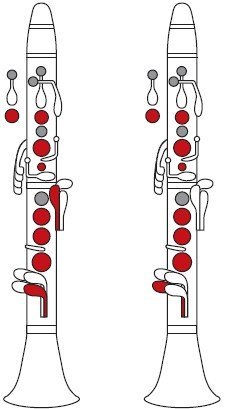
Receive a free PDF of the chart with clarinet fingering diagrams for every note!
This free clarinet fingering chart for Ding Dong, Merrily On High gives you the notes, but the story of this tune is what gives those notes color. Once you know where it comes from and who has shaped it, even a beginner line on Bb clarinet starts to sound like part of a much larger choir.
Quick Answer: What is Ding Dong, Merrily On High clarinet fingering chart?
The Ding Dong, Merrily On High clarinet fingering chart is a Bb clarinet note guide for this classic carol that shows every pitch, register key change, and simple pattern so players can learn it quickly, play in tune, and focus on musical expression and joyful sound.
Where Ding Dong, Merrily On High Comes From
The melody of Ding Dong, Merrily On High began life as a French dance tune called “Branle de l'Official” in a 16th century collection by Jehan Tabourot. Picture a stone courtyard, dancers circling in patterns, shawms and early chalumeau-like pipes cutting through the winter air. The rhythmic bounce you feel under your fingers on clarinet is literally a dance step from 400 years ago.
The English text that we sing today arrived much later, thanks to George Ratcliffe Woodward. He loved old church modes and historic melodies, and he wrapped that lively French dance in bright, bell-laden words. For clarinetists, that mix of secular dance rhythm and sacred text creates a perfect playground for air support, articulation, and ringing tone.
Field Note: In the Martin Freres archives, there is a late 19th century Bb clarinet with a hand-written carol booklet tucked in its original case. Among the hymns and folk songs, Ding Dong, Merrily On High sits right between a rustic bourree and a solemn chorale, marked with a penciled note: “Play with joy, but do not rush.” That little scribble could have been written by any modern band director.
Clarinet Voices Who Give This Carol Its Glow
No single clarinetist made Ding Dong, Merrily On High “famous” in the way Benny Goodman did for swing, but the song weaves through recordings and traditions in surprising ways. Once you start listening for it, you hear the spirit of this tune in how great players handle bright carol-style writing.
Think of Sabine Meyer recording the Weber Concerto in F minor with the Staatskapelle Dresden. In the third movement, every arpeggio and leaping figure could easily be adapted into a sparkling carol setting. The same bell-like finger patterns you feel in Ding Dong, Merrily On High show up in Meyer’s controlled, dancing articulation on her Buffet Crampon instrument.
Martin Frost, with his recordings of Nordic Christmas music and Bach transcriptions, often shapes phrases so they feel like a single, giant church bell swing. Even when he plays quiet lines, the bell image is there. If you listen to his Christmas-themed concerts, the way he floats high-register A and B notes over string drones is exactly the type of sound you want when you land on the high points of Ding Dong, Merrily On High.
On the jazz side, Benny Goodman and Artie Shaw never recorded this specific carol in their classic studio years, but their holiday radio broadcasts are full of arrangements in the same major-key, bell-like idiom. Listen to Goodman’s “Jingle Bells” or “Santa Claus Came In The Spring.” The bright chalumeau-to-clarion leaps, the clean register key work, and those front-of-the-beat staccato notes are perfect models for a carol like Ding Dong, Merrily On High on Bb clarinet.
Contemporary soloists such as Richard Stoltzman have taken the clarinet into crossover Christmas programming. His warm vibrato and legato line in arrangements of “O Holy Night” or “Silent Night” show another side of what you can do with a simple carol. Take that same approach to phrasing and apply it to the longer “Glo-o-o-o-o-ria” melismas of Ding Dong, Merrily On High, and the line suddenly stops sounding like an exercise and starts sounding like a prayer set to bells.
Range spotlight: usually low E to top-line A
Most Bb clarinet versions of Ding Dong, Merrily On High sit comfortably between low E and top-line A, with optional high B or C for advanced parts. This keeps the carol accessible for beginners while giving room for intermediate players to add resonance, throat-tone color, and nuanced dynamic changes.
Where This Carol Hides In Recordings And Arrangements
Ding Dong, Merrily On High shows up in more places than you might expect, sometimes as the main tune, sometimes as a quick quotation or variation. For clarinet players, listening widely can shape how you use dynamics and articulation in your own version.
In classical Christmas albums by ensembles like the King's College Choir or the Choir of St John's College, Cambridge, listen closely to the descant lines. When trumpets, flutes, and oboes soar above the choir, imagine a clarinet taking that role. Those high descants map beautifully to the clarinet clarion register. The phrasing, breath timing, and subtle swells are a perfect guide for your own playing.
Wind band recordings by groups such as the Dallas Winds or the Royal Marines Band often include medleys where Ding Dong, Merrily On High appears for a few brilliant bars. Clarinet sections in these arrangements use tight, matching articulation across the reed, synchronized register key changes, and strong bell tones on written G and A. Even if you are working alone with a fingering chart, those ensemble sounds give you a goal.
In film and television, the tune sneaks into Christmas scenes as a quick orchestral wink. While you might not hear a named clarinet solo, those flurries of woodwind notes often double the carol line. The same kind of part is what you would play in a youth orchestra or community band, sitting next to flutes and oboes with your Bb clarinet, sharing the bell-motif with clean, matching fingers.
Klezmer artists like Giora Feidman and David Krakauer sometimes adapt carols for interfaith concerts, blending folk modes and traditional melodies. When Feidman bends into a high note in a Hanukkah or Christmas program, the intensity and throat-tone inflection can inspire how you treat the more expressive “Gloria” section of this carol, even if you keep your fingers in standard classical positions.
Setting
Clarinet Role
What To Listen For
Choir & organ recording
Hidden woodwind doubles
Bell-like articulation, breath-shaped phrases
Wind band medley
Section melody & countermelody
Unified tonguing, bright clarion register sound
Jazz Christmas arrangement
Improvised fills around carol
Swing feel, playful grace notes, warm chalumeau tone
From Baroque Courtyards To Modern Clarinet Choirs
Even though the clarinet was still evolving when this melody first danced through French streets, the musical DNA lines up beautifully with our instrument's history.
In the baroque era, early single-reed instruments like the chalumeau sang dance tunes similar to the original Branle. If you play Ding Dong, Merrily On High almost entirely in the chalumeau register on Bb clarinet, with dark low F and G anchoring the line, you get a taste of that earthy baroque flavor that Anton Stadler would later carry into Mozart's writing.
By the classical and romantic periods, composers such as Mozart and Weber had fully embraced the clarinet. The leaping figures in Mozart's Clarinet Concerto and Weber's Concertino are cousins to the skipping contour of this carol. Heinrich Baermann, one of the great early clarinet virtuosos, was known for smooth legato across the break. That same skill lets you glide cleanly from the lower bell notes up through the bridge of the instrument in the “Gloria” passages.
In the 20th century, as clarinet found a home in jazz bands, Dixieland groups, and swing orchestras, carols became source material for improvisation. Buddy DeFranco might not have soloed on Ding Dong, Merrily On High in a famous recording, but his approach to navigating fast, diatonic lines in a bright key mirrors what you need for the fastest verse of this tune.
Today, clarinet choirs, school bands, and amateur ensembles program Christmas medleys every season. Ding Dong, Merrily On High often sits there as the sparkling, up-tempo contrast to more solemn pieces. A set might jump from “O Come, O Come, Emmanuel” in a minor mode to this bright, major-key carol. That contrast gives you a chance to practice emotional flexibility: same reed, same mouthpiece, completely different character.
How This Carol Feels To Play On Bb Clarinet
There is a special kind of joy in lining up the opening leap of Ding Dong, Merrily On High so it feels like a bell swing instead of a clumsy jump. On clarinet, the way your left-hand index finger and thumb coordinate with the register key can make that interval feel either like work or like gravity pulling the note into place.
The rhythm of the text shapes how you phrase. “Ding dong merrily on high” has a natural lilt that your tongue can follow. Light staccato at the tip of the reed, just like Benny Goodman in his classic big band lines, turns the first bar into a row of tiny bells. Then the “Glo-o-o-o-o-ria” invites you to let the clarinet line bloom. Long air, controlled jaw, gentle vibrato if your style allows, and suddenly your Bb clarinet sounds as if a distant church tower has grown a reed.
Emotionally, this tune blends celebration and reverence. It is not as serene as “Silent Night” and not as grand as “Hark! The Herald Angels Sing.” It sits in the middle, with dancing steps and sacred text together. That balance is perfect training for more complex repertoire: Brahms sonatas, Nielsen Concerto, and even klezmer freylekhs all require that same ability to smile through the sound without losing depth.
Why Ding Dong, Merrily On High Matters For Your Playing
From a player's perspective, this little carol is quietly powerful. It is short, tuneful, and mostly diatonic, which means you can focus on your sound. The fingering chart shows you the path, but the payoff comes from how you shape each bell note, especially in the clarion register.
Working through Ding Dong, Merrily On High on Bb clarinet helps you
Coordinate register key transitions between lower notes like A and upper notes like E and F
Balance bright articulation on high G and A with stable intonation
Practice even fingers in patterns that later show up in Mozart and Weber
Build breath control for long “Gloria” phrases without tension in the throat
If you are a beginner, this might be your first tune that really feels like “music” instead of an exercise. If you are more advanced, it doubles as a mini etude in festive style, a place to experiment with tone color changes between barrel, upper joint, and lower joint notes.
Simple Practice Routine For This Carol
Segment
Time
Focus
Opening “Ding dong” motif
5 minutes
Even fingers, clear tongue, steady air
“Gloria” phrase
10 minutes
Long line, smooth register changes
Full carol
10 minutes
Dynamics, storytelling, steady tempo
A Few Words About The Bb Clarinet Fingering Chart
The free Ding Dong, Merrily On High clarinet fingering chart lays out every note you need, usually centered around a friendly key with few accidentals. Most arrangements sit comfortably with standard fingerings: left-hand index and middle fingers doing a lot of the work on the upper joint, plus occasional throat A and B flat to connect to the clarion register.
Use the chart as a visual map, especially for any tricky leap that crosses the break between written B and C. Keep your left-hand thumb curved so the register key and tone hole feel like two positions of the same motion. Once the fingers feel automatic, shift your focus back to air, embouchure, and musical line. The chart is there to free your ear, not chain your playing to the page.
Quick Fingering Reminders
Practice slow slurs between throat tones and clarion E using the register key.
Check that right-hand fingers stay relaxed on low E, F, and G to keep intonation stable.
Use light tongue strokes on the tip of the reed for the repeated “ding” notes.
Key Takeaways
Use the Ding Dong, Merrily On High clarinet fingering chart to learn the notes quickly so you can focus on tone and phrasing.
Listen to great clarinetists in classical, jazz, and folk styles to shape your bell-like articulation and long “Gloria” lines.
Treat this carol as both a joyful holiday piece and a compact etude in register changes, breath control, and expressive playing.
Frequently Asked Questions
What is Ding Dong, Merrily On High clarinet fingering chart?
The Ding Dong, Merrily On High clarinet fingering chart is a visual guide for Bb clarinet that shows how to finger every note in the carol, including register key changes and common patterns. It helps players at any level learn the tune faster, stay in tune, and focus on expressive, bell-like sound.
What level of clarinet player can learn Ding Dong, Merrily On High?
The carol suits late beginners through advanced players. The main melody fits within a comfortable range, usually low E to top-line A, with simple rhythms. Teachers can simplify tricky leaps for new players, while advanced clarinetists can add ornamentation, dynamics, and higher descants for extra challenge.
Which clarinet register is most important for this carol?
Most arrangements sit in the chalumeau and lower clarion registers. You will spend time on notes like low G, A, B, and middle C, then climb to clarion E, F, and G. This makes the piece ideal for practicing smooth transitions across the break while keeping a bright, ringing tone in the melody.
How should I practice articulation for Ding Dong, Merrily On High?
Start with light, short tonguing on the repeated “ding” notes, keeping the tip of your tongue near the tip of the reed. Use a metronome for steady rhythm, then experiment with accents and slurs. Listen to swing clarinetists like Benny Goodman for crisp attacks, and apply that clarity to your carol phrasing.
Can I play Ding Dong, Merrily On High in an ensemble with other instruments?
Yes, the carol fits beautifully in clarinet duets, trios, and full bands. Bb clarinet blends well with flute, oboe, and saxophone on this tune, especially in unison or simple harmony. Many school band arrangements include it, and you can also create your own harmony line using the fingering chart as a reference.