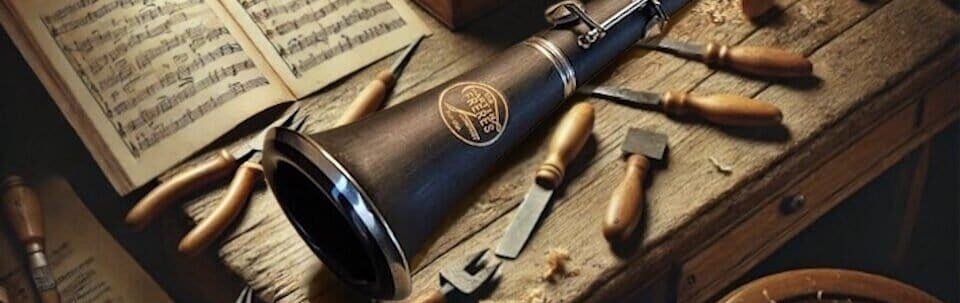
Martin Freres clarinets are prized in orchestral settings for a warm, focused tone, precise intonation, ergonomic keywork and reliable projection, qualities that help clarinetists blend with strings while retaining presence for solos. Their historical designs and careful acoustical balance make them suitable for both section work and exposed orchestral passages. ...
Clarinet Bell: How This Small Part Shapes Your Sound
The clarinet bell is the flared end piece of the clarinet that helps amplify low notes, shape projection and influence tonal warmth; its material, flare profile and fit with the body/barrel directly affect the instrument's sound and intonation. Small changes in bell design can noticeably change clarity, focus, and how low notes speak. ...
The Martin Freres Clarinet Legacy: A Journey Through Craftsmanship and Sound
When we talk about the Martin Freres clarinet legacy, we're exploring a tradition that combines talent, dedication, and a commitment to musical excellence. Imagine skilled craftsmen shaping intricate parts, pouring their passion into every note produced. This isn't just craftsmanship; it's an art form. ...
Understanding Martin Freres Clarinet Production Years: A Dive into Quality and Craftsmanship
Introduction to Martin Freres Clarinets
The journey of clarinet playing is often enriched by the history of the instruments we play. When exploring clarinets, one name stands out distinctly among the rest: Martin Freres. Known for their exceptional craftsmanship, these clarinets have a rich history that speaks volumes about their production years, shaping the very nature of the music that flows from them! ...
Clarinet Breathing Exercises: Complete Guide To Air, Endurance & Tone
How to do diaphragmatic breathing for clarinet players: Sit or lie comfortably with a straight spine. Place one hand on your belly. Inhale through the nose, filling the lungs from bottom to top so the belly gently expands. Exhale on a steady stream so the belly contracts. Repeat 5-10 breaths, then practice controlled exhalations (hissing or on clarinet) for 10-30 seconds. ...
Clarinet Teaching: Methods, Exercises, and Lesson Plans for Real Progress
Clarinet teaching checklist: 1) Establish posture and breathing with simple standing/sitting checks and a balloon exercise. 2) Teach embouchure using a mirror and long tones. 3) Build finger dexterity with slow-to-fast scale practice. 4) Use specific, constructive feedback and clear goals. 5) Integrate recording and apps for student self-review. ...
Clarinet in Jazz Clubs: History, Setup, Techniques & Gig-Ready Skills
The clarinet in jazz clubs is a versatile melodic and rhythmic voice rooted in early 20th-century New Orleans and swing traditions, used for lead lines, counter-melodies, and improvisation. In clubs it interacts closely with acoustics and the rhythm section; players prioritize articulation, projection, and responsive improvisational language to fit styles from New Orleans to bebop. ...
The Clarinet in a Jazz-Influenced World Music: A Melodic Exploration
The clarinet has long been a staple in both jazz and world music, acting as a bridge between cultures and styles. When you think of the clarinet in jazz-influenced world music, it paints a picture of smoky clubs and lively street festivals, where the clarinet dances with other instruments, creating a rich tapestry of sound and emotion. This post explores this fascinating intersection, showing how the clarinet adds its own flair to rhythm and melody. ...
Clarinet in Post-Bop Jazz: History, Sound, and Practice Guide
Clarinet in post-bop jazz: the clarinet (and bass clarinet) reclaimed a creative voice in the late 1950s-1960s post-bop era, adding unique textures through extended tone colors, inventive phrasing, and freer harmonic exploration, pioneered by players such as Eric Dolphy and Jimmy Giuffre. Their work showed how clarinet could move beyond swing and bebop into modern jazz language. ...
Clarinet in Ragtime, Boogie-Woogie and Stride: Style, Technique and Listening Guide
The clarinet in ragtime, boogie-woogie and stride usually acts as a melodic lead or countermelody voice above the piano. To sound authentic, focus on clear articulation, a flexible but controlled embouchure, and confident register changes. Practice syncopated scales and broken chords with a metronome, and study recordings by Scott Joplin, Sidney Bechet, Louis Armstrong and James P. Johnson's “Carolina Shout” to shape your style. ...
