If you have ever picked up your Bb clarinet late at night and just wanted to play something gentle, honest, and wide as the sky, you already understand why “Home on the Range” feels so natural under the fingers. This old American song sits in that sweet spot where simple notes carry big feelings, and a single clarinet can sound like a whole horizon of open prairie.
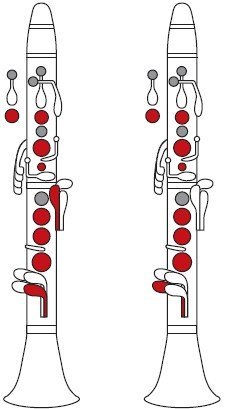
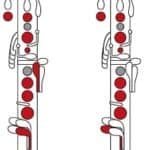
Receive a free PDF of the chart with clarinet fingering diagrams for every note!
A Home on the Range clarinet fingering chart is a Bb clarinet note guide that shows every fingering needed to play the full melody cleanly and in tune. It helps beginners and advanced players focus on phrasing, tone, and musical storytelling instead of hunting for notes.
The quiet power of Home on the Range
“Home on the Range” grew up as a cowboy ballad in the American West, drifting through campfires, cattle trails, and small town porches long before it found its way into band rooms. On clarinet, it becomes a kind of sung prayer through wood and silver: long lines, open intervals, and gentle swells that feel like breathing with the land.
Where a piece like the Mozart Clarinet Concerto in A major KV 622 asks for athletic leaps and crystal articulation, “Home on the Range” asks for honesty. It asks you to let the reed vibrate freely, to let the bell of your clarinet carry a single phrase across an imaginary field. Players who love lyrical études by C. Rose or slow movements from Weber's Clarinet Concerto No. 1 often fall head over heels for how simple and sincere this melody feels.
How great clarinetists would sing this melody
Even if you cannot find a famous studio recording labeled “Home on the Range” played by Anton Stadler or Sabine Meyer, this song sits right in the emotional pocket that many legendary clarinetists built their sound around.
Imagine Anton Stadler, the clarinetist for whom Wolfgang Amadeus Mozart wrote the Clarinet Concerto and Clarinet Quintet. Stadler was known for his warm low chalumeau register, the same part of the instrument that carries the opening of “Home on the Range.” If he had taken this tune onto a Viennese street corner with his extended basset clarinet, the dark, velvety sound would have suited the melody perfectly.
Jump ahead to the Romantic era: Heinrich Baermann, muse to Carl Maria von Weber, had a singing tone that inspired Weber's clarinet concertos and the Concertino in E b. The way Baermann likely shaped long notes in those pieces is the same kind of phrasing that makes “Home on the Range” special: an expressive swell, a slight rubato on the highest note of a phrase, then a gentle release into silence.
In the 20th century, Sabine Meyer and Martin Frost have both shown in Mozart, Nielsen, and concertos by Aaron Copland how a clarinet can sound not just agile but human. Listen to Sabine Meyer spin the slow movement of the Mozart Concerto, or Martin Frost in the Andante of the Copland Clarinet Concerto. Then play through “Home on the Range” and try to pour that same legato into every bar. You will hear a direct connection between concert hall and campfire.
On the jazz side, picture Benny Goodman or Artie Shaw on a late set, away from the high-energy swing charts. After tearing through standards like “Sing, Sing, Sing” or “Begin the Beguine,” players like Goodman, Buddy DeFranco, or Eddie Daniels often settled into ballads. The way they caress a slow melody in the upper clarion register is exactly the kind of sound that makes the upper notes of “Home on the Range” feel like a sigh instead of a strain.
Klezmer legends such as Giora Feidman and David Krakauer also give us a clue. Though their traditional repertoire leans on tunes like “Der Heyser Bulgar” and “Ale Brider,” their use of slides, vibrato, and gentle ornaments turns any simple melody into a story. When you bend slightly into a note in “Home on the Range” or add a tiny grace note at the top of a phrase, you are borrowing from that same expressive vocabulary.
From frontier song to clarinet standard
“Home on the Range” began as a 19th century frontier song, often attributed to Dr. Brewster Higley with music by Daniel E. Kelley. It started with voice, fiddle, and simple guitar, long before clarinets and saxophones began to sing it in school bands and wind ensembles.
As concert bands grew across the United States, arrangers started slipping “Home on the Range” into medleys and patriotic suites. Clarinet sections from small-town high schools to university wind ensembles suddenly had this melody on their stands, right next to Sousa marches and transcriptions of Brahms Hungarian Dances. In many cases, the first true lyrical solo a young Bb clarinetist played in public was a line from “Home on the Range.”
Film composers picked up on the same atmosphere. While not always quoted directly, the contour and gentle intervals of “Home on the Range” echo through Western film scores by composers like Elmer Bernstein in “The Magnificent Seven” or Jerome Moross in “The Big Country.” Solo clarinet lines in those soundtracks, often played by studio legends in Hollywood orchestras, use the same kind of sustaining, open-throated tone that brings this folk song to life.
Contemporary clarinetists such as Richard Stoltzman and Sharon Kam, known for crossing stylistic borders, have shown how folk melodies can live between genres. Stoltzman's work with the Slovak Radio Symphony Orchestra and his jazz collaborations, or Sharon Kam's recordings of cross-over albums that sit between Brahms and Broadway, mirror what happens when you treat “Home on the Range” seriously: a simple tune turns into a canvas for color and phrasing.
Most common arrangements of “Home on the Range” for Bb clarinet use around 16 to 20 bars. That short length makes it perfect for focused work on breath control, embouchure stability, and tone even for a 10-minute practice session.
Why this song feels so good on Bb clarinet
On paper, “Home on the Range” is simple: mostly stepwise motion, a few leaps, gentle rhythms. On clarinet, though, those lines pass through some of the richest parts of the instrument. You are not just playing notes; you are moving through registers that feel like different shades of sky.
The low chalumeau around written E, F, and G can sound like a baritone voice humming late at night. As the melody rises into the clarion register around written B, C, and D, the tone brightens, a little like the way the morning light brightens the horizon. The top note of a phrase might not be very high compared to the altissimo in a Gershwin “Rhapsody in Blue” solo, but it can feel just as exposed and emotional.
For many players, this tune becomes a personal ritual. One player might use it to warm up long tones after assembling the instrument, just as another might play the opening of the Brahms Clarinet Sonata Op. 120 No. 1. Another might use it to calm nerves before a performance, playing it softly in a backstage corner while the timpani and trumpets rehearse louder passages from a Mahler symphony.
A quick fingering glance, not a textbook
The free “Home on the Range” clarinet fingering chart that goes with this article keeps the note work simple so you can put your attention where it belongs: on sound. The melody typically sits in comfortable keys like concert F or G, which put the Bb clarinet in written G or A major, with familiar fingerings like long B, C, and D in the staff and occasional notes just above.
Use the chart as a visual guide:
- Scan it once before you play to spot any notes that jump out of your comfort zone.
- Mark spots where your left-hand index finger or right-hand ring finger might need a clean, silent lift.
- Then stop staring at the page and listen to your tone instead.
| Phrase | Register focus | Fingering feeling |
|---|---|---|
| Opening line | Mostly chalumeau to lower clarion | Stable left hand, ideal for smooth throat tone transitions |
| Middle rise | Clarion register | Uses register key, great for practicing even air support |
| Final phrase | Return to lower notes | Gentle finger relaxation, chance to fade into a soft dynamic |
Turning a folk song into your personal clarinet studio
You can treat “Home on the Range” the way many professionals treat Bach cello suites or Schubert songs: as a recurring space to check in with your sound, your breath, and your imagination. A short, thoughtful routine can do more for your tone than an hour of unfocused scale work.
| Practice focus | Time | How to use the fingering chart |
|---|---|---|
| Tone and breath | 5 minutes | Play the whole song at half tempo, following the chart, holding each long note for 4 slow counts. |
| Legato and slurs | 5 minutes | Circle intervals on the chart and practice connecting them with no bumps in the fingers. |
| Expression and phrasing | 5 minutes | Ignore bar lines on the chart and mark your own breaths, then play as if you are singing the text. |
For more lyrical ideas, you might also enjoy reading about long-line phrasing in other pieces on MartinFreres.net, such as discussions of Mozart's Clarinet Concerto, Weber's Concertino, or tone studies inspired by Brahms clarinet works.
How the song's journey connects to your own
Think of everyone who has carried “Home on the Range” before you: anonymous cowboys humming under the stars, school bands rehearsing for a spring concert, clarinet students playing it for grandparents in living rooms, and even orchestral musicians using its shape to warm up before tackling symphonies by Tchaikovsky or Rachmaninoff.
By putting this melody under your fingers, you step into that line. You connect the same breath work used by classical players in the Berlin Philharmonic or the New York Philharmonic, jazz soloists in small clubs, and folk players at festivals, all through one short song.
Once you can sing through “Home on the Range” on Bb clarinet without thinking about the fingerings, you will find that other lyrical pieces feel easier too. The slow movement of the Mozart Clarinet Concerto, the famous solo in Gershwin's “Rhapsody in Blue,” and even the gentle clarinet lines in film scores by John Williams will feel more natural because you trained your air and fingers on this quiet classic.
- You will trust your low register more when holding soft notes.
- You will coordinate the register key more smoothly for clarion entries.
- You will hear phrasing as sentences, not just bar numbers.
Key Takeaways
- Use the Home on the Range clarinet fingering chart once, then focus your ears on tone and phrasing, not just note names.
- Treat this folk song like a mini-concerto: shape every phrase as carefully as you would Mozart or Weber.
- Return to this melody regularly as a quick checkup on breath support, legato, and your personal musical voice.
Frequently Asked Questions
What is Home on the Range clarinet fingering chart?
The Home on the Range clarinet fingering chart is a Bb clarinet note map for the full melody of the song. It shows exactly which keys and holes to press for each pitch so you can focus on breath, vibrato, and phrasing instead of guessing fingerings.
Is Home on the Range good for beginner clarinet players?
Yes. The melody mostly sits in the chalumeau and lower clarion registers, using fingerings that beginning students learn early. It is slow enough to practice long tones, embouchure stability, and basic phrasing while still feeling like real music, not an exercise.
What key is Home on the Range usually played in on Bb clarinet?
Most school band and solo arrangements use concert F or G. For Bb clarinet, that often means written G or A major. These keys use familiar fingerings like long B, C, and D with the register key, which makes the tune comfortable for both students and advanced players.
How should I practice Home on the Range with the fingering chart?
Start by slowly reading through the chart once to notice any tricky notes. Then play the whole song at half tempo, listening for even tone between chalumeau and clarion. Add dynamics, slight rubato, and breath marks so the melody feels sung rather than counted.
Can Home on the Range help with more advanced clarinet repertoire?
Yes. The air control, legato finger motion, and phrasing you practice here transfer directly to lyrical passages in Mozart, Weber, Brahms, and Copland. Once you can shape this folk song with confidence, slow movements from major concertos feel more natural under the fingers.