There are songs that feel like they were written for the clarinet, and O Holy Night is one of them. The moment that long, arching opening phrase floats out of a Bb clarinet, the air changes a little: the room gets quieter, the reverb in the bell feels warmer, and suddenly you remember why you wanted to make music in the first place.
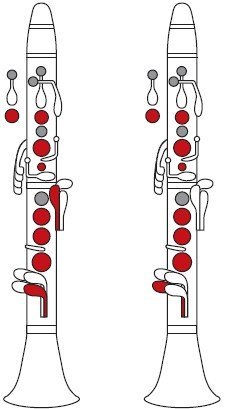
Receive a free PDF of the chart with clarinet fingering diagrams for every note!
An O Holy Night clarinet fingering chart is a note-by-note Bb clarinet guide that shows which keys and holes to use for every pitch in the carol. It helps players focus on tone, phrasing, and emotion instead of guessing fingerings, so the melody feels effortless and expressive.
The story behind O Holy Night and the clarinet
O Holy Night began its life in 1847 as a French carol, “Cantique de Noel,” with music by Adolphe Adam. It was written for voice and church organ, not for Boehm-system clarinet and silver-plated keys. Yet clarinetists quietly adopted it, phrase by phrase, in Christmas services, midnight masses, and holiday pops concerts, until it felt like part of our own tradition.
Imagine a Christmas Eve service with a small chamber ensemble: a Bb clarinet, a string quartet, and maybe a distant organ. The clarinet takes the solo line in the quieter second verse. The reed is just broken in, the ligature is snug, and the throat A glows against the soft tremolo of violins. That kind of memory is why so many clarinetists first learn O Holy Night long before they tackle Mozart or Weber.
How famous clarinetists made O Holy Night their own
While O Holy Night is rarely the headline piece on a clarinet album, many great players have woven it into concerts, broadcasts, and special recordings, each with their own setup, reed strength, and signature sound.
Richard Stoltzman, known for his singing vibrato and lyrical phrasing, often included Christmas music in his holiday programs. His approach to long lines in works like Copland's Clarinet Concerto and the Brahms Clarinet Sonatas is exactly the kind of phrasing that makes O Holy Night soar. Listen to how he shapes a sustained G in Copland, and you will hear the same breath strategy you want in the climax of this carol.
Sabine Meyer, playing her Buffet-Crampon with an incredibly focused core, has performed Christmas arrangements with the Berlin Philharmonic and chamber ensembles. Even when the program is not specifically O Holy Night, the way she phrases slow movements, such as the Adagio from Mozart's Clarinet Concerto, gives a blueprint for how to carry that same intensity into a carol performance.
On the jazz side, imagine Benny Goodman walking onto a radio broadcast in December, Selmer Balanced Tone in hand, and taking a chorus on O Holy Night between big band charts. His work on tunes like “Body and Soul” and “Stardust” shows how a clarinet can float through a ballad tempo, using subtle vibrato and a gentle chalumeau register. The same approach turns O Holy Night into a jazz-inflected meditation.
Artie Shaw might have stretched the harmony, adding upper clarion embellishments to the climactic phrase “Fall on your knees.” His recording of “Begin the Beguine” reveals an instinct for long arcs and fearless high notes that many players bring to holiday arrangements of O Holy Night.
Klezmer artists like Giora Feidman and David Krakauer have also touched Christmas material in crossover projects. Their mastery of expressive bends, portamento, and sighing ornaments in tunes like “Yidl Mitn Fidl” or “Der Heyser Bulgar” gives clarinetists another color palette. A tiny klezmer-style pitch slide into the opening note of O Holy Night can suddenly sound like a human voice on the verge of tears.
Many clarinetists can hold the opening O Holy Night phrase for 14 to 18 seconds on one breath. Practicing this phrase as a long-tone exercise improves breath support, embouchure stability, and throat-tone resonance across your entire register.
O Holy Night in concerts, films, and clarinet arrangements
Even if you have never seen “O Holy Night, clarinet solo” printed on a CD cover, you have probably heard the clarinet hiding in the texture. Holiday pops concerts with orchestras like the Boston Pops, New York Philharmonic, and London Symphony Orchestra regularly program O Holy Night with lush woodwind lines doubling the voice.
Listen to orchestral recordings where the clarinet section shadows the soloist's melody. Those countermelodies and inner lines often sit in the Bb clarinet sweet spot: open G, long A, throat B-flat, and the warm chalumeau D and E. The instrument becomes the invisible second singer, supporting the big vocal notes.
Film and TV holiday specials frequently place clarinet in the background of O Holy Night arrangements. A soft clarinet in A or Bb, recorded close to the microphone, can sound almost like a whisper. That is the same register you will use in our fingering chart: middle B, C, D, and that fragile throat A that always feels like spinning glass.
Chamber music adaptations are everywhere. Quartets for clarinet, violin, cello, and piano often give the carol's main melody to the clarinet in the second verse, passing it from the piano's right hand to the wooden bell. Amateur ensembles, church groups, and conservatory students all over the world have used versions where the Bb clarinet carries the emotional peak.
If you enjoy holiday music on clarinet, you might also like learning the gentle lyricism of the Silent Night clarinet melody, or exploring the darker colors needed for the Bb clarinet low register in more introspective carols.
From French carol to clarinet favorite: a short journey
O Holy Night started as “Cantique de Noel” in France, sung in walled stone churches with pipe organ and choir. The clarinets in those orchestras used early systems, with fewer keys and a different bore shape than modern Buffet or Yamaha instruments. Yet the melody, with its clear contour and wide emotional swing, already invited wind instruments to sing along.
By the late 19th century, clarinetists like Heinrich Baermann and Anton Stadler had pushed expressive playing in concertos by Weber and Mozart. Their lyrical approach in slow movements, such as the Romanze from Weber's Clarinet Concerto No. 1, created a model for singing-style clarinet that fits O Holy Night perfectly.
In the Romantic era, as Christmas concerts became more common, wind players started arranging popular carols. Early Bb clarinet parts in carol books often left O Holy Night to the voice, but by the time brassy Victorian bands and town wind ensembles flourished, the clarinet was carrying the main line as often as the cornet.
Moving into the 20th century, the spread of radio and records put clarinet front and center at Christmas. Big bands under Glenn Miller, Benny Goodman, and Artie Shaw played seasonal broadcasts. Even if O Holy Night itself was not always the featured song, the sound of a clarinet section under strings became part of the sonic image of the holiday season.
Today, contemporary soloists like Martin Frost and Andreas Ottensamer occasionally program Christmas arrangements with strings and harp. Their ability to switch from crisp staccato to floating legato in pieces like the Nielsen Concerto or Debussy's Premiere Rhapsodie shows exactly the skill set you need for O Holy Night: a reed that speaks easily and a right hand that stays relaxed across register shifts.
Why O Holy Night feels so natural on Bb clarinet
Strip away the harmonies for a second and look only at the line your clarinet will play. It climbs patiently, waits, then suddenly opens into that famous leap at “Fall on your knees.” On a Bb clarinet, that moment often means moving from a strong chalumeau or throat tone up into the clarion register with a clear register key flick and firm left-hand position.
This physical lift mirrors the emotional lift in the text. Even without words, your audience hears that gesture as a plea, a cry, or a surrender. The clarinet's flexible embouchure and soft reed tip let you lean into that leap with just enough vibrato or straight tone to tell your version of the story.
O Holy Night invites you to experiment with color: a slightly darker sound near the mouthpiece cork for the first verse, a brighter, bell-forward tone for the climax, and then a gentle, covered ending where the last note almost folds back into the barrel. Long legato fingers, soft right-hand pinky transitions, and steady diaphragm support keep this all tied together.
If you want more music that stretches this lyrical side of your playing, check out how the Mozart Clarinet Concerto Adagio or simple Bb clarinet scale studies can support your breath and phrasing practice.
Why learning O Holy Night matters for your playing
Learning O Holy Night with a clear fingering chart does more than prepare you for Christmas gigs or family gatherings. It quietly trains some of the most musical parts of your technique.
| Skill | Where it shows up in O Holy Night | How it helps other music |
|---|---|---|
| Breath control | Long opening and closing phrases | Improves slow movements in Mozart, Brahms, and film themes |
| Register shifts | Climactic leap in the middle section | Smooth transitions in Weber concertos and jazz ballads |
| Tone color | Soft verse vs powerful chorus | More expressive sound in solos and ensemble playing |
Because the melody sits mostly in the comfortable middle register of the Bb clarinet, even early-intermediate players can sound convincingly lyrical. For advanced players, subtle details like breath placement, finger legato, and dynamic shading turn a simple carol into a personal statement.
Your free O Holy Night clarinet fingering chart
The fingering chart for O Holy Night focuses on practical, playable notes for Bb clarinet, usually in keys like C major or Bb major that sit well under the fingers. You will see familiar patterns: open G and A in the throat register, chalumeau F and E, and then clarion B and C using the register key and stable left-hand position.
Use the chart as a visual roadmap so your mind is free for phrasing. Glance at the diagrams to confirm things like which right-hand pinky key you prefer for low E, or how you want to approach alternate fingerings for B-flat in lyrical lines. Then put the sheet on the stand, close your eyes for a moment, and play the melody as if you were singing it.
- Scan the entire chart once, away from the clarinet, tracing the melody with your finger.
- Play slowly, using a tuner or piano, focusing on gentle transitions between throat tones and clarion notes.
- Add dynamics: start mezzo piano, build to a full but warm forte at the high point, then taper back down.
- Record yourself and listen for even finger action and steady air on the longest notes.
| Practice Day | Focus | Suggested Time |
|---|---|---|
| Day 1 | Slow reading with fingering chart | 10 minutes |
| Day 2 | Breath control on long phrases | 10 to 15 minutes |
| Day 3 | Dynamics and tone color | 15 minutes |
| Day 4 | Play-through without the chart | 10 minutes |
Troubleshooting common O Holy Night clarinet issues
Even with a clear O Holy Night clarinet fingering chart, a few spots can feel tricky, especially register changes and soft entrances.
| Problem | Likely Cause | Quick Fix |
|---|---|---|
| Cracking on the big leap | Unsteady air or late register key | Blow through the leap, press the register key a hair early, keep throat open |
| Weak throat tones | Loose embouchure or sagging air support | Firm upper lip around the mouthpiece and continuous air, even at soft dynamics |
| Uneven finger changes | Lifting fingers too high | Keep fingers close to the keys, especially right-hand ring finger and pinky |
Key Takeaways
- Use the O Holy Night clarinet fingering chart to free your mind from mechanics and focus on breath, line, and emotion.
- Study how great clarinetists shape long phrases in concertos and ballads, then apply those ideas directly to this carol.
- Treat O Holy Night as a lyrical etude: a chance to refine register shifts, tone color, and expressive dynamics for all your music.
Frequently Asked Questions
What is O Holy Night clarinet fingering chart?
An O Holy Night clarinet fingering chart is a visual guide that shows every note of the carol with standard Bb clarinet fingerings. It lets you learn the melody confidently, without guessing key combinations, so you can spend more attention on tone, phrasing, and expressive dynamics.
What level of clarinet player can learn O Holy Night?
Most late beginner and intermediate players can handle O Holy Night comfortably. The melody usually stays in the chalumeau and lower clarion registers, using familiar notes like low E, F, and open G. With a clear fingering chart, even newer players can sound lyrical and confident.
Which key is best for O Holy Night on Bb clarinet?
Common clarinet-friendly keys are C major and Bb major. These keep the melody in a comfortable range with simple fingerings and minimal accidentals. The exact key often depends on the singer or accompaniment, but both options work well for clear tone and smooth transitions.
How should I practice O Holy Night for performance?
Start slowly with the fingering chart, then work on long-tone phrases and steady air. Add dynamics once the notes feel comfortable. Practice the big climactic leap separately, focusing on register key timing and a relaxed throat. Finally, play full run-throughs and record yourself to shape your interpretation.
Can I improvise on O Holy Night for jazz clarinet?
Yes. Many jazz clarinetists treat O Holy Night like a ballad standard. Learn the melody solidly first, then add tasteful embellishments in the clarion register. Focus on warm subtone in the chalumeau, gentle vibrato, and simple passing tones. The fingering chart gives you a secure base for creative variations.