If you ask a room full of clarinetists what their very first melody was, you will hear a lot of shy laughs and one familiar answer: “Old MacDonald Had A Farm.” This simple tune has launched more clarinet journeys than most etude books ever will, and it still has the power to make a beginner grin and a professional quietly nostalgic.
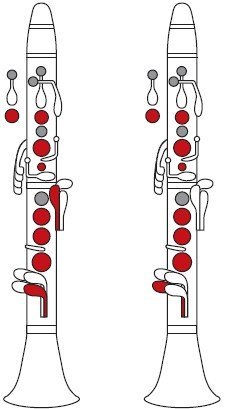
Receive a free PDF of the chart with clarinet fingering diagrams for every note!
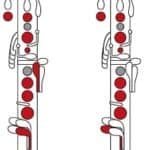
An Old MacDonald Had A Farm clarinet fingering chart is a visual guide showing which keys to press on a Bb clarinet for every note in the song. It helps beginners learn the melody faster, build confidence with basic finger patterns, and enjoy playing music that feels friendly and familiar.
Why Old MacDonald Still Feels Like Magic On Clarinet
Old MacDonald Had A Farm might look like a children's tune on paper, but on a Bb clarinet it becomes something else: your first real conversation with the instrument. A handful of notes, a tiny rhythm pattern, and suddenly the mouthpiece, barrel, upper joint, and lower joint are all joining in on a little folk opera about cows, chickens, and one very patient farmer.
The melody is short, repetitive, and honest. That is exactly why teachers from Paris Conservatoire legends to small-town band directors use it in the first weeks of playing. It asks just enough from your embouchure and your right hand to feel like progress but gives back a whole story in return. Every “E-I-E-I-O” is a mini victory lap for your tone, your breath, and your fingers finally moving together.
From Barnyards To Great Halls: A Hidden Training Ground
Long before a clarinetist stands on stage to play Mozart's Clarinet Concerto in A major, K. 622, that same player likely spent time with Old MacDonald Had A Farm. You do not hear that in glamorous biographies of Anton Stadler or Heinrich Baermann, but every virtuoso started with tunes this simple. They just grew from there.
Think about Sabine Meyer shaping those clear ascending lines in the slow movement of the Mozart concerto. Or Martin Frost spinning folk-like phrases in Anders Hillborg's “Peacock Tales.” Behind those breathtaking lines lies early muscle memory built on tunes that sit nicely in the clarinet's throat and chalumeau registers, just like Old MacDonald. Left hand over the tone holes, right hand quietly waiting to join the party: that is the same setup.
Jazz players lived this arc too. Benny Goodman did not jump straight into “Sing, Sing, Sing” with full big band and Gene Krupa on drums. His childhood practice would have been full of simple folk songs and hymns on an old Albert system clarinet. Those early melodies taught him finger patterns he later twisted into improvisations on standards like “Body and Soul” and “Stompin' at the Savoy.” Old MacDonald sits in the same family of comfortable, singable tunes that build this kind of foundation.
Most Old MacDonald arrangements for Bb clarinet stay between low C and open G in the chalumeau register. This tight range keeps focus on air support, embouchure, and simple finger switches instead of register key challenges.
A Folk Song's Long Journey To The Clarinet Stand
The roots of Old MacDonald Had A Farm stretch back into older English and Scottish folk songs. Variants like “In the Fields in Frost and Snow” and “The Farmer's in his Den” used similar call-and-response patterns. Traveling fiddlers, flutists, and singers carried these tunes from village to village, while early clarinet-like instruments, such as the chalumeau, joined dances and outdoor gatherings.
By the late 18th century, when Anton Stadler gave those legendary performances for Wolfgang Amadeus Mozart in Vienna, folk material was already feeding into art music. Composers like Franz Krommer and Carl Stamitz wrote clarinet concertos that slipped in dance rhythms and rustic themes. The idea that a simple farm or village melody could sit next to court music was not strange at all.
Through the 19th century, as clarinet designs improved with better keys, pads, and acoustical bores, players started bringing children's songs and folk tunes into method books. Hyacinthe Klosé in Paris, and later teachers who influenced Gustav Langenus and Daniel Bonade, often used short melodies like Old MacDonald to warm up the chalumeau register before jumping to more demanding études.
By the 20th century, as clarinet found its voice in jazz and popular music, Old MacDonald had already been coded deep into music education. You can almost picture a young Artie Shaw or Buddy DeFranco in their first lessons, working through the same note shapes that later became lightning-fast bebop runs. Simple song, big future.
How Great Clarinetists Turn Simple Tunes Into Art
Few clarinetists are known specifically for Old MacDonald Had A Farm on stage, but many of the giants have recorded or performed children's songs and folk tunes with the same love they give to Brahms. Listening to them can totally change how you feel about this little farm song.
Richard Stoltzman, on his albums of folk and spiritual arrangements, makes one-note melodies feel like conversations. The way he shapes a single sustained G or builds a soft crescendo from the throat A key shows how even the simplest line can glow. If you apply that level of care to Old MacDonald, suddenly your “here a moo, there a moo” starts sounding like chamber music.
Giora Feidman and David Krakauer, both giants of klezmer clarinet, have a special relationship with folk material. Feidman can bend a note on his Buffet clarinet so that it sounds like a singer in a small wooden synagogue. Krakauer can twist a tiny motif into a wild, laughing dance. When they approach pieces like “Oyfn Pripetshik” or “Der Heyser Bulgar,” they treat the melody exactly the way you can treat Old MacDonald: as a living story.
On the classical side, Sabine Meyer and Sharon Kam often include encores that quote folk or children's tunes as little winks to the audience. After a weighty performance of Johannes Brahms's Clarinet Quintet in B minor, Op. 115, a short, playful encore based on a nursery melody lets everyone breathe. That sense of balance is something Old MacDonald gives you early in your journey: the reminder that music can be gentle and fun, not only serious.
Even in film and animation music, clarinet carries childlike themes. Think about Michel Legrand's lyrical clarinet lines in “The Umbrellas of Cherbourg” or Howard Shore's use of clarinet for the Shire themes in “The Lord of the Rings.” The warmth you practice in Old MacDonald Had A Farm is the same warmth composers rely on for those cinematic moments.
Old MacDonald In Jazz, Band Rooms, And Soundtracks
Old MacDonald Had A Farm may start as a children's tune, but arrangers have had endless fun with it. Jazz clarinetists often treat it as a lighthearted encore or workshop piece. Imagine a small combo with clarinet, double bass, and brushes on snare, turning “E-I-E-I-O” into a swing riff. A player like Ken Peplowski could easily outline ii-V-I progressions over this melody and still keep the farm animals intact.
In school bands, Old MacDonald is almost a rite of passage. Directors use it while coaching unison playing between Bb clarinet, alto saxophone, and flute. The clarinet section learns to listen for intonation on notes like D and E in the chalumeau register while matching the stronger projection of trumpets and the warmth of the euphonium. A melody this familiar frees the mind to focus on blend, tone, and articulation.
Arrangers for TV and film sometimes quote Old MacDonald for a split second to signal “farm,” “country,” or “childhood”. Clarinet, with its wooden resonance and ability to sound either playful or earnest, is a natural choice. In some cartoon scores, you will hear a Bb clarinet, maybe with just the upper joint in use for a comical effect, outlining the tune in short staccato bursts while strings and percussion supply the barnyard chaos around it.
There is also a nice connection to traditional band literature. Folk-based pieces like Percy Grainger's “Lincolnshire Posy” or Ralph Vaughan Williams's “English Folk Song Suite” sit beautifully under clarinet fingers. Practicing Old MacDonald on Bb clarinet prepares you to phrase long folk lines in these works, especially when you need to move smoothly between throat tones and chalumeau notes.
Why This Little Farm Song Matters To Your Playing
On the surface, Old MacDonald Had A Farm is about animals and a cheerful farmer. Underneath, it is about breath control, repetition, and groove. Every time you repeat “E-I-E-I-O” you test your ability to keep the same tempo, the same tone color, the same gentle articulation from reed to bell.
Emotionally, there is something disarming about it. Even a tense high school player headed toward auditions for Mozart, Weber's Clarinet Concerto No. 1 in F minor, Op. 73, or Debussy's “Premiere Rhapsodie” can relax when they play Old MacDonald for a few minutes. The pressure drops. The embouchure softens. The fingers remember that this can be play, not just practice.
That feeling of simplicity is not childish. It is the same ease a master like Sabine Meyer brings to a tricky clarinet cadenza or that Benny Goodman showed in his 1938 Carnegie Hall concert when he let a bluesy phrase float like it weighed nothing at all. They both relied on comfort in simple, song-like lines. Old MacDonald offers you that comfort at an early stage.
How Mastering Old MacDonald Opens New Musical Doors
Once Old MacDonald feels natural on your Bb clarinet, a surprising number of pieces start feeling less intimidating. That repetitive melodic contour shows up everywhere: in beginner arrangements of “Ode to Joy” by Ludwig van Beethoven, in the opening of many band warm-ups, even in the way you shape scales from low C up to high C.
Confidence on those first few notes lets you step into more adventurous music: jazz standards, klezmer tunes, or movie themes. For instance, when you move from Old MacDonald to something like “Hava Nagila” or “When the Saints Go Marching In” on clarinet, you will notice how your fingers already know the general geography of the instrument. The right-hand index over the tone hole, the left-hand thumb balancing on the thumb rest and tone hole, the soft press of the register key: it all feels more natural.
It also prepares you for reading more complex scores. Once you have played Old MacDonald in concert band or clarinet choir, watching the conductor, you will be more ready to sit in the clarinet section while playing arrangements of “Beauty and the Beast” or “The Lion King” that often pass tunes through the chalumeau and throat areas in the same way.
| Song | Main Range On Bb Clarinet | What It Trains |
|---|---|---|
| Old MacDonald Had A Farm | Low C to open G | Basic finger patterns, steady air, simple articulation |
| Twinkle, Twinkle, Little Star | Low G to D | Interval jumps, phrase shaping, long tones |
| Ode to Joy | Low B to A | Legato lines, dynamic contrast, ensemble blend |
A Gentle Word On The Fingering Chart Itself
The free Old MacDonald Had A Farm clarinet fingering chart keeps everything in the comfortable lower range. Most notes live in the chalumeau register, with a few friendly throat tones like A and B-flat. Your left-hand thumb will stay on the thumb hole almost all the time, while the right hand slowly joins on notes like low D and E.
You can think of the song in three tiny moves:
- Start on a stable note like G or E using simple left-hand fingerings.
- Add or lift one finger at a time, using the chart to check exactly which key cup or tone hole to cover.
- Repeat the same pattern several times so your hands remember without looking.
Use the bell of the clarinet as a built-in resonator. If a note sounds fuzzy, check that your fingers are sealing the tone holes and that your reed is placed correctly on the mouthpiece with a balanced ligature. The chart is there as a picture, but your ears are the real teachers.
Key Takeaways
- Treat Old MacDonald Had A Farm as your first real duet with the Bb clarinet, not just a kids song.
- Use the fingering chart to master a small note range, then carry that comfort into folk tunes, jazz, and classical pieces.
- Listen to great clarinetists on folk-inspired music to inspire how you shape every “E-I-E-I-O” phrase.
Frequently Asked Questions
What is Old MacDonald Had A Farm clarinet fingering chart?
An Old MacDonald Had A Farm clarinet fingering chart is a visual guide that shows which keys and tone holes to press for every note of the song on a Bb clarinet. It helps beginners learn the melody quickly, build confidence with basic fingerings, and focus on sound quality instead of guessing notes.
Is Old MacDonald Had A Farm good for absolute beginner clarinetists?
Yes. The tune uses a small set of notes in the chalumeau and throat registers, sits comfortably in the range of most student mouthpieces and reeds, and has an easy rhythm. That combination makes it perfect for first lessons, especially when paired with a clear fingering chart and slow practice.
Which clarinet register does Old MacDonald mostly use?
Most arrangements for early players stay entirely in the chalumeau register, from low C to open G, with the thumb on the back hole and few right-hand keys. Some versions add throat A and B-flat, which help bridge into later pieces while still keeping the song simple and singable.
How often should I practice Old MacDonald on Bb clarinet?
Short, regular sessions work best. Try 5 to 10 minutes a day, a few days each week, using the fingering chart until the notes feel natural. Once you can play it without looking at your fingers, you can start focusing on tone color, dynamics, and playful phrasing.
What other songs pair well with Old MacDonald for early practice?
Tunes like “Twinkle, Twinkle, Little Star,” “Mary Had a Little Lamb,” and “Ode to Joy” are excellent next steps. They share similar note ranges and patterns, so the same fingerings you use for Old MacDonald will transfer directly into these pieces and later band arrangements.