There is a special kind of joy when a Bb clarinet sings out the first notes of “She'll Be Comin' ‘Round the Mountain.” It is the sound of porches and campfires, old trains and new school bands, a simple tune that somehow carries a century of stories inside it.
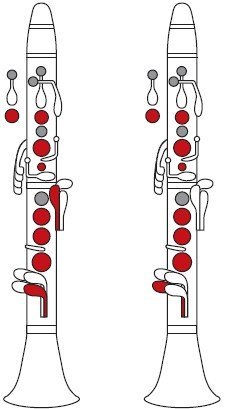
Receive a free PDF of the chart with clarinet fingering diagrams for every note!
Playing “She'll Be Comin' ‘Round the Mountain” on clarinet is like being handed a musical passport. With just a few easy fingerings, you can step into folk music, swing bands, bluegrass jams, film scores, and school concerts. This free clarinet fingering chart simply gives your fingers a map for a tune that has already traveled the globe.
Quick Answer: What is She'll Be Comin' ‘Round the Mountain clarinet fingering chart?
“She'll Be Comin' ‘Round the Mountain” clarinet fingering chart is a visual guide that shows which keys to press on a Bb clarinet for every note in the song, usually covering about 1 to 1.5 octaves. It helps players of all levels learn the melody quickly and play with confident, steady tone.
From spiritual to stage: how the mountain tune found the clarinet
Long before any clarinetist took a solo on this tune, “She'll Be Comin' ‘Round the Mountain” began its life as an African American spiritual called “When the Chariot Comes.” It traveled on voices, not on paper, carried by workers, preachers, and choirs who had never even seen a Boehm-system clarinet or a silver ligature.
As the song moved into folk tradition at the turn of the 20th century, fiddles, mandolins, and banjos picked it up. Clarinet joined the party a little later, especially in brass bands and early American concert bands, where Bb clarinet parts often doubled popular songs to keep audiences humming. In community ensembles, the first clarinetist might play the melody while the second clarinet laid down harmony, using the same basic fingerings you will see in this fingering chart.
By the time swing and jazz bands took over dance halls, the tune was ready for a new accent. Clarinetists who grew up on Sousa marches and church hymns could now twist the melody with glissandi and growling chalumeau tones. The song that started in spirituals suddenly rubbed shoulders with saxophones, drum sets, and walking bass lines.
Field Note: In the Martin Freres archive, there is a 1920s catalog that lists simple folk and hymn arrangements right next to early clarinet method books. Several tunes share the same range and key as “She'll Be Comin' ‘Round the Mountain,” reminding us that student clarinetists have always met folk melodies at the very start of their journey.
How great clarinetists would sing this simple tune
No one became famous only for playing “She'll Be Comin' ‘Round the Mountain,” but you can hear its spirit echoing in the way many legendary clarinetists handle folk-flavored melodies.
Imagine Anton Stadler, the clarinetist who inspired Mozart's Clarinet Concerto in A major K.622. His warm chalumeau register and singing clarion range shaped how composers thought about the instrument. If he had been handed this tune, he would probably have leaned into the long notes, letting the clarinet bell resonate as if it were the slow movement of a concerto, not a camp song.
Heinrich Baermann, who worked closely with Carl Maria von Weber on the famous Clarinet Concertos in F minor and E flat major, was known for his expressive phrasing. The same nuanced air support he used in Weber's lyrical lines would make the simple leap from A to high E feel like a miniature Romantic aria when playing this folk melody.
Move forward a century and think of Benny Goodman in front of his big band, mid-chorus on “Sing, Sing, Sing.” You can almost hear him turning “She'll Be Comin' ‘Round the Mountain” into a riff, bending the notes with slight finger vibrato and playful articulation. The core fingerings are the same ones you see on this chart, but his phrasing turns the tune into something that could fill the Savoy Ballroom.
Artie Shaw, on recordings like “Begin the Beguine,” often took a simple melodic cell and let it spin into dazzling runs. Hand him this tune, and those basic fingerings would suddenly jump into arpeggios and bluesy turns, stretching from low E all the way up into the altissimo register above high C.
In classical circles, players like Sabine Meyer and Martin Frost have recorded folk-infused works by composers such as Carl Nielsen and Aaron Copland. Listen to Copland's Clarinet Concerto, famously recorded by Benny Goodman, and you can hear how a single folk-like phrase can feel both rustic and refined. The same emotional balance can live inside “She'll Be Comin' ‘Round the Mountain” if you treat every simple note with care.
Klezmer artists like Giora Feidman and David Krakauer show another side of this tune's personality. Their recordings of klezmer freylekhs and horas are full of slides, grace notes, and ornamentation that can easily be borrowed for a playful version of this song. A quick slide into a G or A, a tasteful scoop toward high B, and suddenly the mountain path has a little Eastern European flavor.
Even in contemporary settings, clarinetists such as Richard Stoltzman often highlight folk melodies in their recital programs. His recordings of American pieces, including works by George Gershwin and Leonard Bernstein, treat simple tunes with almost vocal tenderness, the same approach that can make your version of “She'll Be Comin' ‘Round the Mountain” feel more like storytelling than just note-reading.
From campfire to concert hall: pieces that share the same musical DNA
“She'll Be Comin' ‘Round the Mountain” might not appear in a Mozart catalog, but it shares a musical language with some heavy hitters in the clarinet repertoire. That is why it feels so at home under your fingers.
Take Mozart's Clarinet Quintet in A major K.581. Its opening clarinet lines are as singable as any folk tune, gliding mostly within a comfortable range similar to the notes on this fingering chart. The difference is harmony, not complexity of finger patterns.
In Brahms's Clarinet Sonatas Op.120, especially the first one in F minor, the clarinet often rests on long, songlike phrases that could easily be replaced by a simple folk melody without losing their emotional weight. Practicing a tune like “She'll Be Comin' ‘Round the Mountain” with serious phrasing is like a baby step toward that kind of artistry.
American composers embraced similar folk flavors. Aaron Copland's “Old American Songs” and his clarinet-friendly writing in pieces like “Appalachian Spring” draw from the same well of simple, strong melodies. The intervals and ranges feel familiar to anyone who has worked through this mountain tune on a Bb clarinet.
On the jazz side, pieces like “When the Saints Go Marching In” and “Down by the Riverside” have been recorded repeatedly by clarinetists such as George Lewis, Edmond Hall, and Pete Fountain. Their phrasing and articulation on those tunes can be transplanted directly onto “She'll Be Comin' ‘Round the Mountain” without changing a single note on the fingering chart.
Film scores pick up on this energy too. Think of the rustic clarinet lines in soundtracks for Westerns or Americana-inspired films. A session clarinetist reading a studio chart for a film set in the early 1900s might easily find a line that feels like a cousin to this folk song, using the same fingerings from low G up through high C.
Typical range for this arrangement: low G to high D
This 13-note span sits perfectly in the Bb clarinet's chalumeau and clarion registers, the same tessitura used in many beginner band pieces and traditional folk arrangements.
If you browse through other teaching pieces on Martin Freres resources, like simple arrangements of “Amazing Grace” or early classical melodies adapted for young players, you will see the same notes repeating: G, A, B, C, D, and E in comfortable registers. “She'll Be Comin' ‘Round the Mountain” fits right into that familiar family.
Why this song feels so good on Bb clarinet
This tune feels almost custom-written for the Bb clarinet's personality. In the chalumeau register, notes like low G and A have a woody, story-teller sound. As you climb into middle C, D, and E in the clarion register, the clarinet starts to smile. The melody of “She'll Be Comin' ‘Round the Mountain” walks right through that sweet spot.
Emotionally, the song wants to move. Every phrase pushes forward, like footsteps on a winding path. That forward motion is made for clarinet legato playing. A well-supported air column from diaphragm to barrel, gentle tongue on a 2.5 strength reed, and a stable embouchure on the mouthpiece turn each repeat of the verse into a ride rather than a march.
Because the melody is so familiar, your brain relaxes. That leaves more room to experiment: changing dynamics between piano and forte, adding a little swing rhythm, or even trying a klezmer-style slide by releasing a ring key slightly as you move from B to C. Suddenly, you are not just “learning a song” but sculpting it.
For young players, this song substitutes nerves with smiles. It is hard to feel stiff or anxious when you are playing about someone “coming round the mountain.” For advanced players, it becomes a blank canvas for tone studies, articulation work, and phrasing experiments.
A quick word about the clarinet fingering chart for this tune
The free Bb clarinet fingering chart for “She'll Be Comin' ‘Round the Mountain” stays in a friendly range so you can focus on expression rather than survival. Most notes fall on familiar fingerings: open G with no fingers, A and B with simple left-hand combinations, and C, D, and E adding right-hand fingers as needed. The break between A and B in the middle register is handled smoothly to avoid squeaks.
Think of the chart as choreography for your fingers. Once you can move from low G to high D without looking, the real work starts: shaping the sound with breath support, tongue position, and listening. The chart is your map; your ear and imagination decide what the mountain looks like.
Phrase
Typical range
Feeling on clarinet
“She'll be comin' round the mountain”
G to D
Smooth, connected chalumeau to clarion line
“When she comes”
A to C
Short, rhythmic echo, fun for articulations
Call-and-response tag
G to B
Great spot for dynamics and extra color
A simple practice path up the mountain
You do not need hours to make this melody feel good under your fingers. Short, focused sessions with the fingering chart will do far more for your tone and confidence than endlessly looping the song at full speed.
Session step
Time
Focus
1. Slow reading with chart
5 minutes
Check each fingering, hold notes steady with full breath
2. Phrase shaping
5 minutes
Add crescendos and decrescendos on each line
3. Style experiment
5 minutes
Try straight, swing, and a gentle folk lilt
Play the melody once using the chart, very slowly, counting 4 beats on each note.
Repeat, this time whispering the lyrics in your mind while you play, to keep the phrasing natural.
Finally, set the chart aside and see how much your fingers remember, then glance back only for rescue.
For more gentle practice material, you might enjoy combining this chart with simple scale pieces, folk arrangements, and beginner-friendly studies found on other Martin Freres learning pages. Mixing this tune with early classical exercises keeps both your ear and your fingers interested.
Troubleshooting squeaks and bumps on the mountain road
Even a friendly tune can misbehave. The good news is that most problems have simple fixes once you know where to look on the clarinet: embouchure, fingers, or air.
Problem
Likely cause
Quick fix
Squeak on the jump from A to high B
Uncovered tone hole or soft reed response
Curve fingers, press rings firmly, use steady air through the register key
Notes sound airy and weak
Loose embouchure or leaky ligature
Firm corners of the mouth, even ligature pressure, check reed placement
Rhythm feels uneven
Rushing finger changes
Practice slowly with a metronome at 60 bpm, then increase gradually
Why “She'll Be Comin' ‘Round the Mountain” matters for your playing
Every clarinetist needs a tune that feels like home base. Something you can warm up with, improvise on, or share with a child or grandparent who has never heard a Mozart cadenza. “She'll Be Comin' ‘Round the Mountain” does that work beautifully.
For beginners, this fingering chart builds comfort with the basic layout of the Bb clarinet: left-hand ring keys, right-hand fingers, and simple use of the register key. For intermediate and advanced players, the same notes become a miniature lab for tone, vibrato, ornamentation, and even jazz-style phrasing.
When you play this tune, you are quietly standing in a long line of players: early band clarinetists in town squares, swing musicians in smoky clubs, modern chamber players weaving folk melodies into new compositions. The melody may be simple, but the story around it is as wide as the mountain range in its title.
Key Takeaways
Use the free fingering chart to learn the melody slowly, then focus on phrasing, tone, and style.
Treat this folk tune like a mini-concerto, borrowing ideas from jazz, klezmer, and classical clarinet legends.
Return to this song regularly as a friendly test of your air support, articulation, and musical imagination.
Frequently Asked Questions
What is She'll Be Comin' ‘Round the Mountain clarinet fingering chart?
It is a visual guide that shows which keys to press on a Bb clarinet for each note in “She'll Be Comin' ‘Round the Mountain.” The chart usually covers notes from low G to high D or E and helps players learn the melody accurately so they can focus on tone, rhythm, and musical expression.
Is “She'll Be Comin' ‘Round the Mountain” good for beginner clarinet players?
Yes. The tune stays in a comfortable register, mostly between low G and middle D, and uses standard fingerings that appear in many band method books. Its familiar melody helps beginners relax, which makes it easier to practice breath support, embouchure stability, and basic tongue articulation without feeling overwhelmed.
What tempo should I use when learning this song on Bb clarinet?
Start slowly, around 60 to 72 beats per minute, playing quarter notes with a steady pulse. Once you can play the melody smoothly with clear tone and clean finger changes, gradually increase to 96 or even 120 beats per minute, depending on the style you want, whether straight folk, march-like, or light swing.
Can I use this fingering chart to improvise on the tune?
Absolutely. The same fingerings you see on the chart outline a simple major scale and its neighbors, which are perfect for easy improvisation. Try changing the rhythm, adding passing tones, or inserting short fills between lyric phrases, much like jazz or klezmer clarinetists do with other folk-based melodies.
What equipment works best for playing this melody expressively?
A well-adjusted Bb clarinet with a medium-open mouthpiece, a balanced ligature, and reeds in the 2 to 3 strength range usually works well. This setup supports warm chalumeau notes and clear clarion tones, giving you enough flexibility for dynamic contrast, gentle vibrato, and articulation experiments on this folk melody.