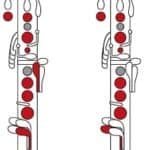
If you want a clarinet song that makes every room feel like a warm kitchen on a winter afternoon, The Muffin Man is it. Simple, catchy, and instantly familiar, it is one of those melodies that turns a Bb clarinet from a stick with keys into a storyteller. Our free clarinet fingering chart for The Muffin Man is really an invitation to join a very long musical conversation.
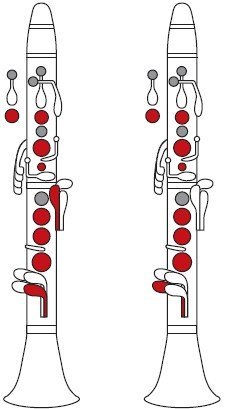
Receive a free PDF of the chart with clarinet fingering diagrams for every note!
The Muffin Man clarinet fingering chart is a simple visual guide that shows every note a Bb clarinetist needs to play this folk song accurately. It highlights left and right hand fingerings, register key use, and basic rhythms so players can learn the tune quickly and focus on musical expression.
The old street song that followed the clarinet home
Before The Muffin Man ever met a clarinet, it was a street call. Picture a baker in Victorian London, walking through narrow alleys with a basket of warm rolls, singing to announce fresh muffins. Children answered with the same melody, turning a sales pitch into a game. When that tune finally met the clarinet, it fit so naturally that it felt like it had always been written for our cylindrical friend with pads and springs.
The clarinet, with its singing chalumeau register and ringing clarion notes, gave The Muffin Man a new kind of life. What started as a vendor's melody became a teaching song in lessons, a warmup in conservatories, and even a soft encore in chamber music settings. In music schools from London to New York, you can still hear a beginner in one practice room playing this tune while, two doors down, someone rehearses the Mozart Clarinet Concerto on the same Bb instrument.
How great clarinetists turn simple songs into magic
You might think a children's song would never appear in the practice rooms of serious players, but The Muffin Man has quietly shaped the sound of many clarinet legends. The line is simple enough that it becomes a blank canvas for tone, phrasing, and breath control.
Imagine Anton Stadler, Mozart's clarinet muse, in late 18th century Vienna. He is known for soaring lines in the Clarinet Concerto in A major, but he would have cut his teeth on folk tunes. Teachers in his time used street songs and dances to help students understand how to shape a phrase. The same rising and falling contour that makes The Muffin Man so singable is exactly the sort of contour you hear in the slow movement of that Mozart concerto, especially in the clarion register around the written notes A and B.
Move forward a century and think of Heinrich Baermann, the romantic virtuoso admired by Carl Maria von Weber. Weber wrote clarinet works like the Concertino in E b and the Concerto No. 1 in F minor for Baermann. Though those pieces are fiery and virtuosic, Baermann's lyrical reputation was built on the way he could make even a scale or a folk melody sound like a story. Teachers today still invite students to play The Muffin Man with a “Baermann tone”: steady air, focused embouchure, and a hint of vocal color on every note.
In the 20th century, players like Sabine Meyer and Martin Frost proved that clarity and character can coexist in even the simplest tune. Meyer, known for her glowing sound in the Brahms Clarinet Quintet, often speaks about how phrasing begins with childhood songs and chorales. Frost, with his theatrical performances of pieces like Anders Hillborg's “Peacock Tales”, treats nursery-like motifs as raw material for drama. Give either of them The Muffin Man on a student Bb clarinet and you would hear a masterclass in line and timing.
Then there are the jazz and klezmer giants. Benny Goodman did not record The Muffin Man, but listen to his early takes of “Swing Swing Swing” or “King Porter Stomp” and you will hear the same playful, singable patterns found in the muffin melody. Artie Shaw and Buddy DeFranco both stressed singing familiar tunes over chord changes during practice. A line like The Muffin Man works beautifully over simple I and V chords in B b, D, or F major, making it a perfect entry point for improvisation.
In klezmer circles, players like Giora Feidman and David Krakauer often weave snippets of children's songs into improvisations. That wink to the audience comes from this same tradition of taking a simple melody and giving it a twist with krekhts (sighing ornaments), scoops, and glissando. On a wooden clarinet with a soft reed and a flexible lip, The Muffin Man can turn into a small klezmer dance in just a few notes.
Most versions of The Muffin Man use just 8 to 12 distinct written pitches on the Bb clarinet. This limited range frees your right hand and lets you focus on embouchure, breath support, and dynamic shaping instead of constant fingering gymnastics.
From nursery rooms to concert halls and film scores
The Muffin Man lives in the same musical universe as other short, catchy tunes that composers love to quote and transform. While you might not see it listed on a symphony program, its spirit hides inside many pieces clarinetists play every day.
In classical literature, listen to how Wolfgang Amadeus Mozart shapes the theme in the Clarinet Quintet in A major, K. 581. The opening phrase is calm and stepwise, not unlike a refined version of a street song. Carl Nielsen does something similar in his Clarinet Concerto, Op. 57, where simple motifs are turned, stretched, and colored. Once you have played The Muffin Man with long, singing lines, those themes become easier to phrase on a Bb clarinet and on an A clarinet alike.
Folk melodies drifting into formal music is nothing new. Johannes Brahms built entire variations sets on children's songs. Jacques Ibert in his “Trois Pieces Breves” for woodwind quintet winks at dance-like tunes that feel almost like playground songs. When a clarinetist in an orchestra like the Berlin Philharmonic or the London Symphony Orchestra plays those lines, they draw on countless hours of shaping simple melodies in the practice room, including songs very close to The Muffin Man.
In jazz, the habit of reharmonizing nursery rhymes is long standing. Clarinetists in small groups, from Edmond Hall to Ken Peplowski, have been known to quote short children's tunes mid-solo. The first eight notes of The Muffin Man land beautifully over a basic B b blues or over a rhythm changes bridge. A player might lift that contour and dress it up with chromatic passing tones, turning bakery music into late-night club material.
Film composers have also leaned into this type of melody. Listen to John Williams's use of clarinet in the “Harry Potter” scores or in “E.T.”. Many of those themes rely on interval patterns that you can feel after playing The Muffin Man slowly and carefully. Alan Menken writes for clarinet in movies like “Beauty and the Beast” with the same kind of gentle, singable shapes. The instrument's soprano voice, especially in the clarion register, makes these tunes sound like a remembered lullaby.
Even in band rooms and conservatories, The Muffin Man has a quiet presence. It shows up in method books, in group warmups for junior wind ensemble, and as a favorite first duet. Teachers often have students trade the melody between first and second clarinet, mirroring the call and response that muffin sellers once had with children in the street.
Why The Muffin Man matters so much to your musical heart
There is something disarming about a tune that everyone already knows. As soon as you start The Muffin Man, your listener stops judging your technique and simply leans into the memory. That gives you space to work on the things that truly make a clarinetist unique: breath, color, timing, and personality.
On a Bb clarinet, the song often sits comfortably between low G and middle D or E, right where the bore vibrates most warmly. Long notes in this range let you feel the reed, the mouthpiece, and the resonance of the upper and lower joints all working together. Add a hint of vibrato with your air and jaw, shape a soft diminuendo, and suddenly a nursery song feels like a miniature aria.
Emotionally, The Muffin Man lives in that gentle space between play and nostalgia. For a young student, it feels like a game. For an adult player or a returning clarinetist, it can feel like a door back to childhood, to picture books and kitchen chatter. The very simplicity of the melody invites you to be honest. There is nowhere to hide, but also nothing to fear.
A quick look at the clarinet fingerings for The Muffin Man
The fingering chart for The Muffin Man is deliberately straightforward. Most arrangements keep the melody in the chalumeau register and the lowest part of the clarion, so beginners can keep the left thumb steady on the thumb hole and focus on clean movements of the first three fingers of each hand. You will mostly use standard note shapes like low G, A, B, C, and D on a Bb clarinet, with the register key only appearing in slightly more advanced versions.
Because the tune repeats short patterns, it is perfect for refining how your fingers lift and land on the tone holes and keys. The free PDF clarinet fingering chart lays out each written note above a simple staff, with clear diagrams of which rings, spatulas, and levers to press. That way you can learn visually at first, then close your eyes and let your ear guide the line.
| Phrase in The Muffin Man | Typical written range on Bb clarinet | Fingering feel |
|---|---|---|
| Opening question (“Do you know…”) | Low G to middle C | Mostly left hand, stable thumb, gentle legato |
| Answering phrase (“Yes I know…”) | A step higher, often A to D | Left and right hand balance, good for finger coordination |
| Final tag (“…who lives in Drury Lane”) | Returns to starting notes | Great for practicing soft endings and breath control |
A simple practice routine to make this song sing
Because the clarinet part for The Muffin Man is short, you can build an entire warmup around it in less than 10 minutes. That is long enough to wake up your embouchure, your lungs, and your fingers without feeling like a chore.
| Time | Focus | How to practice |
|---|---|---|
| 2 minutes | Tone | Play The Muffin Man at half speed. Hold every longer note for 4 counts, listening for a steady sound in the chalumeau register. |
| 3 minutes | Finger clarity | Use the fingering chart and tongue every note lightly. Check that each pitch speaks right away, especially on written C and D. |
| 3 minutes | Dynamics | Play the whole song mezzo forte, then repeat piano, then forte. Keep your embouchure relaxed on every dynamic. |
| 2 minutes | Creativity | Change the rhythm slightly or add a tiny grace note, like a klezmer clarinetist. Stay within the same notes from the chart. |
- Look at the first bar of the fingering chart and finger through the notes without playing.
- Breathe deeply from your abdomen, set your embouchure on the mouthpiece and reed, and play the phrase softly.
- Repeat up to 5 times, each time focusing on a different detail: finger smoothness, articulation, or pitch stability.
Why this tiny tune matters for your journey
Learning The Muffin Man with a clear clarinet fingering chart might seem like a small step, but it connects you directly to an entire lineage of players. The same air you use for this tune is the air you will later pour into the Weber Concertino, a Benny Goodman solo, or a klezmer wedding dance with clarinet and violin.
For a beginner, mastering this song on Bb clarinet creates early wins. You learn that your instrument can actually sing, not just squeak. For an advanced player, returning to it can reset your relationship with your tone and phrasing. Some orchestral clarinetists quietly warm up on The Muffin Man backstage before playing Stravinsky or Ravel, just to remember that music starts with a human voice and a simple line.
Most of all, this little melody reminds you why you picked up the clarinet in the first place: to tell stories. The baker, the children in the street, the student in a first lesson, the professional testing reeds in a practice room, all share that same tune. Your fingers, guided by a small chart, join a very large choir.
Key Takeaways
- Use The Muffin Man clarinet fingering chart to master a simple tune that lets you focus on tone, breath, and phrasing instead of complex fingerwork.
- Treat this folk song like a miniature concerto: vary dynamics, color the sound, and shape each phrase as if you are on stage.
- Return to this melody regularly as a warmup and listening exercise, and connect it to larger works from Mozart, Weber, jazz standards, and klezmer tunes.
Frequently Asked Questions
What is The Muffin Man clarinet fingering chart?
The Muffin Man clarinet fingering chart is a visual guide that shows which keys and holes to press on a Bb clarinet for each note of this folk song. It maps the melody onto clear diagrams so beginners can learn quickly, while more advanced players use it to refine finger coordination and phrasing.
Is The Muffin Man suitable for absolute beginner clarinetists?
Yes. The Muffin Man sits mostly in the comfortable chalumeau register and uses stepwise motion, so new players can focus on steady air and relaxed embouchure. With a clear fingering chart and slow practice, many beginners can play a recognizable version within their first few weeks of lessons.
Which clarinet should I use to play The Muffin Man?
The song works best on a standard Bb soprano clarinet, the same instrument used for band, orchestra, and jazz. You can also adapt it for A clarinet or E b clarinet, but most method books and classroom arrangements are written with Bb clarinet in mind, making fingerings easier to follow.
How can I make The Muffin Man sound more expressive?
Start by playing slowly with a beautiful legato, shaping small crescendos toward the high point of each phrase. Experiment with soft staccato, gentle vibrato, and dynamic contrasts. Listen to recordings of lyrical clarinetists like Sabine Meyer or Richard Stoltzman, and imagine you are giving the same care to this tiny tune.
Can I use The Muffin Man for improvisation practice on clarinet?
Yes. Once you are comfortable with the written melody, try changing the rhythm, adding grace notes, or reharmonizing it over simple I and V chords in B b or F. Jazz and klezmer clarinetists often start improvisation practice by varying well known tunes like this one to build confidence and style.
For more clarinet stories, charts, and historical notes, keep exploring the teaching resources and archives on the Martin Freres site, especially the sections on folk melodies, beginner clarinet studies, and the history of Bb clarinet craftsmanship.