If you have ever played The Yellow Rose of Texas on Bb clarinet, you know it does something quietly beautiful to a room. The tune is simple on the page, but the moment that first sunny interval leaves the mouthpiece and spins through the bell, it carries Texas dust, front-porch evenings, and a whole line of clarinet players who have used this melody to make strangers feel like friends.
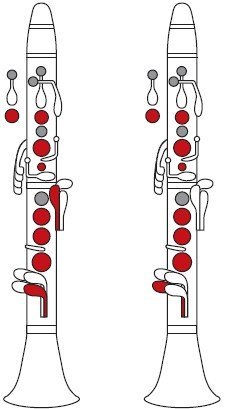
Receive a free PDF of the chart with clarinet fingering diagrams for every note!
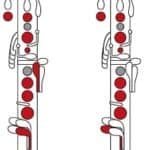
The Yellow Rose of Texas clarinet fingering chart is a note-by-note guide for playing this classic American folk song on Bb clarinet that shows which keys to press for every pitch, helps you feel secure in the melody, and lets you focus on phrasing, tone color, and storytelling.
The long road of The Yellow Rose of Texas to the Bb clarinet
The Yellow Rose of Texas did not start in a band room. It began as a 19th century folk song, whispered and sung in parlors, camps, and on dusty roads. By the time clarinets picked it up, the melody had already carried stories of the Battle of San Jacinto, soldiers in the American Civil War, and the complicated history of the American South.
Early clarinetists like Anton Stadler and Heinrich Baermann never knew this tune, but they built the language that would eventually let a clarinet sing it. Stadler inspired Mozart to write the famous Clarinet Concerto in A major, K. 622, with its lyrical second movement that flows like a folk song. Baermann shaped the sound that Carl Maria von Weber used in his Clarinet Concertos No. 1 and 2. Their liquid, vocal phrasing is exactly the kind of phrasing The Yellow Rose of Texas begs for.
By the early 20th century, American marching bands and concert bands began arranging folk songs like The Yellow Rose of Texas. Military band clarinet sections turned it into a bright, singing line above cornets, trombones, and snare drum. In that world, the piece sat on stands next to arrangements of Sousa marches, Stephen Foster songs, and transcriptions of Brahms Hungarian Dances.
Clarinet voices that gave this folk tune its shine
Folk melodies like The Yellow Rose of Texas rarely appear as star pieces in big concert programs, but they live everywhere around the edges. Listen closely to famous clarinet players and you will hear the same kind of phrasing, swing, and storytelling they would use on this tune.
In jazz, Benny Goodman often wove folk-like material into his phrasing. On recordings like his 1938 Carnegie Hall Concert, his sound on standards such as Sometimes I'm Happy and One O'Clock Jump carries that same easy, whistled quality you need for The Yellow Rose of Texas. Artie Shaw, especially in his recording of Star Dust, bends notes and shapes lines so they rise and fall like a front-porch song at dusk.
Buddy DeFranco, a bridge between swing and bebop, could take a simple melodic cell and flip it into intricate lines over complex chords. While he might not have recorded The Yellow Rose of Texas directly, his work on pieces such as I'll Remember April teaches you how to decorate a plain melody with grace notes, arpeggios, and passing tones that would sound right at home over a guitar strumming this folk tune.
On the classical side, players like Sabine Meyer and Martin Frost show how to color a simple line. Listen to Meyer in the slow movement of the Weber Clarinet Concerto No. 1 in F minor or Frost in arrangements of Nordic folk tunes. They shape long phrases with tiny swells and subtle vibrato. That same approach turns The Yellow Rose of Texas from a camp song into a real clarinet song.
Klezmer clarinetists such as Giora Feidman and David Krakauer provide another angle. Their playing on pieces like Der Heyser Bulgar or Der Gasn Nigun mixes wails, slides, and sobbing phrases with moments of pure sunshine. If you borrow even a little of that on The Yellow Rose of Texas, the melody starts to glow, bending and leaning like a human voice instead of sitting flat on the staff.
Most versions of The Yellow Rose of Texas break into 4 or 8 bar phrases. Thinking in these small musical sentences helps clarinetists breathe naturally and shape each idea, rather than just stringing together individual notes from the fingering chart.
Iconic uses of The Yellow Rose of Texas in bands, recordings, and films
The Yellow Rose of Texas wandered into almost every musical corner: fife and drum corps, brass bands, clarinet choirs, and film scoring sessions. Clarinetists have carried it all along the way.
Marching and military bands often feature the tune in medleys. Clarinet sections in groups like the United States Marine Band or the Dallas Wind Symphony have performed arrangements where clarinets carry the melody in unison before breaking into close harmony. That bright, reedy texture sits perfectly with Bb clarinets, E b clarinet on top, and bass clarinet anchoring the low line.
On the recording side, popular singers like Mitch Miller and Bing Crosby filmed and recorded versions where clarinets weave around the vocal line. Session players in studios for labels in New York and Los Angeles added obligato lines, little fills between phrases, and background figures that you can easily adapt as clarinet embellishments when you play the tune solo.
Film composers have used The Yellow Rose of Texas in Westerns and historical dramas set in Texas. In those orchestras, clarinets often share the tune with violins, horns, or solo trumpet. Think of a clarinet in the London Symphony Orchestra, sitting in a soundtrack session, asked to play this tune softly over strings and acoustic guitar. Suddenly it is not a campfire piece anymore. It is a character theme, full of memory and place.
Clarinet choirs and community bands also love arranging folk songs. On programs that include arrangements of Brahms Hungarian Dance No. 5 or themes from Dvorak's New World Symphony, The Yellow Rose of Texas often appears as an encore or a light opener. The contrast between rich symphonic clarinet writing and a simple folk tune is exactly what makes it so charming.
If you browse clarinet teaching materials from the mid-1900s, you will also find this melody inside method books right next to technical studies, scale pages, and etudes. It sits comfortably beside pieces like Schumann's Soldier's March or simple versions of Schubert's Standchen. Teachers used it because the tune is catchy, the range is friendly, and students remember it after one listen.
From 19th century song to a clarinet classroom favorite
The earliest known versions of The Yellow Rose of Texas date to the 1800s, long before the Boehm-system clarinet took over band rooms. Clarinet designs used at that time by makers like Iwan Muller or early French workshops had fewer keys and a more direct, vocal tone. Even on those instruments, this melody would have leaned on open holes and simple finger patterns, much like a fife or a simple system flute.
As the Boehm-system Bb clarinet became standard through the work of makers like Buffet-Crampon and the spread of French playing traditions, folk tunes entered conservatories and band schools. Teachers paired major scales and arpeggios with folk melodies to train ear, rhythm, and phrasing. A clarinet student might practice a G major scale, then immediately play an arrangement of The Yellow Rose of Texas in G, hearing how those same notes could speak as music instead of exercise.
In the romantic era, composers like Brahms and Dvorak took folk material and built symphonies and chamber music around it. While they may not have used this specific Texas song, the idea is the same. A simple line, sung by ordinary people, ends up in clarinet pieces that fill concert halls. When you play The Yellow Rose of Texas, you are sharing the same instinct that led Brahms to write his Clarinet Quintet in B minor, Op. 115, filled with folk-like motives traded between clarinet and strings.
By the time jazz and swing exploded in the 1920s and 1930s, clarinetists had fallen in love with tunes that audiences already knew. That is exactly why many early jazz bands quoted folk melodies during improvisations. A clarinetist might slide into a bar or two of a song like The Yellow Rose of Texas inside a solo on a blues in B b, earning a smile from anyone who recognized it in the crowd.
How The Yellow Rose of Texas feels on Bb clarinet
The Yellow Rose of Texas is, at its core, a song about affection and distance. The lyrics tell a story about missing someone far away, yet the melody shines like sunlight. On Bb clarinet, that mix of warmth and longing lives in the way you use your air, your throat, and your fingers.
Play the opening phrase with a gentle attack from the reed, almost like you are speaking a name softly. If your clarinet has a wood body, for example an older Martin Freres or Buffet model, you will feel the resonance in the upper joint as the sound blooms upward through the barrel and out the bell. Even on a plastic student clarinet, you can shape the tone with a relaxed embouchure and warm, supported air.
Where a technical etude might feel like counting steps on a stairway, The Yellow Rose of Texas feels like walking a familiar path at twilight. The intervals are mostly small, often stepwise in a major key, which invites legato connection and subtle dynamic shading. Little swells at the top of each phrase, a slight diminuendo at the end of a line, and you suddenly have a story instead of a pattern.
Jazz players sometimes swing the rhythm, turning the straight eighth notes into a lilting triplet feel, similar to the way Benny Goodman might treat a ballad. Classical players might stick closer to the printed rhythm but use rubato, similar to a Brahms Intermezzo, to give the line a natural human breath. Both approaches live happily on Bb clarinet, and both grow from the same fingering chart you are about to print.
Why this simple fingering chart matters for your playing
On paper, The Yellow Rose of Texas is not as flashy as a Weber concerto cadenza or as athletic as a Stravinsky Three Pieces sprint. Yet mastering this little song quietly trains some of the most important musical skills you can carry into those bigger works.
You learn to keep a steady, beautiful tone across the break from throat tones up to clarion. You learn to phrase in 4 bar ideas, just like you would in the Mozart Clarinet Concerto. You learn to control pitch, especially in notes like throat A and B b, so that they sit in tune with a guitar, piano, or clarinet section around you.
Emotionally, it gives you something many players forget to practice: sincerity. There is nowhere to hide behind technical fireworks. Your long tones, your finger coordination, your sense of rhythm, and your imagination are all right at the center. If you can make someone feel something with this folk tune, you can carry that same honesty into Brahms Sonatas, Klezmer dances, or a jazz ballad.
| Piece | What it trains | Connection to The Yellow Rose of Texas |
|---|---|---|
| Mozart Clarinet Concerto, K. 622 | Long phrases, breath control | Same need for singing tone and 4 bar phrase shapes |
| Weber Concertino, Op. 26 | Expressive rubato, lyrical playing | Folk-like themes that feel similar to this song |
| Benny Goodman ballad solos | Swing feel, melodic decoration | Teaches ways to ornament the simple folk melody |
A few friendly fingering notes for your chart
The full Yellow Rose of Texas clarinet fingering chart shows every note clearly, so you will not find a long technical manual here. Still, a few small choices make the melody flow more easily under your fingers.
Most arrangements sit comfortably in the middle register of the Bb clarinet, often around low G up to clarion C or D. This means plenty of notes like throat A, B b, and long B natural. Many players prefer the long fingerings for A and B b (using the left hand first finger and right hand side keys) to keep the tone warmer and the intonation steadier, especially when playing in tune with a piano or guitar.
- Start by playing the melody at a slow tempo, looking back and forth between the staff and the chart to memorize the feel of each interval.
- Notice where you cross the break between A and B natural, and practice that motion separately, tongue light and fingers close to the keys.
- Once the fingerings feel secure, put the chart aside and sing the tune out loud, then try to match that same natural lilt on your clarinet.
A simple practice plan for The Yellow Rose of Texas
Here is a short routine you can use with your fingering chart, whether you are a beginner with a new student Bb clarinet or an experienced player dusting off an old folk favorite.
| Step | Time | Focus |
|---|---|---|
| 1. Slow reading with chart | 5 minutes | Check every fingering against the chart, no rush |
| 2. Phrase practice | 5 minutes | Play in 4 bar phrases, add small crescendos and decrescendos |
| 3. Style experiment | 5 minutes | Try straight, then slightly swung, then rubato versions |
| 4. Memory playthrough | 5 minutes | Put the chart aside and play from memory, listening to tone |
If you enjoy folk tunes on clarinet, you might also like reading about baroque-inspired phrasing in the Mozart Clarinet Concerto, discovering how romantic color works in the Weber clarinet concertos, or comparing tone styles in historic Martin Freres clarinets.
Key Takeaways
- Use the Yellow Rose of Texas clarinet fingering chart to free your mind from note worries so you can focus on tone and phrasing.
- Treat this folk song like a tiny concerto: shape 4 bar phrases, experiment with rubato, and listen for a singing sound.
- Let the history of jazz, classical, and folk clarinetists inspire you to add style, color, and personality to every note.
Frequently Asked Questions
What is The Yellow Rose of Texas clarinet fingering chart?
The Yellow Rose of Texas clarinet fingering chart is a visual guide that shows exactly which keys and holes to press on a Bb clarinet for each note of the song. It helps you play the melody confidently so you can focus on tone, rhythm, and expression instead of guessing fingerings.
Is The Yellow Rose of Texas suitable for beginner clarinet players?
Yes. The range is comfortable, usually from low G to clarion C or D, and the rhythm is mostly simple eighth and quarter notes. Beginners can use the chart to learn correct fingerings, while teachers use the tune to introduce phrasing, air support, and basic dynamics.
What key is The Yellow Rose of Texas usually played in on Bb clarinet?
Most student arrangements place The Yellow Rose of Texas in a clarinet-friendly key such as G major or F major concert. That keeps the part in a comfortable range on Bb clarinet, using familiar fingerings like low G, A, B, C, and clarion D, so tone and phrasing can stay relaxed.
How can I make The Yellow Rose of Texas sound more expressive on clarinet?
Think in 4 bar phrases, use a slight crescendo toward the middle of each line, and relax the air at the ends. Borrow ideas from players like Benny Goodman or Sabine Meyer: light tongue touches, gentle dynamic waves, and a singing legato will make the folk tune feel alive.
Should I use throat or long fingerings for A and B b in this song?
Both work, but many players prefer long A and long B b when holding notes or playing with piano or guitar, because they tend to be more stable in pitch. The chart shows standard fingerings, and you can experiment to find which combination gives the best intonation and tone on your clarinet.