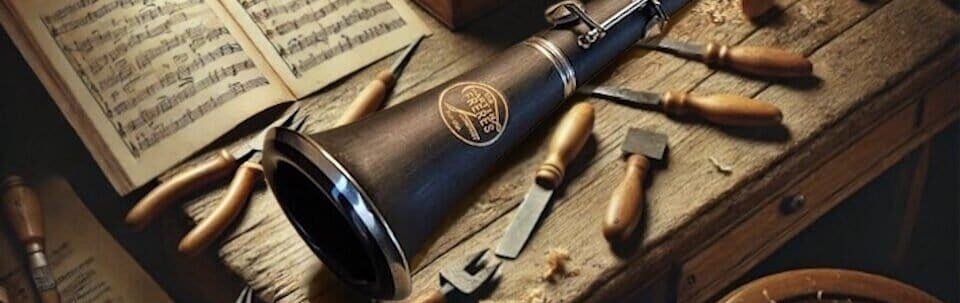
Clarinet ensemble music is repertoire written or arranged for multiple clarinet voices (from E-flat and B-flat clarinets to bass and contra) that emphasizes blend, balance, and interplay across duets, quartets, and large clarinet choirs. It uses the full clarinet family to create orchestral depth, rich harmonies, and flexible textures in chamber and large-group settings.
What is Clarinet Ensemble Music?
Clarinet ensemble music is music scored for two or more clarinets, often using several members of the clarinet family. It ranges from simple duets and trios to quartets, chamber groups with mixed instruments, and full clarinet choirs with 20 or more players. The focus is color, blend, and intricate inner parts, not just solo melody.
In a typical clarinet ensemble, B-flat clarinets carry much of the texture, while E-flat, alto, bass, and contrabass clarinets add brilliance, warmth, and depth. Arrangers use these voices like orchestral sections, assigning melody, counter-melody, harmony, and bass lines to different instruments. Successful clarinet ensemble music balances clarity of lines with a unified, choir-like sound.
A Brief History of Clarinet Ensembles
Clarinet ensemble music has roots in 19th century Harmoniemusik, where pairs of clarinets, bassoons, and horns played outdoor serenades by composers like Mozart and Beethoven. While not yet full clarinet choirs, these groups established the idea of clarinets as flexible ensemble voices with both melodic and harmonic roles.
In the late 19th and early 20th centuries, military and civic bands in Europe and the United States began using larger clarinet sections. Some directors experimented with all-clarinet groups for special events. Early clarinet makers, including Martin Freres in France, supplied instruments for such ensembles, and their instruments appear in photographs of period band and salon groups.
By the mid 20th century, dedicated clarinet choirs emerged in universities and conservatories. Harvey Hermann at the University of Illinois and other educators organized large clarinet ensembles that commissioned and arranged new works. These choirs demonstrated that the clarinet family could function as a complete, self-contained orchestra of single reeds.
From the late 20th century into the 21st, clarinet choirs became fixtures at events like ClarinetFest, organized by the International Clarinet Association. Ensembles such as the Dutch Clarinet Choir and university groups in the United States, Japan, and Europe recorded landmark albums, helping standardize instrumentation and performance practice for clarinet ensemble music.
The Clarinet Family: Voices and Anatomy
Clarinet ensembles rely on a family of related instruments that share basic anatomy: mouthpiece, reed, ligature, barrel, upper and lower joints with tone holes and keys, and a bell. Each voice uses similar fingerings but differs in length, bore, and pitch, which affects color and blend in ensemble settings.
The E-flat clarinet is the smallest common member, pitched a minor third higher than the B-flat clarinet. Its shorter tube and narrower bore create a bright, penetrating tone that can project above the group. In ensemble music, E-flat clarinet often plays high melodies, obbligato lines, or coloristic flourishes, similar to a piccolo in a wind band.
The B-flat clarinet is the core voice of most ensembles. Its cylindrical bore and standard mouthpiece-reed setup produce a flexible tone that can blend or project as needed. In clarinet choirs, multiple B-flat clarinets usually cover 3 or 4 parts, handling melody, inner harmonies, and rhythmic figures across the chalumeau, clarion, and altissimo registers.
The A clarinet, pitched a semitone lower than B-flat, appears more often in orchestral music than in clarinet choirs. However, some advanced ensembles use A clarinets for specific repertoire or to match original keys. The instrument shares almost identical anatomy with the B-flat clarinet, so switching between them is straightforward for experienced players.
The alto clarinet, pitched in E-flat, has a larger bore, curved neck, and sometimes a floor peg. Its darker, mellow sound fills the gap between B-flat and bass clarinet. In ensemble textures, alto clarinet often plays inner harmony lines, supporting both melody and bass while helping overall balance and intonation in the middle register.
The bass clarinet extends the range downward, typically to written low C or E-flat, depending on the model. Its upturned metal bell and longer body require a floor peg or neck strap. In clarinet choirs, bass clarinet functions like a cello or bassoon, anchoring harmonic progressions, doubling bass lines, and occasionally taking lyrical solos in its rich middle register.
Contra-alto and contrabass clarinets provide the lowest voices. These large instruments often use metal bodies with floor stands. Their deep, organ-like sound gives clarinet ensemble music a true bass foundation. In scores, they reinforce root motion, outline harmonic rhythm, and add weight to climactic passages without overpowering upper voices when balanced carefully.
Mouthpiece and reed choices strongly affect ensemble blend. Softer reeds and more closed mouthpieces can help high clarinets tame brightness, while slightly stronger reeds and more open facings can give low clarinets clarity and projection. Matching reed strength ranges within each section helps stabilize pitch and articulation across the group.
Choosing Repertoire for Your Ensemble
Choosing clarinet ensemble music starts with honest assessment of ensemble size, skill level, and available instruments. A small group of 3 to 5 players will need different repertoire than a 25-player clarinet choir with multiple bass and contra parts. Directors should match difficulty, range, and independence of parts to the players they have.
For duets and trios, look for pieces with clear melodic sharing and manageable independence between parts. Classical transcriptions, folk song settings, and original pedagogical works by composers like Voxman and Baermann offer good starting material. These pieces build listening skills and intonation without overwhelming less experienced players.
Clarinet quartets often use 3 B-flat clarinets and 1 bass clarinet or 4 B-flat clarinets. Repertoire ranges from baroque transcriptions to jazz and contemporary works. When selecting quartets, check that each part has musical interest and that the lowest part is playable for your bass or low-voiced player. Avoid extreme altissimo writing for developing groups.
For medium clarinet ensembles of 6 to 12 players, look for flexible scoring that can work with missing instruments. Many modern arrangements include optional E-flat, alto, or contra parts. Directors should prioritize scores where key lines are not confined to a single rare instrument, so the music can still function if, for example, no alto clarinet is available.
Large clarinet choirs can tackle more ambitious repertoire, including symphonic transcriptions, original works, and multi-movement pieces. When programming, balance technical showpieces with lyrical works and lighter selections. Consider stamina, especially for E-flat and high B-flat parts, and ensure that low clarinet players have enough rest to maintain tone quality.
Directors should also consider access to quality editions. Look for clear notation, logical page turns, and accurate transpositions. When possible, consult publisher notes or recordings to confirm intended tempos and articulations. For historical works, check modern critical editions or trusted archives to avoid outdated or error-prone parts.
Reading and Understanding Clarinet Arrangements
Clarinet ensemble scores use standard treble clef notation, but each instrument is transposed. B-flat clarinets sound a major second lower than written, E-flat clarinets a minor third higher, alto clarinets a major sixth lower, bass clarinets a major ninth lower, and contrabass clarinets two octaves plus a major second lower. Directors must keep these transpositions in mind when analyzing harmony.
In a full score, clarinet parts are usually ordered from highest to lowest: E-flat, B-flat 1, B-flat 2, B-flat 3, B-flat 4, alto, bass 1, bass 2, contra-alto, contrabass. Some scores condense similar parts. When studying an arrangement, trace the main melody, counter-melody, and bass lines through the score to understand how the composer uses the clarinet family.
Articulation markings in clarinet ensemble music are important for clarity. Staccato, tenuto, accents, and slurs must be interpreted consistently across sections. In many arrangements, the same figure appears in several parts at different octaves. Directors should mark unified articulations and note any exceptions where a specific color or emphasis is desired.
Dynamic shaping often follows orchestral practice, with crescendos and decrescendos spread across the choir. Low clarinets may need to play slightly louder than marked to balance the group, while E-flat and high B-flat parts may need to underplay. When reading a new score, mark likely balance adjustments so you can address them efficiently in rehearsal.
Texture labels such as soli, tutti, and divisi appear frequently. Soli indicates a small group or section feature, often B-flat 1 and E-flat clarinet together. Tutti signals full ensemble. Divisi in low parts may split a bass clarinet section between root and fifth or between two independent lines. Clarifying these markings with players prevents confusion in rehearsal.
Many clarinet choir arrangements include optional parts, such as an optional E-flat or contra-alto clarinet. When reading the score, decide early whether to include or omit these parts. If omitted, check that important harmonies and bass motion still sound complete. Sometimes you can reassign critical notes to neighboring parts with small pencil edits.
Tone Blending, Tuning and Intonation Techniques
Blend and tuning are central challenges in clarinet ensemble music. Each clarinet type has natural tendencies: E-flat clarinets can sound bright and sharp, B-flat clarinets vary by register, and low clarinets can sag in pitch when played softly. A systematic tuning routine and shared concept of sound help overcome these tendencies.
Begin rehearsals with unison tuning on concert F and B-flat, using a reference pitch from a tuner, piano, or reliable player. Tune first at mezzo-forte, then check at piano and forte. Encourage players to adjust with embouchure, voicing, and air support before pulling or pushing barrels and necks. This builds flexibility and awareness across the ensemble.
After unisons, move to sustained chords, such as concert B-flat major and E-flat major, voiced across the choir. Ask each section to listen for beats and adjust to the bass clarinet or contrabass foundation. Teach players to lower major thirds slightly and raise leading tones for more resonant, just intonation in slow passages.
For blend, focus on matching tone color within sections. Have all B-flat clarinets play the same note and experiment with vowel shapes in the oral cavity, such as “oh” versus “ee,” to find a unified resonance. Repeat this with low clarinets and then between sections, so the entire choir shares a common core sound.
Balance exercises help prevent E-flat and high B-flat clarinets from dominating. Try having the ensemble play a chorale while the high parts play at half dynamic. Then gradually raise their volume until the texture feels full but not top heavy. Reverse the process with low clarinets to ensure the bass foundation remains present but not boomy.
Intonation in fast passages often suffers from unfocused air and uneven finger technique. Practice technical sections at slow tempos with a drone on the tonic or dominant, asking players to sustain key notes while listening for pitch stability. Gradually increase tempo while maintaining steady air and relaxed fingers to prevent sharpness in the upper register.
Rehearsal Strategies and Communication
Efficient clarinet ensemble rehearsals depend on clear goals, structured time, and open communication. Before each rehearsal, directors should set 2 or 3 specific objectives, such as tuning a particular chorale, cleaning a fast passage, or balancing a featured section. Share these goals with players at the start so everyone knows the focus.
Begin with a consistent warm up routine that includes long tones, scale patterns, and articulation exercises tailored to the ensemble. Use these to address ensemble skills, not just individual technique. For example, play a scale in staggered entrances by section to train listening and timing, or practice articulated scales at unified dynamics to refine clarity.
When working on repertoire, rehearse in short, focused segments. Isolate problem measures, then expand to surrounding phrases. Ask sections to play alone so balance and articulation issues are easier to hear. Encourage players to mark solutions in their parts, such as breath points, dynamic adjustments, or alternate fingerings for tricky passages.
Communication within the ensemble is as important as conductor gestures. Section leaders can help coordinate fingerings, articulations, and phrasing. Encourage them to speak briefly and clearly, then demonstrate with their section. This shared responsibility builds ownership and reduces the need for the director to address every detail personally.
Address uneven preparation with clear expectations and supportive accountability. Provide practice priorities in writing, such as specific measures and tempo goals. At the next rehearsal, begin by hearing those spots. Players quickly see that preparation matters. Keep the tone constructive, focusing on improvement rather than blame.
Finally, schedule occasional seating changes or mixed seating for listening exercises. Have players sit in small mixed groups or circles and play chorales without a conductor. This encourages eye contact, breathing together, and active listening across the ensemble, skills that transfer directly to more responsive, flexible performances.
Maintenance and Care for Ensemble Performance
Good instrument maintenance directly affects ensemble sound, tuning, and response. Before each rehearsal, players should swab their clarinets, check reeds, and inspect tenon corks. A clean, well-sealed instrument speaks more easily and tunes more predictably, which saves rehearsal time and reduces fatigue, especially in longer clarinet choir sessions.
Pre-rehearsal, each player should: 1) assemble the clarinet with cork grease applied sparingly as needed, 2) select a reed that plays freely and evenly across registers, 3) check that pads seal by gently pressing keys and blowing, and 4) confirm that all rods and screws are secure. Any leaks or mechanical issues should be addressed before serious ensemble work.
Seasonal care includes swabbing after every playing session, occasional bore oiling for wooden instruments if recommended by a technician, and regular inspection of pads and corks. In dry climates or winter heating, use a case humidifier to protect wooden clarinets from cracking. Large bass and contra instruments need special attention to joints and keywork due to their size.
Reed management is critical in ensemble settings. Encourage players to rotate 3 to 5 reeds, marking them and resting each reed between uses. This improves consistency from rehearsal to rehearsal. For clarinet choirs, consider asking each section to agree on a general reed strength range so response and pitch tendencies are more predictable.
Temperature and humidity affect pitch and response. Before performances, allow at least 20 to 30 minutes for instruments to acclimate to the hall. Avoid leaving clarinets in cars or near heating vents. Low clarinets and metal-bodied contras can feel cold longer, so players should warm air and mouthpieces thoroughly with long tones before tuning.
On performance day, a simple checklist helps: swab and inspect the instrument, test 2 or 3 reeds and choose the most stable, verify that all joints fit securely, check that stands and pegs are functioning, and pack necessary accessories such as spare reeds, cork grease, swabs, and a small screwdriver. This preparation reduces onstage emergencies.
Common Problems and Troubleshooting in Ensemble Settings
Clarinet ensembles often face recurring issues such as sharp upper voices, weak bass presence, squeaks in technical passages, and muddy articulation. A troubleshooting mindset treats these as solvable patterns. Directors and players can use simple diagnostic steps to identify causes and apply targeted fixes during rehearsal.
When a section plays consistently sharp or flat, first check individual tuning at a comfortable dynamic. If many players are sharp, ask them to relax embouchures slightly and use warmer air before adjusting barrels. If low clarinets are flat, encourage more support and slightly firmer embouchures. Only after these checks should you adjust instrument length.
If the ensemble sounds top heavy, experiment with seating and doubling. Move bass and contra players closer to the center so their sound projects more evenly. Ask E-flat and high B-flat parts to play one dynamic level softer than written in tutti passages. Consider having fewer players on the top part and more on inner and low parts.
Squeaks often result from reed issues, embouchure tension, or finger leaks. Have the affected player test the reed alone at mezzo-forte, then check for relaxed embouchure and curved fingers covering tone holes. In technical passages, slow practice with a metronome can reveal specific finger combinations that cause instability, which can sometimes be eased with alternate fingerings.
Muddy low-end sound usually comes from uncoordinated articulation or unfocused air in bass and contra parts. Ask low clarinet players to articulate slightly ahead of the beat in fast passages and to use a clear, “tah” syllable. Practicing bass lines alone at a slower tempo, then with a metronome, helps lock in clarity before reintegrating with the full ensemble.
Venue acoustics can also create problems. In very live spaces, fast passages may blur. Encourage shorter articulations and slightly slower tempos. In dry rooms, the ensemble may sound thin. Ask for more legato and fuller dynamics, especially from inner and low voices. Simple adjustments in seating, such as curved rows instead of straight lines, can improve ensemble hearing.
Performing with a Clarinet Choir: Logistics and Programming
Clarinet choir performances require careful planning of space, seating, and program flow. The ensemble should be arranged so all players can see the conductor and hear key sections, especially bass and inner voices. Curved rows or semi-circles work well, with low clarinets near the center and high instruments slightly inward rather than on the extreme ends.
Stage logistics include stands, chairs, and instrument supports. Bass and contra players need sturdy pegs or floor stands and enough room to manage large instruments safely. Allow extra space between rows for instrument bells and for players to stand and sit without bumping keys. Check sight lines from the back row to ensure clear view of the conductor.
Programming should consider audience variety and player stamina. A well-constructed clarinet choir concert alternates textures: full ensemble works, smaller chamber pieces, and features for specific sections. This variety keeps listeners engaged and gives players mental and physical breaks, especially for demanding E-flat and first clarinet parts.
Transitions between pieces can showcase different subsets of the ensemble. For example, follow a full-choir opener with a clarinet quartet or bass clarinet feature while other players rest. Announcements or brief spoken introductions by the director or players can give historical context and highlight unique aspects of clarinet ensemble music.
Sound checks in the venue are important, even for acoustic performances. Have the ensemble play a representative passage from each piece, including soft chorales and loud tutti sections. Walk the hall to assess balance and projection. Adjust seating, dynamics, or articulations as needed. In amplified settings, use microphones sparingly to reinforce low voices without overwhelming natural blend.
Recording performances can provide valuable feedback and documentation. Simple stereo recordings help directors and players evaluate balance, tuning, and phrasing after the concert. For more advanced projects, multi-microphone setups can capture section detail. Always test recording levels during sound check to avoid distortion in loud passages.
Case Studies and Archive References
Historical and modern clarinet ensembles offer practical models for programming, instrumentation, and style. University clarinet choirs, professional chamber groups, and community ensembles have built repertoires that demonstrate what works well for different sizes and skill levels. Studying their programs and recordings can guide your own ensemble planning.
The International Clarinet Association maintains archives of clarinet choir scores, programs, and recordings. These materials show how clarinet ensemble music has evolved across decades, including the rise of original works and the refinement of standard instrumentation. Directors can reference these archives when selecting pieces or researching performance practice.
The Library of Congress and other national libraries hold early clarinet ensemble manuscripts and published parts, including Harmoniemusik and salon pieces that adapt well to clarinet choirs. Examining these sources reveals historical approaches to voicing, articulation, and phrasing that can inform modern interpretations, especially for classical and romantic transcriptions.
Modern case studies include university clarinet choirs that commission new works and record albums. Their programs often combine original compositions, such as multi-movement suites for clarinet choir, with arrangements of orchestral and choral works. Analyzing these programs can help directors balance difficulty, style diversity, and audience appeal in their own concerts.
Community clarinet choirs offer another model, showing how to adapt repertoire to mixed ability levels. Many such ensembles use flexible scoring, with optional parts and simplified lines for less experienced players. Their experiences highlight practical solutions to common challenges like limited rehearsal time, rotating membership, and varying access to low clarinets.
Resources, Scores and Further Reading
Clarinet ensemble directors and players can draw on a growing range of resources for scores, recordings, and research. Major music publishers offer dedicated clarinet choir series, while smaller presses and self-published composers provide innovative original works and flexible arrangements. Exploring multiple publishers broadens repertoire options for different ensemble sizes and skill levels.
Professional organizations, including the International Clarinet Association, regularly feature clarinet ensemble performances and articles in their publications and conferences. These events showcase new works, highlight successful ensembles, and share practical advice on topics like tuning, programming, and instrument care. Many conference performances are recorded and made available for study.
Academic libraries and digital repositories host theses, dissertations, and articles on clarinet choir history, repertoire, and pedagogy. These writings often include annotated repertoire lists, analysis of key works, and interviews with prominent clarinet choir directors. Such research can guide long-term repertoire planning and inform interpretive decisions.
Recordings by established clarinet choirs provide important listening. They reveal how experienced groups handle balance, articulation, and phrasing across different styles. Directors can share selected tracks with their ensembles as models, asking players to notice specific details like dynamic shaping, blend between sections, and treatment of melodic lines.
For players and educators interested in arranging, books and courses on orchestration and arranging for winds can be adapted to clarinet ensembles. Understanding register characteristics, transposition, and idiomatic writing for each clarinet voice helps create effective new arrangements that suit your specific ensemble and available instruments.
Key Takeaways
- Clarinet ensemble music uses the full clarinet family to create rich, orchestral textures, from small chamber groups to large clarinet choirs.
- Careful repertoire selection, clear rehearsal goals, and consistent tuning routines greatly improve blend, balance, and overall ensemble quality.
- Regular maintenance, thoughtful seating, and attention to venue acoustics help prevent common problems and support confident, musical performances.
FAQ
What is Clarinet ensemble music?
Clarinet ensemble music is repertoire written or arranged for multiple clarinets, from duets and quartets to large clarinet choirs. It uses different clarinet voices, such as E-flat, B-flat, alto, bass, and contra, to create layered melodies, harmonies, and bass lines with a focus on blend, balance, and color.
What instruments make up a clarinet choir?
A typical clarinet choir includes several B-flat clarinets plus low clarinets such as alto, bass, and sometimes contra-alto and contrabass. Many choirs also use one or more E-flat clarinets for high lines. The exact mix varies, but the goal is to cover a wide pitch range with a unified clarinet tone.
How do I choose repertoire for a small clarinet ensemble?
For small ensembles, match repertoire to your size and skill level. Duets and trios should share melody and keep parts manageable. Quartets can use 3 B-flat clarinets and 1 bass or 4 B-flats. Look for clear, independent lines, reasonable ranges, and flexible scoring if you lack certain instruments.
How can I improve tuning and blend in my clarinet group?
Start each rehearsal with unison tuning and sustained chords, focusing on listening to the bass foundation. Encourage players to adjust with air and embouchure before moving barrels. Practice chorales for blend, matching tone color and dynamics within and between sections. Balance high and low voices by adjusting dynamics and seating.
What maintenance should players do before a performance?
Before a performance, players should swab their instruments, check tenon corks and pads, select a stable reed, and confirm that all joints fit securely. Allow time for instruments to warm to room temperature, then tune carefully. Bringing spare reeds, cork grease, and basic tools helps prevent small issues from affecting the concert.
Related Posts: