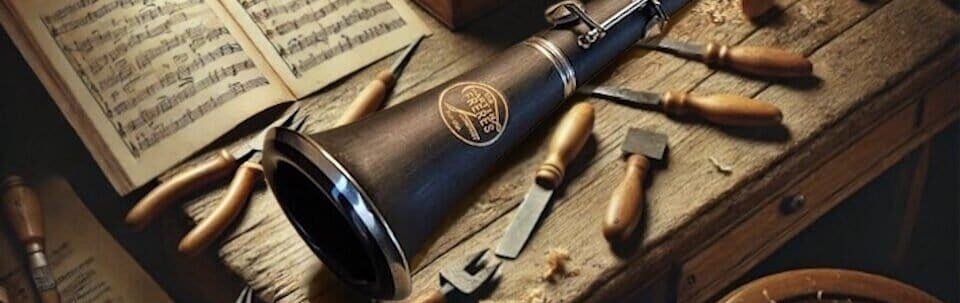
Unusual clarinet trivia are little-known, surprising facts about the instrument: its unusual history (often traced to Johann Christoph Denner in the early 18th century), surprising playing techniques like slap-tonguing, key clicks, and circular breathing, uncommon materials such as grenadilla (African blackwood), and quirky roles in film, jazz, and orchestral lore that most players never hear about in lessons.
Unusual Clarinet Trivia: A Symphony of Surprises
Unusual clarinet trivia sits at the crossroads of history, acoustics, and performance tricks. These facts explain why the clarinet can whisper like a flute, bark like a saxophone, or imitate a human voice. They also reveal how makers, from early German workshops to French factories, shaped the instrument that students and professionals use today.
For players and band directors, these odd details are not just fun. They help explain tuning quirks, keywork choices, and why certain passages feel awkward under the fingers. For collectors and music-curiosity readers, unusual trivia connects physical instruments to archival stories, film soundtracks, and rare variants like the basset horn or contrabass clarinet.
Clarinet by the numbers:
Typical soprano clarinet range: about 3.5 octaves (written E3 to C7).
Standard orchestral clarinetists often use 2 or more instruments per concert (usually B-flat and A).
Professional wooden clarinets can contain wood from trees over 60 years old.
History & Evolution: From Denner’s Early Instruments to Modern Clarinet Design
One of the most persistent bits of unusual clarinet trivia is that the clarinet appeared almost overnight. In reality, it evolved from the chalumeau, a single-reed folk instrument with limited range. Around the early 1700s, Nuremberg maker Johann Christoph Denner is credited with adding a register key, which allowed the instrument to jump to a higher set of overtones.
Denner’s instruments looked more like extended chalumeaux than modern clarinets. They had few keys, a cylindrical body, and a warm, reedy tone. Surviving early clarinets in collections such as the Germanisches Nationalmuseum and the Musée de la Musique show that these instruments often had only two keys and were pitched in a variety of tunings, not standardized A=440 Hz.
Timeline snapshot:
c. 1700: Denner-era clarinets with 2 keys.
Late 1700s: 5-6 key clarinets become common.
1843: Klosé publishes his Boehm-inspired clarinet method.
Early 1900s: Mass-produced student clarinets expand in Europe and North America.
During the 18th century, makers gradually added keys to solve specific fingering and tuning problems. By Mozart’s time, many clarinets had 5 to 8 keys, enough to play in more distant keys but still far from modern ergonomics. Mozart’s Clarinet Concerto was written for an extended-range instrument, a basset clarinet, which could reach down to low written C.
In the 19th century, Hyacinthe Klosé and Louis-Auguste Buffet adapted Theobald Boehm’s flute key principles to the clarinet. Their system reorganized tone holes and keywork for more even tuning and smoother fingering. This Boehm-system clarinet became dominant in France, the United States, and many other regions, while the older Albert and Oehler systems remained strong in parts of Germany and Eastern Europe.
By the 20th century, clarinet manufacturing shifted from small workshops to industrial production. Factories in France, Germany, and the United States began offering graded lines of student, intermediate, and professional instruments. New materials like hard rubber and plastics appeared, especially for school use, while grenadilla wood remained the standard for professional models.
Field Note: Martin Freres Archive Insight
Archival catalogues from the Martin Freres brand show how 19th and early 20th century makers offered clarinets in multiple systems and pitches, often in matched sets. These documents reveal a market where players might own B-flat, A, and C clarinets, plus specialty instruments, long before modern standardization simplified instrument choices.
For a visual aid, a timeline infographic can be powerful: start with a chalumeau illustration, then mark Denner’s early clarinet, classical-era key additions, the Klosé/Boehm redesign, and 20th century factory production. Adding dates, key counts, and representative makers helps readers connect trivia to concrete historical milestones.
Clarinet Anatomy: Odd Parts, Rare Variants, and How They Affect Sound
At first glance, a clarinet looks simple: a black tube with silver keys. Under the surface, the anatomy hides several unusual acoustic tricks. The mouthpiece, ligature, and reed form a vibrating system that controls attack, color, and response. Small changes in reed strength or facing curve can produce surprisingly large differences in sound.
The barrel is a short but important component. Tiny changes in barrel length, even 1 to 2 millimeters, can noticeably affect tuning. Some professionals own multiple barrels for different repertoire or pitch standards. The upper and lower joints house most of the tone holes and keywork, while the bell helps project lower notes and influences how the clarinet blends in ensembles.
The clarinet’s cylindrical bore is one of its strangest features. Unlike the conical bore of an oboe or saxophone, the clarinet behaves acoustically like a closed pipe. This is why overblowing at the register key produces a twelfth (an octave plus a fifth), not an octave. That single fact explains much of the clarinet’s unique fingering system and extended low register, called the chalumeau register.
The register key itself is a small but powerful piece of trivia. It does not simply open a vent to the octave. Instead, it encourages the reed and air column to favor a higher harmonic, which is why some notes share fingerings across registers while others require complex alternate fingerings to stay in tune.
Rare clarinet variants add more unusual details. The E-flat clarinet, smaller and brighter, often carries piercing solos in works by Berlioz, Mahler, and Shostakovich. The bass clarinet, with its curved neck and upturned bell, extends down to a deep, resonant low C or E-flat, depending on the model, and can sound almost like a cello.
Basset horns and basset clarinets occupy a special place in clarinet trivia. The basset horn, typically pitched in F, has an extended lower range and a haunting tone used by Mozart and later composers. The basset clarinet in A, similar to what Mozart’s clarinet soloist Anton Stadler used, allows extra low notes that change the shape of famous passages in the Clarinet Concerto and Quintet.
System differences also matter. The Boehm system dominates in many countries, with ring keys and a layout designed for smoother scales. The Albert and Oehler systems, used in some German and Eastern European traditions, have different fingerings and key shapes. Players switching systems often discover that familiar passages feel completely different under the fingers, even though the written notes are the same.
Because of its acoustics, the clarinet can mimic many sounds. With half-holing, pitch bends, and subtle embouchure adjustments, players can imitate bird calls, human speech-like inflections, or even percussive effects. These abilities underlie many of the quirky techniques described later in this guide.
Quirky Playing Techniques That Produce Unusual Sounds
Some of the most memorable unusual clarinet trivia come from extended techniques. Slap-tonguing, key clicks, and circular breathing create sounds that surprise audiences and challenge players. They also appear in contemporary repertoire, film scores, and jazz solos, so understanding them has practical value.
Slap-tonguing produces a sharp, percussive pop at the start of a note. On clarinet, this involves creating suction between the tongue and reed, then releasing it quickly. The reed snaps back, creating a popping attack. Jazz and klezmer players sometimes use milder versions for accented articulation, while contemporary pieces may call for exaggerated, drum-like slaps.
Key clicks use the mechanical noise of the keywork as a musical element. With or without air, the player closes keys sharply so that the pads and metal produce a rhythmic clicking sound. Composers may notate these as x-shaped noteheads or with special instructions. On recording, microphones can pick up these sounds clearly, turning the clarinet into a hybrid of wind and percussion.
Circular breathing is one of the most impressive clarinet tricks. The player stores air in the cheeks, blows that air out through the instrument while quickly inhaling through the nose, then resumes normal blowing. Mastery allows nearly continuous sound, useful in long contemporary passages or dramatic jazz effects. It requires careful practice with water or a straw before applying it to the clarinet.
Other unusual techniques include multiphonics, where the clarinet produces more than one pitch at once. Special fingerings and embouchure adjustments encourage the instrument to split its harmonics, creating complex, sometimes unstable chords. Composers like Stockhausen and Berio exploited these sounds in 20th century works.
Pitch bends and glissandi provide another layer of trivia. The famous opening glissando of Gershwin’s “Rhapsody in Blue” uses a combination of finger sliding and embouchure change to smear the pitch upward. On a strictly mechanical level, the clarinet’s tone holes and flexible reed make these slides more dramatic than on many other wind instruments.
For players interested in learning these techniques, structured exercises help. Start slap-tonguing on low, comfortable notes at soft dynamics, then gradually increase volume. For key clicks, practice silent fingering patterns with firm but relaxed motion. For circular breathing, begin with water in a glass and a straw, then transfer the skill to long tones on the mouthpiece alone.
Clarinet in Popular Culture and Film: Notable Moments and Examples
Clarinet trivia often surfaces in film and popular culture. Many listeners recognize the sound without knowing what instrument they hear. The clarinet’s wide range and vocal quality make it a favorite for character themes, nostalgic scenes, and comic effects in animation.
In early jazz and swing, clarinetists like Benny Goodman and Artie Shaw brought the instrument to mainstream audiences. Film clips of Goodman’s orchestra show the clarinet leading big band sections with agile, high-register solos. These performances helped cement the clarinet as a symbol of the swing era.
In film scoring, the clarinet often represents innocence, curiosity, or introspection. Composers such as John Williams, Ennio Morricone, and Alexandre Desplat use clarinet solos to color key emotional moments. A single sustained note, carefully orchestrated, can cut through a full string section and draw the ear to a character’s inner life.
Animation features many quirky clarinet moments. Cartoons from studios like Disney and Warner Bros. use clarinets for comedic slides, squeaks, and fast runs that match character movements. The instrument’s ability to jump quickly between registers makes it ideal for exaggerated sound effects that still feel musical.
In television and streaming series, clarinet often appears in small ensemble cues. Woodwind quartets, klezmer bands, and jazz combos on screen provide visual confirmation of what listeners hear. These appearances help younger viewers associate the clarinet with contemporary storytelling, not only with school bands.
For an article like this, including MediaObject examples is useful. Short audio or video clips of iconic clarinet film moments, such as a swing-era solo or a lyrical movie theme, let readers connect written trivia to real sound. Time-stamped references help students and directors find and share these examples in class.
The Craft of Making Clarinets: Materials, Makers, and Sustainability
Another rich source of unusual clarinet trivia lies in materials and craftsmanship. Professional clarinets are commonly made from grenadilla, also called African blackwood, a dense hardwood from the Dalbergia melanoxylon tree. Its stability, fine grain, and resistance to moisture make it ideal for precise tone holes and a focused sound.
Climate care facts:
Recommended relative humidity for wooden clarinets: about 40-60%.
Safe temperature range: roughly 18-24 °C (64-75 °F).
Rapid changes of more than 10 °C in a short time increase cracking risk.
Student clarinets often use ABS plastic or hard rubber. These materials handle temperature swings and rough handling better, which is why school programs prefer them. While some players assume plastic always sounds inferior, careful design and mouthpiece choice can produce surprisingly good tone on non-wood instruments.
Historically, makers experimented with boxwood, cocobolo, and even metal bodies. Metal clarinets, popular in some early 20th century bands, offered durability and projection but never fully replaced wooden instruments. Today, carbon fiber and hybrid designs appear in niche markets, adding new trivia to the clarinet story.
Sustainability has become a serious concern. African blackwood grows slowly and faces pressure from overharvesting and habitat loss. Certification systems and responsible forestry initiatives aim to track legal, sustainable wood. Some makers also explore alternative woods or composite materials to reduce reliance on endangered species.
From a player’s perspective, sustainable handling of grenadilla instruments matters. Avoiding extreme dryness, oiling bore surfaces when recommended, and repairing rather than replacing instruments all reduce waste. Collectors and educators can also support brands that document their wood sourcing and participate in replanting efforts.
Inside the workshop, trivia abounds. Clarinet bores are reamed to precise dimensions, often within hundredths of a millimeter. Pads can be made from felt, leather, cork, or synthetic materials, each with its own response and longevity. Springs, usually blue steel or stainless, control key tension and feel under the fingers.
For readers curious about the making process, diagrams showing cross-sections of the bore, tone hole undercutting, and key mechanism link visible parts to hidden craftsmanship. These visuals help explain why two clarinets that look similar can feel and sound very different.
Care, Maintenance, and Troubleshooting for Uncommon Issues
Unusual clarinet trivia often shows up when something goes wrong: a sudden crack, a sticky pad, or a mysterious tuning issue. Understanding these problems, and how to prevent them, turns trivia into practical maintenance knowledge that extends an instrument’s life.
Seasonal care for wooden clarinets starts with humidity control. Aim to keep the instrument in an environment around 40-60 percent relative humidity. In dry winters, use case humidifiers or humidity packs. In humid summers, allow the clarinet to dry fully between sessions and avoid storing it in damp basements or car trunks.
Daily maintenance includes swabbing the bore after each playing session, wiping the tenons, and checking that no moisture sits in tone holes. Use cork grease sparingly on tenon corks to prevent tearing. For grenadilla instruments, some technicians recommend light bore oiling once or twice a year, especially in very dry climates, but always follow a qualified technician’s advice.
Reed care is another area full of small but useful trivia. Rotating several reeds, allowing them to dry flat, and avoiding extreme temperature swings can double their usable life. Many players find that reeds play more consistently after a gentle break-in period of a few minutes per day over several days.
Uncommon issues often puzzle players. Sticky pads after a humid concert can result from sugar residue from drinks or simply condensed moisture. A quick, safe fix is to use clean, unpowdered cigarette paper or specialized pad paper: place it under the pad, close the key gently, and pull the paper out to absorb residue.
Cracks in wooden barrels or upper joints usually appear when temperature or humidity changes too quickly. If a crack occurs, avoid playing the instrument, keep the pieces in a stable environment, and consult a repair technician promptly. Many cracks can be pinned and sealed successfully, preserving the instrument’s playing qualities.
Tuning instability with unusual fingerings, such as throat tones or altissimo notes, often traces back to small leaks or pad height issues. A simple diagnostic test is to play long tones on suspect notes, then compare them with a tuner and with alternate fingerings. If the pitch wobbles or drops unexpectedly, a leak test with a technician may be needed.
Unwanted key clicks can be mechanical or musical. Mechanically, missing or hardened key corks cause loud metal-on-metal noise. Musically, players can reduce incidental clicking by relaxing the hands and practicing slow, silent finger motion. When a piece calls for deliberate key clicks, the same mechanism becomes a creative tool instead of a problem.
Famous Myths, Anecdotes, and Archival Stories
Clarinet lore is full of myths and anecdotes that make great trivia. One common myth is that Denner single-handedly invented the clarinet in a single year. In reality, his work built on existing chalumeau designs, and other makers contributed to key additions and refinements over decades.
Another recurring story claims that certain composers hid secret messages in clarinet parts. While some programmatic works assign symbolic roles to instruments, most hidden-message tales are exaggerated. However, composers like Mahler and Shostakovich did use clarinet timbres to represent specific characters, moods, or even coded political commentary in broader orchestral textures.
Jazz history offers colorful anecdotes. Benny Goodman’s famous 1938 Carnegie Hall concert helped legitimize jazz in a classical venue. Accounts from the time describe audiences surprised by the clarinet’s power and agility in a hall more associated with symphonies and string quartets.
Archival instrument catalogues reveal unexpected details. Some 19th century listings show clarinets sold in matched pairs or trios, with different pitches and systems, bundled for professional players. Others advertise exotic woods or silver-plated keys as luxury upgrades, mirroring today’s custom options.
Another bit of trivia involves early recording technology. On some acoustic-era records, clarinets were placed close to the recording horn because their focused sound translated well to the medium. This practical choice helped shape how listeners perceived the clarinet’s role in early jazz and dance bands.
Stories from orchestral pits add more color. Players tell of last-minute instrument switches when a crack appeared before a performance, or of using spare E-flat clarinets to cover missing parts. These anecdotes highlight how a deep bench of instruments and knowledge of variants can save a concert.
Practical Outcomes for Players: What You Can Learn from These Oddities
Unusual clarinet trivia becomes most valuable when it changes how you play, practice, or care for your instrument. Knowing the historical evolution of keywork can guide your choice of fingerings and help you understand why some passages feel awkward. Awareness of bore acoustics can inform how you approach tuning and tone color across registers.
Use quirky sounds as warm-up inspiration. Try gentle pitch bends, soft key clicks, or air-only sounds to learn how your embouchure and air interact with the instrument. These experiments build control and make you more comfortable with contemporary techniques that might appear in auditions or new repertoire.
For circular breathing, incorporate short drills into your daily routine. Start with sustained notes on mouthpiece and barrel, then transfer to full-instrument long tones. Over time, this control can help with endurance, even if you never use full circular breathing in performance.
Slap-tonguing and percussive effects can sharpen articulation. Practicing light, controlled slaps at slow tempos improves tongue precision. Even if you rarely use full slap effects in classical repertoire, the underlying skills translate to cleaner staccato and accented attacks.
Repertoire choices can showcase unusual timbres. Look for pieces that feature glissandi, multiphonics, or extended low-range writing, such as works influenced by klezmer, contemporary solo pieces, or film-inspired arrangements. Programming one “oddity” piece in a recital can engage audiences and demonstrate your versatility.
Care routines drawn from maintenance trivia protect your investment. Set a regular schedule for pad checks, tenon cork inspection, and humidity monitoring. Keep a small kit in your case with swabs, cork grease, pad paper, and a simple screwdriver, and know when an issue requires a professional technician.
For band directors, sharing selected trivia with students can boost engagement. A short story about Denner, a quick demonstration of a key click or glissando, or a film clip featuring clarinet can turn a routine rehearsal into a memorable learning moment that deepens respect for the instrument.
Further Resources, References, and Archival Citations
For readers who want to go deeper than basic trivia, primary sources and specialized references are important. Museum collections such as the Germanisches Nationalmuseum, the Musée de la Musique in Paris, and major university instrument collections hold early clarinets, chalumeaux, and rare variants that document the instrument’s evolution.
Historical method books by authors like Hyacinthe Klosé, Carl Baermann, and other 19th century pedagogues reveal how players of their time thought about fingerings, tone, and technique. Comparing these texts with modern methods highlights how much keywork and performance practice have changed.
Academic journals and conference proceedings on organology and woodwind history often include detailed studies of specific instruments, makers, or regional traditions. These articles can confirm or correct popular myths, providing data-backed measurements, photographs, and archival documents.
Film and audio archives, including national libraries and broadcaster collections, preserve early jazz and orchestral recordings featuring clarinet. Listening to historically informed performances on period instruments gives context to trivia about tuning, vibrato, and articulation styles.
For practical technique and maintenance, modern clarinet pedagogy books, repair manuals, and workshops by experienced technicians offer step-by-step guidance. Many include photos or diagrams of key mechanisms, bore profiles, and pad work that make abstract descriptions concrete.
When using online resources, look for references to specific instruments, makers, or archival holdings. Citations to museum inventory numbers, catalog pages, or dated concert programs help distinguish solid historical information from unsupported anecdotes.
Key Takeaways
- Unusual clarinet trivia connects history, acoustics, and technique, explaining why the instrument behaves the way it does in practice and performance.
- Knowledge of materials, climate, and maintenance turns quirky facts about grenadilla and keywork into concrete steps that protect and improve your instrument.
- Extended techniques, rare variants, and film appearances are not just curiosities; they offer creative tools and repertoire ideas for players, teachers, and collectors.
FAQ
What is Unusual Clarinet Trivia?
Unusual clarinet trivia consists of lesser-known facts about the instrument’s history, construction, sounds, and cultural roles. It includes details about Denner-era clarinets, rare variants like basset horns, extended techniques such as slap-tonguing and circular breathing, and surprising appearances in film, jazz, and archival stories that most method books never mention.
Who invented the clarinet and how did it evolve?
The clarinet is commonly associated with Johann Christoph Denner, an early 18th century Nuremberg maker who added a register key to the chalumeau. Over the 18th and 19th centuries, makers added keys and refined bore design. In the mid-19th century, Klosé and Buffet adapted Boehm’s ideas, creating the modern Boehm-system clarinet used by many players today.
What materials are used to make clarinets and are they sustainable?
Professional clarinets are often made from grenadilla (African blackwood), valued for its density and stability. Student models commonly use ABS plastic or hard rubber. Sustainability concerns focus on responsible harvesting of African blackwood and exploring alternative materials. Players can support sustainability by caring for instruments properly and choosing makers who document ethical wood sourcing.
How do you perform slap-tonguing, key clicks, or circular breathing on clarinet?
Slap-tonguing uses suction between tongue and reed to create a popping attack. Key clicks come from closing keys sharply so their mechanical noise becomes rhythmic. Circular breathing involves storing air in the cheeks, blowing that air out while inhaling through the nose, then switching back to normal blowing. Each technique requires gradual, focused practice, often starting on mouthpiece or simple notes.
How should I care for a wooden clarinet to avoid cracking or warping?
Keep wooden clarinets in a stable environment around 40-60 percent humidity and moderate temperatures. Swab the bore after playing, avoid rapid temperature changes, and use case humidifiers in dry seasons. Apply cork grease sparingly, inspect pads and tenons regularly, and consult a qualified technician for bore oiling or any signs of cracking or warping.
Which famous films or soundtracks prominently feature the clarinet?
Clarinet features in many classic and modern soundtracks, often for lyrical solos or character themes. Swing-era films with Benny Goodman highlight virtuosic jazz clarinet. Composers like John Williams and Alexandre Desplat use clarinet for intimate, expressive lines. Animated films and cartoons frequently use clarinet for comic slides, squeaks, and agile runs that match on-screen action.
Are there myths about clarinets (like hidden composer messages) that are true?
Some myths exaggerate the idea of hidden messages, but composers do assign symbolic roles to clarinet timbres. Mahler, Shostakovich, and others used clarinet to represent specific characters or emotional states. While not every story about secret codes is accurate, historical scores and letters show that composers carefully chose clarinet colors for expressive and sometimes coded purposes.
Related Posts: