The clarinet in neoclassical music refers to the instrument's versatile role in 20th-century works that revived classical forms with modern harmonies and rhythms. Notable examples include Stravinsky's Ebony Concerto and Copland's Clarinet Concerto, where the clarinet bridges classical clarity and jazzy expressivity through flexible tone, agile articulation, and stylistic nuance.
Introduction: Why the Clarinet Matters in Neoclassical Music
The clarinet in neoclassical music sits at a crossroads of classical discipline and modern color. Composers such as Igor Stravinsky, Aaron Copland, and Francis Poulenc relied on its wide dynamic range, flexible articulation, and chameleon-like tone to evoke 18th-century clarity while speaking a distinctly 20th-century language.
For advanced players and scholars, this repertoire offers a laboratory of style. The same instrument must sound transparent in quasi-Mozartian passages, pungent in bitonal harmonies, and supple in jazz-inflected lines. Understanding how neoclassical aesthetics shaped clarinet writing helps you choose equipment, articulation, and vibrato that match each score.
Neoclassical works also bridge concert hall and popular idioms. Collaborations with artists like Benny Goodman and Woody Herman brought swing phrasing and jazz color into dialogue with strict forms like concerto, suite, and sonata. The result is a repertoire that challenges both technique and stylistic awareness.
Between roughly 1910 and 1960, more than 40 significant neoclassical works featuring clarinet solo or prominent obbligato were premiered, including at least 10 concertos and 20 chamber works by major composers.
Historical Context: Neoclassicism and the Clarinet's Emergence
Neoclassicism in music arose in the early 20th century as a reaction against late Romantic excess and some extremes of expressionism. Composers revisited Baroque and Classical forms such as concerto grosso, suite, and sonata, but infused them with modern harmonies, rhythmic displacement, and sharper timbres.
The clarinet was perfectly placed for this shift. By 1900, the Boehm-system B-flat and A clarinets had stabilized mechanically, offering secure intonation and agile keywork. This reliability encouraged composers like Stravinsky and Paul Hindemith to write exposed, virtuosic lines that would have been risky on earlier 19th-century instruments.
Stravinsky's turn toward neoclassicism around 1918, visible in works like Pulcinella and later the Octet, coincided with a broader interest in wind timbres. Clarinetists in Paris, Berlin, London, and New York championed new works, and orchestras such as the Boston Symphony and the New York Philharmonic became key platforms for premieres.
Jazz and popular music also fed into this context. By the 1930s, clarinetists like Benny Goodman and Artie Shaw were international stars. Their technical brilliance and distinctive tone colors influenced classical composers who wanted to reference contemporary styles while still working within traditional formal frameworks.
Neoclassicism did not end abruptly. Its influence stretched into the 1950s and 1960s, intersecting with serialism, nationalism, and film music. Clarinet parts in works by Leonard Bernstein, Jean Françaix, and others often carry a neoclassical fingerprint: clear textures, motivic economy, and a blend of irony and elegance.
Key Composers & Landmark Works (Stravinsky, Copland, Poulenc, and others)
Several landmark neoclassical works define the clarinet's role in this style. Knowing their context, dedicatees, and performance traditions helps you make informed interpretive decisions and locate reliable sources.
Stravinsky: Ebony Concerto and Beyond
Igor Stravinsky's Ebony Concerto (1945) for clarinet and jazz band was written for Woody Herman and his orchestra. The work combines Baroque concerto principles with jazz harmony and swing-inflected rhythms. The clarinet part demands precise articulation, rapid register shifts, and a tone that can move from dry and classical to smoky and jazz-like.
Earlier, Stravinsky had already highlighted the clarinet in neoclassical contexts, such as the Octet (1923) and the Symphonies of Wind Instruments (1920, revised 1947). These works use the clarinet as a structural voice, often presenting key motives and anchoring harmonic pivots within a transparent wind texture.
Copland: Clarinet Concerto for Benny Goodman
Aaron Copland's Clarinet Concerto (completed 1948, premiered 1950) was commissioned by Benny Goodman. Structured in two connected movements with a cadenza, it juxtaposes lyrical neoclassical writing with Latin American and jazz influences. The first movement requires a pure, almost vocal tone, while the second demands rhythmic bite and flexible articulation.
Goodman's correspondence with Copland, preserved in archives such as the Library of Congress, reveals discussions about technical feasibility and stylistic character. These letters confirm that Copland expected a classical core sound with tasteful use of jazz inflection, not a full swing-band style throughout.
Poulenc: Sonata for Clarinet and Piano
Francis Poulenc's Sonata for Clarinet and Piano (1959) is often categorized as late neoclassical. Written for Benny Goodman and dedicated to the memory of Arthur Honegger, it combines classical three-movement form with Poulenc's bittersweet harmony and Parisian wit. The clarinet writing alternates between lyrical cantilena and sharply etched staccato.
Neoclassical traits appear in the sonata's balanced phrases, use of traditional key centers, and clear motivic development. At the same time, Poulenc's harmonic language and expressive markings require a nuanced vibrato approach and careful control of color between registers.
Other Important Neoclassical Clarinet Works
Paul Hindemith's Kleine Kammermusik, Carl Nielsen's Clarinet Concerto (though stylistically individual), and Jean Françaix's Tema con variazioni all show neoclassical tendencies in their formal clarity and wind-centric textures. Each uses the clarinet as a primary carrier of thematic material within a lean, rhythmically active ensemble.
In Eastern Europe, composers like Bohuslav Martinu wrote neoclassically tinged works such as the Sonatina for Clarinet and Piano. These pieces often combine folk rhythms with classical forms, demanding rhythmic precision and an unforced, speech-like articulation from the clarinetist.
Benny Goodman commissioned or inspired at least 30 major classical works, including Copland's Clarinet Concerto (c. 1948) and Poulenc's Clarinet Sonata (1959), shaping mid-20th-century clarinet repertoire.
Neoclassical Clarinet Techniques and Stylistic Choices
Neoclassical clarinet playing balances classical clarity with modern expressivity. Technique alone is not enough; you must align articulation, vibrato, dynamics, and phrasing with each composer's aesthetic and the historical context of the work's premiere.
Articulation: Clean, Varied, and Historically Informed
Articulation in neoclassical music often recalls Classical-era practice: light, clear tonguing, short but not clipped staccato, and carefully graded accents. In Stravinsky and Hindemith, repeated-note figures must be even and dry, avoiding Romantic swell or heavy legato that would blur rhythmic profiles.
In jazz-influenced passages, such as Copland's second movement or the Ebony Concerto, articulation may incorporate a subtle swing feel without literal tripletization. Many players use slightly lengthened offbeats and a marginally softer tongue to evoke jazz phrasing while preserving notated rhythms.
Vibrato: Restraint and Coloristic Use
Most neoclassical clarinet repertoire assumes a core non-vibrato tone, especially in orchestral and chamber contexts. Vibrato, when used, serves as a coloristic device on long notes or climactic phrases, not a continuous default. This aligns with historical recordings by players such as Reginald Kell and early Benny Goodman classical discs.
In Poulenc and some French repertoire, a narrow, controlled vibrato can underline expressive peaks. In Stravinsky, vibrato is often best avoided except where explicitly marked or where the musical line clearly benefits from a subtle shimmer at phrase endings.
Dynamics and Tone Color
Neoclassical writing frequently exploits extreme dynamics, from whispered pianissimo to incisive forte. The clarinetist must maintain pitch and focus at both ends. Practice long tones with dynamic swells across the full range, particularly in the throat and altissimo registers where intonation can drift.
Tone color shifts are central. For example, the opening of Copland's Concerto needs a transparent, almost pastoral sound, while the coda of Ebony Concerto can tolerate a brighter, more metallic edge. Develop a palette of colors by experimenting with air speed, voicing, and subtle embouchure adjustments.
Rhythm and Phrasing
Neoclassical scores often feature displaced accents, irregular meters, and bitonal clashes. Rhythmic precision is non-negotiable. Practice with a metronome on offbeats and subdivisions, and isolate transitions between meters. In Stravinsky, phrasing often follows motivic cells rather than long Romantic arches.
In jazz-classical crossovers, internalize the style by listening to period recordings of Woody Herman, Benny Goodman, and their bands. Then translate that sense of groove into a notated context, maintaining the written rhythm while allowing micro-flexibility at phrase ends.
Many neoclassical clarinet works feature tempo markings from quarter note = 48 (Copland Concerto opening) up to quarter note = 152 or higher in final movements, demanding wide dynamic and rhythmic control.
Instrument Anatomy & Setup for Neoclassical Tone
Your instrument setup strongly influences how easily you can achieve a neoclassical sound. Bore design, key system, mouthpiece, and reed choice all interact with your embouchure and air to produce the desired clarity and flexibility.
Boehm vs Oehler Systems and Instrument Choice
Most neoclassical repertoire was written with the modern Boehm-system B-flat and A clarinets in mind, especially in France, the United States, and the United Kingdom. German and Austrian composers, including Hindemith, expected Oehler-system instruments, which typically produce a darker, more covered tone.
Both systems can serve neoclassical music effectively. Boehm instruments often facilitate agile keywork and bright clarity, useful in Stravinsky and Copland. Oehler instruments offer focused resonance and a slightly more reedy attack, which can suit Hindemith or Martinu. Choose based on your regional tradition and ensemble context.
Bore, Mouthpiece, and Reed Strength
Medium to medium-small bore clarinets tend to support the centered, articulate sound associated with neoclassical style. Large-bore instruments can sound too diffuse unless carefully matched with a resistant mouthpiece and reed. Aim for a setup that responds quickly without sacrificing stability in soft dynamics.
Mouthpieces with moderate tip openings and medium facings usually work best. A very open mouthpiece may encourage a wide, jazz-like vibrato and loose articulation, which is harder to control in Stravinsky or Poulenc. Typical reed strengths range from 3 to 3.5 for advanced players, balancing projection and flexibility.
Diagram: Key Parts of the Neoclassical Clarinet Setup

In a typical neoclassical setup, pay special attention to the mouthpiece facing, barrel length, and register key height. Small adjustments here can dramatically affect intonation and response in exposed solo passages, such as the Copland cadenza or the high-register lines in Ebony Concerto.
Historical Instruments and Martin Freres Context
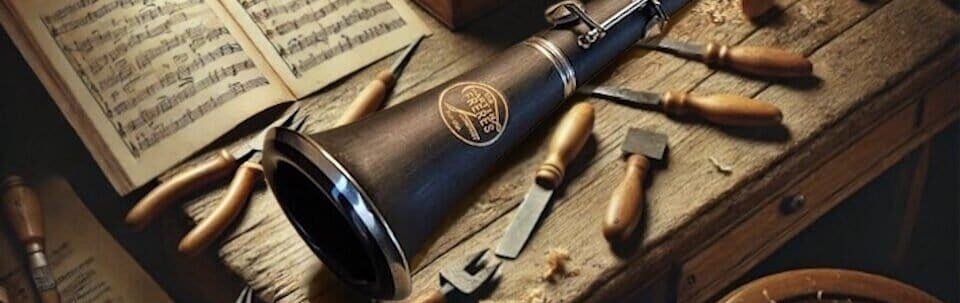
Early 20th-century clarinets, including some by Martin Freres, often featured slightly smaller bores and different key ergonomics compared to many modern instruments. These characteristics produced a focused, ringing sound that blended well in wind ensembles and early neoclassical orchestras.
Players interested in historically informed neoclassical performance sometimes explore restored instruments from this period. These clarinets can reveal how composers first heard their works, especially in French and early American contexts, though they require careful maintenance and adjustment.
Maintenance and Preparation for Performance
Neoclassical repertoire exposes every mechanical flaw in your instrument. Clean key action, airtight pads, and stable reeds are important. A disciplined maintenance routine reduces onstage surprises and lets you focus on style and interpretation.
Pre-performance Checklist
Before any major performance, inspect pads and corks for leaks or compression. Gently press each key while playing long tones to detect subtle leaks that can sabotage pianissimo entrances. Check tenon corks for proper fit; loose joints can cause instability in fast passages.
Swab the instrument thoroughly, then apply a thin layer of cork grease to tenons. Verify that key regulation screws are secure and that spring tension feels even across both hands. Test all trills and alternate fingerings used in your program, especially in Stravinsky and Hindemith, where rapid alternations are common.
Seasonal Storage and Climate Considerations
Wooden clarinets used in neoclassical repertoire are vulnerable to cracking and warping. Store the instrument in a stable environment, ideally around 40 to 60 percent relative humidity. Avoid rapid temperature changes between rehearsal rooms, stages, and transport.
During dry seasons, use case humidifiers or humidity packs, and limit long practice sessions on a cold instrument. Warm the clarinet gradually with gentle playing before tackling demanding passages, especially in the altissimo register where pitch and response are sensitive.
Reed Selection and Rotation
Neoclassical programs often combine lyrical and highly articulated movements. Maintain a small rotation of 4 to 8 reeds, labeling and tracking their condition. Choose slightly stronger reeds for works with sustained high dynamics and softer reeds for programs with extensive soft playing or rapid articulation.
For jazz-influenced pieces like Ebony Concerto, some players prefer a marginally softer reed or a more open mouthpiece to facilitate bends and inflections. Test this setup well in advance to ensure it does not compromise intonation or control in classical sections of the same program.
Field Note: Archival instruments attributed to Martin Freres from the early 20th century often show meticulous pad seating and relatively narrow bores. When restored with modern pads and corks, these clarinets can produce a compact, singing tone that suits French-influenced neoclassical chamber works particularly well.
Troubleshooting Common Performance and Instrument Issues
Neoclassical clarinet parts are unforgiving. Register instability, squeaks, and unclear articulation can undermine an otherwise solid interpretation. Systematic troubleshooting helps distinguish between player-related and instrument-related causes.
Tuning Instability Across Registers
If pitch sags in the chalumeau and rises in the clarion, first check barrel length. Experiment with slightly shorter or longer barrels and small pulls at the middle joint. Confirm that the register key opens cleanly and that its pad seals fully when closed, as leaks can distort upper-register intonation.
On the player side, monitor voicing. In Copland's cadenza, for example, an overly low tongue position can flatten high notes. Practice slow scales with a tuner, focusing on consistent oral cavity shape. Record yourself to detect subtle pitch drifts during crescendos or decrescendos.
Squeaks: Embouchure vs Pad Leaks
Squeaks in exposed neoclassical passages are often blamed on embouchure, but leaks and misaligned keys are frequent culprits. Test for leaks by playing very soft chromatic scales; if certain notes consistently break, inspect their pads and tone holes with a light.
If the mechanism is sound, examine embouchure pressure and finger coverage. In fast Stravinsky figures, fingers may lift too high, causing small timing gaps. Practice in front of a mirror, keeping fingers close to the keys, and use slow practice to coordinate tongue and finger motion.
Articulation Clarity Problems
Unclear articulation in neoclassical music often stems from an oversized tongue motion or inconsistent air support. Aim for a light, forward tongue contact near the tip of the reed, with continuous air behind every note. Avoid stopping the air between staccato notes.
Practice short excerpts from Ebony Concerto or Hindemith at half tempo, focusing on identical length and shape for each staccato. Then gradually increase tempo while maintaining the same tongue motion. If clarity deteriorates, reassess reed strength and mouthpiece response.
On-the-road Fixes vs When to See a Technician
For minor issues on tour, carry a small repair kit with cigarette paper, a screwdriver, and temporary pad materials. You can sometimes reseat a slightly sticky pad or adjust a loose screw enough to finish a concert. Always test the full range after any quick adjustment.
Persistent leaks, binding keys, or severe intonation problems require a professional technician. Schedule regular checkups, especially before recording sessions or important premieres of neoclassical works where every nuance is exposed by close microphones and transparent textures.
Ensemble Roles: Chamber, Orchestral, and Jazz-Classical Crossovers
The clarinet's role in neoclassical music varies widely by ensemble type. Understanding your function within each setting helps you balance projection, blend, and stylistic choices, from chamber groups to jazz-influenced orchestras.
Chamber Music Roles
In neoclassical chamber works, such as Poulenc's Trio for Oboe, Bassoon, and Piano or Françaix's wind pieces, the clarinet often alternates between melodic leader and inner voice. You must switch quickly between foreground and background roles without changing basic tone quality.
Balance is critical. In mixed ensembles with strings or piano, aim for a clear but not piercing sound. Use slightly less vibrato than string colleagues to preserve stylistic coherence, and agree on articulation length and accent shape during rehearsal to achieve a unified neoclassical character.
Orchestral Neoclassicism
In orchestral neoclassical works, such as Stravinsky's Pulcinella or Symphony in C, the clarinet often doubles or comments on string lines, adding color and rhythmic definition. The part may sit high in the texture, requiring focused projection without harshness.
Coordinate with the principal oboe and flute on tuning and blend, especially in unison or octave passages. In tutti sections, maintain a slightly more compact sound to prevent the clarinet from dominating; in solo lines, allow a bit more core and presence while respecting the classical framework.
Jazz-Classical Crossovers
Works like Ebony Concerto and Copland's Clarinet Concerto place the clarinet between classical orchestra or band and jazz rhythm sections. Here, you must negotiate stylistic boundaries: enough swing and inflection to sound authentic, but not so much that the structure unravels.
Listen to historical recordings by Woody Herman's band and Benny Goodman to understand the original sound world. Then adapt that style to your own instrument and ensemble, taking into account modern tuning standards, larger halls, and different recording expectations.
Archival Sources, Scores, and Recommended Recordings
Reliable sources are important for neoclassical performance practice. Critical editions, manuscripts, and early recordings reveal composer intentions, cuts, and alternative articulations that may not appear in standard parts.
Primary Sources and Manuscripts
For Stravinsky, Copland, and Poulenc, major manuscript collections reside at institutions such as the Library of Congress, the Paul Sacher Foundation, and the Bibliothèque nationale de France. These archives often hold autograph scores, corrected proofs, and correspondence with dedicatees like Benny Goodman.
Consulting facsimiles or scholarly editions can clarify articulation marks, dynamics, and even tempo indications. For example, early sources of Copland's Clarinet Concerto show slight differences in phrasing slurs compared to some later printed parts, affecting how players shape the opening melody.
Critical Editions and Study Scores
Whenever possible, use critical or urtext editions that document editorial decisions. Publishers often include prefaces discussing performance practice, premiere history, and known interpretive traditions. These notes can guide choices about vibrato, tempo flexibility, and cadential embellishment.
Study scores of orchestral works, such as Stravinsky's neoclassical symphonies, help clarinetists understand their role within the full texture. Analyzing how your line interacts with strings, brass, and percussion informs decisions about balance, articulation, and color.
Recommended Recordings
For Ebony Concerto, compare Woody Herman's early recordings with later interpretations by classical soloists and major orchestras. Notice differences in articulation length, vibrato use, and tempo choices, then decide what best suits your own stylistic goals and ensemble.
For Copland's Clarinet Concerto, recordings by Benny Goodman, Richard Stoltzman, and Sabine Meyer offer contrasting approaches to tone, vibrato, and jazz inflection. Poulenc's Sonata benefits from listening to French clarinetists as well as international players to grasp the range of acceptable stylistic interpretations.
Legacy and Influence: From Mid-20th Century to Today
The clarinet's role in neoclassical music shaped much of the instrument's later repertoire. The emphasis on clarity, rhythmic precision, and stylistic versatility influenced composers writing concertos, chamber works, and even film scores in the second half of the 20th century.
Composers such as Leonard Bernstein, Malcolm Arnold, and John Adams absorbed neoclassical traits, including transparent textures and motoric rhythms, while moving into new harmonic territories. Their clarinet writing often demands the same disciplined articulation and color control found in Stravinsky and Copland.
In contemporary music, neoclassical echoes appear in postminimalist and crossover works that blend popular idioms with classical forms. Clarinetists today are expected to navigate classical, jazz, and world-music influences with ease, a skill set first tested in mid-century neoclassical scores.
Educationally, neoclassical pieces have become core repertoire in conservatories and competitions. They serve as benchmarks for evaluating tone control, stylistic awareness, and ensemble skills, ensuring that future generations of clarinetists internalize the aesthetic values that defined this important period.
Practical Resources: Where to Learn More (Scores, Libraries, and Associations)
To deepen your understanding of the clarinet in neoclassical music, combine score study, archival research, and community engagement. Many resources are accessible online or through institutional libraries and professional organizations.
Libraries and Digital Archives
National libraries and university collections often provide digital access to manuscripts, early editions, and premiere programs. Search by composer, work title, and dedicatee names such as Benny Goodman or Woody Herman to locate clarinet-related documents and correspondence.
Some archives host streaming audio of historical performances, including radio broadcasts of early neoclassical premieres. These recordings can reveal original tempos, rubato practices, and even instrument timbres that differ from modern expectations.
Professional Associations and Conferences
Clarinet and musicological associations regularly publish articles on neoclassical repertoire, including analytical studies and performance guides. Conference proceedings may include papers on specific works like Ebony Concerto or Copland's Concerto, often with detailed archival citations.
Workshops and masterclasses focusing on 20th-century repertoire give you direct feedback on style and setup. Seek out sessions that address both historical context and practical technique, bridging scholarly research and day-to-day performance needs.
Scores, Parts, and Study Materials
Acquire high-quality study scores and solo parts for key neoclassical works, ideally from publishers that offer critical notes. Supplement these with analytical texts and recordings to build a multi-layered understanding of each piece.
Etude books and excerpt collections focusing on 20th-century music can help you isolate typical neoclassical challenges, such as mixed articulations, changing meters, and extended soft playing in the altissimo register. Integrate these into your regular practice routine.
Conclusion and Suggested Further Reading
The clarinet in neoclassical music occupies a unique position between past and present. Mastering this repertoire requires not only technical command but also an informed sense of style, instrument setup, and historical awareness grounded in scores, recordings, and archival sources.
For further reading, explore composer biographies, critical editions with scholarly commentary, and studies of neoclassicism in 20th-century music. Combine this research with focused practice on key works by Stravinsky, Copland, Poulenc, and their contemporaries to build a confident, historically sensitive neoclassical voice.
Key Takeaways
- Neoclassical clarinet writing demands classical clarity, rhythmic precision, and selective use of jazz inflection, especially in works by Stravinsky, Copland, and Poulenc.
- Instrument setup, including bore, mouthpiece, and reed strength, should support a focused, flexible tone capable of rapid articulation and stable soft dynamics.
- Historical sources, early recordings, and critical editions provide important guidance on articulation, vibrato, and phrasing choices in neoclassical repertoire.
- Regular maintenance and systematic troubleshooting are important, as neoclassical textures expose even minor mechanical or embouchure issues.
FAQ
What is Clarinet in Neoclassical Music?
Clarinet in neoclassical music refers to the instrument's role in 20th-century works that revive classical and Baroque forms while using modern harmonies, rhythms, and timbres. Composers like Stravinsky, Copland, and Poulenc wrote clarinet parts that emphasize clarity, balance, and stylistic versatility, often blending classical technique with subtle jazz influences.
Which major neoclassical works feature the clarinet?
Key neoclassical works featuring clarinet include Stravinsky's Ebony Concerto and Octet, Copland's Clarinet Concerto, Poulenc's Clarinet Sonata, Hindemith's Kleine Kammermusik, and chamber pieces by Jean Françaix and Bohuslav Martinu. Many of these works were written for or inspired by prominent clarinetists such as Benny Goodman and Woody Herman.
How should I set up my clarinet for neoclassical repertoire?
For neoclassical repertoire, use a stable B-flat or A clarinet with a medium or medium-small bore, a mouthpiece with moderate tip opening, and reeds around strength 3 to 3.5. Aim for a focused, quick-responding sound that supports clean articulation and reliable soft dynamics, adjusting barrel length and voicing to refine intonation.
How did jazz collaborations (e.g., Benny Goodman) influence neoclassical clarinet writing?
Jazz collaborations with clarinetists like Benny Goodman and Woody Herman encouraged composers such as Copland and Stravinsky to integrate swing rhythms, blue notes, and flexible articulation into classical forms. Their works maintain structural clarity while allowing the clarinet to reference jazz phrasing and tone color, creating a distinctive crossover style.
Where can I find authoritative scores and first-performance recordings?
Authoritative scores often come from publishers that issue critical or urtext editions with scholarly notes. First-performance recordings and early interpretations may be available through national libraries, university archives, and historical recording collections, which sometimes host digitized audio and scanned concert programs documenting neoclassical premieres.
What maintenance steps are important before a neoclassical performance?
Before a neoclassical performance, inspect pads and corks for leaks, swab the instrument thoroughly, apply cork grease to tenons, and check key regulation and spring tension. Test all registers and critical passages at performance dynamics, and select well-balanced reeds from a small rotation to ensure stability and clarity throughout the program.
How do I troubleshoot register instability or articulation issues in neoclassical pieces?
For register instability, verify barrel length, check the register key for leaks, and practice with a tuner to refine voicing. For articulation issues, reduce tongue motion, maintain steady air, and practice excerpts slowly with consistent note length. If problems persist, evaluate reed strength and mouthpiece response or consult a qualified technician.
Related Posts: