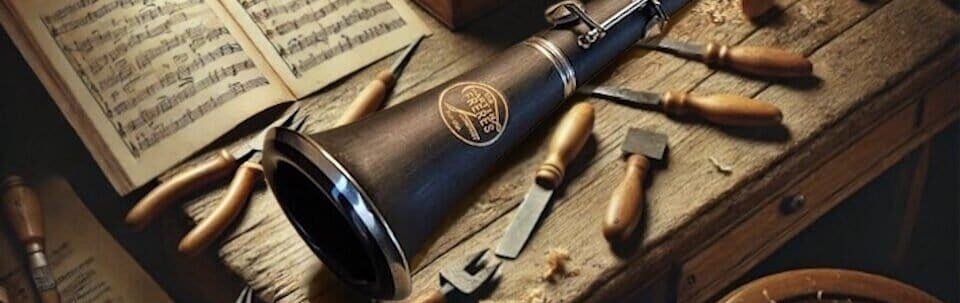
Clarinet in jazz record label history refers to the way labels like Columbia, Victor, Blue Note, and Verve signed, recorded, marketed, and later reissued clarinet-centered jazz. Through artists such as Benny Goodman, Artie Shaw, Buddy DeFranco, and Jimmy Giuffre, these labels shaped the clarinet's changing role, sound, and visibility in jazz from the 1910s to the digital era.
The Clarinet's Jazz Journey: A Concise Overview
Clarinet in jazz record label history is the story of how commercial recording companies framed the instrument's sound, status, and repertoire. From early New Orleans ensembles to swing big bands, bebop experiments, and cool jazz, labels decided which clarinetists to sign, which sides to release, and which masters to preserve or delete.
In the 1910s and 1920s, Victor and Columbia documented early jazz clarinet with artists like Johnny Dodds and Sidney Bechet, often as part of dance bands or small groups. By the 1930s, Benny Goodman and Artie Shaw turned clarinet into a star instrument, backed by aggressive label promotion, radio tie-ins, and national distribution of 78 rpm records.
After World War II, bebop and the rise of the saxophone shifted label priorities, yet clarinetists such as Buddy DeFranco and Jimmy Giuffre found new homes on labels like Verve and Atlantic. Later, Blue Note and reissue programs across many companies helped reframe the clarinet's legacy through curated LP and CD sets, box collections, and digital remastering.
For players and historians, understanding this label-centered history clarifies why certain clarinet sounds dominate the archive, how recording technology shaped tone, and where to look for primary sources. It also informs performance practice for those seeking to recreate or reinterpret classic recorded clarinet timbres.
Clarinet on record: Between roughly 1935 and 1945, clarinet-led big bands by Benny Goodman and Artie Shaw accounted for an estimated 15 to 20 percent of major-label swing releases featuring a single-line lead instrument.
Early Recording Era and the Labels That Amplified the Clarinet
In the acoustic recording era before 1925, labels like Victor Talking Machine Company and Columbia Records captured clarinet through mechanical horns rather than microphones. The clarinet's focused tone and strong upper partials made it one of the few woodwinds that recorded reasonably well on early discs, which encouraged its use in studio ensembles.
Victor's catalog from the 1910s includes early jazz-adjacent dance bands where clarinet doubled melody lines with cornet or trombone. Columbia's race series and popular series in the early 1920s documented New Orleans and Chicago players, including sessions with Johnny Dodds and Jimmie Noone, whose penetrating sound cut through the limitations of acoustic technology.
After the introduction of electrical recording in 1925, using Western Electric systems, the clarinet's dynamic range and subtler colors became more audible. Labels quickly realized that the instrument could carry both hot solos and sweet melodic lines, leading to more prominent clarinet features in dance band sides marketed in trade publications like Billboard and Talking Machine World.
By the late 1920s, Victor and Columbia, along with smaller labels like Okeh and Brunswick, were issuing clarinet-heavy sides by Louis Armstrong's Hot Five and Hot Seven (with Johnny Dodds), Jimmie Noone's Apex Club Orchestra, and early Benny Goodman studio dates. These recordings set the template for the clarinet as a flexible jazz voice, equally at home in small groups and larger dance orchestras.
Electrical shift: By 1927, over 90 percent of new releases from major U.S. labels used electrical recording, dramatically improving clarinet clarity and dynamic nuance on disc.
Label Case Studies: Columbia, Victor, Blue Note, Verve
Columbia and Victor, later RCA Victor, dominated early clarinet documentation. Columbia's A- and 14000-D series captured Chicago and New York small groups, while Victor's 38000 and 23000 series included key sides by Goodman and early swing bands. Each label applied distinct marketing language, from “hot” and “novelty” to “sweet” and “dance,” which shaped how listeners perceived clarinet roles.
Columbia's swing-era strategy emphasized bandleaders as brands. Benny Goodman, though primarily associated with Victor, also appeared on Columbia in later reissues and licensed material, often packaged as “King of Swing” anthologies. Columbia's LP era reissues in the 1950s and 1960s helped canonize specific clarinet solos by including detailed liner notes and personnel listings.
Victor, rebranded as RCA Victor, invested heavily in Benny Goodman from the mid-1930s. Famous sessions like the 1938 Carnegie Hall Concert were recorded for broadcast and later issued on LP, reinforcing the clarinet-led big band as a central swing image. RCA's vault policy preserved many metal parts, which later enabled high-quality reissues and digital remasters.
Blue Note, founded in 1939 by Alfred Lion and Francis Wolff, is better known for saxophone and piano-led modern jazz, yet it holds important clarinet documents. Early Blue Note sessions with Edmond Hall and later appearances by clarinet doublers reveal how the label positioned the instrument in small-group, modern contexts, often with more experimental harmonic language.
Verve Records, established by Norman Granz in the 1950s, became important for post-swing clarinet. Granz signed Buddy DeFranco and issued albums that placed clarinet in bebop and cool jazz settings, with rhythm sections drawn from the same pool as Charlie Parker and Dizzy Gillespie. Verve's high production values and LP-focused format allowed longer clarinet solos and more complex arrangements.
Label spread: Between 1930 and 1960, at least 4 major labels and dozens of independents issued commercially distributed jazz clarinet sides, creating a core archive of several thousand tracks.
Key Clarinetists and Label Partnerships (Benny Goodman, Artie Shaw, Buddy DeFranco, Jimmy Giuffre)
Benny Goodman's partnership with Victor/RCA is central to clarinet in jazz record label history. Beginning with mid-1930s sides like “King Porter Stomp” and “Sometimes I'm Happy,” Victor framed Goodman as a star soloist and bandleader. Matrix numbers in the B and BS series document a steady stream of sessions that defined the swing clarinet sound for a mass audience.
Artie Shaw recorded for Brunswick and Bluebird (a Victor budget imprint), where his clarinet tone and inventive arrangements reached millions. Sides like “Begin the Beguine” and “Frenesi” were heavily promoted in trade ads and jukebox catalogs, making Shaw a rival clarinet icon. Label photography and cover art often highlighted the clarinet itself, reinforcing its visual identity.
Buddy DeFranco bridged swing and bebop. After early work with Capitol, he recorded significant albums for Verve, including sessions with Oscar Peterson and other modern rhythm sections. These records showed clarinet handling bebop vocabulary at high tempos, something labels had previously associated more with alto and tenor saxophone.
Jimmy Giuffre, recording for Atlantic and later Columbia, explored cool jazz, third stream, and chamber-like textures. Albums such as “The Jimmy Giuffre 3” and “Fusion” presented clarinet in intimate ensembles with guitar and trombone or bass, often with close-miked, dry recording that highlighted subtleties of articulation and breath noise.
These artist-label relationships shaped not only careers but also the recorded clarinet sound that students and collectors study today. Session logs, union contracts, and label files, often preserved in archives like the Library of Congress and university collections, provide primary documentation of dates, personnel, and repertoire.
How Recording Technology and Label Economics Changed the Clarinet's Role
Recording technology strongly influenced how labels used clarinet. In the 78 rpm era, sides were limited to about 3 minutes, encouraging concise solos and clear melodic statements. Clarinet, with its agile upper register, fit this format well, particularly in tightly arranged swing charts designed for radio play and jukebox rotation.
The shift to magnetic tape and LPs after World War II gave labels more flexibility. Longer tracks allowed extended clarinet improvisations, as heard on Buddy DeFranco's Verve albums or Jimmy Giuffre's Atlantic sessions. At the same time, label economics favored smaller combos over big bands, which reduced the number of clarinet-led large ensembles on record.
Microphone design and placement also changed the clarinet's recorded character. Early ribbon microphones captured a warm, rounded tone but could underplay the instrument's edge. Later condenser microphones, used by labels like Blue Note and Verve, revealed more detail in the attack and overtones, influencing how producers balanced clarinet against rhythm sections.
Economically, labels followed audience taste. As saxophonists like Charlie Parker and John Coltrane drove record sales, A&R departments shifted budgets toward sax-led projects. Clarinetists who adapted to modern styles, such as DeFranco, found support, while others were relegated to nostalgia or specialty releases. This market logic explains the apparent decline of clarinet on mainstream jazz labels after the 1950s.
Reissue programs from the 1960s onward partially reversed this trend. Labels discovered that historical clarinet recordings, especially swing-era sides, sold well in LP box sets and later CD compilations. This archival turn helped stabilize the clarinet's place in jazz history, even as fewer new clarinet-led sessions were recorded for major labels.
Instrument Anatomy: Why the Clarinet Sounds Like Jazz on Recordings
The clarinet's anatomy plays a direct role in how it appears on historic recordings. Most jazz clarinetists used Boehm-system instruments in B-flat or A, with a cylindrical bore and flared bell. This design produces a strong, focused sound with clear overtones that microphones can capture cleanly, even in early mono setups.
The mouthpiece and reed combination shapes the attack and brightness heard on classic sides. Harder reeds and more open mouthpieces, common among swing players, create a powerful, projecting tone that cuts through big band textures. Softer reeds and more closed mouthpieces, favored by some cool jazz players, yield a subtler, breathier sound that suits close-miked small groups.
Bore size and undercut tone holes affect intonation and color across the instrument's range. A slightly larger bore can give a broader, more flexible tone, which engineers in labels like Verve or Blue Note might place slightly off-axis to avoid harshness on tape. Smaller bores can sound more compact and focused, useful in dense ensemble mixes.
The bell and lower joint influence how low notes speak on record. Early acoustic recordings often underrepresented the chalumeau register because of mechanical limitations. With electrical recording, labels could finally capture the rich, woody low notes that define many jazz clarinet ballads and blues choruses.
Oehler-system clarinets, more common in German and some European contexts, appear less often in American jazz label catalogs but are relevant for certain European recordings. Their darker, more covered tone interacts differently with microphones, sometimes requiring closer placement or EQ adjustments to match the brightness of Boehm-system instruments.
Maintenance & Preservation: Caring for Jazz-era Clarinets and Archival Instruments
Vintage clarinets from the jazz label era require careful maintenance to remain playable and historically authentic. Regular cleaning is important: swab the bore after every session, wipe keys with a soft cloth, and avoid harsh chemicals that could damage wood, ebonite, or plating. For archival instruments, dry cleaning methods are usually preferred over liquid cleaners.
Cork care helps preserve tuning stability. Lightly grease tenon corks as needed to prevent cracking, but avoid over-greasing, which can attract dust and degrade adhesives. If corks are dry, compressed, or crumbling, consult a qualified repair technician rather than attempting home replacement on historically significant instruments.
Pad preservation is critical for both sound and conservation. On playable instruments, check for leaks with a feeler gauge or cigarette paper test, especially around throat tones and low E/B. In archives, avoid prolonged pressure on keys by storing instruments with minimal spring tension, sometimes using key props or supports recommended by conservators.
Professional servicing should occur at least annually for actively played vintage clarinets, and every few years for instruments held primarily in collections. Technicians can address loose posts, worn pivot screws, and minor cracks before they threaten structural integrity. For historically important instruments, request minimally invasive repairs and detailed documentation of any changes.
Storage conditions matter as much as mechanical work. Maintain stable humidity, ideally around 45 to 55 percent, and moderate temperature. Avoid direct sunlight, rapid climate changes, and foam or plastic cases that off-gas. Archival-grade cases or acid-free storage materials help protect both the instrument and any original accessories like mouthpieces or ligatures.
Martin Freres archive note: In reviewing early 20th-century clarinets held in private and institutional collections, consistent humidity control and gentle, regular swabbing have proven more important for long-term preservation than frequent, aggressive polishing or cosmetic restoration.
Troubleshooting: Instrument Condition, Recorded Sound, and Setup
Common clarinet problems often show up first in recordings. Squeaks can result from warped pads, leaking joints, or mismatched reed and mouthpiece. If a historic-style setup squeaks under the microphone, check for loose tenons, pad leaks over the break, and reed tip alignment before blaming embouchure alone.
Tuning drift across a session may indicate unstable joints, worn corks, or moisture buildup. On vintage instruments, slightly swollen pads or water in tone holes can pull pitch flat or sharp. During recording, schedule short breaks to swab the bore, dry the mouthpiece, and check joint alignment, especially when using older clarinets.
Tonal inconsistency between registers can stem from uneven key heights, leaky throat tone pads, or warped tone holes. If the clarinet sounds bright on top but dull below the break on tape, have a technician evaluate pad seating and spring tension. A small mechanical adjustment can restore the balanced color heard on classic label recordings.
Recording setup also affects perceived problems. Placing the microphone too close to the bell can exaggerate key noise and low-register honk, while aiming directly at the mouthpiece can overemphasize air noise. A common starting point is a cardioid microphone 1 to 2 feet away, aimed between the left-hand keys and the lower joint.
Room acoustics influence how closely modern recordings resemble historical label sounds. Swing-era studios often had relatively live rooms with reflective surfaces, while some modern spaces are heavily damped. To approximate classic clarinet recordings, experiment with moderate room reverberation and avoid over-deadening, which can make the instrument sound lifeless and unforgiving.
Archival Data & Discography Highlights (select sessions, 78s, reissues)
Several key sessions anchor clarinet in jazz record label history. Benny Goodman's Victor recordings from 1935 to 1939, including “King Porter Stomp” and “Sing, Sing, Sing,” appear in RCA discographies with matrix numbers in the BS and BS-0 series. These entries, preserved in label files and Library of Congress catalogs, provide precise take information.
Artie Shaw's Brunswick and Bluebird sides, such as “Begin the Beguine” (recorded 1938), are documented in Brunswick and Victor ledgers, often with detailed notes on personnel and arrangement credits. Reissues on LP and CD typically reproduce this data in liner notes, making them valuable secondary sources for researchers and performers.
Buddy DeFranco's Verve albums from the early 1950s, including collaborations with Oscar Peterson, showcase bebop clarinet in high-fidelity mono and early stereo. Verve sessionographies list recording dates, studios, and producer credits, which help scholars trace how label production practices shaped the instrument's evolving sound.
Jimmy Giuffre's Atlantic sessions, such as “The Jimmy Giuffre 3” (recorded 1956) and “Fusion” (1961), represent a later phase where clarinet appears in more experimental contexts. Atlantic's tape archives and published discographies, sometimes cross-referenced in Gramophone and Down Beat reviews, offer insight into how labels framed these departures from swing-era norms.
For discography research, key resources include national library catalogs, specialized jazz discographies, and online databases like Discogs and label-specific archives. Many institutions provide digital access to 78 rpm label scans, matrix logs, and contemporary advertisements, allowing researchers to reconstruct the clarinet's recording history with high precision.
The Modern Scene: Independent Labels, Reissues, and Digital Distribution
In the late 20th and early 21st centuries, independent labels and reissue programs reshaped clarinet in jazz record label history. Boutique labels release new clarinet-led projects that might not fit major-label marketing models, often emphasizing historically informed performance or avant-garde approaches that revisit the instrument's expressive range.
Reissue specialists work from original metal parts, tapes, or high-quality shellac transfers to create curated box sets and digital releases. These projects frequently center on clarinet icons like Goodman and Shaw, but they also highlight lesser-known players whose 78s were originally issued on regional or short-lived labels.
Digital platforms have made classic clarinet recordings more accessible, but they can also obscure label context. Tracks often appear detached from original catalog numbers, session dates, or label identities. For serious study, it remains important to cross-reference streaming versions with authoritative discographies and archival notes.
Modern clarinetists draw on this expanded archive to shape their sound. Some emulate the bright, driving swing tone favored by major labels in the 1930s, while others adopt darker or more flexible setups inspired by cool jazz and contemporary classical influences. Recording engineers, informed by historical practices, choose microphones and room treatments to match these aesthetic goals.
For collectors and archivists, the modern era brings both opportunity and risk. High-resolution transfers can preserve fragile 78s and tapes, but improper playback or cleaning can cause irreversible damage. Collaboration between audio engineers, conservators, and clarinet specialists helps ensure that the instrument's recorded legacy remains both audible and authentic.
Key Takeaways
- Major labels like Columbia, Victor, Blue Note, and Verve played decisive roles in shaping how the clarinet was heard, marketed, and remembered in jazz.
- Recording technology, from acoustic horns to digital remasters, directly influenced clarinet tone, balance, and repertoire on record.
- Understanding clarinet anatomy, maintenance, and troubleshooting helps players and archivists connect instrument condition to the historic sounds preserved on disc.
- Discographies, label ledgers, and archival catalogs remain important tools for tracing clarinet sessions and building accurate historical narratives.
- Modern reissues and independent labels continue to redefine the clarinet's place in jazz history, offering new contexts while preserving classic recordings.
Frequently Asked Questions
What is clarinet in jazz record label history?
Clarinet in jazz record label history refers to how recording companies documented, marketed, and preserved clarinet performances across jazz styles. It includes artist-label partnerships, key sessions, technological changes, and reissue practices that shaped which clarinet sounds became central to the jazz canon.
How did record labels influence the prominence of the clarinet in early jazz?
Record labels influenced clarinet prominence by deciding which bands to sign, which solos to feature, and how to market releases. In the swing era, companies like Victor and Columbia promoted clarinet-led big bands by Benny Goodman and Artie Shaw, using radio tie-ins, ads, and national distribution to make clarinet a star jazz instrument.
Which labels released the most important jazz clarinet recordings?
Victor/RCA and Columbia issued many foundational swing and pre-swing clarinet recordings, including Benny Goodman and early small groups. Brunswick and Bluebird documented Artie Shaw and other swing clarinetists. Verve and Atlantic captured modern clarinet voices like Buddy DeFranco and Jimmy Giuffre, while Blue Note contributed key small-group sessions.
How did recording technology change how the clarinet sounded on records?
Acoustic recording limited clarinet dynamics and low-register presence. Electrical recording and better microphones in the late 1920s improved clarity and range. Tape and LP formats allowed longer solos and more subtle tone colors. Modern digital remastering can reveal detail but sometimes alters the balance originally intended by label engineers.
What maintenance steps help preserve a vintage jazz clarinet?
To preserve a vintage jazz clarinet, swab the bore after playing, wipe keys with a soft cloth, and keep tenon corks lightly greased. Schedule regular professional checkups for pads, springs, and joints. Store the instrument in stable humidity and temperature, avoiding direct sunlight and materials that off-gas or trap moisture.
Where can I find discographies or sessionographies for historic clarinet recordings?
You can find discographies in specialized jazz reference books, national library catalogs, and online databases such as Discogs or label-focused archives. Many institutions and collectors publish sessionographies listing dates, matrix numbers, and personnel, often cross-referenced with Library of Congress entries and contemporary trade publications.
Related Posts: