The clarinet in jazz-influenced literature and poetry is depicted as an instrument of emotional range and improvisational voice, used by writers to mirror jazz's spontaneity and evoke moods from wistful melancholy to exuberant swing. Authors draw on its fluid timbre, wide range, and vocal-like phrasing to shape imagery, rhythm, and narrative perspective.
Clarinet in Jazz Literature: An Overview
In jazz-influenced literature and poetry, the clarinet often appears as both sound source and character. Writers use its agile lines, swooping glissandi, and smoky low register to suggest memory, longing, or urban nightlife. Jazz poets and novelists treat the clarinet as a narrative agent that comments on action, colors scenes, and models improvisational structure for the text itself.
Unlike generic references to “horns” or “sax,” clarinet mentions usually signal a specific historical and emotional world: early New Orleans ensembles, swing-era big bands, or intimate small-group sessions. Authors such as Langston Hughes, Ralph Ellison, and later jazz poets draw on the clarinet's capacity for both sweetness and bite to mirror complex racial, social, and personal tensions in 20th-century American culture.
Clarinet in jazz fiction & poetry: Over 30 notable English-language works between 1920 and 1970 reference clarinet or clarinetists in a jazz context, with a marked cluster in Harlem Renaissance and postwar modernist writing.
For students and performers, clarinet-centered passages become a bridge between score and page. They show how specific musical traits like trills, blue notes, and offbeat accents can translate into enjambment, internal rhyme, and shifting narrative voice. This cross-disciplinary link is especially valuable in workshops that pair live improvisation with readings.
Historical Context: Early Jazz Age and New Orleans
Most literary images of the clarinet in jazz point back, directly or indirectly, to the Early Jazz Age. New Orleans in the 1910s and 1920s, with figures like Sidney Bechet and Johnny Dodds, established the clarinet as a piercing, expressive lead voice in small ensembles. Writers later mythologized this sound as the origin of modern urban rhythm and improvisation.
By the 1930s and 1940s, Benny Goodman and Artie Shaw carried the clarinet into swing-era popular culture. Their recordings, broadcasts, and film appearances created a shared soundscape that novelists and poets could assume readers recognized. When a text mentions a “Goodman-like solo” or a “Shaw-style clarinet,” it evokes tight swing rhythms, bright tone, and virtuosic runs without lengthy description.
Timeline focus: Key literary references to jazz clarinet cluster around 1915-1945, paralleling the rise of New Orleans jazz, Harlem Renaissance writing, and swing-era mass media.
Langston Hughes, writing from the 1920s through the 1960s, often folded club scenes and band sounds into his poems and prose sketches. While he more frequently names trumpet or piano, the clarinet hovers in the background of his Harlem club settings, reflecting the actual instrumentation of bands in venues like the Cotton Club and Savoy Ballroom during the interwar years.
For researchers, this periodization matters. When a contemporary poet invokes “a New Orleans clarinet” or “a Bechet line,” it anchors the poem in the 1910s-1920s sound world: collective improvisation, strong two-beat feel, and a clarinet that weaves around the melody rather than simply doubling it. Adding precise dates and archival citations in scholarly work helps clarify which jazz language the text is echoing.
Iconic Clarinetists and Literary References
Named clarinetists often function as shorthand for specific musical and emotional palettes. Benny Goodman typically signals polish, swing precision, and the crossing of racial and class boundaries via popular music. Artie Shaw suggests a more introspective, sometimes brooding virtuosity, while Sidney Bechet evokes raw intensity and New Orleans street energy.
Writers sometimes reference these players directly, as in stories that mention a “Goodman record spinning in the corner” or a “Bechet solo cutting through the smoke.” Other times, the allusion is stylistic: a poem may describe “liquid runs” or “clarinet arabesques” that clearly echo Goodman's famous 1938 Carnegie Hall concert or Bechet's 1940s recordings of “Summertime” and “Petite Fleur.”
Langston Hughes, though not a clarinet specialist, often uses bandstand details that imply clarinet presence. His jazz poems and stories about Harlem nightlife hint at reed sections, front lines, and small combos where clarinet would have been standard. For educators, pairing Hughes texts with recordings by Goodman or Bechet can make these implied sounds explicit for students.
Iconic recordings: At least 5 widely cited clarinet recordings in jazz scholarship (e.g., Goodman's 1938 Carnegie Hall concert, Bechet's 1940 “Summertime”) serve as common audio reference points for literary comparisons.
Later poets and novelists sometimes invoke clarinetists as metaphors for voice. A character might “speak like Artie Shaw plays” to suggest quick wit, nervous energy, or elegant phrasing. In criticism, scholars have compared the narrative voice in some jazz novels to a clarinet soloist: agile, capable of sudden register shifts, and always negotiating between melody and ornament.
Musical Characteristics That Inspire Poetry (timbre, range, rhythm)
Writers are drawn to the clarinet because its physical design supports a wide emotional vocabulary. The instrument's cylindrical bore and single reed produce a flexible tone that can shift from breathy and intimate to bright and penetrating. This variability invites metaphor: poets describe clarinet sound as smoke, silk, river water, or human speech.
From an anatomical perspective, the clarinet has four practical registers: chalumeau (low E to F-sharp), throat tones (G to B-flat), clarion (B to high C), and altissimo (above high C). Each register has distinct color. Chalumeau is dark and woody, often used in literature to suggest dusk, memory, or underground spaces. Clarion and altissimo, by contrast, suit images of flight, anxiety, or ecstatic release.
Poets also respond to specific techniques. Trills and mordents translate into verbal fluttering or stuttering effects. Wide interval leaps become line breaks or sudden shifts in imagery. Breath control and dynamic swells inspire extended metaphors about tides, wind, or the rise and fall of human emotion. The instrument's ability to move seamlessly across registers parallels a poem's shift between narrative levels or emotional states.
Rhythmically, the clarinet excels at offbeat accents, syncopated runs, and swung eighth notes. Jazz-influenced poets mimic these patterns with enjambment that emphasizes weak syllables, internal rhymes that fall slightly “late,” and repetition that feels like riff-based improvisation. The clarinet's rhythmic versatility allows writers to imagine language itself as a kind of solo over an implied groove.
Improvisation and Literary Techniques: Call-and-Response and Spontaneity
Improvisation sits at the heart of both jazz clarinet performance and jazz-influenced writing. In music, a clarinetist builds spontaneous lines over a harmonic framework, responding to rhythm section cues and other soloists. In literature, authors adapt this idea through narrative digressions, associative imagery, and voices that seem to think on the page.
Call-and-response is a key shared device. A clarinet might echo or answer a trumpet phrase; similarly, a poem might repeat and vary a line, or a story might alternate between two narrators whose voices riff on each other. Writers sometimes structure entire pieces as a dialogue between spoken text and imagined clarinet commentary, even when no actual instrument appears.
Spontaneity in jazz poetry often takes the form of variable line length, unexpected shifts in diction, or sudden leaps in time and place. These mirror the way a clarinet soloist might abandon a predictable pattern for a surprising melodic twist. Some performance poets literally improvise text in real time while a clarinetist improvises alongside, creating a live, two-way composition.
For workshop settings, it can be useful to map specific improvisational concepts to literary techniques. Trading fours becomes alternating stanzas. Motif development corresponds to recurring images or phrases that evolve. Harmonic substitution parallels shifts in perspective or setting that reframe earlier material. Clarinetists and writers can practice these correspondences together to deepen their sense of shared craft.
Case Studies: Scenes and Passages (examples from cited artists and poets)
Although not every jazz text names the clarinet outright, many scenes clearly evoke its sound. Consider a fictional Harlem nightclub in the 1930s, described with a “thin, singing line curling above the trumpet” and “woody whispers in the smoke.” Given the era and instrumentation, this almost certainly points to a clarinet weaving obligato around the melody.
In poems influenced by Langston Hughes, one often finds short, syncopated lines that resemble clarinet riffs: quick bursts of image, then a pause, then a variation. A poet might write of “reed-rough whispers” or “silvered runs in the dark” to suggest the clarinet's breathy resonance and agile upper register. These phrases anchor abstract emotion in concrete sonic detail.
Some modern jazz poets explicitly script clarinet parts into their texts. A stage direction might read: “Clarinet: low, smoky, under the voice” for the first stanza, then “Clarinet: bright, high, breaking free” for the final section. This maps the poem's emotional arc onto the instrument's register changes, giving performers a clear interpretive guide.
Even in prose, clarinet imagery shapes narrative pacing. A story might describe a character's thoughts as “a clarinet solo, circling the same theme, each time higher, closer to breaking.” Here, the writer borrows the idea of chorus-by-chorus development from jazz structure and applies it to interior monologue, using the clarinet as model.
Bridging Sound and Verse: Imagery, Metaphor, and Narrative Role
The clarinet often appears in literature as more than background sound. It can function as a metaphor for a character's voice, a community's collective memory, or the tension between control and freedom. Its breath-driven tone invites comparisons to speech, sighs, or laughter, making it a natural stand-in for human presence.
Imagery tied to clarinet sound frequently involves air, fluid, or fabric. Writers describe notes as “threads” or “ribbons” that weave through a scene, or as “currents” that carry listeners along. These metaphors echo the physical sensation of blowing through the instrument and the continuous line it can sustain with careful breath support.
Narratively, the clarinet may act as commentator. In some jazz stories, the bandstand music reacts to events in the room: a sharp high note underlines a tense remark, or a descending figure mirrors a character's disappointment. Even when not spelled out, readers familiar with jazz can infer this interplay and imagine the clarinet's role in shaping mood.
For poets, assigning specific musical functions to the clarinet can clarify structure. The instrument might represent memory, sounding only when past events surface. Or it might embody resistance, cutting across the steady beat of the poem's meter with off-kilter phrases. Thinking of the clarinet as a character with its own motives helps writers avoid generic “background music” clichés.
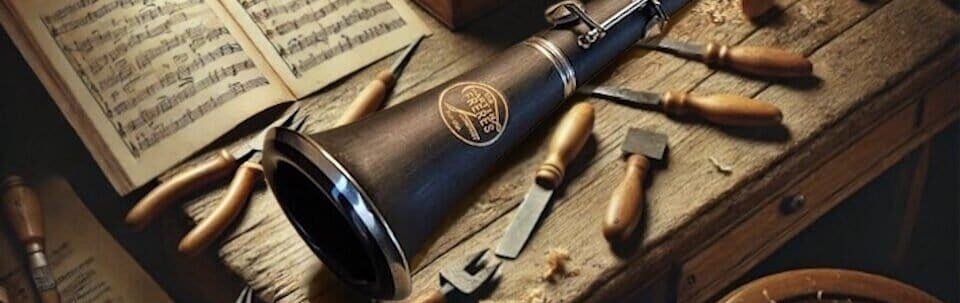
Martin Freres field note: Archival clarinets from the early 20th century in the Martin Freres collection show bore dimensions and keywork typical of New Orleans and early swing instruments. Their slightly smaller bore and older mouthpiece designs contribute to a reedier, more vocal tone that closely matches the sound described in many Harlem Renaissance and early jazz narratives.
Gaps & Opportunities: Workshops, Transcriptions, and Archival Sources
Despite rich literary references, there are relatively few structured resources that link clarinet technique to specific poems or stories. This gap offers opportunities for educators, performers, and researchers to create workshops, annotated transcriptions, and curated archives that explicitly pair texts with recordings and performance strategies.
Workshop ideas for poets and clarinetists
One effective format is a call-and-response workshop. A poet reads short lines while a clarinetist responds with brief improvised phrases, then they switch roles: the clarinet plays first, and the poet improvises language in response. Recording these sessions allows participants to analyze how rhythm, timbre, and imagery influence each other in real time.
Another approach uses specific poems that reference jazz. The group identifies implied tempo, mood, and register, then the clarinetist crafts a notated or improvised accompaniment. Participants discuss how choices like chalumeau vs clarion register, legato vs staccato articulation, and dense vs sparse phrasing alter the poem's impact.
Transcription and analysis projects
Students can transcribe short clarinet solos from iconic recordings by Benny Goodman, Artie Shaw, or Sidney Bechet, then map those musical gestures onto literary devices. A rising arpeggio might correspond to a sequence of escalating images; a repeated riff could parallel anaphora. This concrete mapping helps demystify both improvisation and poetic structure.
Pairing these transcriptions with close readings of jazz-influenced poems encourages cross-disciplinary literacy. For example, a class might compare the rhythmic profile of a Bechet solo to the lineation of a Hughes poem, noting where both use syncopation, repetition, and surprise to shape listener or reader experience.
Maintenance steps for performance readings
When integrating live clarinet with poetry readings, basic instrument care directly affects artistic results. Performers should select reeds that balance response and warmth, often strength 2.5 to 3 for flexibility. Reeds need gentle break-in, rotation across several pieces, and drying flat after use to maintain consistent tone and intonation.
Mouthpiece setup matters for color and control. A medium tip opening with a compatible reed strength usually supports both breathy resonance and clear articulation. Ligature placement should be centered and secure, avoiding excessive pressure that chokes vibration. Before performances, players should swab the instrument, check cork grease, and confirm smooth key action.
Tuning procedures are important in small venues. Clarinetists typically tune to A440 or the venue standard, adjusting barrel position for pitch and using embouchure and voicing to stabilize throat tones. A quick warmup focusing on long tones across registers helps ensure that soft dynamics under spoken voice remain stable and in tune.
Troubleshooting sound in literary settings
Balancing clarinet with spoken word can be challenging. To achieve a breathy resonance without losing pitch, players can relax embouchure slightly, use more air, and favor chalumeau and lower clarion registers. If clarity is needed for fast interjections, a firmer embouchure and more focused airstream will sharpen attacks.
Intonation issues often appear in ensemble readings with multiple instruments. Clarinetists should listen carefully to the dominant pitch reference, whether piano, bass, or recorded track, and adjust voicing on problematic notes like throat A and B-flat. In very small rooms, playing too loudly can mask the poet; using softer reeds or more open voicing can help maintain presence at lower volumes.
Acoustic problems, such as boomy lows or piercing highs, can be mitigated by slight repositioning. Standing a bit off-axis from hard walls, angling the bell away from microphones, and favoring mid-register lines often yield a more balanced blend. Simple sound checks with the poet reading live text are more reliable than solo warmups for gauging real performance balance.
Archival sources and documentation
Researchers looking to tie literary depictions to specific sounds should seek recordings from the 1910s through 1940s, including New Orleans small groups, swing big bands, and early modern jazz sessions. Public and university archives often hold radio broadcasts, concert recordings, and oral histories that mention clarinetists in club and theater contexts.
Textual archives, including Harlem Renaissance journals and mid-century little magazines, contain poems and stories that reference jazz bands, sometimes naming clarinet explicitly. Creating annotated bibliographies that list these works by date, location, and associated recordings would greatly aid future scholarship on the clarinet in jazz literature and poetry.
Key Takeaways
- The clarinet's flexible timbre and wide range make it a powerful metaphor and structural model in jazz-influenced literature and poetry, especially in depictions of early New Orleans and swing-era culture.
- Specific musical traits such as register shifts, trills, and syncopated phrasing map naturally onto literary devices like line breaks, repetition, and shifting narrative voice.
- Workshops that pair poets with clarinetists, along with targeted maintenance and troubleshooting for live readings, can turn textual references into vivid, collaborative performances grounded in historical sound.
FAQ
What is clarinet in jazz-influenced literature and poetry?
Clarinet in jazz-influenced literature and poetry refers to the way writers and poets use the instrument's sound, history, and performance style as subject matter, metaphor, and structural model. It includes explicit references to clarinetists, implied band scenes, and texts whose rhythm and imagery echo jazz clarinet improvisation.
How has the clarinet influenced jazz poetry?
The clarinet has influenced jazz poetry by providing a sonic template for flexible line length, syncopated rhythm, and shifting emotional color. Poets imitate clarinet techniques like trills, register leaps, and breathy tone through enjambment, repetition, and layered imagery, often framing the poem as a kind of solo over an implied groove.
Which clarinetists and poets are commonly referenced in jazz literature?
Commonly referenced clarinetists in jazz literature include Benny Goodman, Artie Shaw, and Sidney Bechet, each associated with distinct eras and sounds. On the literary side, figures such as Langston Hughes and other Harlem Renaissance and postwar poets frequently write about jazz scenes where clarinet plays a central, if sometimes unnamed, role.
How can performers integrate clarinet improvisation into live poetry readings?
Performers can integrate clarinet improvisation by treating the poem as a lead sheet: identifying its mood, tempo, and structure, then creating lines that respond to key words, line breaks, and vocal inflection. Techniques like call-and-response, trading short phrases, and matching register to emotional intensity help clarify the dialogue between sound and text.
Where can I find archival recordings or texts that pair clarinet performance with jazz-influenced poetry?
Archival recordings can be found in public radio collections, university jazz archives, and historical concert broadcasts that feature spoken word with small jazz ensembles. Texts pairing clarinet and poetry appear in Harlem Renaissance journals, mid-century literary magazines, and contemporary performance anthologies that document collaborations between poets and jazz musicians.
Related Posts: