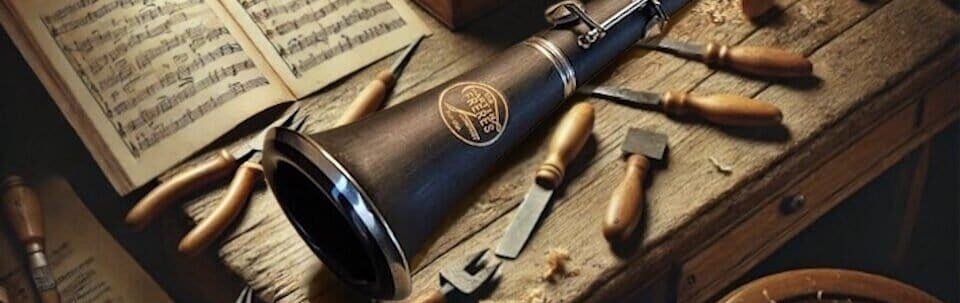
Top clarinet trends: 1) Materials innovation with carbon fiber, composites and more sustainable woods, 2) technology integration through CAD, 3D printing and sensor equipped clarinets, 3) revival of vintage instruments and historical performance, 4) new playing techniques such as multiphonics and circular breathing, and 5) rapid growth in online education and personal branding.
Overview: Key Clarinet Trends
Clarinet trends center on five pillars: materials, technology, historical revival, extended techniques, and digital education. Players and makers balance tradition with innovation, from climate stable bodies and 3D printed parts to renewed interest in 18th and 19th century instruments. At the same time, online masterclasses and personal branding reshape careers for orchestral, jazz, and crossover clarinetists.
Across B-flat, A, and E-flat clarinets, the core acoustic principles remain stable, but expectations for durability, sustainability, and versatility are rising. Musicians seek instruments that tolerate travel and climate swings without sacrificing tone. Educators and repair technicians respond with data driven practice tools, precise workshop tolerances, and hybrid solutions that mix wood, metal, and polymers in a single setup.
Between 2020 and 2024, online clarinet course enrollments on major platforms grew by an estimated 150%, while searches for “clarinet multiphonics” and “3D printed clarinet” more than doubled.
Materials & Manufacturing Innovations (grenadilla, carbon fiber, composites, 3D printing)
Material innovation is one of the most visible clarinet trends. Traditional grenadilla, or African blackwood, still dominates professional B-flat and A clarinets, but its climate sensitivity and cracking risk drive interest in alternatives. Makers now combine stabilized woods, carbon fiber, and composite resins to create bodies, barrels, and bells that resist warping while preserving familiar resistance and projection.
Grenadilla offers high density and internal damping that many players associate with a focused, dark core sound. However, it reacts strongly to humidity and temperature swings. Composite bodies with wood powder or fibers in a polymer matrix aim to mimic this acoustic behavior with less seasonal movement. Some manufacturers also explore cocobolo, mopane, and sustainably sourced hardwoods that offer similar mass but different color and grain.
Carbon fiber clarinets and barrels attract players who tour in extreme climates or perform outdoors. The material is light, rigid, and almost immune to cracking. Acoustically, it often yields a quick response and strong projection, with a slightly brighter edge compared to dense wood. Many professionals now keep a carbon fiber or composite backup instrument for summer festivals, marching work, or travel to regions with large humidity swings.
Field reports from repair shops indicate that carbon fiber or composite clarinets account for roughly 10% to 15% of new intermediate and professional sales in some regions, compared with under 3% a decade ago.
3D printing has moved from novelty to practical workshop tool. Makers and technicians use FDM and resin printers to prototype barrels, thumb rests, tenon caps, and ergonomic key extensions. CAD models allow precise control of bore diameter, taper, and undercutting, which is critical because a 0.1 mm change in barrel bore can noticeably shift intonation and resistance for advanced players.
Hybrid builds are increasingly common. A player might use a grenadilla body with a carbon fiber barrel and a 3D printed custom thumb rest. This mix lets musicians fine tune balance, hand comfort, and response without replacing an entire instrument. For luthiers, digital calipers, CAD archives, and standardized STL files for replacement parts reduce guesswork and help maintain consistent tolerances across multiple instruments.
Vintage Instruments & Historical Performance Context (18th-19th century revival, Martin Freres legacy)
Interest in historical performance practice continues to grow, especially for Mozart, Weber, and early Romantic repertoire. Clarinetists seek instruments that approximate the bore, keywork, and mouthpiece shapes used in the late 18th and 19th centuries. This trend supports both period instrument ensembles and modern players who want to explore original colors in works by Mozart, Beethoven, and early Schubert.
Many historical clarinets feature narrower bores, fewer keys, and different tuning standards, often around A=430 to 438 Hz. The resulting tone is lighter and more vocal, with flexible pitch and a distinct chalumeau character. Players use these instruments for Mozart's Clarinet Concerto, Weber's concertos and concertino, and early chamber works, aiming for articulation and phrasing closer to what the composers expected.
The late 19th and early 20th centuries saw brands like Martin Freres contribute to the spread of clarinets in bands and salons. Surviving instruments from that era document changes in bore design, key ergonomics, and tuning standards. Collectors study these clarinets to understand how regional schools in France, Germany, and elsewhere shaped tone ideals that still influence modern setups.
Field Note (Martin Freres archives): Archival catalogs from the early 1900s show Martin Freres offering multiple bore profiles and pitch standards on similar models, reflecting a market that served both military bands and salon players. Modern collectors use these documents to match serial numbers, engraving styles, and bore dimensions when assessing authenticity and restoration options.
Vintage clarinets from the early 20th century are also gaining attention for jazz and traditional music. Some players prefer the slightly smaller bores and different intonation tendencies of older French or American instruments for Gershwin, early swing, and New Orleans styles. These clarinets can produce a flexible, vocal tone that suits portamento and expressive pitch inflections common in pre-bebop recordings.
Historical performance is not limited to classical repertoire. Clarinetists exploring Stravinsky, Copland, and early 20th century works sometimes experiment with period appropriate mouthpieces and reeds, even on modern bodies. This hybrid approach lets them retain modern keywork reliability while adjusting facing length, tip opening, and reed cut to approximate the attack and color of earlier recordings and performance traditions.
Playing Techniques & Repertoire Trends (multiphonics, circular breathing, flutter tonguing, contemporary repertoire)
Extended techniques have moved from niche to mainstream expectations in many conservatories and professional auditions. Multiphonics, circular breathing, and flutter tonguing appear in contemporary solo, chamber, and even film scores. Clarinetists who want to stay competitive need at least functional command of these sounds and a clear plan for integrating them into daily practice.
Multiphonics involve producing two or more pitches simultaneously by using special fingerings and embouchure adjustments. Composers like Boulez, Berio, and more recent voices in new music often notate specific multiphonics with fingering suggestions. Players should build a personal chart, noting which fingerings speak reliably on their own instrument and mouthpiece, since small bore and facing differences affect stability.
Circular breathing supports long phrases in contemporary works and transcriptions, as well as in some jazz and world music contexts. For clarinet, the technique improves endurance and tone continuity, even when used sparingly. A typical progression starts with water glass exercises, then moves to sustained low G on the instrument, gradually increasing duration until the transition between cheek air and lung air becomes imperceptible.
Flutter tonguing appears in orchestral excerpts, film cues, and modern solo pieces. Clarinetists use either rolled R tongue flutter or uvular flutter, depending on their physiology. Consistent practice on middle register notes, like written G and A, helps stabilize the technique before applying it to altissimo passages in works by composers such as Stravinsky or contemporary film scorers.
Repertoire trends show a broadening of genres. Clarinetists increasingly play in electronic, pop, and cross-genre settings, often using effects pedals, loopers, or live processing. New works combine traditional tone with air sounds, key clicks, pitch bends, and quarter tones. Players who can read complex rhythms, manage extended techniques, and improvise basic lines gain access to a wider range of gigs and collaborations.
Surveys from several conservatories indicate that over 70% of graduate clarinet recitals between 2021 and 2023 included at least one work written after 1970, and roughly 40% included explicit extended techniques such as multiphonics or slap tonguing.
For teachers, the trend is to introduce extended techniques earlier, often at the late intermediate level. Short etudes that combine traditional tone with simple multiphonics or air sounds help demystify the vocabulary. Clear difficulty labels, such as “introductory multiphonics” or “advanced circular breathing,” guide students and prevent overuse that might compromise basic embouchure and air support.
Technology Integration: CAD, 3D-Printed Parts, Smart Clarinets & Digital Tools
Technology integration now affects both instrument design and daily practice. CAD software allows makers to simulate bore profiles, tone hole placement, and key geometry before cutting any wood. This reduces trial and error and supports consistent production runs. For repair technicians, digital models of keywork and posts simplify fabrication of replacement parts that match original dimensions within tight tolerances.
3D printed parts are common for non-acoustic components such as thumb rests, hand supports, and key extensions. Resin printers can produce smooth, strong parts with tolerances around 0.05 to 0.1 mm, which is usually sufficient for ergonomic add-ons. For acoustically critical parts like barrels, technicians often use 3D printing for prototypes, then machine the final version from wood or metal once the bore and length are confirmed.
Smart clarinets and sensor systems are emerging as practice tools. Some setups use optical or pressure sensors on keys and mouthpieces to track finger timing, air pressure, and pitch stability. Data streams to a mobile app that highlights late finger movements, inconsistent articulation, or unstable long tones. This feedback helps players diagnose issues that might be hard to hear in real time.
Digital tuners and spectrum analyzers remain important. Many clarinetists now use apps that display partials and overtone balance, not just fundamental pitch. This allows detailed work on voicing and resonance, especially in the throat tones and altissimo. By comparing spectral patterns across reeds and mouthpieces, players can make more informed equipment choices instead of relying only on subjective impressions.
Online collaboration tools also shape clarinet trends. High quality, low latency platforms allow remote chamber rehearsals and lessons. Teachers can annotate scores in real time, share slow motion videos of fingerings, and record multi angle demonstrations. These tools expand access to specialized instruction, especially for players who live far from major conservatories or repair centers.
Customization, Repair & Workshop Notes (bore sizes, keywork options, replacement part tolerances)
Customization and precise workshop practices are central to modern clarinet work. Bore size and taper strongly influence resistance, intonation, and color. Typical B-flat clarinet bores range from about 14.6 to 15.0 mm, with subtle variations along the length. A change of 0.1 mm in the upper joint can noticeably affect throat tone intonation and the ease of the altissimo register.
Barrel length and internal shape are key adjustment points. Standard barrels range from 64 to 67 mm, but many players own several lengths to adapt to different pitch standards or ensembles. Reverse taper or polycylindrical barrels can brighten or darken the sound and adjust response. Repair technicians should measure both length and internal profile when duplicating or modifying a barrel, not just the external dimensions.
Keywork options reflect ergonomic and stylistic preferences. Some players prefer low E and F resonance keys, articulated G sharp mechanisms, or alternate trill keys for smoother passages in Brahms and orchestral excerpts. Custom thumb rests, adjustable hand supports, and pinky key extensions help prevent strain, especially for players with smaller hands or long rehearsal schedules.
Replacement part tolerances matter for both playability and longevity. Tenon rings, posts, and rod screws must fit within tight ranges to avoid wobble or binding. As a general guideline, technicians often aim for rod screw play of around 0.02 to 0.04 mm in key tubes. Excess clearance leads to noisy keys and imprecise pad seating, while too little clearance causes sticking when humidity changes.
For 3D printed parts, technicians should account for material shrinkage and printer calibration. A thumb rest that measures exactly 10.0 mm in CAD might print at 9.9 mm or 10.1 mm depending on settings. Test prints and careful measurement with digital calipers help refine dimensions. When printing tenon caps or non structural spacers, a slightly looser fit is safer to avoid stress on the wood.
Workshop notes increasingly include digital archives. Makers and repairers store bore maps, key venting measurements, and pad thickness records for each instrument serviced. This history helps diagnose recurring issues, such as a clarinet that consistently plays sharp in the upper clarion despite multiple setups, which might indicate a bore irregularity rather than reed or mouthpiece problems.
Sustainable Care & Maintenance Steps (eco-friendly products, humidity control, crack prevention)
Sustainable care focuses on protecting both the instrument and the environment. Wooden clarinets, especially grenadilla models, require careful humidity and temperature management to prevent cracks. At the same time, many players want to avoid harsh chemicals and disposable plastics in their maintenance routines. Thoughtful product choices and consistent habits address both concerns.
Humidity control is central. Aim to keep wooden clarinets in environments between roughly 40% and 60% relative humidity whenever possible. Use a case humidifier or humidity control pack during dry seasons, and avoid rapid transitions from cold outdoor air to heated indoor spaces. When entering a warm room from the cold, leave the case closed for 15 to 20 minutes so the instrument warms gradually.
Eco friendly products now include natural cork grease made from plant based oils and waxes, biodegradable reed cases, and reusable swabs made from durable fabrics. Avoid petroleum based oils on wood surfaces. For key mechanism lubrication, use small amounts of synthetic oils or greases designed for instruments, applying sparingly to minimize environmental impact and prevent excess from reaching pads.
Crack prevention also depends on playing habits. New wooden clarinets benefit from a break in period, with shorter sessions in the first few weeks and careful swabbing after each use. Avoid leaving the instrument assembled with moisture inside for long periods. Regularly inspect the barrel and upper joint for hairline lines, especially near tone holes and tenons, so minor cracks can be stabilized early.
Pad and cork inspection should occur every 6 to 12 months for active players. Look for frayed edges, deep impressions, or discoloration that might indicate leaks or water damage. When replacing pads, consider options with less toxic adhesives or shellac. Some workshops now track pad life and replacement intervals digitally, helping players plan maintenance before major auditions or tours.
How to care for a wooden clarinet sustainably
This step by step routine supports both instrument health and environmental responsibility. It focuses on humidity control, gentle cleaning, and thoughtful product choices that reduce waste and chemical exposure while protecting grenadilla or other hardwood bodies.
- Control storage humidity
Store the clarinet in its case with a humidity control pack or small case humidifier. Aim for 40% to 60% relative humidity. Check levels weekly using a small hygrometer, especially in winter or air conditioned climates. - Warm up gradually
When moving from cold to warm environments, keep the case closed for 15 to 20 minutes. This reduces thermal shock to the wood and helps prevent cracks in the barrel and upper joint. - Swab after every session
Use a reusable, lint free swab to remove moisture from each joint. Pull the swab through the bore several times, avoiding force near the register tube. Let the swab dry fully between uses. - Use natural cork grease
Apply a thin layer of plant based cork grease to tenons as needed. Wipe away excess to prevent buildup. This keeps joints sealing well without introducing unnecessary petroleum products. - Clean keys and body gently
Wipe keys with a soft, slightly damp cloth, then dry. For the body, use a dry cloth only. Avoid household cleaners or alcohol on wood, as they can dry the surface and affect finish and pads. - Inspect for cracks and leaks
Every few weeks, visually inspect the barrel and upper joint near tone holes and tenons. If you see a line that does not follow the grain, or feel air escaping, consult a qualified repair technician promptly. - Schedule regular checkups
Plan a professional maintenance visit every 12 to 24 months, or more often if you play daily. Ask the technician to check pad sealing, tenon fit, and bore condition, and to document any changes over time.
Market, Collecting & Valuation Trends (vintage market demand, second-hand sales, 2022+ projection references)
The clarinet market from 2022 shows growth in three areas: high quality student instruments, climate stable professional models, and vintage or historical clarinets. Rising interest in early music and jazz history drives demand for well preserved older instruments, while economic pressure encourages many players to buy and sell on the second hand market rather than purchasing new.
Vintage clarinets from reputable makers, including early 20th century French and American brands, are increasingly viewed as both musical tools and collectible assets. Values depend on condition, originality of keywork and plating, bore integrity, and documented provenance. Instruments with clear serial number records, period cases, and original mouthpieces often command higher prices.
Provenance verification is a key challenge for collectors. Serious buyers look for consistent engraving styles, matching serial numbers on joints, and historical catalogs or repair receipts that tie an instrument to a specific era. Expert appraisals, including bore measurements and key layout analysis, help distinguish original configurations from later modifications or hybrid assemblies.
Second hand sales of modern clarinets remain strong, especially for intermediate and professional models less than 15 years old. Players often upgrade barrels, bells, and mouthpieces while keeping a trusted body. Accurate descriptions of bore type, pitch tendencies, and recent maintenance work are important for fair pricing. High resolution photos of tone holes, tenons, and keywork help buyers assess condition remotely.
Market projections suggest continued growth in demand for climate resilient instruments and historically significant models. As more players seek backup clarinets for travel and outdoor work, composite and carbon fiber instruments hold value well. At the same time, limited production vintage clarinets with unique bore designs or ties to notable players remain attractive to collectors and museums.
Education, Marketing & Player Outcomes (online masterclasses, personal branding, measurable practice outcomes)
Clarinet education now blends traditional studio lessons with online masterclasses, asynchronous courses, and data driven practice tools. Advanced students and professionals use video platforms to study with teachers worldwide, while also participating in recorded feedback sessions and digital studio classes. The trend is toward structured programs with clear goals rather than passive content consumption.
Effective online courses define measurable outcomes, such as consistent altissimo response, reliable multiphonics, or improved articulation at specific tempos. Smart metronome and tuner apps track progress in tempo stability, pitch accuracy, and practice time. Some platforms integrate video analysis, allowing teachers to comment on embouchure, finger motion, and body use with time stamped notes.
Personal branding has become part of a clarinetist's career toolkit. Musicians build portfolios through social media, streaming platforms, and curated video channels. Successful branding strategies focus on clear artistic identity, such as new music advocacy, historical performance, jazz improvisation, or cross genre collaborations. Consistent, high quality audio and video, along with thoughtful repertoire choices, help attract both audiences and collaborators.
For teachers, the trend is to combine in person lessons with online resources. Studio policies increasingly include shared practice logs, digital fingering charts, and recorded warm up routines. This hybrid approach supports accountability and allows students to revisit key demonstrations between lessons, leading to more efficient use of lesson time for musical interpretation and problem solving.
Player outcomes are more quantifiable than in the past. Clarinetists can track reed performance, practice hours, and audition results over time, correlating them with changes in equipment or technique. This data supports informed decisions about when to adjust mouthpieces, change practice strategies, or seek specialized instruction in areas like multiphonics, circular breathing, or historical performance.
Key Takeaways
- Material innovation, including carbon fiber and composites, addresses climate sensitivity while preserving or reshaping traditional clarinet tone.
- Vintage and historical clarinets, including early 20th century models, are gaining value for both performance and collecting, with provenance and condition driving prices.
- Extended techniques, smart practice tools, and online education are now central to advanced clarinet training and career development.
- Precise workshop tolerances, sustainable maintenance habits, and hybrid customization strategies help players adapt instruments to modern demands.
FAQ
What is clarinet trends?
Clarinet trends refer to current changes in how clarinets are built, played, maintained, and marketed. This includes new materials like carbon fiber and composites, 3D printed parts, revival of vintage and historical instruments, wider use of extended techniques, and the growth of online education and personal branding for clarinetists.
How are new materials like carbon fiber and composites changing clarinet sound and durability?
Carbon fiber and composite clarinets are more resistant to cracks and climate changes than traditional grenadilla. They often produce a quick, projecting response, sometimes with a slightly brighter tone. Composites that mix wood fibers with polymers aim to mimic the warmth and damping of wood while offering greater stability and lower maintenance demands.
Why are vintage clarinets becoming more valuable and how can I verify provenance?
Vintage clarinets attract interest for their unique bore designs, historical context, and links to early jazz and classical performance. To verify provenance, check serial numbers on all joints, study engraving style, compare with period catalogs, and seek expert appraisal. Documentation such as old repair receipts or original cases also supports authenticity and valuation.
How should I maintain a wooden clarinet sustainably to prevent cracks and preserve tone?
Maintain stable humidity around 40% to 60%, warm the instrument gradually after cold exposure, and swab thoroughly after each session. Use plant based cork grease and reusable swabs, avoid harsh cleaners, and inspect the barrel and upper joint regularly for early signs of cracks. Schedule professional checkups every 12 to 24 months to monitor pads, corks, and bore condition.
Which advanced techniques should clarinetists learn to stay current?
Clarinetists should develop at least basic skills in multiphonics, circular breathing, and flutter tonguing, along with comfort in contemporary articulation patterns and extended sounds like air noise and key clicks. These techniques appear frequently in modern solo and chamber music, and they also expand creative options in jazz, electronic, and cross genre projects.
Related Posts: