Top clarinet film cues and why they matter
- Schindler's List (John Williams) – Track: “Theme from Schindler's List,” 0:42 – Clarinet doubles violin in chalumeau for dark warmth and breath-like phrasing.
- Rhapsody in Blue in Fantasia 2000 (George Gershwin, arr. Bruce Broughton) – Opening glissando, 0:00 – Iconic jazz clarinet smear that defines American urban energy.
- Star Wars: A New Hope (John Williams) – Track: “Princess Leia's Theme,” 0:54 – Clarinet sings the secondary line, adding intimacy under the horn solo.
- Up (Michael Giacchino) – Track: “Married Life,” 0:36 – Clarinet carries nostalgic melody with light, vocal vibrato and dance-like articulation.
- Harry Potter and the Sorcerer's Stone (John Williams) – Track: “Hedwig's Theme,” 1:18 – Bass clarinet adds dark color under celesta, hinting at mystery.
- Chinatown (Jerry Goldsmith) – Main Title, 0:40 – Clarinet in smoky, jazz-inflected lines that define neo-noir mood.
- The Godfather (Nino Rota) – Track: “The Godfather Waltz,” 0:58 – Clarinet doubles strings in chalumeau to deepen the tragic, old-world color.
- How to Train Your Dragon (John Powell) – Track: “Forbidden Friendship,” 1:05 – Clarinet floats above strings, shaping wonder and tenderness.
What is clarinet in film music?
Clarinet in film music refers to how composers and orchestrators use the clarinet family to shape character, mood, and narrative in movie scores. It includes B-flat, A, E-flat, and bass clarinets in solo lines, coloristic textures, and doublings with other instruments, all captured through modern studio recording for cinema and streaming formats.
In practical terms, clarinet in film music covers three areas: how the instrument is written in scores, how it is recorded on the scoring stage, and how players interpret those parts under tight studio conditions. For clarinetists and film-music fans, it is a window into orchestration, tone color, and expressive storytelling.
A typical 80- to 100-piece film orchestra includes 2 to 3 clarinetists, often covering 4 to 6 different instruments (B-flat, A, E-flat, bass, sometimes contrabass) across a full score.
A brief history: the clarinet's journey into film scoring
The clarinet entered film scoring as silent films gave way to synchronized sound in the late 1920s. Early pioneers like Max Steiner and Erich Wolfgang Korngold brought late-Romantic orchestral practice from Vienna and Hollywood studios quickly embraced clarinet for lyrical solos and flexible color between woodwinds and brass.
By the 1930s and 1940s, scores such as Max Steiner's music for “King Kong” (1933) and “Gone with the Wind” (1939) used clarinet for pastoral scenes, love themes, and comic relief. Studio orchestras at RKO, Warner Bros., and MGM kept clarinetists on contract, and the instrument became a standard voice in the emerging Hollywood sound.
Between 1930 and 1960, over 70 percent of major Hollywood studio features used full symphonic scores that included clarinet parts, according to surveys of cue sheets and studio archives.
During the Golden Age (1940s-1960s), Korngold, Alfred Newman, and Dimitri Tiomkin wrote clarinet lines that mirrored operatic arias, often in the clarion register for noble warmth. Jazz-influenced scores by Alex North and Elmer Bernstein added swing and blues clarinet, foreshadowing later hybrid styles in films like “The Man with the Golden Arm” (1955).
Technological advances in microphones and tape recording changed clarinet writing. Ribbon mics in the 1940s captured a darker, blended sound, while condenser mics from the 1950s onward allowed close, detailed clarinet solos. Stereo recording in the 1960s let engineers place clarinet spatially, so composers like Jerry Goldsmith could feature it as a distinct voice in films such as “Planet of the Apes” (1968).
Modern composers such as John Williams, Alexandre Desplat, and Michael Giacchino use clarinet with more stylistic range. Williams writes operatic solos and intricate woodwind textures in “Star Wars” and “Harry Potter.” Desplat favors delicate, chamber-like clarinet writing in films like “The Grand Budapest Hotel” (2014). Giacchino often uses clarinet for nostalgic, mid-century colors in “Up” and “Ratatouille.”
Archival sources such as studio score manuscripts (Warner Bros. archives), soundtrack liner notes (Sony Classical, Decca), and academic references like Oxford Music Online document this evolution. Comparing early manuscripts for “Gone with the Wind” with modern published scores for “Schindler's List” shows how clarinet roles shifted from simple doublings to highly exposed, character-defining lines.
How composers use the clarinet by genre (animation, drama, sci-fi, noir, jazz)
Composers adapt clarinet writing to film genre, exploiting its wide range of color. In animation, the instrument often plays playful, vocal lines, while in drama it carries intimate themes. Sci-fi and noir scores lean on clarinet for eerie or smoky colors, and jazz-oriented films highlight its swing and improvisatory roots.
Clarinet in animation
In animation, clarinet often acts like a cartoon voice. In “Fantasia 2000” (segment “Rhapsody in Blue”), the opening clarinet glissando at 0:00 instantly signals 1930s New York. Michael Giacchino uses light, bouncing clarinet lines in “Ratatouille” (track “Le Festin,” 0:48) to suggest Parisian charm and quick character movements.
Orchestrators in studios like Disney and Pixar frequently assign clarinet to character themes that need warmth without heaviness. The instrument can jump quickly between registers, so it suits slapstick timing and rapid emotional shifts. Doublings with flute or bassoon help match specific characters: bright sidekicks, bumbling villains, or wistful protagonists.
Clarinet in drama and romance
In drama and romance, clarinet often carries secondary love themes or introspective moments. John Williams uses clarinet in “Schindler's List” to echo the violin solo, deepening the sense of human fragility. In “The English Patient” (Gabriel Yared), soft clarinet lines around 1:30 in cues like “Convento di Sant'Anna” add breathy intimacy under strings.
Composers choose A clarinet for darker, smoother tone in tragic or nostalgic scenes. The chalumeau register supports whispered confessions, while clarion register can sing like a mezzo-soprano. Close miking in modern drama scores lets the audience hear key clicks and air noise, which can make the sound feel almost like a human voice.
Clarinet in sci-fi and fantasy
In sci-fi and fantasy, clarinet often sits between human and otherworldly sounds. In “Star Wars: A New Hope,” clarinet supports “Princess Leia's Theme” at 0:54, giving the melody a tender, human core amid a vast space opera texture. Bass clarinet adds mystery in “Harry Potter and the Sorcerer's Stone” (“Hedwig's Theme,” 1:18) under celesta and strings.
Modern sci-fi scores by composers like Michael Giacchino and John Powell mix clarinet with synth pads and processed woodwinds. Bass clarinet can be doubled with low synths to create hybrid timbres that feel both acoustic and electronic, ideal for liminal spaces, alien landscapes, or dream sequences.
Clarinet in noir and thriller
Film noir and neo-noir scores often feature clarinet in smoky, jazz-tinged lines. Jerry Goldsmith's “Chinatown” main title (0:40) uses clarinet to weave around trumpet and strings, suggesting both seduction and danger. Nino Rota's writing in “The Godfather” uses clarinet in the chalumeau register to deepen the old-world melancholy of the waltz at 0:58.
In thrillers, clarinet can shift quickly from warm to unsettling. Short, dissonant figures in the upper clarion or altissimo register, sometimes with flutter-tongue, create nervous tension. Bass clarinet, used with low strings and muted brass, often signals hidden threats or moral ambiguity.
Clarinet in jazz-influenced scores
Jazz-influenced film scores draw on the clarinet's swing-era heritage. In “Sweet and Lowdown” (Woody Allen, music by various artists), period jazz clarinet shapes the entire sound world. Gershwin's “Rhapsody in Blue” in “Fantasia 2000” showcases the famous opening smear at 0:00, a direct link to Artie Shaw and Benny Goodman.
Composers like Henry Mancini and Michel Legrand often wrote clarinet lines that blur written and improvised style. In “The Pink Panther,” clarinet doubles saxophone and flute in riffs that feel improvised, even when fully notated. Modern scores sometimes hire jazz specialists to improvise over harmonic beds, especially in small ensemble settings.
Spotlight cues and timestamps: famous clarinet moments in film scores
Hearing specific cues is the fastest way to understand clarinet in film music. The examples below include track titles, composers, approximate timestamps, and the clarinet's role. Use high-quality recordings and, where possible, follow along with published scores or transcriptions.
Schindler's List (1993, John Williams)
Track: “Theme from Schindler's List” (original soundtrack). At about 0:42, clarinet enters doubling the solo violin in the chalumeau and lower clarion registers. The blend adds breath and depth to the melody, emphasizing human vulnerability without overpowering the string tone.
For players, this cue teaches soft, supported legato and subtle vibrato that matches a string player. Study Williams's autograph score facsimiles and the Hal Leonard published score to see how dynamics and phrasing are marked. Listen to recordings with Itzhak Perlman to hear balance between violin and clarinet.
Fantasia 2000: Rhapsody in Blue (Gershwin, arr. Bruce Broughton)
Track: “Rhapsody in Blue” (Fantasia 2000 soundtrack). The iconic clarinet glissando starts at 0:00. The player begins on a low written B-flat and smears up to a high F, using a combination of finger slides and embouchure bend. This gesture instantly signals New York jazz and urban bustle.
Clarinetists can slow the passage down and practice the underlying scale cleanly, then add the smear. Historical recordings by Benny Goodman and scores from the Boosey & Hawkes edition show how this effect evolved from early 20th-century performance practice.
Star Wars: A New Hope (1977, John Williams)
Track: “Princess Leia's Theme” (original soundtrack). Around 0:54, clarinet enters with a lyrical counter-melody under the horn solo. The line sits in the clarion register and must project through a rich orchestral texture without sounding forced.
Studying this cue helps players learn how to phrase long lines over changing harmony. The published full score and the Omni Music Publishing study score show how Williams orchestrates clarinet with flute, oboe, and harp to keep the texture transparent.
Up (2009, Michael Giacchino)
Track: “Married Life” (original soundtrack). At about 0:36, clarinet takes over the main melody in a light, music-box-like texture. The sound is slightly nostalgic, with gentle vibrato and clean, dance-like articulation that tracks the montage of Carl and Ellie's life.
This cue is ideal for practicing expressive phrasing at mezzo-piano and below. Giacchino's orchestrations, available in some studio study editions and analyzed in film-music journals, show how clarinet is paired with piano and light percussion to evoke a 1930s parlor feel.
Harry Potter and the Sorcerer's Stone (2001, John Williams)
Track: “Hedwig's Theme” (original soundtrack). Around 1:18, bass clarinet joins low strings and celesta to add a dark shimmer under the main theme. The part is not flashy, but its color is important: it hints at danger and depth beneath the magic.
Bass clarinetists can use this cue to practice soft attacks and blending. The full score, published by Hal Leonard, shows how Williams uses bass clarinet in octaves and unisons with cellos and bassoons to create a unified low register.
Chinatown (1974, Jerry Goldsmith)
Track: “Main Title” (original soundtrack). Around 0:40, clarinet enters with a winding, slightly bluesy line that weaves around trumpet and strings. The tone is dry and close-miked, evoking a smoky nightclub more than a concert hall.
For advanced players, this cue is a lesson in jazz inflection within a notated part. Pay attention to scoops, subtle pitch bends, and timing behind the beat. Liner notes from the original album and later reissues discuss Goldsmith's instrumentation choices for this iconic neo-noir sound.
The Godfather (1972, Nino Rota)
Track: “The Godfather Waltz” (original soundtrack). At about 0:58, clarinet doubles the strings in the main waltz theme, mostly in the chalumeau register. The sound adds a reedy, almost vocal sob to the melody, reinforcing the tragic, old-world atmosphere.
Players can study this cue to refine expressive portamento and rubato. Scores published by Ricordi and detailed analyses in film-music scholarship highlight how Rota uses clarinet to connect Italian folk color with symphonic writing.
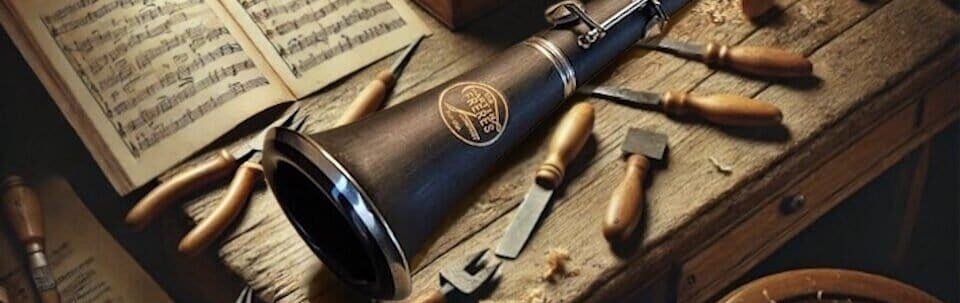
Martin Freres field note: Archival Martin Freres clarinets from the early 20th century show bore and keywork designs similar to instruments used in European cinema orchestras. While not directly tied to Hollywood studios, these instruments illustrate the tonal ideals that influenced early film-score clarinet sound: dark chalumeau, flexible tuning, and quick key response for intricate passages.
Instrument anatomy and orchestral roles: why the clarinet sounds like it does
The clarinet's role in film music starts with its anatomy and registers. A single reed on a cylindrical bore gives it a wide, even range of about three and a half octaves. Composers exploit three main registers: chalumeau, clarion, and altissimo, each with distinct emotional colors on B-flat, A, and bass clarinets.
Registers: chalumeau, clarion, altissimo
The chalumeau register (low E to written B-flat) is dark and woody. In film scores, it often represents introspection, secrecy, or old-world nostalgia, as in “The Godfather.” The clarion register (written B to high C) is clear and singing, perfect for lyrical themes like “Princess Leia's Theme.” Altissimo (above high C) can sound piercing or ecstatic, used sparingly for climaxes or tension.
Composers like John Williams and Alexandre Desplat carefully place melodies in specific registers to match character psychology. For example, a theme might begin in clarion for innocence, then drop into chalumeau as the story darkens. Understanding these register shifts helps players shape long arcs and dynamic contrasts in recording sessions.
B-flat, A, E-flat, and bass clarinets in film scores
B-flat clarinet is the workhorse of film sessions, used for most standard parts. A clarinet offers a slightly darker, smoother tone and easier fingerings in sharp keys, so composers often choose it for tragic or romantic cues. E-flat clarinet provides bright, penetrating color, common in action or comic moments.
Bass clarinet extends the range downward, with a velvety low register that blends well with cellos and bassoons. In “Harry Potter,” bass clarinet often underpins magical textures. Some modern scores add contrabass clarinet for extreme low color, especially in sci-fi and horror, where its rumble can be felt more than heard.
Articulations and special effects in film writing
Film composers use a wide palette of clarinet articulations. Legato solos with smooth slurs dominate lyrical cues, while light staccato and spiccato-like tonguing support comedic or dance scenes. Jazz-influenced scores call for swing articulation, ghosted notes, and occasional growls or subtone effects.
Special effects include flutter-tongue for nervous tension, slap tonguing for comic pops, and glissandi for jazz or surreal moments. In “Rhapsody in Blue,” the opening smear is a combination of finger slides and embouchure bend. Some modern scores request multiphonics or air sounds, especially in experimental thrillers and art films.
Orchestration choices and emotional effects
Orchestrators often pair clarinet with oboe for blended, vocal duets, or with flute for lighter, airy textures. Doubling with violins an octave apart can make a melody feel both grounded and shimmering, as in many Williams and Desplat scores. With bassoon, clarinet creates a warm, pastoral color suitable for countryside or childhood scenes.
Bass clarinet frequently doubles cellos or bassoons to strengthen low lines without adding brass weight. In suspense cues, bass clarinet may play soft, sustained notes under strings, creating a subtle sense of unease. Understanding these combinations helps clarinetists listen and balance in studio sessions, adjusting tone color to match partners.
Practical maintenance and setup for recording sessions
Clarinetists in film sessions need reliable gear and fast, repeatable setup. Unlike live concerts, studio work demands consistency across multiple takes under close microphones. A clear maintenance and preparation routine helps avoid squeaks, intonation drift, and reed failures when the red light is on.
Session-ready checklist: reeds, mouthpiece, and alignment
Start with 4 to 6 well-broken-in reeds for each instrument you will use (B-flat, A, bass). Rotate them during the week before the session, playing each for 10 to 15 minutes a day. Aim for reeds that respond easily at soft dynamics and stay stable in the upper register.
Choose a mouthpiece that balances projection and control, not just raw power. Many studio players favor medium tip openings and moderate facing lengths for flexibility. Align the reed carefully with the tip and rails; under bright studio mics, even slight misalignment can cause noisy attacks or unstable pitch.
Acclimation to scoring stages: temperature and humidity
Scoring stages like those in Los Angeles, London, or Prague are climate controlled, but the combination of lights, people, and long sessions can still shift temperature and humidity. Arrive early enough to let your clarinets warm up for at least 15 to 20 minutes before tuning.
Use a swab between takes to remove condensation, especially from the upper joint and barrel. Keep a small hygrometer in your case to monitor humidity and use case humidifiers or silica packs as needed. Stable moisture levels help reeds stay consistent across a long day of recording.
Professional studio clarinetists often bring 2 to 3 B-flat clarinets, 1 to 2 A clarinets, and at least 1 bass clarinet to a major film session, plus 20 to 30 playable reeds.
Managing A/B-flat swaps and spare gear
Film scores frequently alternate between B-flat and A clarinet, sometimes within a single cue. Mark your parts clearly with instrument changes and keep both clarinets on stands within easy reach. Practice silent swaps so you can change instruments quickly without bumping stands or making noise.
Bring spare barrels, ligatures, and at least one backup mouthpiece for each instrument. A cracked tenon cork or damaged ligature can derail a session if you have no replacement. Keep a small repair kit with cork grease, teflon tape, and a screwdriver for emergency fixes between takes.
Session etiquette and quick fixes between takes
Studio etiquette matters as much as playing. Avoid loud warmups or scale runs when engineers are setting levels. When the conductor or composer speaks, stay silent and listen for instructions. Keep page turns and key clicks as quiet as possible while microphones are live.
Between takes, check that your reed has not shifted and that water has not collected in tone holes or the mouthpiece. If pitch drifts sharp as the instrument warms, pull out slightly at the barrel and adjust voicing. For sudden reed failures, switch to a pre-tested backup rather than trying to rescue a dying reed on the spot.
Troubleshooting common recording and performance issues
Film sessions expose every detail of clarinet sound. Close miking, click tracks, and tight schedules magnify small problems like breath noise, intonation drift, and unstable reeds. Anticipating these issues and knowing practical fixes helps you stay calm and professional under pressure.
Breath noise and mic bleed
Close microphones can exaggerate breath noise, especially in soft entrances. Work with the engineer to find a mic position slightly above and in front of the bell, angled toward the upper joint. This captures tone while reducing direct air blasts and key noise.
Practice silent breathing through the corners of your mouth and plan breaths at rests or phrase ends. In dense orchestral settings, mic bleed from brass or percussion can be a problem. Engineers may use gobos or adjust mic patterns; your job is to play with consistent tone so they can manage the mix.
Intonation under studio conditions
Studio intonation can feel different from live performance. Headphones, click tracks, and isolation can make it harder to hear colleagues. Always tune to the reference pitch provided by the engineer, then check octaves and key notes (open G, throat tones, clarion C) quietly before takes.
If you tend to go sharp under bright lights or strong dynamics, build in small pull-outs at the barrel and lower joint. Use voicing and air support to adjust pitch rather than biting. For bass clarinet, pay special attention to low E and F, which may sag flat and need extra support.
Reed stability and hot lights
Reeds can dry out or soften under studio lights and air conditioning. Rotate reeds between takes, storing spares in a humidity-controlled reed case. If a reed starts to feel too soft, you can gently clip the tip or switch to a slightly harder reed for louder cues.
Have a small cup of water or damp sponge in your case to rehydrate reeds if the room is very dry. Avoid over-soaking, which can make reeds unstable. Keep a few synthetic reeds in reserve; while not always ideal for tone, they can save a session if natural reeds fail.
Communication with engineers and conductors
Clear, respectful communication solves many problems. If you cannot hear the click or balance in your headphones, tell the engineer between takes, not during a take. If a passage feels unplayable at the marked tempo, quietly ask the conductor if a retake at a slightly different tempo is possible.
When a composer asks for a specific color, ask clarifying questions: brighter vs darker, more vibrato vs pure tone, closer to jazz vs classical. This kind of dialogue shows professionalism and helps you deliver the sound they imagine, whether it is a “Chinatown”-style smoky line or a “Harry Potter” shimmer.
Player outcomes: what clarinetists learn from studying film scores
Studying clarinet in film music builds skills that translate to orchestral work, chamber playing, and studio gigs. Film cues demand flexible tone, strong sight-reading, stylistic versatility, and the ability to blend or lead on command. Focused listening and practice with specific cues can accelerate your development.
Tone control across registers
Film scores often move melodies across chalumeau, clarion, and altissimo within a single phrase. Practicing cues like “Princess Leia's Theme” or “Married Life” helps you smooth register transitions and maintain consistent color. Aim for even resonance and intonation as you cross the break and shape long crescendos and decrescendos.
Bass clarinet parts in “Harry Potter” or “How to Train Your Dragon” teach control in the low register at soft dynamics. Work with a tuner and recording device to refine attacks and releases, especially in exposed lines where the microphone will capture every detail.
Stylistic agility: classical, jazz, folk, and hybrid
Film music draws on many styles. Studying “Rhapsody in Blue” builds jazz inflection and glissando control. “The Godfather” and similar scores develop folk-inspired portamento and rubato. Williams and Desplat cues reinforce classical phrasing and articulation.
Set up practice sessions where you switch between styles: a Williams lyrical cue, a Goldsmith noir line, and a Gershwin jazz passage. This trains your embouchure, air, and articulation to adapt quickly, a key requirement for modern studio work where a single session may cover multiple genres.
Sight-reading and click-track skills
Film sessions rarely allow extensive rehearsal. Strong sight-reading is important. Practice reading through published film-score excerpts at tempo, using a metronome or click track. Focus on counting complex meters, handling sudden dynamic shifts, and staying calm when you miss a note.
Use DAW software or a metronome app to simulate click-track conditions. Record yourself playing along with a click and listen back for timing accuracy and musicality. This prepares you for real sessions where you must align precisely with picture and pre-recorded elements.
Orchestral balance and audition preparation
Film cues teach you to balance with strings, brass, and other winds in many combinations. Listening closely to recordings of “Schindler's List,” “Up,” or “Chinatown” helps you internalize how clarinet should sit in the mix. Try playing along with recordings at low volume to practice blending.
These skills support orchestral auditions and studio auditions alike. Excerpts from film scores are increasingly used in auditions for crossover ensembles and media orchestras. Building a personal library of transcribed film cues can give you a unique edge and a deeper sense of style.
Trivia, archives, and recommended listening with citations
Clarinet in film music comes with rich trivia and archival stories. Knowing where to find authoritative sources helps you separate myth from fact and deepens your appreciation of iconic cues and performers. It also gives you reliable references for research papers or program notes.
One famous anecdote: the “Rhapsody in Blue” glissando in “Fantasia 2000” traces back to Ross Gorman's improvised smear at the 1924 premiere, later adopted by Benny Goodman. Score editions from Boosey & Hawkes and historical recordings on Columbia and RCA document how this effect became standard.
Archival score manuscripts for films like “Gone with the Wind” and “King Kong” reside in studio collections such as the Warner Bros. and USC archives. Scholars have published analyses in journals like Journal of Film Music and Music and the Moving Image, often citing specific clarinet passages and orchestration techniques.
For recommended listening, build a playlist that includes: “Schindler's List” (Williams, Sony Classical), “Star Wars” and “Harry Potter” (Williams, various labels), “Chinatown” (Goldsmith, Intrada), “The Godfather” (Rota, Paramount), “Up” and “Ratatouille” (Giacchino, Walt Disney Records), and “The Grand Budapest Hotel” (Desplat, ABKCO).
Authoritative references include AllMusic album entries, Oxford Music Online articles on individual composers, and published full scores from Hal Leonard, Omni Music Publishing, and Ricordi. Liner notes in expanded soundtrack releases often feature interviews with composers and players that mention clarinet roles and recording details.
Further resources, internal links, and how to cite film music cues
When you cite clarinet in film music for research or teaching, include film title, year, director, composer, cue title, album release, label, and timestamp. This level of detail helps others locate the exact passage and supports clear, verifiable scholarship or practice notes.
A basic citation might look like: “Schindler's List (1993), dir. Steven Spielberg, score by John Williams, cue ‘Theme from Schindler's List,' original soundtrack, Sony Classical, 0:42 clarinet doubling violin.” For academic work, follow your style guide (APA, Chicago, MLA) and add catalog numbers where available.
Clarinetists can keep a practice journal listing film cues, keys, registers, and technical challenges. Over time, this becomes a personalized etude book drawn from real scores. Pair each cue with related orchestral excerpts or method-book studies to reinforce specific skills such as legato, articulation, or register shifts.
For deeper study, explore books on film scoring and orchestration, interviews with studio clarinetists, and historical overviews of Hollywood music. Many universities host digital collections of film-score manuscripts and cue sheets that include clarinet parts, offering a direct look at how composers and orchestrators worked.
Key takeaways
- Clarinet in film music spans lyrical solos, coloristic textures, and jazz-inflected lines across B-flat, A, E-flat, and bass clarinets.
- Iconic cues from Williams, Goldsmith, Rota, Gershwin, Giacchino, and others offer concrete models for tone, phrasing, and style.
- Session success depends on careful maintenance, reed preparation, and clear communication with conductors and engineers.
- Studying film cues builds tone control, stylistic agility, and click-track skills that support both orchestral and studio careers.
- Archival scores, soundtrack liner notes, and scholarly sources provide reliable references for research and informed listening.
FAQs
What is clarinet in film music?
Clarinet in film music refers to how the clarinet family is written, recorded, and performed in movie scores. Composers use B-flat, A, E-flat, and bass clarinets for solos, color, and texture, shaping character and emotion in genres from animation and drama to sci-fi, noir, and jazz-influenced films.
Which famous film cues feature the clarinet and where can I hear them?
Notable examples include “Theme from Schindler's List” (0:42 clarinet doubling violin), “Rhapsody in Blue” in Fantasia 2000 (0:00 opening glissando), “Princess Leia's Theme” in Star Wars (0:54 clarinet counter-melody), “Married Life” in Up (0:36 clarinet melody), and “Hedwig's Theme” in Harry Potter (1:18 bass clarinet color).
How do composers choose between Bb, A and bass clarinet for a film cue?
Composers and orchestrators choose B-flat clarinet for general use, A clarinet for darker tone and comfortable fingerings in sharp keys, and bass clarinet for low, velvety colors. The decision depends on key, register, desired color, and how the clarinet will blend with strings, brass, and other winds in the cue.
What are common recording problems for clarinet in studio sessions and how are they fixed?
Common issues include breath noise, mic bleed, intonation drift, and unstable reeds under studio lights. Solutions involve careful mic placement, silent breathing, regular swabbing, controlled tuning adjustments, reed rotation, and clear communication with engineers and conductors to adjust balance, headphone mix, or tempo as needed.
Can studying film score clarinet parts help me get studio gigs?
Yes. Studying film cues improves sight-reading, click-track accuracy, tone control across registers, and stylistic flexibility, all important for studio work. Building a repertoire of well-practiced film excerpts and understanding common orchestration patterns makes you more prepared and attractive to contractors and composers.
Where can I find authoritative sources or score manuscripts for film clarinet parts?
Authoritative sources include published full scores from Hal Leonard, Omni Music Publishing, and Ricordi, studio and university archives (such as Warner Bros. and USC), soundtrack liner notes, and reference sites like AllMusic and Oxford Music Online. Some expanded soundtrack releases also include detailed notes on instrumentation and recording.
Related Posts: