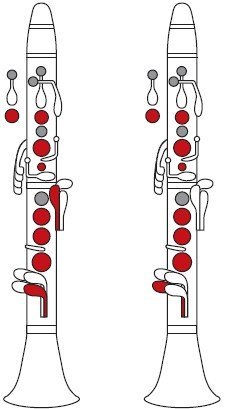
If there is one Christmas carol that feels like a night walk through old cobblestone streets, it is “God Rest Ye Merry Gentlemen.” On Bb clarinet, this melody curls out of the bell like candlelight, dark and warm at the same time. It is the sound of minor keys, church choirs, brass bands, and snowy city corners wrapped into a single tune.
Receive a free PDF of the chart with clarinet fingering diagrams for every note!
Playing “God Rest Ye Merry Gentlemen” on clarinet connects you to village bands from centuries ago, swing orchestras from the 1940s, London studio players on film soundtracks, and jazz soloists who love that haunting minor flavor. This is not just a carol. It is a story your reed gets to tell every December.
The God Rest Ye Merry Gentlemen clarinet fingering chart is a note-by-note Bb clarinet guide that shows all fingerings for the melody and key notes, so you can play the carol in tune, with confidence, and focus on expression instead of guessing fingerings.
A carol older than your clarinet: the long road of God Rest Ye Merry Gentlemen
“God Rest Ye Merry Gentlemen” was already an old song when the first modern clarinets were being made. The carol comes from 16th and 17th century England, a time of street singers, viols, shawms, and early chalumeaux, the clarinet's ancestor. Imagine a winter market in London: fiddles, small drums, maybe a crude reed pipe tracing this same winding minor melody.
By the time makers like the early Martin Freres workshops were refining their wooden instruments in the 19th century, the carol had moved from street corners into church choirs, organ lofts, and eventually full orchestras. Clarinetists started to catch it in their parts whenever Christmas suites appeared on programs, with Bbs and throat tones shaping that unmistakable Phrygian-influenced flavor on the opening notes.
Field Note: In the Martin Freres archives, there are handwritten holiday band parts from the late 1800s where “God Rest Ye Merry Gentlemen” is carefully transposed for Bb clarinet. The clarinet line is marked “dolce ma oscuro” in one set, a reminder that players were already treating this carol as a darkly sweet solo moment.
During the Romantic era, church bands and civic wind ensembles used the tune in seasonal medleys. Clarinetists playing alongside cornets and euphoniums had the job of adding nimble inner lines and counter-melodies. Those same patterns live in your fingers when you follow a complete clarinet fingering chart for “God Rest Ye Merry Gentlemen” today.
Clarinet voices that gave this carol its shadow and shine
Even if “God Rest Ye Merry Gentlemen” is rarely the headlining track on clarinet albums, it sneaks into holiday recordings like a secret favorite. Different clarinetists treat it like a miniature character study: a chance to paint with dark colors in the middle of all the bright major-key carols.
In the classical world, players such as Sabine Meyer and Martin Frost often include minor-key Christmas tunes in their seasonal programs. When they bend from a low F to G on a German-system or French-system clarinet, the sound has that same moody lift you feel in “God Rest Ye Merry Gentlemen.” Their work on Mozart's Clarinet Concerto, Weber's Concertino, and Brahms's Clarinet Quintet shows how they handle long, singing lines and soft chalumeau-register phrases, exactly the tools you need for this carol's opening bars.
Richard Stoltzman, with his unmistakable tone and broad vibrato, brings a vocal quality to slow, hymn-like melodies. Listen to his phrasing in Copland's Clarinet Concerto or his arrangements of spirituals and you can hear how he might lean into the descending minor phrases of “God Rest Ye Merry Gentlemen,” maybe taking a tiny rubato on that first fall from D to C to B.
Jazz clarinetists have turned this carol into something else entirely. Benny Goodman never recorded every Christmas tune, but his big band work on dark swing classics gives a clear model. Imagine his Selmer clarinet sailing above trumpets, playing the carol in a 4/4 groove, accented like “Stompin' at the Savoy” but in a minor key. Artie Shaw would likely have added a touch of romantic portamento between notes, using the side keys and register key to slide with surgical control.
More recently, players such as Eddie Daniels and Anat Cohen have used minor carols in concert programs to bridge classical precision and jazz improvisation. The same alternate fingerings they use for fast bebop lines can help you keep the melody of “God Rest Ye Merry Gentlemen” smooth when it hops between middle-register A, throat B, and clarion C#.
Klezmer clarinetists like Giora Feidman and David Krakauer show another path. While they may not always record this specific carol, their handling of Yiddish tunes like “Oyfn Pripetshik” or “Der Heyser Bulgar” gives you a vocabulary of slides, scoops, and sob-like ornaments that fit perfectly on “God Rest Ye Merry Gentlemen.” That first note can start almost like a sigh through the mouthpiece and barrel, then bloom into full tone as you settle into the pitch.
From cathedral lofts to jazz clubs: iconic uses of this melody
“God Rest Ye Merry Gentlemen” has threaded itself into all sorts of settings where clarinet hides in plain sight. Think about big Christmas compilation albums where woodwind sections color the harmony. Somewhere in those lush arrangements, a Bb clarinet is often doubling the alto line, slipping under the soprano melody of this very carol.
In orchestral Christmas concerts, conductors regularly program medleys like “A Christmas Festival” or “Christmas Suite” where this tune appears. Clarinetists in groups such as the London Symphony Orchestra or the Berlin Philharmonic have played it inside thick textures, shaping the minor-key line while sharing it with flutes, bassoons, and French horns.
Film and television scores have used this carol to signal something slightly mysterious under the holiday surface. Imagine a clarinetist in a London studio, with a Vandoren reed on a Buffet or Yamaha clarinet, softly playing the theme for a scene of a child walking alone through a snowy street. The tone is almost whispered, using the throat A and long B with careful breath control so every note speaks, but never sounds harsh.
Jazz recordings and big band charts often quote the melody over ii-V progressions. In that context, the clarinet can take the tune into unexpected directions, turning the simple minor scale into blues-infused runs. Listen to holiday jazz albums by artists like Wynton Marsalis or Harry Connick Jr. and you will often hear clarinet in the reed section giving that crucial color to darker carols.
Range spotlight: 16 to 18 core melody notes
The main melody of “God Rest Ye Merry Gentlemen” on Bb clarinet usually fits into about 16 to 18 distinct notes, mostly from low G to clarion D, which makes it friendly for newer players while still rich enough for advanced phrasing and tone work.
Chamber groups love the carol too. Clarinet choirs and wind quintets often arrange it with the melody in the Bb clarinet while bass clarinet holds a pedal tone. The way those low notes resonate through the floor under the main tune gives a physical, chest-level weight to the minor harmonies.
Why this carol hits differently on Bb clarinet
On piano or organ, “God Rest Ye Merry Gentlemen” can feel quite formal, almost like standing in an old stone church. On Bb clarinet, it suddenly becomes personal. The reed vibrates against your lip, the air column runs through grenadilla or aged boxwood, and that characteristic clarinet vibrato (or pure straight tone, if you prefer) makes the melody sound like a human voice telling a story.
The tune sits mostly in a minor scale, but it has that delicious twist on the line “tidings of comfort and joy.” Harmonically, you move from shadow into something hopeful without ever leaving the night sky. On the clarinet, this means shaping dynamics carefully: perhaps starting mezzo piano on the opening phrase, dipping to piano near the end of the line, then blooming to mezzo forte as the harmony brightens.
Technically, much of the piece rests in the chalumeau and lower clarion registers, right where the clarinet is at its most expressive. Long tones on low G, A, and B, then slurred leaps toward clarion C and D, give you space to color the sound with breath support and subtle finger shading. You feel the ring keys, the register key, and the left-hand pinky keys working as part of a living, breathing phrase instead of just “notes to get right.”
What learning this carol does for your playing
Working with a clear God Rest Ye Merry Gentlemen clarinet fingering chart is not only about being ready for Christmas gigs. It quietly trains several musical superpowers at once, from breath control to stylistic flexibility.
You practice smooth register shifts between chalumeau and clarion without wild dynamic jumps.
You learn to shape a minor melody so it sounds expressive instead of gloomy.
You gain confidence reading common Christmas rhythms that appear in countless arrangements.
You get ready for church services, school concerts, and last-minute holiday calls where this carol suddenly appears on the stand.
For students, this piece is a gentle introduction to expressive playing beyond method books like Kloses scales or Rose etudes. For professionals, it is a canvas for color, articulation experiments, and improvisation. You can start with the printed melody from your fingering chart, then gradually add grace notes, turns, or even short jazz fills.
Player level
Focus with this carol
Artistic gain
Beginner
Learn basic fingerings, steady tone on low notes
Comfort with minor key melodies
Intermediate
Control dynamics, smooth register changes
Expressive phrasing and breath planning
Advanced
Add ornamentation, stylistic variations
Personal interpretation and improvisation
A quick word on the God Rest Ye Merry Gentlemen clarinet fingering chart
The fingering chart for “God Rest Ye Merry Gentlemen” on Bb clarinet lays out every note you need, from the first low G up through clarion D or E depending on your arrangement. You will use standard Boehm-system fingerings for almost every note, with a few alternate options suggested to help smooth awkward shifts between throat tones and clarion notes.
The melody typically fits in a comfortable range, so you rarely need the altissimo register. That lets you focus on air support, matching the color of throat A and B to the richer clarion notes above them. Use the chart as a visual anchor while you listen to different versions, and notice how the same fingerings can lead to very different moods depending on articulation and timing.
Play through the chart slowly once, naming each note out loud.
Repeat, this time singing the melody first, then matching your clarinet tone.
Circle any tricky throat or pinky combinations and isolate them for 2 to 3 minutes.
Finally, play the whole carol at a soft dynamic, focusing on legato between finger changes.
Simple practice routines to make the carol feel natural
Instead of just playing the tune from start to finish on repeat, a short, focused routine can make “God Rest Ye Merry Gentlemen” feel comfortable in your fingers and in your breath. These mini-sessions fit easily between scale work on G minor or studies from Baermann and Rose.
Practice block
Time
Focus
Warmup on the scale
3 minutes
Play the carol's minor scale slowly, using the same fingerings as in the chart.
First phrase only
4 minutes
Shape dynamics and air for the opening line. Experiment with softer attacks using tongue and air.
Register shifts
3 minutes
Loop bars that move between chalumeau and clarion. Keep pitch stable and tone even.
Full melody
5 minutes
Play the entire song twice: once legato, once with light swing or gentle dance-like articulation.
Troubleshooting: keeping the carol smooth and in tune
Even with a clear fingering chart, a few spots in “God Rest Ye Merry Gentlemen” can feel stubborn. Throat tones, low notes, and quiet entrances like to test your patience. Use this quick guide to fix them without losing the musical magic.
Issue
Likely cause
Quick fix
Throat notes sound dull
Weak air or pinched embouchure on A, Bb, B
Blow a warm, fast air stream and slightly relax your lower lip while keeping mouthpiece angle steady.
Low notes do not speak
Inconsistent support on low E, F, G
Practice low notes as long tones, then add the melody slowly, keeping the same abdominal support.
Register change pops
Late register key or sudden air surge
Finger the new note first, then add the register key a fraction earlier while keeping air steady, not louder.
Melody feels rushed
Skipping breath plans between phrases
Mark specific breath spots on your part and honor them every time you play.
Key Takeaways
Use the God Rest Ye Merry Gentlemen clarinet fingering chart to free your mind from guessing notes so you can focus on color and phrasing.
Treat this carol as a minor-key story: practice soft dynamics, smooth register shifts, and expressive breath control.
Listen to classical, jazz, and klezmer clarinetists to borrow styles and make your own version of the carol feel alive.
Frequently Asked Questions
What is the God Rest Ye Merry Gentlemen clarinet fingering chart?
The God Rest Ye Merry Gentlemen clarinet fingering chart is a note-by-note guide for Bb clarinet that shows which keys and holes to use for every pitch in the carol. It helps you play confidently in the correct range, stay in tune, and focus on expression instead of guessing fingerings.
What skill level do I need to play God Rest Ye Merry Gentlemen on clarinet?
The piece suits late beginners through advanced players. If you can comfortably play from low E to clarion C or D and read simple rhythms, you can handle most arrangements. More experienced clarinetists can add dynamics, ornaments, and stylistic variations for recitals or holiday services.
Which clarinet register is used most in this carol?
Most arrangements of God Rest Ye Merry Gentlemen sit in the chalumeau and lower clarion registers. You will use notes from low G or A up to clarion D or E, which is ideal for developing a warm, singing tone without the added challenge of frequent altissimo passages.
How should I practice the carol for better tone and phrasing?
Break the song into short phrases. Practice each one as a long-tone exercise, holding every note slightly longer than written. Focus on steady air through the mouthpiece and barrel, clean finger changes, and gentle starts with the tongue. Then reconnect the phrases while keeping the same smooth airflow.
Can I improvise over God Rest Ye Merry Gentlemen on clarinet?
Yes. Once you can play the written melody confidently, use the underlying minor scale to create simple fills and variations between phrases. Start with small rhythmic tweaks and neighbor tones, then listen to jazz or klezmer clarinetists to gather ideas for more adventurous improvisation.