There is a special hush that settles over a room when a clarinet sings the opening line of “It Came Upon a Midnight Clear.” The hymn is simple on paper, but on a Bb clarinet it turns into a kind of quiet storytelling, a melody that feels like candlelight reflecting off silver keys. This is the song that makes even a brand new player feel like a real musician and lets a seasoned pro paint the air with calm.
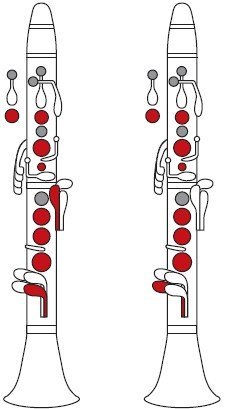
Receive a free PDF of the chart with clarinet fingering diagrams for every note!
The It Came Upon a Midnight Clear clarinet fingering chart is a visual guide showing every note and suggested Bb clarinet fingering for this carol in a clear layout. It helps players of all levels learn the melody faster, play in tune, and focus on expression and beautiful phrasing.
The midnight melody and where it came from
Before it ever touched a clarinet mouthpiece or a Vandoren reed, “It Came Upon a Midnight Clear” began as a poem. In 1849, Unitarian minister Edmund Sears wrote the text in Massachusetts, reflecting on peace, struggle, and the human longing for quiet. A couple of years later, American composer Richard Storrs Willis set those words to the tune many clarinetists know today.
That melody sits beautifully on Bb clarinet. The phrases rest in the middle register, right where the instrument speaks most like a human voice. The warm chalumeau notes under the break wrap around the lower part of the tune, while the clarion register carries those angel-like arcs on long, singing tones. It is no surprise that Christmas services and winter concerts almost always have a clarinetist somewhere in the mix on this piece.
Field Note: In the Martin Freres archives, there is a handwritten Christmas program from the 1920s listing a “Midnight Carol” for clarinet and harmonium. The clarinet part is a simple arrangement of “It Came Upon a Midnight Clear” penciled onto yellowing staff paper. The dynamic marking above the first note just says: “soft as snow.”
How great clarinetists have carried this carol
This carol might not headline a virtuoso concerto, but it has passed through the hands and hearts of many famous clarinet players, often in arrangements, medleys, and quiet encore pieces.
Sabine Meyer, known for her glowing tone in the Mozart Clarinet Concerto and Brahms Clarinet Quintet, recorded several Christmas albums and broadcasts where she treats carols like tiny concert pieces. When she shapes a line like “It Came Upon a Midnight Clear,” you can hear the same care she gives to Weber's Romantic phrases: long bow-like breaths, gentle swells, and perfectly balanced throat tones from A to C.
Richard Stoltzman took the holiday clarinet concept in a different direction. On his Christmas recordings with piano and chamber ensembles, he weaves tunes such as “It Came Upon a Midnight Clear” into jazz harmony and subtle swing, bending notes just enough to feel conversational. The way he leans on the upper-clarion A and B reminds many players that this carol can sit comfortably next to standards like “Body and Soul” or “The Nearness of You” in terms of expression.
Modern soloist Martin Frost, famous for his theatrical performances of Nielsen and Copland, often includes seasonal tunes in softer encores. He has spoken in interviews about growing up in Sweden and playing hymns in small churches, using simple carols to experiment with color changes. When you hear him shade a pianissimo high G in a Christmas encore, you can imagine the same control illuminating a phrase of “It Came Upon a Midnight Clear” in a candlelit hall.
On the jazz side, Benny Goodman and Artie Shaw both recorded Christmas medleys for radio and television. While they might not have left a solo studio track of this carol alone, the way they treated songs like “Silent Night” and “O Come All Ye Faithful” gives a blueprint: a singing chalumeau register, tasteful ornamentation over the cadences, and a touch of swing on repeated notes. That same approach works beautifully when you move your right-hand fingers over the notes of “It Came Upon a Midnight Clear” in a small combo.
From Victorian pews to film scores and jazz clubs
“It Came Upon a Midnight Clear” started in mid-19th century America, but it did not stay there. Once the melody caught on, organists, violinists, and clarinetists in Europe picked it up, arranging it for church services and domestic music-making. In drawing rooms with upright pianos, Bb clarinet players would double the top line, adding a gentle reedy shimmer to the family singing.
In the Baroque and Classical repertoire that players often study, you will not find this tune, but the way you phrase Bach chorales or a Mozart slow movement directly feeds how you play this carol. Think of Anton Stadler, Mozart's clarinet friend, shaping the Adagio of the Clarinet Concerto with a floating, vocal style. That same kind of air support and jaw relaxation turns “It Came Upon a Midnight Clear” into a miniature concerto aria.
By the late Romantic era, clarinetists like Heinrich Baermann were soaking everything they played in warm vibrato and long rubato lines in concertos by Weber and his contemporaries. Church musicians of the period often borrowed that style for seasonal music. A clarinet in a Christmas Eve orchestra might move from a Brahms chorale prelude arrangement straight into an earlier carol like this one, using the same wide tone and expressive phrasing.
Move forward into the 20th century and the carol becomes a regular visitor in television specials and film scores. Studio clarinetists in London and Los Angeles often track soft background lines or countermelodies under choirs and strings. You can hear that sound in many arrangements by John Rutter, where clarinet quietly doubles the soprano line or adds an inner voice over gentle harp. While not always credited, those studio players apply all the same skills developed from pieces like Debussy's Rhapsodie and Poulenc's Clarinet Sonata.
Klezmer masters such as Giora Feidman and David Krakauer show another path. In winter programs, they sometimes weave Christian carols and Jewish songs together, reshaping both with expressive bends, ornamented turns, and soulful chalumeau growls. If you play “It Came Upon a Midnight Clear” with a slide into the high note or a small turn on a long tone, that nod to klezmer style connects the carol to a much wider musical family.
Typical range of It Came Upon a Midnight Clear on Bb clarinet: low G to high C
This roughly 10-note span keeps you mostly below the break, with just a few clarion notes. It is perfect territory for developing breath control, throat tone tuning, and a warm, centered sound without overtaxing the left-hand pinky keys and register key.
Iconic arrangements and clarinet moments to know
While “It Came Upon a Midnight Clear” does not have a single definitive clarinet showcase like Mozart's Concerto, it hides in many recordings that clarinetists love to study.
On the classical side, listen for:
Christmas chamber albums featuring clarinet and piano, where the carol appears in medleys alongside “O Holy Night” and “What Child Is This.” Players like Sharon Kam and Karl Leister often include such tunes as encores in live holiday broadcasts.
British cathedral-style arrangements with clarinet in the orchestra, such as programs by the Choir of King's College, Cambridge. The clarinet line often doubles the treble voices on the long legato notes of this carol.
Wind band recordings where the first clarinet section carries the melody. Conductors sometimes seat the section in one unified line, creating a bright, organ-like blend on the tune.
In jazz and crossover projects, keep an ear out for:
Richard Stoltzman's Christmas recordings, where he uses breath vibrato and soft accents to make the carol feel like a ballad.
Big band holiday albums influenced by Benny Goodman and Artie Shaw, with clarinet weaving counterlines around the choir or saxophones during carol medleys.
Small combo versions where clarinet plays the melody and then steps aside while piano or guitar solos, before returning with an embellished final verse.
Even in film and television, session clarinetists quietly shape the mood. A single sustained clarinet note under a children's choir on “It Came Upon a Midnight Clear” can be as expressive as a dramatic solo in a Weber concerto. The same embouchure, breath support, and right-hand stability you practice on etudes by Rose and Baermann become the tools that sell the emotion of the carol on screen.
Version
Clarinet Role
Listening Focus
Church service arrangement
Melody in unison with choir
Blend, pure intonation, soft entrances
Jazz combo setting
Lead line and improvised fills
Swing feel, tasteful ornamentation, phrasing
Wind band or orchestra
Inner voice or countermelody
Dynamic control, color changes, blending with flutes and oboes
The emotional heart of It Came Upon a Midnight Clear
This carol is not about fireworks. It is about a long exhale after a busy day, about standing in the stillness of a winter night. On clarinet, every breath becomes part of that atmosphere. The mouthpiece, ligature, and barrel almost disappear and you feel like you are singing directly through the bell.
The melody moves mostly by step, which lets you shape each phrase like a single line of speech. Try thinking in sentences: a gentle question in the opening, a more confident statement at the phrase peak, then a soft landing on the cadence. Clarinetists often use a slightly darker, covered tone for this tune, bringing the lower register of the instrument into the upper notes with smooth register key transitions.
Emotionally, this piece belongs in the same family as the slow movement of the Mozart Clarinet Concerto or the second movement of Brahms's Clarinet Sonata in F minor. It is quieter and more compact, but it gives you the same chance to stretch time, to lean into suspensions, to let your left-hand fingers move as if they are breathing too.
Why this song matters for your clarinet journey
Whether you are just learning throat tones or polishing concertos, “It Came Upon a Midnight Clear” gives you real musical work to do without overwhelming your fingers. It sits in a comfortable Bb clarinet range, using notes you probably already know: low G, A, B, C, D, and just a few clarion register notes reached with the register key.
Because the carol is so familiar, your brain is free to focus on tone, air, and phrasing. You can experiment with:
Soft attacks on notes like low B and C using very steady air
Gentle vibrato at the ends of long clarion notes, inspired by players like Sabine Meyer
Subtle timing rubato borrowed from recorded interpretations by Richard Stoltzman and Martin Frost
Learning this carol well prepares you for pieces like the slow movement of Weber's Concerto No. 1, the lyrical Etudes of Rose, and solo lines in film music. The same hand position, throat openness, and embouchure flexibility that make this hymn float will help you later when you shape the haunting lines in Nielsen's Clarinet Concerto or Copland's Clarinet Concerto.
Suggested 10-minute practice plan with the fingering chart
Time
Focus
Details
3 minutes
Fingerings
Use the chart to play the melody slowly, checking each Bb clarinet fingering and keeping fingers close to the keys.
4 minutes
Tone and breath
Play in long phrases of 2 or 4 bars, listening for even tone from low G to clarion C.
3 minutes
Musical story
Shape dynamics, add small rubato, and imagine you are playing this as the opening of a Christmas service.
A few quick fingering and technique notes
The free fingering chart for “It Came Upon a Midnight Clear” shows every note clearly, so here are just a couple of points to keep in mind as you read it.
Most of the melody sits below the break, using standard left-hand and right-hand combinations: low G with all main fingers down, A with left-hand fingers only, B and C in the throat tone area, and D with left-hand fingers plus your right-hand index. A few notes step into the clarion register with the register key, often on A and B above the staff. Keep the left-hand position stable and move the register key with a gentle fingertip rather than a heavy push.
Scan the chart once before playing to notice where the register key appears.
Practice those small jumps separately, then place them back into the phrase.
Use very steady air on throat tones (G, A, B, C) so they match the color of the clarion notes.
If you already know scales like G major and C major on Bb clarinet, you will find that this carol shares many of the same finger patterns. The chart simply ties them to a familiar melody and lets you hear those patterns in a real musical context.
Key Takeaways
Use the It Came Upon a Midnight Clear clarinet fingering chart to free your attention for tone, phrasing, and emotion.
Listen to classical, jazz, and klezmer clarinetists to borrow colors and phrasing ideas for this gentle carol.
Treat this tune like a miniature concerto slow movement, using it to refine breath control and expressive playing.
Frequently Asked Questions
What is It Came Upon a Midnight Clear clarinet fingering chart?
The It Came Upon a Midnight Clear clarinet fingering chart is a visual guide that shows every note of the carol and the suggested Bb clarinet fingerings. It helps players quickly learn the melody, stay in tune across throat tones and clarion notes, and focus on expressive phrasing instead of guessing which keys to press.
Is It Came Upon a Midnight Clear suitable for beginner clarinetists?
Yes. The tune mostly uses a comfortable range from low G to high C, with only a few notes using the register key. Beginners can use the chart to learn fingerings, while more advanced players focus on breath control, soft dynamics, and phrasing practice that also supports pieces like the Mozart and Weber concertos.
How should I practice this carol with the fingering chart?
Start by playing slowly with the chart in front of you, saying note names quietly as you play. Then group the song into 2 or 4 bar phrases and work on smooth connections. Finally, add dynamics, vibrato if you use it, and gentle rubato, treating the melody like a short clarinet solo in a concert.
Which clarinet techniques improve most when learning this song?
You will strengthen tone production in the chalumeau and throat tone areas, learn to cross the break smoothly into clarion notes, and refine breath support for long phrases. It also helps you control soft attacks and releases, skills that carry directly into lyrical studies by Rose and orchestral solos by Brahms and Debussy.
Can I use this fingering chart with other Christmas carols?
Yes. Once you are comfortable, compare the fingerings to tunes like “Silent Night” or “O Come, All Ye Faithful.” You will notice repeating patterns and similar note shapes. That familiarity makes it easier to sight-read new carols and focus on musical expression rather than constant fingering decisions.