There is a special quiet that falls over a room when a clarinet begins “My Old Kentucky Home”. The melody is simple, almost shy, but it carries more than 150 years of American memory, porchlight evenings, and slow summer air. On Bb clarinet, “My Old Kentucky Home” sings with a vocal warmth that feels like someone humming from the next room.
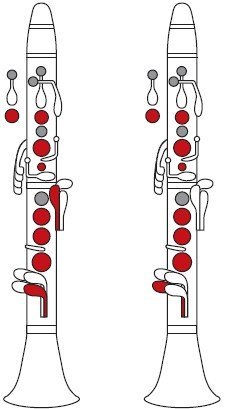
Receive a free PDF of the chart with clarinet fingering diagrams for every note!
The My Old Kentucky Home clarinet fingering chart is a Bb clarinet note guide that shows every pitch needed for the melody, with clear fingerings and register choices. It helps players of all levels play the song in tune, with smooth phrases and expressive tone for performances and personal enjoyment.
The long journey of “My Old Kentucky Home” and the clarinet
Long before a Bb clarinet ever joined a concert band or jazz combo, “My Old Kentucky Home” was already drifting across parlor pianos, parlor guitars, and voices gathered around a simple tune. Written in the 1850s by Stephen Foster, it began as a parlor song, then slowly moved into folk tradition, onto bandstands, and finally into the clarinet cases of students and professionals everywhere.
By the time early clarinet pioneers like Heinrich Baermann and Anton Stadler were carving out a place for the instrument in concert halls with Mozart and Weber, songs like “My Old Kentucky Home” were shaping another side of musical life: community singing, brass band arrangements, and small town concerts. When the American concert band tradition exploded in the late 19th and early 20th century under conductors like John Philip Sousa, this tune started showing up in band books where clarinet sections carried the melody in rich unison.
In the Martin Freres archives, there are early 20th century Bb clarinets with worn case compartments stuffed with handwritten copies of folk melodies, including tunes from Foster, spirituals, and traditional waltzes. That mix of formal European clarinet technique and homegrown American song is exactly where “My Old Kentucky Home” lives.
Field Note: In an old Martin Freres workshop ledger from the 1920s, a repairman notes that a returning customer “plays hymns and Kentucky songs for the neighborhood” and requests a dark, covered tone. Simple songs like “My Old Kentucky Home” quietly shaped how many clarinetists thought about color and warmth long before they ever tackled a concerto.
How great clarinetists have carried this song
You will not find “My Old Kentucky Home” on the same printed programs as the Mozart Clarinet Concerto in A major or the Brahms Clarinet Quintet, yet the spirit of this melody has flowed through the playing of legendary clarinetists for decades.
Think about Benny Goodman's smooth phrasing in ballads like “Body and Soul” or “Where or When”. That kind of singing line, supported by a tender chalumeau register, is exactly what makes “My Old Kentucky Home” glow on clarinet. Goodman's work with arranger Fletcher Henderson and his small group recordings showed how the instrument could take a simple tune and make it feel like a whispered story.
Artie Shaw brought a more overtly romantic sound, especially in slow pieces like “Star Dust”. His use of vibrato and a gently sliding pitch on expressive notes is the same kind of touch that can make the final phrase of “My Old Kentucky Home” feel personal rather than plain. When you practice this song, you are quietly training the same expressive muscles that Shaw used on his most famous ballads.
On the classical side, Sabine Meyer and Martin Frost often speak through their playing about lyricism and speech-like phrasing. Listen to Meyer in the slow movement of the Mozart Clarinet Concerto or Frost in Carl Nielsen's Clarinet Concerto. Their mastery of line, air, and color can all be practiced in miniature inside “My Old Kentucky Home”. It may be a folk song, but it can be shaped with the same care as a Brahms phrase.
Klezmer icons like Giora Feidman and David Krakauer push the clarinet into raw, human territory, using bends, sighs, and ornamentation. If you listen to Feidman play “Yidl Mitn Fidl” or Krakauer tear into “Der Heyser Bulgar”, you will hear how they treat a melody as a living thing. That approach brings a deep honesty to “My Old Kentucky Home” when you let your vibrato, breath, and timing respond to the words behind the tune.
8 to 12 bars
Most classroom or band arrangements of “My Old Kentucky Home” give the clarinetist an 8 to 12 bar solo line. That short stretch is perfect for practicing projection, legato, and tone focus without fatigue.
Where “My Old Kentucky Home” hides in programs and recordings
“My Old Kentucky Home” is not usually printed in large type on a concert poster, but it appears again and again in the margins, in arrangements, medleys, and quiet encore sets.
Concert bands and wind ensembles often program American medleys by arrangers such as Clare Grundman, Alfred Reed, and James Swearingen. In pieces like “American Folk Rhapsody” or “American Folk Suite”, you will often find a phrase that quotes or gently echoes “My Old Kentucky Home”. Clarinet sections in school bands learn to blend, phrase, and tune through these lines, sometimes without even realizing which melody they are playing.
Clarinet and piano collections marketed as “American Songs” or “Parlor Favorites” frequently include this tune. Richard Stoltzman has recorded many lyrical American pieces on albums that pair Gershwin, Copland, and folk-inspired works; the spirit of “My Old Kentucky Home” is right alongside things like Copland's “Simple Gifts” or the slow theme from “Appalachian Spring”.
Film scores echo the mood of this song too. Look at the clarinet lines in Aaron Copland's film music, or the warm Bb clarinet solos in scores by Randy Newman and James Horner. Pieces like Newman's “The Natural” or Horner's “Field of Dreams” carry a nostalgic, rural, almost front-porch quality that sits very close to the emotional territory of “My Old Kentucky Home”. Practicing the song is good preparation for reading those types of lyrical clarinet cues.
In marching bands at the Kentucky Derby and state ceremonies, clarinets often join brass and low reeds in traditional arrangements of the song. Even if you never play the Derby itself, that connection between local history and the clarinet's singing voice is part of what makes this melody special to so many players.
From parlor song to clarinet standard: then and now
“My Old Kentucky Home” began as a parlor song in the 19th century, performed by singers with piano, guitar, or banjo. As community bands grew, E flat and Bb clarinets started carrying the melody, often doubled by cornets and flugelhorns. Early band method books treated it as a model of simple melody and phrasing.
In the early 1900s, clarinetists in town bands would play this tune at picnics, outdoor concerts, and social gatherings. It often appeared next to waltzes, schottisches, and marches in small-format band books. The melody's modest range made it perfect for clarinets with less reliable keywork or players still learning tone control in the chalumeau and clarion registers.
As jazz grew in cities like New Orleans, Chicago, and New York, songs with a similar shape and era began getting new lives as standards. While “My Old Kentucky Home” itself did not become a core jazz tune, the training that clarinetists received on these lyrical melodies shaped the way they approached standards by Irving Berlin, George Gershwin, and Duke Ellington.
Today, clarinet teachers still pull out “My Old Kentucky Home” for students who are moving beyond basic long tones and scales. It is short, singable, and emotionally alive. In studio lessons, it often sits next to early pieces from the Rose 40 Etudes or simple movements from Carl Baermann's clarinet method, giving the student a chance to apply their technical work to something that feels like a song, not an exercise.
Era
Clarinet setting
Role of “My Old Kentucky Home”
Late 1800s
Town bands, parlor groups
Melody in band books, simple clarinet solos
Early 1900s
Concert bands, school ensembles
Practice piece for tone, phrasing, and blend
Late 1900s to today
Clarinet lessons, chamber arrangements
Teaching tool and lyrical encore or folk feature
The emotional heart of “My Old Kentucky Home” on clarinet
Clarinetists are storytellers. The Bb clarinet has a voice that can sob in the chalumeau, speak clearly in the throat tones, and soar in the clarion. “My Old Kentucky Home” gives you all the room you need to tell a quiet story without any flashy technique.
The song carries a gentle sadness mixed with affection. That mood comes out through dynamic shape, breath, and tone color. Think of how Richard Stoltzman shapes a phrase in the Beethoven Trio Op. 11 or how Sabine Meyer floats the slow melody in an opera arrangement. They use small swells, careful timing at the ends of phrases, and a centered embouchure to let the music sound like speech.
On clarinet, you can lean into the long notes by slightly darkening the reed with more lower lip cushion, softening the airstream at the top of the phrase, then allowing a small crescendo into the next arrival. The fingerings in your free clarinet fingering chart will tell you which keys to press, but the feeling comes from how you move the air and how you listen to the line.
This song invites you to imagine words under the melody, even if you never sing them. Many players find that quietly speaking the lyrics, then playing the line without tongue on the first repetition, helps connect the melody to breath. That connection is the key to turning notes on a page into something that sounds like memory.
Why “My Old Kentucky Home” matters for your playing
There are pieces that test your fingers and pieces that test your heart. “My Old Kentucky Home” mostly tests your heart. It asks you to make a simple sequence of notes feel alive, which is the same challenge you face in the slow movements of Weber's Clarinet Concerto No. 1, the Brahms Clarinet Sonatas Op. 120, or Debussy's Rhapsodie.
If you are a newer player, this song will help you:
Shape phrases that begin and end with intention
Balance tone between chalumeau and lower clarion
Practice soft entries and gentle releases without squeaks
If you are an advanced player, it offers a chance to work on:
Color changes between repeated phrases
Very slow, controlled crescendos through long notes
Subtle timing choices that feel natural, never forced
In many teaching studios, instructors will pair this melody with long tone exercises from the Baermann method or with excerpts from the Rose 32 Etudes. That combination of etude and song keeps practice balanced between mechanics and meaning.
A few practical notes on the clarinet fingering chart
Your free Bb clarinet fingering chart for “My Old Kentucky Home” focuses on a comfortable range, usually from written low E up to written B or C in the staff. That keeps the melody in the warm, vocal part of the instrument where beginners and advanced players can both find color.
You will see familiar fingerings for notes like G, A, B, and C in the staff, along with some choices for F and E that prioritize smooth motion from note to note. Most arrangements use 4/4 or 3/4 time, with gentle rhythmic movement. The chart lets you concentrate on air, phrasing, and listening without wrestling with altissimo fingerings or extreme leaps.
Look through the chart away from the clarinet and silently name each note.
Finger the melody without playing, focusing on smooth motion of the left-hand and right-hand fingers.
Play the song using only air and fingers (no tongue), letting the clarinet connect the notes naturally.
Add light tonguing on the repeats, copying the phrasing you might use when singing.
Practice focus
Duration
Frequency
Slow melody with continuous air
5 minutes
3 to 4 times per week
Dynamic shaping (pp to mf)
5 minutes
2 to 3 times per week
Tone color experiments (dark vs bright)
5 minutes
1 to 2 times per week
Key Takeaways
Use your My Old Kentucky Home clarinet fingering chart as a springboard for tone, phrasing, and expressive practice, not just note-reading.
Listen to great clarinetists in classical, jazz, and folk styles, then borrow their expressive tools for this simple, powerful melody.
Return to this song regularly as a lyrical “check in” for your sound, breath, and musical storytelling on Bb clarinet.
Frequently Asked Questions
What is My Old Kentucky Home clarinet fingering chart?
The My Old Kentucky Home clarinet fingering chart is a guide for Bb clarinet that shows all the notes needed to play the melody, along with the correct fingerings and register choices. It keeps the range comfortable, so you can focus on tone, phrasing, and emotion instead of technical hurdles.
What level of clarinet player can use My Old Kentucky Home?
This song works well for late beginners through advanced clarinetists. The range is friendly, the rhythm is clear, and the phrases are short, which supports newer players. More experienced players can use it to refine vibrato, color changes, and expressive timing, almost like a short lyrical etude.
What key is My Old Kentucky Home usually played in on Bb clarinet?
Most Bb clarinet arrangements of My Old Kentucky Home appear in concert F or concert B flat, which means written G or written C for clarinet. Both options stay in the comfortable middle register and use standard fingerings, making it easier to shape the melody with a smooth, vocal tone.
How should I practice My Old Kentucky Home with the fingering chart?
Start by fingering through the chart slowly, then play the melody without tongue to connect the notes with air. Add gentle tonguing on repeats and experiment with different dynamics on each phrase. Short, focused sessions of 10 to 15 minutes work best, especially when paired with long tones or simple scale work.
Can My Old Kentucky Home help me prepare for harder clarinet solos?
Yes. The song strengthens core skills like legato control, breath support, and phrase shaping, which are vital for pieces by Weber, Brahms, and Debussy. If you can make this simple melody sound rich and moving, you will be better prepared to handle the slow movements of concertos and sonatas with real musical depth.
For more lyrical clarinet journeys and fingering stories, you might also enjoy reading about other melodies and scales on Martin Freres, including pieces inspired by American folk themes, French lyric style, and timeless classical solos that share the same singing spirit as “My Old Kentucky Home”.