If there is one Christmas carol that feels like night sky and candlelight wrapped into a single melody, it is “We Three Kings of Orient Are.” On Bb clarinet, that opening line almost sings itself, as if the instrument was built to trace those long arches of sound over a quiet choir, a soft organ, or a hushed string section.
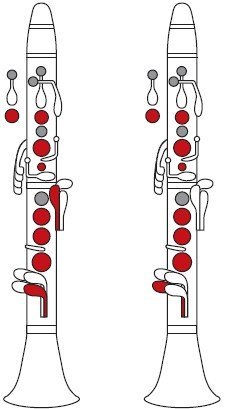
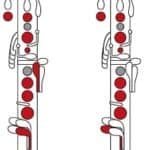
Receive a free PDF of the chart with clarinet fingering diagrams for every note!
This free clarinet fingering chart for “We Three Kings of Orient Are” is more than a cheat sheet. It is an invitation into a carol that has traveled through church choirs, jazz clubs, film scores, and quiet living rooms, always carrying the same slow, searching line that clarinetists love to lean into.
The We Three Kings of Orient Are clarinet fingering chart is a note-by-note guide for Bb clarinet that shows how to finger every pitch in the carol, across both clarion and chalumeau registers, so players can focus on phrasing, tone color, and expression instead of guessing fingerings.
The wandering story behind “We Three Kings of Orient Are”
“We Three Kings of Orient Are” was written in the 1850s by John Henry Hopkins Jr., an American priest who first created it for a Christmas pageant. Unlike many carols that grew out of folk melodies, this one came with a clear dramatic idea: three solo verses, three kings, three gifts, each with its own color and mood.
Clarinet players instinctively understand this drama. The first verse almost begs for a dark chalumeau register, the kind of sound that seems to come from deep inside the wood and metal. The refrain, lifting to the clarion register, feels like the star itself, glowing over the harmony. When a Bb clarinet holds that long note on “star of wonder,” it is as if the entire carol pauses to breathe.
Over the years, choirs and organists carried this song through cathedrals and small chapels, but clarinet soon joined the journey. School band arrangements started to feature the melody for Bb clarinet, orchestral medleys slipped the line into wind solos, and jazz arrangers found a minor key canvas they could stretch and bend. The carol was written for voices, but it whispers beautifully through a clarinet bell.
How great clarinetists shaped the sound of this carol
While you may not find “We Three Kings of Orient Are” listed in the catalogs of Mozart or Brahms, its melodic shape sits right inside the expressive tradition of famous clarinetists across eras. The way they handle legato, vibrato, and color on slow lines gives you a blueprint for this carol, note by note.
Think of Anton Stadler, the clarinetist who inspired Mozart's Clarinet Concerto in A major, K. 622. His playing was described as smooth and vocal, almost like a human voice suspended over the orchestra. If you listen to the slow movement of that concerto and imagine those long clarinet phrases replaced with the line from “We Three Kings of Orient Are,” you feel the same patient question-and-answer motion.
Heinrich Baermann, for whom Carl Maria von Weber wrote his clarinet concertos, brought a more operatic approach. Weber's Concerto No. 1 in F minor, especially the Romanza middle movement, is full of sighing phrases that rise and fall over simple harmony. That same sigh is buried in the carol's opening intervals. A Bb clarinet in the chalumeau register can echo Baermann's dark lyricism with only a handful of notes from the chart.
Jump forward to Sabine Meyer. Her recording of the Brahms Clarinet Quintet with the Alban Berg Quartet is a masterclass in sustained, glowing tone. The way she holds a pianissimo note at the end of a phrase is perfect training for the held tones in “star of wonder, star of night.” If you study that kind of control and then look back at the fingering chart, each note suddenly feels like a small vocal role rather than just a pitch.
Martin Frost brings something different: drama. In his performances of the Nielsen Clarinet Concerto and the Copland Clarinet Concerto, he uses dynamic extremes and flexible timing. That sense of story can charge “We Three Kings of Orient Are” with new life. One verse might be whispered, the next intensified with a wider vibrato and more air, even though the fingerings on your chart stay exactly the same.
In jazz, Benny Goodman and Artie Shaw rarely recorded straight Christmas carols, but their ballad playing is a roadmap. Listen to Goodman's tone on “Body and Soul” or Shaw's phrasing on “Stardust.” The soft subtone in the chalumeau, the gentle scoop into a clarion note, the way they stretch a bar-line without breaking the tempo: all of that can slip easily into your “We Three Kings of Orient Are” phrasing.
Klezmer artists such as Giora Feidman and David Krakauer bring another color entirely. Their use of bends, glissandi, and crying ornaments around minor melodies feels incredibly close to the dark, wandering mood of this carol. Even if you play from a simple church arrangement, a tiny fall into a note or a soft grace note above the melody can echo that style, all supported by the same basic clarinet fingerings.
This gives Bb clarinet players a rich, vocal sound from low E to open G, similar to the warm tone used by Brahms and Weber in their clarinet writing.
Where “We Three Kings” hides in famous pieces and recordings
You might not always see the title printed in big letters, but “We Three Kings of Orient Are” keeps slipping into clarinet music like a familiar friend. Arrangers love its minor-key contour and its simple, memorable rhythm. That combination makes it perfect for medleys, jazz reharmonizations, and film-style orchestration.
In orchestral Christmas programs, clarinetists often carry the tune in medleys such as Leroy Anderson inspired arrangements or modern suites for symphony and choir. Picture a principal clarinetist in the Berlin Philharmonic or New York Philharmonic taking that slow, exposed line over pizzicato strings and soft harp. The fingerings are as basic as low A and B on the left-hand, but the hall is filled with a single, unbroken thread of sound.
Chamber groups use the carol as a chance for color. Clarinet and piano duos frequently include “We Three Kings of Orient Are” in Christmas recital sets, sometimes in arrangements that drift into jazz harmony in the middle section. The melody might start simply in the chalumeau register, then climb into clarion, echoing the way Brahms writes for clarinet in his Op. 120 sonatas. The pattern on your fingering chart does not change much, but the harmony underneath reshapes the mood.
In jazz and swing settings, the carol has been recorded in minor-key grooves with clarinet taking the head, then breaking into improvisation. Imagine a Benny Goodman style small group at the Blue Note: guitar and piano lay down a gentle walking pattern, the drummer uses brushes, and the Bb clarinet opens with the original line of “We Three Kings of Orient Are,” almost like a standard. After one chorus, the same fingerings start to twist through blue notes and chromatic approach tones, but the skeleton of the carol is still there.
Modern wind band arrangements often give the tune to first clarinet over shimmering flutes and chimes. Those writing styles echo the quiet passages of Alfred Reed's “Russian Christmas Music” or the more reflective moments in James Swearingen's concert band scores. The player still uses familiar fingerings like throat A, side keys for B and C, and the long B on the staff, but the context feels cinematic, as if the clarinet has stepped into a film score.
Film and television soundtracks occasionally quote “We Three Kings” as a quick gesture toward dramatic Christmas mood. A solo clarinet might take a single verse, much like the way the instrument is used in John Williams scores for introspective moments. Even a five second snippet can lean on the same expressive tricks you use in more formal clarinet works: carefully shaped breath, gentle finger motion over the tone holes, and a clear sense of destination in every phrase.
From pageant to jazz club: the historical journey of this melody
When John Henry Hopkins Jr. first wrote “We Three Kings of Orient Are” in the mid-19th century, Europe was still living with the echo of Romantic composers like Schumann and Mendelssohn, while clarinet writing in orchestras was becoming richer and more lyrical. The carol's minor key and built-in solos fit right into that mood: a little theatrical, a little exotic, and deeply singable.
In the late 1800s, as clarinet parts in Brahms and Dvorak grew more expressive, church musicians and small ensembles began to use the instrument as a substitute for voice when choirs were small. A single Bb clarinet could stand in for a singer on the melody of “We Three Kings of Orient Are,” supported by harmonium or small organ. That role, somewhere between soloist and narrator, has never really gone away.
By the early 20th century, as jazz clarinet emerged through players like Sidney Bechet and later Benny Goodman, the minor mood of “We Three Kings” began to sound like material that could swing. Arrangers reharmonized the chords, added ii-V progressions, and encouraged clarinet players to improvise new lines around the familiar contour. The same carol that started life in a pageant had learned to wear a smoky club suit.
After World War II, as clarinetists such as Richard Stoltzman and Harold Wright deepened the instrument's lyrical reputation in classical circles, December concerts became a natural place to join sacred carols with concert-level clarinet playing. A slow, reverent setting of “We Three Kings of Orient Are” might sit beside the slow movement of the Mozart Clarinet Concerto on a holiday program, both relying on warm chalumeau tone and flexible phrasing.
Today, the song lives happily in many homes: in school band books, jazz fake books, clarinet choir arrangements, and solo collections for Bb clarinet with piano or guitar. A player can move from basic school notation of the melody to a virtuosic arrangement with extended arpeggios and grace notes, all built on the same fingering chart you have in front of you.
| Era | Typical Clarinet Role | How “We Three Kings” Fits |
|---|---|---|
| 19th century church music | Voice substitute with organ | Clarinet plays melody as a solo verse or in unison with choir |
| Early jazz and swing | Improvised lead over carol harmonies | Melody becomes a minor-key standard for ballad chorus |
| Modern concert and band | Lyrical feature in medleys | Principal clarinet carries the line over soft ensemble textures |
Why this carol feels so natural under clarinet fingers
Part of the magic of “We Three Kings of Orient Are” on Bb clarinet lies in its emotional shape. The melody is mostly stepwise, with just enough leaps to feel searching. That means your fingers move smoothly between tone holes and keys, while the air and embouchure do the expressive work. It is a song that invites you to forget about technique and simply sing through the mouthpiece and barrel.
The minor key color lets clarinetists lean into their darker sounds. Low G, A, and B in the chalumeau register can feel almost like a whispered voice, especially with a mouthpiece and reed setup that favors warmth, such as a slightly softer reed on a medium facing. The higher phrases in the clarion register can glow without ever sounding shrill, especially if you think of the legato from the slow movement of the Weber Concertino or the Copland Concerto.
Emotionally, each verse can carry a different character: the first thoughtful and reserved, the second filled with wonder, the third perhaps hinting at sorrow or sacrifice. Clarinetists are used to changing color quickly, as in Debussy's “Premiere Rhapsodie” or the solo in Ravel's “Bolero.” This carol gives you that same palette, but within a melody that even beginners can read from the chart.
What “We Three Kings” gives you as a clarinet player
Playing “We Three Kings of Orient Are” with a clear fingering chart does more than prepare you for a single December performance. It builds skills you will use in Mozart, Brahms, and even jazz heads. Long notes teach breath control. Gentle dynamic swells teach diaphragm support and embouchure stability. Simple phrases teach how to shape a line like a story with a beginning, middle, and end.
For students, this carol is often one of the first chances to play a solo that everyone recognizes. The pressure of that recognition can be a gift. It pushes you to care about intonation on low E and F, smooth slurs from chalumeau to clarion, and the perfect start of a note on the mouthpiece with the reed vibrating evenly across the tip.
For advanced players and professionals, the same song turns into a canvas for color. You can experiment with different barrel lengths for slightly darker intonation, try various ligatures for response, and play with vibrato width in the style of your favorite artists, from Sabine Meyer to Richard Stoltzman. All while the actual written notes remain simple and clear on the page.
“We Three Kings” supports tone work, phrasing, and breath control all in a single, 16-bar melody, making it efficient practice for both beginners and professionals.
A light look at fingerings and practice for this carol
The free Bb clarinet fingering chart for “We Three Kings of Orient Are” keeps the technical side simple. Most notes sit in the lower register, using standard left-hand positions for E, F, G, A, and B, and familiar right-hand fingerings for C and D. When the melody lifts into clarion, you mostly rely on the register key with basic first-finger patterns, much like the upper notes in an F major or G minor scale.
Instead of obsessing over every mechanism on the upper joint and lower joint, use the chart as a quiet reference and then listen closely to the line. Make sure throat tones like G and A match the color of neighboring notes. Keep fingers close to the tone holes and keys so that the slurs across the break from B to C or C to D feel seamless. Once those fingerings are comfortable, all your energy can go into breath support, phrasing, and color choices.
- Play the melody once entirely in the chalumeau register if your arrangement allows, focusing on rich tone from low E to open G.
- Repeat in the written octave, with clarion notes for the high points, practicing smooth register key transitions.
- Add gentle dynamics: start each phrase at piano, swell to mezzo forte in the middle, and return to piano at the cadence.
- Record yourself and listen for evenness between throat tones, long tube notes, and clarion notes.
| Practice Focus | Suggested Time | Frequency |
|---|---|---|
| Slow melody with fingering chart | 5 minutes | Daily during December |
| Tone and breath on long notes | 5 minutes | 2 to 3 times per week |
| Stylistic variations (classical, jazz, klezmer) | 10 minutes | Once a week as creative practice |
Other clarinet pieces that make this carol shine brighter
Working on “We Three Kings of Orient Are” becomes even more satisfying when you connect it to other pieces on your stand. The same skills show up across clarinet literature and seasonal music.
The long, sustained lines feel very close to the slow movement of the Mozart Clarinet Concerto and the opening of the Brahms Clarinet Sonata in F minor, Op. 120 No. 1. Both demand quiet breath control and subtle dynamic changes that will immediately improve your carol playing.
The dark minor character is echoed in movements from Weber's Clarinet Concerto No. 1 and in parts of Saint-Saens' “Sonata for Clarinet and Piano” in E b major, especially where the clarinet dips into the chalumeau register for expressive phrases.
If you enjoy crossing styles, try pairing your “We Three Kings” work with a jazz ballad like “My Funny Valentine” or a klezmer tune often played by Giora Feidman. You will feel how the same minor-scale patterns and expressive ornaments can travel from a 19th century carol into modern improvisation.
On Martin Freres, you can also find stories on historic clarinet makers, discussions of Bb clarinet warm up routines, and guides to expressive long-tone practice that all feed back into how you approach a simple melody with confidence and style.
Key Takeaways
- Use the “We Three Kings of Orient Are” clarinet fingering chart as a safety net so you can focus on tone, phrasing, and color.
- Listen to great clarinetists across classical, jazz, and klezmer styles to shape the expressive line of this carol.
- Treat this simple melody as a daily December study in breath control, legato finger motion, and emotional storytelling.
Frequently Asked Questions
What is We Three Kings of Orient Are clarinet fingering chart?
The We Three Kings of Orient Are clarinet fingering chart is a visual guide that shows how to play every written note of the carol on Bb clarinet. It maps each pitch to specific key and tone hole combinations, across chalumeau and clarion registers, so players can learn the melody confidently and focus on musical expression.
Is “We Three Kings of Orient Are” suitable for beginner clarinet players?
Yes. The melody mostly uses stepwise motion and sits comfortably in the lower and middle range. With a clear fingering chart, beginners can learn the notes quickly and spend time on breathing, simple dynamics, and steady rhythm, while more advanced players can explore color and phrasing.
Which clarinet register is most used in “We Three Kings”?
Most arrangements place the tune primarily in the chalumeau register, from low E to around open G or A, with occasional phrases in the clarion register for dramatic high points. This balance lets the clarinet sound warm and vocal while still giving a few star-like moments in the upper range.
How can I make “We Three Kings” sound expressive on clarinet?
Use slow, supported air, smooth legato finger motion, and gentle dynamic shaping on each phrase. Listen to lyrical clarinet recordings by artists like Sabine Meyer or Richard Stoltzman, then imitate their long lines and tone color. Small touches like soft vibrato and careful phrase endings add extra emotion.
Can I play jazz or klezmer versions of “We Three Kings” on Bb clarinet?
Absolutely. The melody sits perfectly in minor-key jazz and klezmer styles. Learn the basic version from the fingering chart, then add light bends, passing tones, and rhythmic variation. Listening to Benny Goodman, Artie Shaw, Giora Feidman, or David Krakauer can inspire stylistic ideas for your own version.