The clarinet in marching bands typically provides melody and inner harmonies, adds tonal color and articulation clarity, and comes primarily in Bb (mainline), with Eb for high parts and bass clarinet for lower support. This role grew from 19th century military band traditions, where clarinets helped project signals and ceremonial music outdoors.
Clarinet in Bands: Roles & Core Functions
The clarinet in band settings acts as a flexible bridge between woodwinds and brass. In both concert and marching bands, clarinets carry melody, double other lines for strength, and fill inner harmonies. Their wide range, agile technique, and clear articulation make them important for balance, blend, and rhythmic clarity across the ensemble.
In concert bands, clarinets often function like the violin section in an orchestra. Bb clarinets usually hold the main melodic lines, especially in marches and lyrical pieces. They also support flutes and saxophones, reinforcing important themes. Composers and arrangers rely on clarinets for smooth legato passages, fast runs, and dynamic contrast that shape the overall musical narrative.
In marching bands, the role shifts slightly to meet outdoor demands. Clarinets still play melody and counter-melody but must project over brass and percussion. Arrangers often write clarinet parts in the middle and upper middle register, where the instrument cuts through better. Clear articulation from the clarinet section helps define rhythmic figures that might otherwise blur in stadium acoustics.
Clarinets also provide important textural color. Their tone can sound bright, warm, or dark depending on register and dynamic. This flexibility lets band directors adjust the ensemble color without changing instrumentation. A strong clarinet section can smooth out brass brightness, support saxophone choirs, or add shimmer to flute lines, all within a single piece.
A typical high school concert band might have 8 to 16 Bb clarinetists, representing roughly 15 to 25 percent of the total ensemble, making clarinets one of the largest and most influential sections.
Rhythmically, clarinets often double snare drum patterns or inner rhythmic figures to help the band stay together. This is especially important during parades or field shows where sound delay and movement can cause ensemble issues. A disciplined clarinet section with unified articulation can anchor the woodwind timing and support the drumline.
History: From 19th-Century Military Bands to Modern Marching Ensembles
Modern marching bands trace their roots to 19th century military bands in Europe and the United States. As armies needed portable ensembles for signaling, ceremonies, and morale, clarinets joined flutes, brass, and percussion in outdoor formations. Their agility and range made them ideal for calls, fanfares, and quick melodic figures on the march.
By the mid-1800s, military bands in countries such as France, Germany, and the United States regularly featured clarinet sections. Historical band scores from this period show clarinets carrying both melody and technical passagework. Musicologists and archives, including collections at the Library of Congress and national military band libraries, preserve many of these early band arrangements.
As military bands gained public popularity, civilian town bands and community ensembles emerged. These groups adopted similar instrumentation, including clarinets, and performed in parades, civic events, and outdoor concerts. Over time, this tradition evolved into school bands, college marching bands, and drum corps, all of which kept clarinets as a core woodwind voice.
In the early 20th century, as football and school spirit culture grew in North America, marching bands became central to campus life. Clarinets adapted to new roles, supporting popular tunes, fight songs, and halftime shows. Arrangers experimented with clarinet choirs, clarinet trios within the band, and featured clarinet solos that highlighted the instrument's expressive power.
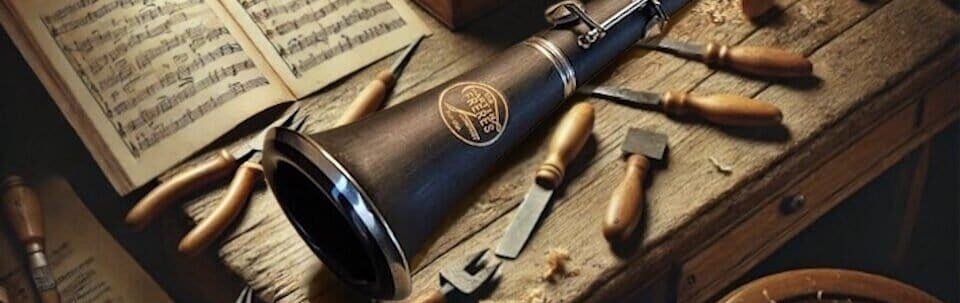
Martin Freres Field Note: Archival records of 19th century French and European band instruments show clarinets designed with strong keywork and durable woods for outdoor use. Historical Martin Freres clarinets from this era reveal bore designs optimized for projection, reflecting the demands of military and civic band performance.
Today, clarinets remain a standard part of both concert and marching band instrumentation worldwide. While amplification and electronic instruments have entered some ensembles, clarinets still provide a natural, acoustic voice that connects modern bands to their 19th century military and civic band heritage.
Types of Clarinets Used in Marching and Concert Bands (Bb, Eb, Bass)
Three clarinet types appear most often in band settings: Bb clarinet, Eb clarinet, and bass clarinet. Each has a distinct range, transposition, and role. Understanding these differences helps directors assign parts effectively and players choose the right instrument for specific marching and concert band needs.
The Bb clarinet is the primary band clarinet. It is a transposing instrument that sounds a major second lower than written. Its practical range in band music usually spans from written low E (concert D) to written high C or D (concert Bb or C). This range covers most melodic and inner harmonic lines in both concert and marching band scores.
The Eb clarinet is pitched a minor third higher than the Bb clarinet and sounds a minor third higher than written. Its smaller size and higher range allow it to project piercing melodic lines over the full band. In marching bands, Eb clarinet often doubles piccolo or trumpet parts, adding brightness and clarity to fanfares and high countermelodies.
Many high school bands use 1 Eb clarinet for every 8 to 12 Bb clarinets, while college bands may feature 2 or more Eb clarinets in larger ensembles to balance expanded brass sections.
The bass clarinet, usually in Bb, sounds an octave plus a major second lower than written. Its practical band range runs from written low E (or lower on extended instruments) up to written high C or D. In concert bands, bass clarinet often doubles tuba, bassoon, or baritone saxophone lines, adding warmth and definition to the low register.
In marching bands, bass clarinet use varies. Some programs march bass clarinets with harnesses or specially designed marching models, while others keep bass clarinets in the stands for stand tunes only. When used on the field, bass clarinets can provide powerful low countermelodies and rhythmic support that help balance strong brass sections.
Anatomically, these clarinets differ in bore size, bell shape, and keywork length. Bb clarinets strike a balance between agility and projection. Eb clarinets have a narrower bore and smaller mouthpiece, which contributes to a brighter, more penetrating tone. Bass clarinets feature a larger bore and often a metal neck and bell, which enhance resonance and low frequency projection outdoors.
Typical written ranges in band scores: Bb clarinet E3 to C6, Eb clarinet G4 to E6, bass clarinet E2 to C5. These ranges give arrangers nearly 4 octaves of clarinet color across the section.
For marching applications, directors often prioritize Bb clarinets for flexibility and visual uniformity. Eb clarinet is used sparingly for exposed high lines, and bass clarinet is chosen when the drill and field conditions allow safe, stable marching. Players should consult with directors to match their instrument choice to the repertoire, drill design, and ensemble balance needs.
Transposition Notes for Band Clarinetists
Bb clarinet parts are written a whole step higher than concert pitch. When the band tunes to concert Bb, Bb clarinetists play written C. Eb clarinet parts are written a minor third lower than concert pitch, so when the band tunes to concert Bb, Eb clarinetists play written G. Bass clarinet in Bb follows the same transposition as Bb soprano clarinet.
Understanding these transpositions helps clarinetists tune quickly in noisy stadiums and adjust for outdoor pitch drift. It also supports students who double between clarinet and other transposing instruments, such as saxophones or trumpets, in marching band settings.
Key Playing Techniques for Marching Clarinetists (Articulation, Tonguing, Phrasing)
Marching clarinetists must maintain solid fundamentals while moving. Articulation, tonguing, and phrasing need extra attention because posture, breathing, and balance change on the field. Consistent, clear articulation helps the clarinet section cut through brass and percussion and keeps the ensemble rhythmically aligned.
For articulation, aim for a light, precise tongue stroke on the tip of the reed. Use syllables like “tah” or “dah” and keep the tongue motion small. Overly heavy tonguing can cause choppy sound and fatigue, especially at marching tempos of 120 to 160 BPM. Practice scales and technical patterns with a metronome while marking time to build stability.
Legato tonguing in marching band requires steady air support. Think of the air as a continuous line, with the tongue briefly interrupting the reed. This approach prevents the sound from breaking when you step or change direction. Long tone exercises while marching in place or doing simple 8-to-5 drill can help connect air and articulation.
Phrasing outdoors often needs more exaggerated shapes than in a concert hall. Dynamics should be slightly broader, with clearer crescendos and decrescendos, to be heard across a field. Clarinetists should coordinate breaths within the section so that melodic lines do not collapse when multiple players breathe at the same time.
Double tonguing is less common for clarinet than for brass, but some advanced marching literature may require rapid articulation. In those cases, practice “ta-ka” or “da-ga” patterns slowly, then increase speed while maintaining a relaxed jaw and steady embouchure. Always prioritize clean single tonguing before adding double tonguing to field music.
Movement affects embouchure stability. Practice long tones and articulated patterns while marching forward, backward, and on diagonals. Focus on keeping the chin flat, corners firm, and pressure consistent. If the tone changes with each step, reduce upper body motion and engage core muscles to stabilize the torso.
Measurable Practice Goals for Marching Articulation
Set specific tempo goals to track progress. Work toward playing major scales in eighth notes at 120 BPM while marking time, then increase to 140 BPM. Aim for 8 to 12 measures of continuous articulated playing without tone distortion while executing basic marching patterns. These benchmarks help clarify when technique is field ready.
Marching-Specific Performance Considerations (Projection, Mobility, Line of Sight)
Projection, mobility, and line of sight are critical for clarinetists on the field. Outdoor venues absorb sound quickly, and stadiums create delays. Clarinets must play with more core and focus in the sound to project, while still blending with the woodwind and brass sections. Good posture and horn angle also affect both tone and visual uniformity.
To improve projection, use a supported, resonant air stream rather than simply playing louder. Think of directing the sound toward the press box or stands, not down at the ground. Slightly raising the bell can help, but avoid extreme angles that strain the wrists or distort embouchure. Directors should check from the stands to confirm effective projection.
Mobility on the field requires efficient horn carriage. Keep wrists straight, fingers curved, and shoulders relaxed. The instrument should remain as still as possible while the body moves underneath. Excessive horn motion not only hurts sound but also breaks visual lines in the clarinet rank. Drill basics, such as slides and direction changes, should be practiced with the instrument up and playing.
Line of sight is often overlooked for clarinetists. Players must see the drum major, listen back to the drumline, and maintain alignment with their rank and file. Use peripheral vision to track yard lines and form intervals while keeping eyes generally forward. Practice rehearsals where you consciously check drum major, guide points, and neighbors every few counts.
Wind and weather also affect performance. In windy conditions, clarinetists may need to angle their bodies slightly to protect the reed and maintain a stable airstream. In cold weather, fingers stiffen and pitch rises. Warm up thoroughly with long tones and slow scales before stepping off, and adjust tuning slides to account for temperature changes.
Directors can help by placing clarinet sections strategically in the drill. For example, positioning clarinets closer to the 50-yard line or slightly forward in the form can improve clarity and blend with brass. Avoid burying clarinets deep inside large brass blocks where their sound will be masked.
Ensemble Blending & Scoring: Melody, Harmony, and Textural Color
Clarinets contribute to band scoring through melody, harmony, and textural color. In many marches and traditional band pieces, Bb clarinets carry the primary melody, especially in trio sections. In modern field shows, clarinets often share melodic duties with flutes, saxophones, and trumpets, creating layered textures that shift across the ensemble.
When playing melody, clarinets should project slightly above the surrounding parts while still blending. Section leaders can help balance by assigning principal players to the top parts and ensuring consistent dynamics across the rank. Matching vibrato style, or choosing to play with straight tone, also affects how the clarinet line sits in the overall texture.
As harmonic instruments, clarinets frequently play inner voices that define chord quality and color. These lines may not be flashy but are important for tuning and blend. Players should listen carefully to low brass and saxophones for pitch reference and adjust fingerings or voicing to lock in chords. Slow chorale work in rehearsal helps train this harmonic awareness.
Texturally, clarinets can sound transparent and light or dark and reedy, depending on register and dynamic. Arrangers exploit this by using clarinet clusters, trills, and flourishes to add sparkle around main themes. In marching shows, quick clarinet runs often connect larger brass statements, acting like musical glue between phrases.
Eb clarinet adds a brilliant top layer to the woodwind choir. It should be used with care, as its penetrating tone can easily dominate. The Eb player must listen down to Bb clarinets and flutes, aiming to blend rather than overpower. Directors may ask Eb clarinet to play slightly under marked dynamics to maintain balance.
Bass clarinet enriches the low end of the woodwind section. Its tone blends well with bassoon, baritone saxophone, and low brass. In marching contexts where bass clarinet is used, it can reinforce tuba lines or provide independent countermelodies that add depth to the drill's visual and musical impact.
Placement and Balance Strategies for Directors
Directors can improve clarinet blend by grouping similar parts together on the field and in the arc. For example, placing first and second clarinets near flutes supports shared melodies, while third clarinets can sit closer to saxophones for harmonic reinforcement. During stand tunes, clarinets might cluster near the 50-yard line to help lead woodwind sound.
Maintenance & Care for Marching Clarinetists (Reeds, Pads, Moisture Management)
Outdoor performance puts extra stress on clarinets. Reeds dry out, pads absorb moisture, and temperature swings affect tuning and mechanism. A consistent maintenance routine keeps instruments reliable through long rehearsals, games, and parades. Marching clarinetists should treat field care as part of their daily practice, not an afterthought.
Reed care is the first priority. Rotate at least 3 to 5 playable reeds, marking them with numbers or dots. Use a small reed case with humidity control, such as a sponge or humidity pack, to prevent cracking. Soak reeds briefly in your mouth or a small water container before playing, especially in dry or cold conditions.
After each rehearsal or game, swab the clarinet thoroughly from bell to barrel. Remove the mouthpiece and dry it separately. Check tone holes and pads for moisture, especially under the register key and left-hand pinky keys. Gently blot wet pads with cigarette paper or pad paper, avoiding rubbing that could damage the pad surface.
Inspect tenon corks regularly. Outdoor use can dry corks, leading to loose joints. Apply a small amount of cork grease as needed to ensure smooth assembly without forcing. Loose joints can twist during drill, affecting alignment and potentially causing air leaks or key misalignment.
Once a week during marching season, check screws and rods for looseness. Lightly tighten pivot screws that have backed out, but avoid overtightening. If a key feels sluggish or misaligned, consult a qualified repair technician rather than forcing it. Keeping a basic repair kit with screwdriver, pad paper, cork grease, and spare reeds in your case is important.
Moisture management also includes body and weather considerations. Avoid leaving the clarinet in direct sun or in a hot car, as rapid temperature changes can crack wooden instruments and warp plastic ones. In rain, use instrument covers when possible and dry the clarinet immediately after performance. If the instrument becomes soaked, allow it to air dry fully before closing the case.
On-Field Maintenance Checklist
Before rehearsal or games, clarinetists should follow a quick checklist: 1) inspect reed for chips or warping, 2) confirm joints are fully seated, 3) test key action with a short scale, 4) check tuning against a tuner or reference pitch, and 5) ensure a swab, spare reed, and cork grease are in a pocket or lyre pouch.
Audition & Section Placement Tips for Marching Bands
Auditions and section placement help directors build balanced clarinet sections for both concert and marching seasons. Clarinetists who understand what directors listen for can prepare more effectively. Strong tone, consistent articulation, and reliable marching fundamentals often matter as much as raw technical speed in marching band auditions.
For musical auditions, prepare a lyrical etude and a technical piece that showcase tone, range, and articulation. Directors often include sight reading to assess reading skills under pressure. Scales, especially full-range major scales and chromatic scales, demonstrate finger fluency and familiarity with the instrument's full register.
Marching-specific evaluations may include playing while marking time or executing simple drill moves. Directors watch for stable posture, consistent horn angle, and minimal embouchure change while moving. Practicing your audition music while marching in place can give you a clear advantage over players who only practice seated.
Section placement within the clarinet section usually reflects a mix of musical ability, marching skill, and leadership potential. Strong readers with reliable pitch and rhythm often receive first or second parts. Players with solid tone but developing technique may be assigned third parts that focus on harmonic support. Directors may place confident marchers and communicators in visible drill spots or as section leaders.
Students interested in Eb or bass clarinet roles should communicate with directors early. These positions often require strong fundamentals and the ability to adapt quickly to different mouthpieces and fingerings. Demonstrating flexibility and a team-focused attitude can help you earn and keep these specialized spots.
Set personal goals for auditions, such as achieving clean articulation at 132 BPM, playing all major scales from memory, or maintaining steady pitch across two octaves. Track your progress over several weeks leading up to auditions, and ask directors or private teachers for targeted feedback.
Key Takeaways
The clarinet in marching and concert bands provides melody, inner harmony, and textural color, with Bb clarinet as the primary voice and Eb and bass clarinets used for specialized roles.
Marching clarinetists must prioritize clear articulation, strong projection, and stable embouchure while moving, practicing at typical field tempos of 120 to 160 BPM.
Outdoor maintenance routines, including reed rotation, moisture control, and regular key checks, reduce equipment failures and keep clarinets in tune and responsive throughout the season.
Thoughtful section placement, informed instrument choice, and measurable practice goals lead to better blend, stronger ensemble balance, and more confident performances on the field and in the stands.
FAQs
What is clarinet?
The clarinet is a single-reed woodwind instrument with a cylindrical bore and a flared bell. It uses a mouthpiece and reed to produce sound and covers a wide range of pitches. In bands and orchestras, clarinets appear in several sizes, with the Bb clarinet being the most common for students and ensemble players.
What is the role of the clarinet in marching bands?
In marching bands, clarinets carry melody, countermelody, and inner harmonies, adding clarity and color to the ensemble. They help define rhythmic figures through precise articulation and often bridge the sound between flutes, saxophones, and brass. Their agility and range make them important for both traditional marches and modern field show music.
How do you maintain a clarinet for marching rehearsals and games?
For marching use, maintain your clarinet by rotating 3 to 5 reeds, swabbing the instrument after every rehearsal, and blotting wet pads with pad paper. Check tenon corks and key screws weekly, store the instrument away from extreme heat or cold, and keep a small kit with spare reeds, cork grease, and a swab at every practice and game.
What types of clarinets are used in marching bands and when should each be used?
Marching bands primarily use Bb clarinets for most melodic and harmonic parts. Eb clarinet is used for high, projecting lines that need extra brightness, often in fanfares or exposed woodwind features. Bass clarinet is used when drill and field conditions allow, providing low register support and countermelodies that enrich the ensemble's sound.