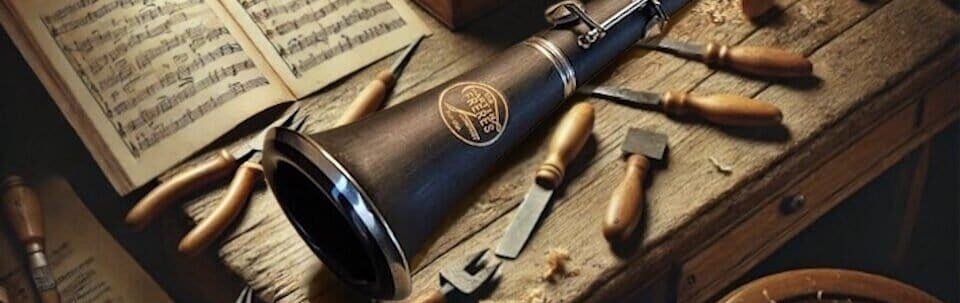
Martin Freres, LaMonte, Coudet, Jean Martin Brand Clarinets and Other Woodwinds
Clarinet Quarter-Tone Techniques: Fingerings, Practice, History & Notation
A clarinet quarter-tone is a pitch 50 cents between semitones; on clarinet it can be produced using alternate fingerings, small embouchure/air adjustments, or special keywork. Quick practice: 1) train your ear with 50-cent drones, 2) learn 2-3 reliable fingerings per pitch, 3) stabilize with focused air and embouchure micro-adjustments.
Understanding Quarter-Tones on the Clarinet
Quarter-tones on clarinet are pitches halfway between two adjacent chromatic notes, such as between written F and F sharp. They divide the octave into 24 equal parts instead of the usual 12. For clarinetists, this means learning new fingerings, voicing strategies, and listening skills so those 50-cent steps are accurate, stable, and repeatable in real performance.
On a standard Boehm clarinet, quarter-tones exploit the instrument's flexible acoustics. Small changes in tone-hole venting, embouchure, and air direction can shift pitch by 20 to 70 cents. Quarter-tone technique organizes these tendencies into a controlled system. The goal is not just to bend notes, but to hit specific microtonal targets that match the composer's notation and the ensemble's tuning.
Typical quarter-tone tolerance in professional performance: +/-10-15 cents around the target 50-cent offset, compared with +/-5-10 cents for standard chromatic notes.
Clarinet quarter-tones appear in solo, chamber, and orchestral works by composers such as Pierre Boulez, Jörg Widmann, and Brian Ferneyhough. They can color melodic lines, create dense microtonal harmonies, or generate special effects like glissandi and spectral clusters. For advanced players, quarter-tone fluency is now an expected part of contemporary technique.
Brief History and Context of Quarter-Tones (and a Note on Martin Freres' Historical Instruments)
Microtonal thinking predates the clarinet, with roots in Middle Eastern maqam systems and Indian raga intonation. In Western art music, systematic quarter-tone experiments began in the late 19th and early 20th centuries. Composers like Alois Hába and Ivan Wyschnegradsky designed instruments and notation systems to divide the octave into 24 or more equal parts.
Alois Hába wrote quarter-tone chamber music that included clarinet, often using specially built pianos and string instruments. Charles Ives hinted at microtonal color in works like “Three Quarter-Tone Pieces” for two pianos, which influenced later wind writing. By the mid 20th century, composers such as Krzysztof Penderecki and György Ligeti were exploring dense clusters and glissandi that encouraged clarinetists to bend and shade pitch beyond 12-tone equal temperament.
From the 1970s onward, clarinetists like William O. Smith, Alain Billard, and Ernesto Molinari collaborated with composers to codify quarter-tone fingerings and extended techniques. This led to detailed fingering charts, specialized quarter-tone clarinets, and a growing body of solo and ensemble repertoire. Today, microtonality appears in works by Georg Friedrich Haas, Beat Furrer, and Unsuk Chin, often demanding precise quarter-tone control.
Martin Freres Field Note: Archival Martin Freres clarinets from the late 19th and early 20th centuries in private and museum collections show the evolution of bore design and tone-hole placement that modern microtonal players now exploit. While these historical instruments were not built for quarter-tones, their acoustical characteristics inform how contemporary makers and performers think about microtonal keywork and tuning flexibility.
Although quarter-tone clarinets with extra keys exist, most historical clarinets, including Martin Freres examples, rely on standard Boehm or simple-system keywork. Microtonal effects on these instruments came from embouchure and cross-fingerings rather than dedicated quarter-tone mechanisms. Understanding this history helps modern players appreciate that quarter-tone technique is primarily a performance practice, not only a hardware solution.
How Quarter-Tones Work: Acoustics and Clarinet Anatomy
The clarinet behaves acoustically as a closed cylindrical tube. Its pitch is set by the effective length of the air column, which depends on the bore, the register vent, and which tone holes are open or closed. Quarter-tones arise when you slightly alter that effective length without fully moving to the next chromatic fingering, creating intermediate resonances between two stable notes.
Key elements of clarinet anatomy for quarter-tones include the bore profile, the register hole, and the placement and size of tone holes. Small changes in venting, such as half-holing or partially opening a side key, shift the impedance peaks of the air column. This can raise or lower pitch by tens of cents while keeping the same written note and approximate fingering.
Embouchure and voicing also influence microtonal pitch. A slightly firmer lower lip, higher tongue position, or more focused air stream tends to raise pitch by 10 to 30 cents. A more relaxed embouchure, lower tongue, or warmer air can lower pitch by a similar amount. Quarter-tone technique combines these subtle adjustments with carefully chosen fingerings to hit specific 50-cent targets.
On most Bb clarinets, embouchure and voicing alone can typically adjust pitch by about +/-30-40 cents; reliable quarter-tones usually require at least a small fingering change in addition to voicing.
Different clarinet types respond differently. Bb and A clarinets share similar quarter-tone patterns, but the A clarinet often feels slightly more flexible in the upper chalumeau and throat tones. Bass clarinet, with its larger bore and longer tone-hole spacing, can produce very stable microtones in the low register but may require more air support and voicing control in the altissimo.
Basset clarinets and extended-range instruments introduce extra low keys and complex bore tapers. These can create additional microtonal opportunities, especially in the extended low register. However, the basic acoustic principles remain the same: control the effective tube length and the strength of specific resonances to place pitches precisely between standard semitones.
Practical Playing Techniques: Fingerings, Embouchure and Air Support
Reliable clarinet quarter-tone technique starts with stable, well-supported basic tone. Without consistent air and voicing, microtonal notes will sound like uncontrolled bends. Before adding special fingerings, make sure your long tones, dynamic control, and intonation on standard pitches are solid across the full range of the instrument.
For most written notes, there are at least two or three viable quarter-tone fingerings: one slightly lower than the standard note, one slightly higher, and sometimes an alternate that changes color. For example, a written G in the staff can be lowered by partially venting the A key or by a cross-fingering that involves the right-hand F and E keys. It can be raised by adding a side key or adjusting voicing while maintaining the basic G fingering.
Embouchure adjustments should be minimal and repeatable. To lower pitch, slightly relax the lower lip, allow a bit more reed vibration, and warm the air with a lower tongue position. To raise pitch, firm the lower lip, slightly increase mouthpiece pressure, and use a higher tongue position as in a focused “ee” vowel. Avoid large jaw movements that destabilize tone.
Air support is critical. Quarter-tones need more, not less, air to stay stable. Use a steady, fast air stream from the diaphragm and lower abdominal muscles. Imagine blowing “through” the microtone to its center, rather than cautiously creeping toward the pitch. This approach helps prevent sagging or sharpness as you sustain the note.
Finger coordination can be challenging, especially for half-holing and side-key combinations. Practice slow motion transitions between standard notes and their quarter-tone neighbors. For example, alternate between written F, F quarter-sharp, and F sharp, listening for equal 50-cent steps. Use a tuner or cent display to verify that each step is close to the target offset.
Document your personal fingering choices. Different clarinet models and mouthpiece-reed setups respond differently, so a published chart is only a starting point. Keep a notebook or digital file where you record fingerings that work reliably on your instrument, along with comments on color, dynamic range, and tuning tendencies for each microtone.
Alternate Setups: Quarter-Tone Clarinet Designs and Special Keywork
Some clarinets are built with dedicated quarter-tone keywork. These instruments add extra tone holes and keys to produce specific microtonal pitches with stable, full tone. Makers such as Buffet Crampon and custom builders have produced quarter-tone Bb clarinets where additional keys fill the gaps between standard semitones across much of the range.
Quarter-tone clarinets often include extra side keys or ring keys operated by the left hand, right hand, or thumbs. Each added key opens or closes a strategically placed tone hole, shortening or lengthening the air column by the precise amount needed for a 50-cent shift. This design reduces the need for half-holing and complex cross-fingerings, especially in fast passages.
Some players use interchangeable barrels or tuning rings to optimize microtonal response. A slightly shorter barrel can bring the overall pitch up, allowing more room to lower specific notes into quarter-tone territory with fingerings and voicing. Conversely, a longer barrel can help stabilize sharp microtones in the upper clarion and altissimo registers.
Special mouthpieces can also support quarter-tone work. Mouthpieces with slightly more open facings and medium-long rails often provide greater flexibility for controlled pitch bending without losing core tone. Reed choice matters too: a reed that is too hard will resist fine pitch adjustments, while one that is too soft may produce unstable or noisy microtones.
Specialized quarter-tone clarinets typically add 4-8 extra keys and tone holes, covering at least 12 of the 24 quarter-tone steps within an octave with dedicated mechanisms.
Even with special keywork, players still need strong ear training and voicing control. Extra keys provide more secure fingerings, but each microtone must still be tuned in context. For most clarinetists, the practical path is to master quarter-tones on a standard instrument first, then consider specialized hardware if their repertoire and career focus justify the investment.
Practice Routines and Ear-Training Exercises for Microtonality
Effective quarter-tone practice combines ear training, technical drills, and repertoire application. Start by training your ear to recognize 50-cent intervals. Use a tuner app or software that can generate drones at specific cent offsets. Alternate listening between a standard pitch and its quarter-tone neighbor until the difference feels as clear as a semitone.
One useful exercise is the 24-step octave. On a single pitch class, such as written C, practice moving from C to C quarter-sharp, then to C sharp, then C sharp quarter-sharp, and finally to D. Aim for evenly spaced steps in both time and pitch. Use a cent display to keep each step close to 50 cents.
Interval comparison drills build discrimination. Play a semitone (for example, F to F sharp), then play two quarter-tone steps (F to F quarter-sharp to F sharp). Listen for whether the two quarter-tone steps together match the size and color of the semitone. This reinforces the idea that quarter-tones are precise subdivisions, not vague bends.
Apply microtones to scales and arpeggios. Practice quarter-tone scales where every step is 50 cents, such as a 24-note C quarter-tone scale over one octave. Then practice hybrid scales where some steps are semitones and others are quarter-tones, as often appears in contemporary repertoire. Focus on smooth finger transitions and consistent tone quality.
Rhythmic drills help integrate quarter-tones into fast passages. Take a short pattern, such as G – G quarter-sharp – A, and play it in sixteenth notes at a moderate tempo, then gradually increase speed. Keep a tuner nearby but rely primarily on your ear, checking visually only when something feels off.
Record your practice. Listening back reveals whether your quarter-tones are consistently high, low, or unstable. Over several weeks, you should hear improvement in cent accuracy, tone focus, and dynamic control. Set measurable goals, such as keeping all quarter-tones within +/-15 cents at a given tempo, then tightening that tolerance as you progress.
Maintenance and Setup Steps for Reliable Quarter-Tone Performance
Instrument condition has a big impact on microtonal stability. Before intensive quarter-tone work, perform a basic leak check. Gently press each key while blowing low notes at a soft dynamic. If a note refuses to speak or sounds airy, a pad may not be sealing fully, which can make microtones unpredictable or impossible on that note.
Check pad seating visually and by feel. Pads that are worn, swollen, or misaligned can leak just enough to destabilize pitch, especially in cross-fingered quarter-tone fingerings. If you suspect leaks, schedule a visit with a qualified technician. Ask them to pay special attention to throat-tone keys, side keys, and any tone holes used in your preferred quarter-tone fingerings.
Mouthpiece and reed matching are important. Choose a mouthpiece that gives you a centered, flexible tone with your usual reed strength. Experiment with reed strengths and cuts to find a setup that allows fine pitch control without collapsing under air pressure. Many players find that a reed slightly softer than their orchestral setup works better for microtonal work.
Barrel length experiments can help. Try a barrel 1-2 mm shorter or longer than your standard choice and test your core quarter-tone fingerings. You may find that one barrel gives more even response across the microtonal range, especially in the throat and clarion registers. Mark the barrel that works best for your microtonal repertoire.
Key regulation affects how evenly multiple keys close together, which is important for complex quarter-tone fingerings. If a stack feels spongy or uneven, or if a side key requires excessive pressure, have a technician adjust spring tensions and key heights. Smooth, light action makes half-holing and rapid microtonal passages more secure.
Regular preventative care supports consistency. Swab the bore after each session, wipe keys to prevent corrosion, and store reeds in a ventilated case. Stable humidity and temperature help reeds respond predictably, which in turn keeps your quarter-tones closer to their intended pitch from day to day.
Troubleshooting: Common Problems and Fixes
Unstable pitch is the most common quarter-tone problem. If a microtone wobbles or drifts, first check your air support. Increase air speed while keeping the embouchure relaxed but focused. Then check for leaks and reed issues. A slightly warped reed or small pad leak can magnify instability in cross-fingered microtones.
Poor projection often comes from timid air or overly loose voicing. Treat quarter-tones like any other note: use a full, resonant sound. Experiment with slightly higher tongue position and more core in the air stream. Avoid over-covering the reed with the lower lip, which can choke the vibration and thin the tone.
Squeaks or unwanted overtones usually indicate voicing mismatches. If a quarter-tone pops into the next register, lower the tongue slightly, relax the throat, and ensure that the register key is not engaged unintentionally. For very high microtones, use a more “oo” shaped oral cavity to stabilize the desired partial.
Inconsistent fingerings across instruments can be frustrating. If a published fingering works on one clarinet but not another, adjust by adding or removing small vents. For example, try adding the right-hand F key, a side key, or a half-hole to fine-tune pitch. Keep careful notes so you can reproduce successful adjustments quickly.
Ensemble tuning conflicts arise when other players are not accustomed to microtonality. If your quarter-tone sounds wrong in context, verify the pitch with a tuner, then discuss with the conductor and colleagues. Sometimes the intended effect is a beating or roughness between close pitches, which can sound like “bad tuning” to unprepared ears.
Fatigue can also affect quarter-tone accuracy. Extended microtonal passages demand intense concentration and embouchure control. Build endurance gradually, and schedule short breaks during practice. If your quarter-tones start drifting consistently sharp or flat as you tire, note that tendency and compensate in performance with small voicing adjustments.
Repertoire, Composers and Recordings to Study
Listening to expert performances is important for internalizing clarinet quarter-tone color. Seek out recordings of works by composers known for microtonal writing, such as Georg Friedrich Haas, Brian Ferneyhough, and Beat Furrer. Clarinetists like Ernesto Molinari, Alain Billard, and Carl Rosman have recorded challenging microtonal repertoire that showcases refined quarter-tone control.
Key solo pieces include works by Jörg Widmann, whose clarinet music often uses pitch bends and microtones in expressive ways, and William O. Smith, who pioneered extended techniques and quarter-tone fingerings. Pieces by Giacinto Scelsi and Iannis Xenakis, while not always strictly quarter-tonal, explore continuous pitch space and can inspire your approach to microtonal phrasing.
Chamber music by composers such as Tristan Murail, Gérard Grisey, and Magnus Lindberg often features clarinet in spectral and microtonal textures. Study scores and recordings together, marking where quarter-tones appear and how they relate to harmonic spectra or instrumental combinations. Pay attention to balance and blend with strings, brass, and voice in these contexts.
Orchestral works with clarinet microtonality include pieces by Unsuk Chin, Thomas Adès, and Kaija Saariaho. In these settings, quarter-tones may be used sparingly but must be executed with precision to cut through the texture. Listening to multiple recordings can reveal different interpretive choices regarding pitch placement and color.
Do not overlook pedagogical and etude material. Some contemporary clarinet methods and etude books now include dedicated microtonal studies. These shorter pieces are ideal for building technique before tackling large-scale works. Use them to test fingerings, practice rapid quarter-tone passages, and refine dynamic control on microtones.
As you listen, make a repertoire list organized by difficulty and microtonal density. Start with pieces that use isolated quarter-tones in lyrical contexts, then progress to works with dense microtonal harmonies and extended passages. This structured approach helps you build confidence and stamina while expanding your artistic vocabulary.
Notation, Score Preparation and Working with Composers
Clear notation is important for successful quarter-tone performance. The most common system uses modified accidentals: a half-sharp sign for a 50-cent raise and a half-flat sign for a 50-cent lower. Some scores use arrows on sharps and flats, or special symbols defined in a legend. Always check the composer's notation key before practicing.
For Bb clarinet parts, remember transposition. A written quarter-tone will sound a major second lower, but the cent offset remains the same. When preparing your own parts or arrangements, keep the transposition consistent and clearly label the instrument (Bb, A, bass) to avoid confusion during rehearsal.
In ensemble writing, spacing and alignment matter. Quarter-tone accidentals should be placed close to the noteheads without colliding with other symbols. For dense textures, consider cue-sized accidentals or extra staff space. Composers should provide a legend explaining all microtonal symbols at the start of the score and each part.
When collaborating with composers, offer practical feedback on idiomatic use. Explain which registers and fingerings produce the most stable quarter-tones on your instrument. Suggest avoiding extremely soft dynamics on fragile microtones in the highest register, or rapid alternations that require impossible finger combinations.
Rehearsal strategies help ensembles integrate microtonality. Tune key microtonal chords slowly, using drones or electronic references. Have each section play their quarter-tone pitches alone, then combine gradually. Conductors should be aware that traditional “in-tune” expectations shift when quarter-tones are structurally important, not ornamental.
For your own performance materials, annotate parts with fingering reminders, especially in complex passages. Use small letters or diagrams above the staff to indicate special fingerings. Over time, you will internalize these choices, but clear markings reduce stress in high-pressure rehearsals and performances.
Performance Tips and Developing Your Microtonal Voice
Quarter-tones are not just technical challenges; they are expressive tools. Think of each microtone as having its own color and emotional weight. Some quarter-tones feel tense and bright, others dark and veiled. Shape phrases so that microtonal inflections support the musical line, rather than sounding like isolated effects.
Dynamic control is central to expressive microtonality. Practice crescendos and diminuendos on single quarter-tones, maintaining pitch stability throughout. Then apply this control to melodic lines where microtones appear on important structural notes. Aim for the same level of nuance you bring to vibrato or timbral shifts in traditional repertoire.
Stage confidence comes from preparation. Before performances, run through all microtonal passages with a tuner, then without, focusing on internalizing the sound of each quarter-tone in context. In live performance, trust your ear more than the tuner. Small deviations are inevitable; what matters is consistency and musical intention.
Developing a personal microtonal voice involves experimentation. Try improvising with quarter-tones over drones or simple harmonic progressions. Learn how different fingerings change color, not just pitch. Record these sessions and note combinations that feel particularly expressive or idiomatic on your instrument.
Collaboration can also shape your voice. Work with composers, electronic musicians, or improvisers who are interested in microtonality. Joint projects often push you to discover new sounds, such as multiphonics combined with quarter-tones, or transitions between standard and microtonal tuning systems within a single phrase.
Over time, your goal is to treat quarter-tones as naturally as semitones. When that happens, you will be able to advise composers confidently, tackle demanding contemporary repertoire, and bring a richer palette of pitch color to every performance, whether in solo recitals, chamber concerts, or orchestral settings.
Key Takeaways
Clarinet quarter-tones are precise 50-cent pitches between semitones that rely on a mix of alternate fingerings, voicing, and air support.
Stable microtonal performance depends on solid basic tone, leak-free setup, and systematic ear training with cent-accurate drones.
Documented personal fingering charts, clear notation, and collaboration with composers make quarter-tone writing and performance more idiomatic.
Listening to expert recordings and studying key repertoire helps you internalize quarter-tone color and integrate it into a personal musical voice.
FAQ
What is clarinet quarter-tone technique?
Clarinet quarter-tone technique is the controlled production of pitches 50 cents between standard semitones using specific fingerings, embouchure, and air adjustments. It turns the clarinet's natural pitch flexibility into a precise 24-tone-per-octave system, allowing performers to realize microtonal notation accurately in solo, chamber, and orchestral music.
How do I produce quarter-tones on a Bb clarinet?
On a Bb clarinet, you produce quarter-tones by combining alternate or half-holed fingerings with small voicing and embouchure shifts. Start with published quarter-tone fingering charts, then refine each pitch using a tuner and your ear. Aim for 50-cent offsets from the neighboring semitones while keeping a stable, well-supported tone.
Do I need a special clarinet to play quarter-tones?
You do not need a special clarinet to play quarter-tones. Most microtonal repertoire can be performed on a standard Boehm Bb or A clarinet using alternate fingerings and voicing control. Specialized quarter-tone clarinets with extra keys make some passages easier, but strong ear training and technique remain important on any instrument.
What are good practice exercises to train my ear for quarter-tones?
Good exercises include listening to 50-cent drones, practicing 24-step quarter-tone scales, and comparing semitone intervals with two quarter-tone steps. Use a tuner that shows cents to check accuracy, but focus on internalizing the sound of the 50-cent difference. Recording yourself and practicing slow melodic lines with inserted quarter-tones also builds reliable aural discrimination.
How should quarter-tones be notated for ensembles?
Quarter-tones are usually notated with half-sharp and half-flat accidentals or arrows on standard sharps and flats, explained in a clear legend. Each part should show the same symbols consistently. Composers should consider spacing and readability in dense textures, and conductors should rehearse microtonal chords slowly to align ensemble tuning.
Why do quarter-tones sometimes sound unstable and how do I fix that?
Quarter-tones often sound unstable due to weak air support, leaks, or mismatched reeds. Strengthen your air stream, check for pad leaks, and choose a reed that responds flexibly but securely. Refine voicing so the oral cavity matches the desired register, and adjust fingerings by adding or removing small vents to improve stability and tone focus.
Which pieces and recordings should I study to hear clarinet microtonality?
Study recordings by clarinetists such as Ernesto Molinari, Alain Billard, and Carl Rosman in works by Georg Friedrich Haas, Brian Ferneyhough, and Beat Furrer. Explore solo and chamber pieces by Jörg Widmann, William O. Smith, and spectral composers like Gérard Grisey. Listening with scores helps you connect notated quarter-tones to their sonic effect.