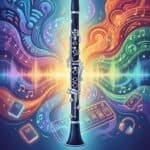
The clarinet in jazz rap is the use of clarinet tones, melodies, and improvisation within hip-hop and jazz-rap tracks to add a warm, woody timbre, melodic counterpoint, and improvisational jazz phrasing, bringing emotional depth, sophistication, and textural contrast to beats.
The Fusion of Clarinet and Jazz Rap
Clarinet in jazz rap describes a meeting point between acoustic woodwind tradition and groove-centered hip-hop production. Producers and players use clarinet lines, riffs, and textures over sampled drums, loops, and live rhythm sections. The result is a sound that feels both classic and experimental, ideal for introspective, narrative, or harmonically rich tracks.
For clarinetists, jazz rap offers a flexible canvas. You can phrase like a bebop soloist, float long tones like a film score, or layer harmonies like a small horn section. For producers, clarinet adds organic movement that samples alone rarely provide. Its wide dynamic range and expressive pitch inflection sit well beside Rhodes, upright bass, and vinyl-textured drums.
Across major streaming platforms, over 150 jazz-rap and lo-fi hip-hop playlists include at least one track featuring clarinet or sampled clarinet textures as of 2024.
A Brief History of Jazz Rap and the Clarinet
Jazz rap grew from late 1980s hip-hop crews who sampled Blue Note, Impulse, and CTI records. Groups like A Tribe Called Quest, Gang Starr, and Digable Planets used horn riffs and walking bass to frame conscious lyrics. Clarinet was not the main horn, but its sound entered through sampled swing and big band recordings.
Historically, the clarinet had already shaped early jazz through artists like Sidney Bechet, Benny Goodman, and Artie Shaw. When hip-hop producers dug into 1930s and 1940s sides, they occasionally pulled clarinet phrases into loops. These fragments helped normalize the instrument's timbre inside a hip-hop context, even when uncredited.
By the 1990s, live jazz musicians began appearing on hip-hop sessions. While saxophone and trumpet dominated, clarinetists in New York, London, and Paris scenes experimented with doubling parts, playing bass clarinet lines, or adding coloristic fills. Journalists at outlets like Rolling Stone and NPR later highlighted these crossovers as part of a broader jazz-hip-hop dialogue.
Field note – Martin Freres archive insight: Archival research into mid-20th-century clarinet manufacturing shows that many jazz clarinetists who later influenced sampled recordings favored warm, flexible bores and medium-strength reeds. These historical tone ideals indirectly shaped the clarinet colors that hip-hop producers discovered on vinyl.
As streaming expanded in the 2000s and 2010s, lo-fi hip-hop and nu-jazz scenes embraced clarinet more openly. Bass clarinet grooves, multi-tracked clarinet choirs, and modal improvisations appeared on independent releases documented in databases like Discogs and AllMusic. This period marks the clarinet's shift from background sample to intentional jazz-rap voice.
Signature Sounds: How the Clarinet Fits in Jazz Rap
The clarinet's role in jazz rap centers on three sonic functions: melodic lead, textural pad, and rhythmic hook. Its registers and bore design give it a chameleon-like ability to cut through or blend, depending on how you play and record it. Understanding these options helps you choose the right sound for each track.
In the chalumeau register (low E to about written B-flat), the clarinet offers a dark, smoky tone that pairs well with boom-bap drums and upright bass. Producers often favor this range for bass clarinet or low clarinet riffs that double synth bass or outline minor 9 and 11 chords. It supports a moody, cinematic atmosphere.
The clarion register (roughly B to C above the staff) gives a clear, vocal quality. This is ideal for hooks, call-and-response lines with the rapper, or short improvised fills between phrases. Many jazz-rap arrangements place clarion-register clarinet over Rhodes or piano voicings to create a floating, lyrical top line.
Altissimo (above high C) provides intensity and emotional lift. In jazz rap, it is best used sparingly: climactic bends, squeals, or brief high-register runs can emphasize a verse peak or transition into a chorus. Overuse can clash with compressed drums and dense mixes, so careful dynamic control is important.
Bore and reed choices also shape the sound. A more open, flexible setup can give a breathy, expressive tone that suits lo-fi textures, while a more focused setup delivers a compact sound that sits neatly inside dense, side-chained mixes. Many players choose medium-strength reeds for a balance of stability and easy articulation at hip-hop tempos.
Typical jazz-rap tempos range from 78 to 96 BPM, a range where clarinetists can comfortably phrase in 8th-note triplets and 16th-note subdivisions without sacrificing tone quality.
Notable Artists and Case Studies
Clarinet in jazz rap often appears through collaborations and cross-genre projects. While the instrument is less common than saxophone, several artists and recordings illustrate its potential. These examples help players and producers understand how clarinet can function in different production styles.
In some New York and London sessions, jazz clarinetists have recorded with hip-hop rhythm sections, contributing bass clarinet ostinatos and upper-register fills. Interviews archived by NPR and local radio stations describe how these musicians approached phrasing like a horn section while leaving space for MCs.
Independent nu-jazz and jazz-rap projects documented on Discogs often credit clarinet or bass clarinet among the horn lineup. In these cases, the instrument might double saxophone lines, add countermelodies in the bridge, or provide atmospheric long tones processed with reverb and delay. Producers treat clarinet as both a traditional horn and a sound design source.
Academic studies and Grove Music Online entries on hip-hop and jazz fusion note that clarinet appears more frequently in European jazz-rap scenes, where classical and klezmer influences intersect with beat culture. Here, clarinetists sometimes use extended techniques like flutter tonguing, pitch bends, and microtonal inflections to echo turntable scratches or vocal ad-libs.
These case studies show that clarinet thrives when arrangements leave space. Producers who carve out midrange frequencies and avoid over-layering synths around 1 to 3 kHz give clarinet room to speak. Clarinetists who listen closely to the rapper's rhythm and timbre can place phrases that feel conversational rather than ornamental.
Timeline: Key Tracks and Recordings (archive references)
The clarinet's journey into jazz rap can be traced through a loose chronology from the 1980s to the present. While not every appearance is widely documented, several eras and reference points help clarify how the sound evolved and where to look for examples.
In the late 1980s and early 1990s, early jazz rap acts sampled classic jazz records that sometimes included clarinet. Library of Congress and university archive collections of 78 RPM transfers reveal clarinet-heavy swing sides that later appeared in chopped or looped form on underground hip-hop mixtapes.
By the mid-1990s, live-in-the-studio hip-hop bands began to appear. Some sessions, cataloged in AllMusic and Discogs, list clarinet or bass clarinet in the horn section. These recordings often blur genre lines, mixing funk, soul, and jazz elements under rap verses. Liner notes from CD releases in this period sometimes mention woodwind doubling as a key arranging tool.
In the 2000s, nu-jazz and broken-beat scenes in cities like London, Paris, and Tokyo embraced clarinet more openly. Jazz-rap hybrids documented in European jazz journals and festival programs feature clarinet solos over MPC-driven beats. Discogs entries from this era show an uptick in credits for bass clarinet, reflecting its deep, gritty appeal in groove-based music.
From the 2010s onward, lo-fi hip-hop and streaming-era jazz rap expanded the palette. Producers sampled clarinet from film scores, small ensemble jazz, and even educational recordings. Independent labels released EPs with clarinet-led melodies over dusty drum loops, often highlighted in NPR and online magazine features on the new jazz-hip-hop wave.
Between 1995 and 2020, Discogs lists show a several-fold increase in releases tagged both “hip hop” and “jazz” that credit clarinet or bass clarinet among session instruments.
Today, clarinet in jazz rap appears in three main forms: sampled vintage recordings, newly recorded live sessions with full bands, and home studio overdubs where a single clarinetist layers multiple parts. Researchers can trace these through liner notes, digital booklet PDFs, and credits on major streaming platforms, cross-referenced with AllMusic and Grove Music bibliographies.
Techniques for Musicians: Playing Clarinet Over Hip-Hop Beats
Playing clarinet over hip-hop beats requires a mix of jazz language and rhythmic precision. The goal is to respect the pocket while adding melodic interest. Semi-advanced clarinetists can adapt their jazz vocabulary by simplifying lines, focusing on strong beats, and using space as a musical tool.
Start with time feel. Practice long tones and simple motifs with a metronome on 2 and 4, then with drum loops at typical jazz-rap tempos. Aim to place notes slightly behind the beat for a laid-back feel, or right on top for more urgency. Record yourself and compare to reference tracks.
For phrasing, think in 2-bar and 4-bar cells. Build short motifs that can repeat with small variations, matching the loop-based nature of many beats. Use call-and-response with the rapper: leave the first half of a bar open for lyrics, then answer in the second half with a concise fill.
Harmonically, focus on chord tones and color tones like 9, 11, and 13. Many jazz-rap tracks sit on static or slowly moving harmonies, so modal approaches work well. Practice Dorian, Aeolian, and harmonic minor modes in the chalumeau and clarion registers, aiming for a warm, centered tone that blends with keys and bass.
Articulation should be clear but not overly classical. Light tonguing on offbeats, ghosted notes, and gentle scoops into longer tones mimic the feel of a human voice or turntable phrase. Avoid overly accented staccato patterns that can clash with relaxed drum grooves.
For players interested in altissimo, use it sparingly for emotional peaks. Practice clean, in-tune high notes at soft and medium dynamics before bringing them into a session. In a jazz-rap context, a single well-placed high note can be more effective than a long altissimo run.
Recording and Production Tips for Jazz Rap Sessions
Recording clarinet for jazz rap requires attention to tone, noise control, and how the instrument sits in the mix. Producers and clarinetists should agree on the musical role before placing microphones or choosing effects. A clear plan saves time and avoids over-processing later.
For close miking, a small diaphragm condenser placed 12 to 18 inches from the instrument, aimed between the bell and the lower joint, usually captures a balanced tone. Avoid pointing directly at the bell, which can sound boomy, or too close to the mouthpiece, which can exaggerate key noise and breath.
Room mics can add depth. In jazz rap, a subtle stereo room capture blended under the close mic can create a sense of space similar to sampled jazz records. If the room is untreated, use absorption behind and to the sides of the player to reduce reflections and flutter echoes.
Compression should be gentle. A ratio around 2:1 or 3:1 with slow attack and medium release preserves transients while controlling peaks. High-pass filtering around 80 to 120 Hz removes rumble without thinning the sound. Slight cuts around 3 to 5 kHz can tame harshness if the clarinet competes with vocal sibilance.
Effects like reverb and delay should match the production aesthetic. For classic jazz-rap, a short plate or room reverb evokes studio recordings from the 1960s and 1970s. For lo-fi textures, tape-style delay, saturation, or vinyl emulation plugins can make the clarinet feel like a sampled element rather than a pristine overdub.
When tracking multiple clarinet parts, vary your distance and angle to the mic slightly for each layer. This prevents phase issues and helps create a natural ensemble feel. Producers can then pan layers to create width while keeping the main melodic line near the center.
Maintenance and Care for Clarinetists in Modern Genres
Regular maintenance is important for clarinetists who perform with amplified beats, where microphones reveal every squeak and leak. A consistent care routine ensures stable intonation, reliable key action, and a tone that records cleanly. This is especially important when sessions run long or venues are humid.
After every practice or gig, swab the bore thoroughly from bell to barrel. Use a pull-through swab that is fully dry and free of knots. Avoid leaving moisture inside the instrument, which can swell pads and compromise response, especially in the low register that jazz rap often favors.
Apply cork grease sparingly to tenon corks when assembly feels tight or dry, typically every few days of regular playing. Excess grease attracts dust and can make joints unstable. Wipe off any surplus with a soft cloth before reassembling the instrument.
Inspect pads weekly under good light. Look for discoloration, fraying, or impressions that suggest uneven sealing. Gently close keys over a thin strip of cigarette paper to check for leaks in problem notes. Addressing small issues early prevents noisy key action and unstable pitch during recording.
Schedule professional checkups at least once a year for moderate use, or every 6 to 9 months for frequent gigging. A technician can adjust spring tension, reseat pads, and check for body cracks or loose posts. These adjustments keep the clarinet responsive when you need to play softly over intimate beats.
Before a session or show, warm up with slow scales, long tones, and gentle articulation for 10 to 15 minutes. This stabilizes pitch and reed response so that the first take already sounds close to final. In studio contexts, this saves time and reduces the need for pitch correction.
Troubleshooting Common Issues (live and studio)
Clarinetists in jazz rap often face specific challenges: intonation drift under stage lights, reed instability with changing humidity, and noise problems when close-miked. A structured troubleshooting approach helps you handle these issues quickly in both live and studio settings.
If intonation drifts sharp under hot lights, first check barrel position and pull out slightly. Play reference notes with a tuner, focusing on throat tones and clarion A and B. If only certain notes are sharp, adjust voicing by relaxing the embouchure and adding more air support rather than biting.
For reed instability, always carry multiple broken-in reeds. Rotate at least 3 to 4 reeds per gig. If a reed feels waterlogged, gently blot it with clean paper and let it rest while you switch to another. In very dry rooms, a small reed case with humidity control can reduce warping and cracking.
Background bleed is a common studio issue when recording with live drums or monitors. Use directional microphones, position the clarinetist away from loud sources, and consider recording horns as overdubs when possible. In live settings, aim the bell slightly away from wedge monitors to reduce feedback and bleed.
Stuck or sluggish keys often result from moisture or minor alignment issues. If a key sticks mid-gig, lightly dry the pad with cigarette paper placed between pad and tone hole, then gently close the key. Avoid using powders or oils on stage. Persistent problems require a technician's attention.
Noise from key clicks can be exaggerated by close miking. Ask the engineer to use a mic angle that captures more tone than mechanism noise, and consider slightly softer finger motion without sacrificing precision. In mixing, a subtle high-frequency roll-off can help mask mechanical sounds without dulling the clarinet.
The Clarinet's Emotional and Cultural Impact in Jazz Rap
The clarinet brings a distinct emotional color to jazz rap. Its woody timbre and vocal-like phrasing can make tracks feel intimate, nostalgic, or reflective. This quality aligns well with storytelling lyrics and themes of memory, identity, and social commentary that often appear in jazz-rap narratives.
Culturally, the clarinet connects early jazz history with contemporary hip-hop expression. When its sound appears over modern beats, listeners subconsciously hear echoes of New Orleans ensembles, swing bands, and mid-century small groups. This layered association adds depth even when the audience cannot name the instrument.
For players, working in jazz rap broadens stylistic identity. A clarinetist who can move between classical repertoire, straight-ahead jazz, and beat-driven projects becomes more versatile and employable. Producers gain access to a timbre that can soften hard-edged drums or add sophistication to simple harmonic loops.
On a personal level, many musicians describe a sense of continuity when they bring clarinet into hip-hop contexts. They feel part of a lineage that stretches from early jazz to sample-based production and beyond. This awareness can inspire more thoughtful phrasing and collaborative listening in sessions.
Further Listening, Scores, and Research Resources
Clarinetists and producers who want to deepen their understanding of clarinet in jazz rap benefit from focused listening and targeted research. Combining ear training with documented sources helps you identify patterns in how the instrument is used and how arrangements are built.
Create playlists that mix classic jazz recordings with modern jazz-rap tracks that feature clarinet or related woodwinds. Pay attention to register choice, articulation, and how the clarinet enters and exits phrases around vocals. Note whether it functions as a lead voice, background texture, or occasional color.
For scores and transcriptions, look for big band and small-group jazz charts that feature clarinet, then adapt phrases to hip-hop loops. Many educational jazz collections include clarinet parts that can be reinterpreted over beats. Transcribing short clarinet lines from sampled jazz records also builds vocabulary that naturally fits the aesthetic.
Research tools like AllMusic, Grove Music Online, and Discogs help trace personnel and instrumentation on jazz-rap and nu-jazz albums. Liner notes, digital booklets, and interviews archived by NPR or similar outlets often reveal how sessions were planned and how woodwinds were recorded and mixed.
Academic articles on hip-hop and jazz fusion, available through university libraries and musicology journals, provide historical context and analytical frameworks. These sources can guide deeper study projects, recital programs, or production case studies focused on clarinet in beat-driven genres.
Key Takeaways
- Clarinet in jazz rap adds a warm, flexible voice that can act as lead, texture, or rhythmic hook, especially in the chalumeau and clarion registers.
- Historical connections run from early jazz clarinet recordings, through sampled vinyl, to modern nu-jazz and lo-fi scenes documented in archives and discographies.
- Success in this style depends on groove-aware phrasing, thoughtful recording choices, and consistent maintenance tailored to amplified, beat-driven environments.
- Clarinetists who master jazz-rap contexts gain broader artistic identity and more diverse performance and recording opportunities.
FAQs
What is Clarinet in Jazz Rap?
Clarinet in jazz rap is the use of clarinet tones, melodies, and improvisation within hip-hop and jazz-rap tracks. Players and producers integrate the instrument's warm, woody sound into beat-driven arrangements to add melodic counterpoint, jazz phrasing, and acoustic texture alongside drums, bass, and keys.
How does the clarinet change the mood of a hip-hop track?
The clarinet softens and deepens the mood of a hip-hop track by adding organic resonance and lyrical phrasing. Its lower register can make beats feel darker and more cinematic, while its clarion range brings a vocal-like quality that supports introspective or narrative lyrics without overpowering the groove.
Which artists and recordings are best examples of clarinet in jazz rap?
Examples appear across jazz-rap, nu-jazz, and lo-fi scenes, often credited as clarinet or bass clarinet in album notes and Discogs entries. Look for projects where jazz ensembles collaborate with MCs or producers, especially in European and independent scenes, and focus on tracks that list woodwinds beyond saxophone.
What clarinet setup works best for studio jazz-rap sessions?
A setup that balances focus and flexibility works best: a comfortable mouthpiece, medium-strength reeds, and a well-regulated instrument. Aim for a tone that records clearly without excessive brightness. Many players favor a slightly darker sound in the chalumeau and clarion registers, which blends well with keys and compressed drums.
How should I care for my clarinet if I play gigs with amplified beats?
Swab the bore after every set, apply cork grease as needed, and inspect pads weekly for leaks or wear. Schedule professional adjustments at least annually, or more often if you gig frequently. In loud, humid venues, carry multiple broken-in reeds and warm up thoroughly so pitch and response stay stable under microphones.
Related Posts: