Martin Freres, LaMonte, Coudet, Jean Martin Brand Clarinets and Other Woodwinds
Free Clarinet Fingering Chart: The First Noel
If you have ever lifted your Bb clarinet on a quiet December evening and played the first notes of “The First Noel,” you know it is more than a Christmas carol. It feels like opening an old music box: the tune is simple, but the memories, colors, and harmonies inside are endless. This free clarinet fingering chart for The First Noel is not just about which key closes where. It is about joining a long winter line of clarinetists who have breathed life into this melody in churches, concert halls, candlelit living rooms, and late-night recording sessions.
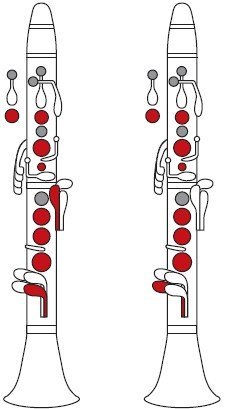
Receive a free PDF of the chart with clarinet fingering diagrams for every note!
Quick Answer: What is The First Noel Bb clarinet fingering chart?
The First Noel Bb clarinet fingering chart is a note-by-note guide that shows which keys and holes to use for every pitch in the carol. It helps beginners and advanced players read the melody quickly, play in tune, and focus on phrasing and emotion instead of guessing fingerings.
The First Noel and the clarinet: a carol with a long story
The roots of “The First Noel” go back to at least the 17th century, likely in Cornwall in England, long before the modern clarinet had its ring keys or a Boehm system. While shepherds and choirboys sang this tune by candlelight, the clarinet was still evolving from the chalumeau. By the time Johann Christoph Denner's early clarinets appeared, this carol was already in the air, waiting for a reed and bell to carry it further.
Fast forward to the classical period: Anton Stadler, the legendary clarinetist for whom Mozart wrote the Clarinet Concerto and the Clarinet Quintet, would have known carols and folk hymns of this kind. While we do not have a recording of Stadler playing “The First Noel,” the warm, pastoral writing in Mozart's slow movements feels like the same spiritual landscape. When you sustain a long, soft G on clarinet in this carol, you are breathing in the same tradition that shaped those great works.
Field Note: In the Martin Freres archives, there is an early 20th century Bb clarinet with a handwritten Christmas program tucked in the case. Between excerpts from the Mozart Clarinet Concerto and Weber's Concertino, someone penciled in “The First Noel – clarinet solo.” It is a quiet reminder that even serious classical players loved to bring this carol into their recitals.
How great clarinetists have shaped the sound of carols
Even if they never officially recorded “The First Noel” itself, many iconic clarinetists have defined how we hear lyrical Christmas melodies on our instrument. Their phrasing, tone, and vibrato choices have become the unwritten “how” behind your own version of this carol.
Think of Sabine Meyer playing the slow movement of the Mozart Clarinet Concerto with the Berlin Philharmonic. That floating, glassy tone and long-line phrasing are exactly the sort of approach that makes “The First Noel” feel like a prayer rather than a sing-along. Her recording of Strauss's Duet-Concertino carries that same winter glow that fits perfectly with a hushed carol arrangement.
Martin Frost often programs Swedish folk melodies and quiet encore pieces with a kind of story-telling hush. Listen to him in works by Anders Hillborg or his interpretations of Brahms clarinet pieces. The way he shapes soft entrances and leaves notes hanging in the hall is a masterclass in how to treat the first phrase of “The First Noel” on a Christmas Eve service or a chamber concert.
On the jazz side, Benny Goodman and Artie Shaw reshaped how the clarinet sings over Christmas harmonies. Goodman's relaxed swing in ballads like “Body and Soul” and his Christmas broadcasts with his orchestra in the 1930s showed how a clarinet could float over lush strings and choir. Even if you play The First Noel straight, without swing, that sense of flexible time and breath comes right out of Goodman's way of stretching a melody.
Artie Shaw's version of “Begin the Beguine” is as far from a church carol as you can get, but his control of long phrases over a soft rhythm section is the same skill you need to keep “The First Noel” lyrical on clarinet. Buddy DeFranco took this even further, guiding the clarinet into bebop lines, yet if you listen to his ballad playing, you will hear the same sweetness and sustained tone that can turn a simple carol into something unforgettable.
In klezmer, Giora Feidman and David Krakauer have recorded plenty of Hanukkah and sacred pieces, and their spiritual, vocal approach crosses holiday boundaries. Feidman's singing tone in slow nigunim and Krakauer's expressive bends and sighs are powerful references for anyone who wants their “Noel” to sound like a voice, not just a woodwind.
Carols, clarinets, and iconic recordings that echo The First Noel
There are countless clarinet recordings of Christmas music where “The First Noel” makes an appearance, often quietly placed between more famous carols. Clarinetists in orchestras such as the London Symphony Orchestra, the New York Philharmonic, and the Vienna Philharmonic have played this melody in arrangements by John Rutter, David Willcocks, and Mack Wilberg, tucked into massive Christmas concerts at Royal Albert Hall and Carnegie Hall.
In many of those arrangements, the clarinet section doubles the choir or strings on the middle verses of “The First Noel.” That warm, reedy blend is part of why the carol feels so cozy. The clarinet tone slips between the alto voices and the violas, adding shimmer without stealing the spotlight.
On a smaller scale, chamber recordings such as Christmas albums by clarinet and piano duos often include “The First Noel” alongside pieces like “Silent Night” and “O Holy Night.” When you listen to a clarinetist such as Richard Stoltzman or Karl Leister playing lyrical music by Schumann or Schubert, you can hear the same tools they would bring to a carol: subtle crescendos on longer notes, soft attacks, and almost vocal vibrato.
Film composers have also leaned on the clarinet to carry carol-like themes. In John Williams's score for “Home Alone,” the clarinet often takes over gentle Christmas melodies that feel related to “The First Noel” in shape and harmony. Michael Kamen, in “The Christmas Carol” projects and holiday specials, favored the clarinet in the middle register for nostalgic themes that could easily be swapped with this carol's tune.
Range spotlight: low E to high C on Bb clarinet
Most arrangements of The First Noel for Bb clarinet sit between written low E and high C. This keeps the melody in the chalumeau and clarion registers, where tone is warm and stable, perfect for expressive control and comfortable for developing players.
From folk hymn to clarinet favorite: the journey of The First Noel
Originally, “The First Noel” lived as a folk carol, passed around by singers more than by printed scores. By the Victorian era, with hymnals by editors such as William Sandys and John Stainer, it slipped into church books and became part of standard Christmas services in England and beyond. At the same time, the clarinet was maturing into the instrument you hold now, with improved keywork and pads that could sing gently in every register.
As clarinet found its way into wind bands and town orchestras, carol services began to feature clarinetists standing by the organ, weaving countermelodies and simple harmonies. In Central Europe, where players such as Heinrich Baermann brought the clarinet to star status, sacred and seasonal music often shared programs with Weber's Clarinet Concertos and Schubert lieder transcriptions. A melody like “The First Noel” would not have felt out of place next to a slow movement by Weber.
By the time jazz clarinet exploded in New Orleans and New York, Christmas broadcasts needed a warm, flexible instrument to carry hymns to radio audiences. Clarinetists in studio orchestras, inspired by both classical training and jazz freedom, frequently treated “The First Noel” as a chance to improvise delicate ornaments. That cross-pollination still lives today in recordings where clarinetists add blues inflections or klezmer-style slides to a very old English carol.
How The First Noel feels under your fingers and in your heart
There is something about the contour of “The First Noel” that feels natural on Bb clarinet. It rises gently, often starting on the dominant and reaching up like a question before resolving back home. On the instrument, that shape usually means a smooth move from chalumeau to clarion, from low A or B up through middle D, E, or F.
Emotionally, it sits in a quiet sweet spot. Unlike the drama of “O Holy Night” or the lullaby softness of “Silent Night,” this carol has a walking, storytelling quality. It feels like someone narrating a scene, verse by verse. The clarinet, with its close connection to the human voice, can shade each verse differently: one very soft with a breathy chalumeau, another more radiant with a brighter clarion tone, the last verse with fuller vibrato like a choir at full strength.
For many players, the carol becomes a personal ritual. One or two notes into the first phrase, and you are back in a particular church, or on a street corner busking in cold air, or sitting in a practice room late at night letting the sound echo off the walls. The Bb clarinet has a special way of catching that nostalgia, especially if you lean into long, unhurried phrases and gentle dynamics.
Why The First Noel matters for you as a clarinetist
Learning “The First Noel” with a clear fingering chart does more than get you through Christmas services. It trains some of the most important musical muscles you have: breath control, legato, and the ability to shape a melody simply and honestly.
Because the tune moves mostly by step, with only a few leaps, it is perfect for refining smooth finger motion across the break between A and B, or B and C. You will feel how small bumps in that break can break the spell of the carol, and that awareness carries directly into Mozart, Brahms, and lyrical passages in band music by composers such as Holst and Vaughan Williams.
It also gives you a safe space to experiment with color. Try playing one verse with a darker, covered sound near the mouthpiece, then another with a more open, French-school brightness. Think of Sabine Meyer's tone in German Romantic music versus Giora Feidman's almost vocal klezmer sound. The same melody, two worlds, all available in your air and embouchure.
Approach
Tone Reference
Best Use in The First Noel
Classical, straight tone
Sabine Meyer, Karl Leister
Opening verse, choir-style hymns
Gentle vibrato, lyrical
Richard Stoltzman, Martin Frost
Middle verses, solo features
Folk/jazz shading
Benny Goodman, Giora Feidman
Intimate settings, small ensembles
A quick look at The First Noel Bb clarinet fingering chart
The fingering chart for The First Noel you can download above keeps everything in a friendly range, ideal for intermediate players and ambitious beginners. You will mostly see written notes from low E to high C, with common cross-fingerings like B natural, C, and throat A. The chart shows standard Boehm-system fingerings that match what most teachers use in band and private lessons.
Because the melody often crosses the break, the chart highlights those notes visually so you can plan your finger motion and air support. Once you are comfortable, try adding soft slurs and shaping each phrase as if you are singing. The goal is not speed; it is control, tuning, and a steady, gentle line from bell to barrel.
Learn the melody slowly with the chart, one phrase at a time.
Practice crossing the break (A to B, B to C) with full, supported air.
Add dynamics, starting piano and growing to mezzo forte on the final phrase.
Listen to a favorite lyrical clarinet recording before you play.
Record yourself and adjust intonation on long notes.
Practice Block
Duration
Focus
Warmup long tones (low E to B)
5 minutes
Breath support, even tone
Phrase 1 of The First Noel
10 minutes
Crossing the break smoothly
Full carol, slow tempo
10 minutes
Dynamics, phrasing, tuning
Full carol, performance run
5 minutes
Confidence, musical expression
Troubleshooting common The First Noel clarinet issues
Problem
Likely Cause
Quick Fix
Squeaks on the high notes
Tight embouchure, tense right hand
Relax jaw, check right thumb position, blow through the note
Break sounds choppy
Lifting fingers too high between A and B/C
Keep fingers close to keys, practice slow slurs across the break
Flat pitch on long notes
Weak air support, barrel pulled too far
Support from diaphragm, adjust barrel slightly, listen and match a tuner
Key Takeaways
Use the The First Noel Bb clarinet fingering chart to free your mind from mechanics so you can focus on phrasing and tone.
Listen to great clarinetists across classical, jazz, and klezmer styles to shape your own sound for this carol.
Treat each verse as a chance to tell the story differently with dynamics, color, and breath control.
Frequently Asked Questions
What is The First Noel Bb clarinet fingering chart?
The First Noel Bb clarinet fingering chart is a visual guide showing which keys and holes to press for every note of the carol on Bb clarinet. It helps players of all levels learn the melody quickly, avoid guesswork on the break, and focus on musical expression rather than figuring out fingerings.
What skill level is The First Noel suitable for on clarinet?
The First Noel is ideal for late beginners through advanced clarinetists. The range stays mostly between low E and high C, and the stepwise melody is comfortable for students, while advanced players can use it to refine tone, breath control, and subtle phrasing in chalumeau and clarion registers.
Which clarinet register does The First Noel use most?
Most arrangements use the chalumeau and lower clarion registers on Bb clarinet. That means plenty of notes like low G, A, B, and middle C, D, and E. This register combination gives the carol its warm, vocal quality and makes it easier to blend with choir parts, strings, or organ.
How often should I practice The First Noel with the fingering chart?
Short daily sessions work best. Try 20 to 30 minutes, with about half on slow practice and half on full runs of the carol. Use the chart until fingerings feel automatic, then put it aside and focus on dynamics, intonation, and the emotional flow of each verse.
Can I use this fingering chart for ensemble or church services?
Yes. The chart is perfect preparation for church services, school concerts, or small ensemble gigs. Learning fingerings in advance lets you adapt quickly to different keys or arrangements, blend confidently with flutes, saxophones, and voices, and keep your attention on listening and balance instead of technical worries.
For more clarinet inspiration, you can also enjoy other articles on MartinFreres.net such as guides on Bb clarinet warmups, stories behind classic clarinet solos, and historical looks at vintage Martin Freres instruments that carried melodies like The First Noel for generations.