Martin Freres, LaMonte, Coudet, Jean Martin Brand Clarinets and Other Woodwinds
Free Clarinet Fingering Chart: Joy to the World
Joy to the World on clarinet feels like opening a snow-dusted window and hearing a whole street sing back to you. Those first bright notes on a Bb clarinet can lift a beginner out of squeaks, and still give a seasoned player goosebumps in a stone cathedral or a tiny living room. This simple carol has carried clarinetists from church balconies to jazz clubs and film studios for generations.
Receive a free PDF of the chart with clarinet fingering diagrams for every note!
Quick Answer: What is a Joy to the World clarinet fingering chart?
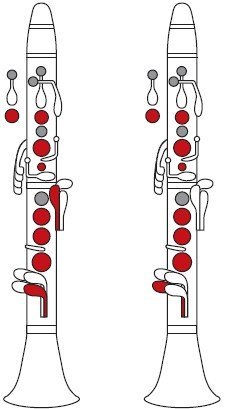
A Joy to the World clarinet fingering chart is a visual guide that shows every note of the carol with standard Bb clarinet fingerings and octave choices. It helps players of all levels learn the melody faster, avoid wrong notes, and focus on musical expression instead of guessing finger positions.
The long, joyful journey of Joy to the World
Joy to the World has a passport full of stamps. Its melody is often linked to ideas by George Frideric Handel, then shaped into the carol we know through the work of Lowell Mason and the text of Isaac Watts. By the time the clarinet really took its modern form in the hands of makers like Theodor Lotz and the early Martin Freres artisans, this tune was already echoing through churches and town squares.
As the clarinet grew from the chalumeau ancestor into a full-fledged orchestral voice, community wind bands began using Joy to the World every December. Wooden Bb clarinets, with their warm chalumeau register and singing clarion register, quickly became the lead voice in many arrangements. That soaring opening leap fits the clarinet's natural singing quality almost suspiciously well.
In the 19th century, you can imagine players like Heinrich Baermann, famous for his singing tone in the Weber concertos, using the same broad, open sound on hymns like Joy to the World in quiet side chapels, even if no recording captured it. Church clarinetists and town band players took the same lyrical approach that Baermann used in concert halls and simply brought it to Christmas services.
Field Note: In the Martin Freres archives, there are handwritten band books from early 20th century French villages. Joy to the World often appears with the clarinet part marked “chanter” (“to sing”), a reminder that players were expected to shape every note like a sung phrase, not just hit the right pitch.
How clarinet legends would sing Joy to the World
Part of the magic of Joy to the World on clarinet is imagining how different great players might shape the same simple line.
Take Anton Stadler, Mozart's clarinet muse. His playing inspired the Clarinet Concerto in A major and the Clarinet Quintet. Listen to the slow movement of the concerto, and you hear a kind of singing that fits this carol perfectly: long arcs, gentle swells on important notes, and a chalumeau register that glows. If Stadler had stood in a Vienna church with a boxwood clarinet and played Joy to the World, he likely would have used the same warm, vocal phrasing.
Fast-forward to Johannes Brahms and his late clarinet pieces written for Richard Muhlfeld. These works, like the Clarinet Sonata in F minor and the Clarinet Quintet, show a darker, more autumnal color. That kind of sound is ideal for verse 2 of Joy to the World if you slow it down and let the harmonies lean slightly into bittersweet territory. The same Bb clarinet that can ring like bells can also sound like a quiet human voice hum-singing by candlelight.
Jump to the 20th century and you land in the era of Sabine Meyer and Martin Frost. Sabine Meyer's ultra-focused sound and precise articulation would turn the fast notes in Joy to the World into little pearls of light, perfect for orchestral Christmas programs with the Berlin Philharmonic or the Staatskapelle Dresden. Martin Frost, with his theatrical phrasing and bold dynamic shapes, might stretch the opening leap from low D to A into a mini-aria, making even the first bar feel like a solo moment.
And of course, you cannot talk about this carol on clarinet without hearing it through the voice of jazz. Benny Goodman, “The King of Swing,” brought holiday tunes into his big band book during radio broadcasts. While not all programs are preserved, the style is clear in recordings like his version of Silent Night and Christmas medleys: bright, forward articulation, a crisp chalumeau, and clarion notes that ring above the band like trumpets.
Artie Shaw, with his famously fluid altissimo, would probably take Joy to the World up into the third register, turning the melody into a silky improvisation. Buddy DeFranco might slide chromatic passing tones between the main notes, kissing each written pitch with bebop ornaments. The basic fingering chart stays the same, but the feel becomes completely new.
Range tip: about 1.5 octaves
Most standard Joy to the World arrangements for Bb clarinet stay between written low C and high B. This compact range lets beginners focus on smooth finger motion and tone, while advanced players can experiment with color and dynamics without fighting extreme altissimo notes.
Joy to the World in concert halls, bands, films, and beyond
Joy to the World might be labeled as a “carol,” but it behaves like a theme, ready to be reshaped for different settings and clarinet roles.
In classical concert halls, the tune appears in countless Christmas arrangements. Think of Leroy Anderson's holiday medleys, often featuring clarinet in the inner voices of the Boston Pops-style orchestration. Clarinet sections in orchestras from the London Symphony Orchestra to the New York Philharmonic have played Joy to the World in pops concerts, holiday broadcasts, and candlelight performances, even if each program has a slightly different arrangement.
Wind bands and concert bands have turned it into a clarinet-friendly playground. Arrangers such as Alfred Reed and Robert W. Smith have published Christmas suites where clarinets either take the main melody in the clarion register, or play running countermelodies underneath the brass. For school bands, clarinet 1 often gets the soaring top line while clarinet 2 and 3 weave in harmony and rhythm.
Film and TV scores also lean on this melody. Holiday films scored by composers like John Williams and Alan Silvestri often quote Joy to the World in the background of bustling city scenes or warm family moments, with clarinets in the woodwind section adding that gentle shimmer. Even if you do not hear a featured clarinet solo, the clarinet section is usually the glue between flutes and horns, giving the carol its comforting middle color.
On the folk and worship side, clarinetists in church groups often carry the melody on Christmas Eve. In some Eastern European congregations, Klezmer-influenced clarinetists like Giora Feidman and David Krakauer have brought their expressive style to carols, weaving in soulful bends, sighing portamenti, and expressive vibrato that make a simple hymn feel like an ancient song.
Modern clarinet ensembles, such as Clarinet Choirs at conservatories or community groups, love using Joy to the World as a seasonal showcase. The E clarinet might sparkle on the top line, while bass clarinet and contrabass clarinet roll out the harmonic foundation. Bb players in the middle create the “choir” effect, and the fingering chart stays your home base as you move between melody and harmony roles.
From baroque roots to jazz clubs: the evolving life of this carol
Joy to the World reaches back toward baroque style. The opening descending figure and simple harmonies echo the kind of things Handel used in works like Messiah. The original clarinet-like instrument at that time, the chalumeau, was already getting used in sacred music and early chamber pieces.
As the 18th century gave way to the classical era, the clarinet took its place in symphonies by composers such as Haydn and Mozart. The same kind of bright major-key writing that fills Mozart's Clarinet Concerto parallels the character of Joy to the World. Parish musicians would adapt popular sacred melodies for village bands, often including 2 clarinet parts alongside oboes and horns.
By the romantic era, clarinets were everywhere: in Brahms symphonies, Weber operas, and small-town brass and reed bands. Holiday processions and town-square celebrations often featured a lead clarinet carrying carols. The same player who struggled through Weber's Concertino on a cold winter evening might gladly relax into Joy to the World afterward, using the same embouchure and breath support but a lighter heart.
The 20th century pulled the carol into jazz and popular music. Big bands led by Benny Goodman and Glenn Miller packaged familiar Christmas themes for radio. Clarinetists began to swing the rhythms, add grace notes, and treat the carol like a standard. Later, artists in New Orleans jazz traditions used clarinet to improvise around carol melodies for holiday parades and club dates, blending sacred roots with street energy.
Today, Joy to the World exists in every corner: in clarinet choir albums, YouTube clarinet covers, school band concerts, and recordings by artists who treat it as a canvas for improvisation. Players like Richard Stoltzman, with his crossover style between classical and jazz, have shown how a clarinetist can slide from Bach to carols to Duke Ellington without changing instruments, only changing color and feel. The same fingers that handle Brahms sonatas can, within seconds, dance through Joy to the World.
Why Joy to the World feels so good to play on Bb clarinet
Clarinetists know the feeling: you take a deep breath, set your embouchure, and the first note vibrates in the mouthpiece and barrel before it blooms in the room. Joy to the World makes smart use of that experience. The melody leaps, but not in a way that feels stressful. It rides through comfortable clarion notes that let the clarinet voice feel open and confident.
Emotionally, the tune holds a balance between celebration and comfort. On Bb clarinet, the chalumeau register brings warmth to the lower notes, ideal for more reflective verses or slow intros. Then, as you move into the clarion register, the melody brightens like light through stained glass. This is the same magic that makes the clarinet line in Ravel's Bolero and the opening solo in Gershwin's Rhapsody in Blue so memorable: a gradual lift from earthy to radiant.
For many players, this carol is tied to memories: first concerts in school gyms, cold hands at outdoor tree-lighting ceremonies, late-night church services where the clarinet solo had to be quiet but expressive. The fingering chart is not just a set of instructions. It is a map of those moments, from low G whispered in the back row to high B ringing out in front of a full choir.
What mastering this song gives you as a clarinetist
Learning Joy to the World on Bb clarinet might seem simple on paper, but it quietly trains many of the same skills used in professional pieces.
The opening leap prepares you for the kinds of intervals you find in Mozart concertos and orchestral excerpts like Beethoven symphonies. Smooth stepwise lines teach you the same finger comfort you need in the Weber Concertino or the solo in Dvorak's Symphony No. 9. Shaping phrases over 2 or 4 bars trains breath control for long lines in Brahms sonatas or the long solo in Nielsen's Clarinet Concerto.
On a more personal level, this carol builds confidence for public playing. Because audiences recognize the tune instantly, you can focus less on explaining the music and more on expressing it. Students who first perform Joy to the World in a school band often find that applause feels different afterward: people hum along, smile, and sometimes sing under their breath. This teaches you one of the quiet truths of clarinet playing, the same one Benny Goodman knew in Carnegie Hall: familiar melodies can move people just as powerfully as virtuoso showpieces.
Joy to the World skill
Helps with clarinet piece
What improves
Smooth leaps between registers
Mozart Clarinet Concerto, K. 622
Register crossings and clean intervals
Singing tone in simple melody
Brahms Clarinet Sonata in E b major
Legato, breath control, phrase shaping
Rhythmic clarity in steady tempo
Benny Goodman swing standards
Articulation and internal pulse
A quick, friendly word about fingerings
The fingering chart for Joy to the World on Bb clarinet is meant to keep things simple so your mind stays on sound and emotion. Most arrangements sit comfortably in the lower and middle registers, using standard fingerings for notes like C, D, E, F, G, A, and B. This means beginners can learn the tune early, while advanced players can focus on color and dynamics.
You will notice a few spots where you can choose between alternate fingerings, especially for throat tones like A and B b or for clarion notes around written C and D. The best choice depends on the phrase and tempo. Use the chart as a starting point, then listen for smooth connections between notes and pick the fingering that keeps the line singing. The goal is not just correctness, but ease and beauty.
Start by playing the melody slowly with full, relaxed breath support.
Use the chart to double-check any throat tones or clarion notes that feel awkward.
Once the fingers feel natural, exaggerate dynamics: try a whisper, then a joyful fortissimo.
Add gentle articulation patterns, like 2 slurred and 2 tongued, to keep the line flexible.
Light, musical practice ideas for Joy to the World
Practice does not have to feel like homework with this piece. Treat each run-through as a tiny concert, the way Richard Stoltzman treats even a long tone like a mini performance. Use the fingering chart as a safety net, not a cage.
Practice focus
Time
How often
Slow melody with full tone (no dynamics yet)
5 minutes
Every practice session
Dynamics: from piano to forte on each phrase
5 minutes
3 times per week
Creative version: swing feel, rubato, or extra ornaments
5 minutes
2 times per week
If you want more musical ideas to pair with this carol, you can connect it with other lyrical favorites. Many players enjoy rotating between Joy to the World, simple studies similar to the early pages of the Rose 32 Etudes, and expressive melodies you might find in classical clarinet collections discussed on Martin Freres' guides to student clarinet repertoire, historic clarinet methods, and clarinet tone development.
Key Takeaways
Use the Joy to the World clarinet fingering chart to free your mind from worry about notes so you can focus on tone and phrasing.
Treat this carol like a miniature concerto: shape every phrase with the same care you would give Mozart or Brahms.
Let different traditions inspire you: classical clarity, jazz swing, and folk-style expressiveness all belong in your personal version.
Frequently Asked Questions
What is Joy to the World clarinet fingering chart?
The Joy to the World clarinet fingering chart is a visual guide that shows each note of the carol and how to play it on Bb clarinet. It maps the melody to standard fingerings, so you can learn the tune quickly and focus on sound, rhythm, and expression instead of guessing which keys to press.
Is Joy to the World suitable for beginner Bb clarinet players?
Yes. Most versions of Joy to the World stay within a friendly range on Bb clarinet, using standard fingerings and clear rhythms. Beginners can use the chart to build basic finger coordination, while more experienced players use the same melody to refine tone, dynamics, and breath control in a familiar context.
Which register should I use when playing Joy to the World?
Most arrangements place the melody in the chalumeau and clarion registers, usually between written low C and high B. Start with the written notes in your chart, focusing on a warm chalumeau and bright but not harsh clarion. Later, you can experiment with higher transpositions and altissimo for more advanced versions.
How can I make Joy to the World sound more expressive on clarinet?
Shape each 2 or 4 bar phrase with a clear dynamic plan, such as growing to the middle and relaxing at the end. Use legato finger motion, steady air, and light articulation from the tip of the tongue. Listening to players like Sabine Meyer, Benny Goodman, or Giora Feidman can give you ideas for color and style.
Can I use alternate fingerings for Joy to the World on Bb clarinet?
Yes, especially for throat tones like A and B b, or for clarion notes that need fast movement. Start with standard fingerings from the chart, then experiment with alternates that keep shifts smooth and intonation steady. Many clarinetists adjust fingerings slightly based on tempo, dynamics, and the acoustic of the room.