Martin Freres, LaMonte, Coudet, Jean Martin Brand Clarinets and Other Woodwinds
Free Clarinet Fingering Chart: Jolly Old Saint Nicholas
If you close your eyes and play the first three notes of “Jolly Old Saint Nicholas” on your Bb clarinet, you can almost smell pine needles and hot chocolate. This little Christmas song is one of the first real melodies many clarinetists ever play, yet it carries the same magic whether you are six or sixty. That is why this free Jolly Old Saint Nicholas clarinet fingering chart is more than a cheat sheet. It is a tiny passport into musical memories, family living rooms, winter concerts, and the long line of players who have used simple carols to build very serious artistry.
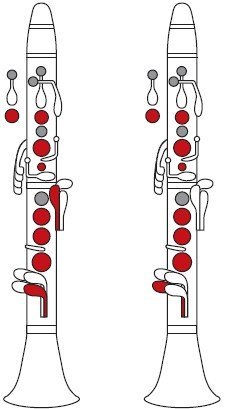
Receive a free PDF of the chart with clarinet fingering diagrams for every note!
Quick Answer: What is a Jolly Old Saint Nicholas clarinet fingering chart?
A Jolly Old Saint Nicholas clarinet fingering chart is a visual guide that shows every note needed to play the carol on Bb clarinet, from low C to clarion A. It helps beginners learn fast, stay in tune, and enjoy a confident first Christmas performance.
The story behind Jolly Old Saint Nicholas on clarinet
“Jolly Old Saint Nicholas” dates back to the late 1800s, when parlor songs and hymns were copied by hand into family music books. Pianos were common, but clarinets were already slipping into church galleries, brass bands, and small town dance orchestras. A Bb clarinet could sit beside the organ, double a violin line, or add a warm inner voice to Christmas hymns and carols.
Think of Anton Stadler, Mozart's clarinet muse, even though he never played this specific song. His singing tone in the Mozart Clarinet Concerto inspired generations of players to approach simple melodies with the same care as an aria. That same mindset is what turns “Jolly Old Saint Nicholas” from a school tune into a miniature solo: breath shaped like a phrase from Mozart, fingers as relaxed as in a slow movement of the Weber Concertino.
By the time Heinrich Baermann and Carl Baermann were charming audiences with Weber's clarinet works, Christmas music was starting to include more woodwinds in chamber settings. Clarinetists would take familiar tunes like “Jolly Old Saint Nicholas” and improvise inner harmonies or countermelodies, using the song as a framework to show off tone and phrasing.
How great clarinetists bring carols like Jolly Old Saint Nicholas to life
Even if you will not find a famous recording titled “Jolly Old Saint Nicholas” by Sabine Meyer or Martin Frost, you can hear the spirit of this carol in how they handle cantabile lines. Listen to Sabine Meyer in the Mozart Clarinet Quintet with the Hagen Quartet: that floating chalumeau and clarion sound is exactly the kind of tone you want when you start the first phrase of this carol on low G, A, B, and middle C.
Martin Frost often plays Christmas programs with chamber orchestras like the Swedish Chamber Orchestra. When he shapes a simple hymn tune, he uses gentle rubato, soft accents, and a vocal approach to phrasing. If you imagined Frost playing “Jolly Old Saint Nicholas” as an encore, you would hear the same clarity of articulation he uses in Nielsen's Clarinet Concerto and the same warm legato he brings to Brahms's Clarinet Sonatas.
On the jazz side, think of Benny Goodman and Artie Shaw playing holiday medleys on radio broadcasts with their big bands. The exact melody might shift into “Jingle Bells” or “Santa Claus Is Comin' to Town,” but the clarinet style is the same toolkit you can use for “Jolly Old Saint Nicholas”: swing-inflected phrasing, light tongue on the tip of the Rico or Vandoren reed, and effortless jumps from low register to clarion.
Buddy DeFranco took Christmas melodies and brushed them with bebop harmony, never losing the singable core. Giora Feidman, the klezmer legend, often uses simple minor carols and Hanukkah tunes to teach phrasing: slides, sighs, and cries between notes. If you played “Jolly Old Saint Nicholas” in a klezmer style, you might start bending into notes, coloring the line the way David Krakauer does on pieces like “Der Heyser Bulgar.”
Field Note: In the Martin Freres archives, there are early 20th century Bb clarinets paired with handwritten Christmas parts marked “Cantabile” over simple carols. The markings show breath phrase brackets and hairpins, just as you might see in a Brahms Intermezzo, reminding us that even the simplest holiday tunes were treated as real music, not just exercises.
Iconic pieces that echo the feel of Jolly Old Saint Nicholas
“Jolly Old Saint Nicholas” sits right at the intersection of lullaby and march. That mixed character shows up in a surprising number of clarinet works and film scores.
In classical music, listen to:
Pyotr Ilyich Tchaikovsky's “Nutcracker Suite” in the Mikhail Pletnev piano transcription with clarinet arrangements, where the clarinet often doubles the celesta and flute in carol-like phrases.
Ralph Vaughan Williams's “Fantasia on Christmas Carols” and his “English Folk Songs” settings, where the clarinet carries soft, hymn-like lines that feel just as cozy as “Jolly Old Saint Nicholas.”
Benjamin Britten's “A Ceremony of Carols” adapted for chamber groups, with clarinet covering inner voices that weave around the vocal lines.
In jazz and big band recordings, the Goodman and Shaw Christmas broadcasts, as well as recordings by Woody Herman, show how BB clarinet can glide through holiday tunes with that bright, ringing projection. Imagine taking the same kind of solo you hear in “Let It Snow” or “White Christmas” arrangements and laying it gently over “Jolly Old Saint Nicholas.”
Film scores are full of clarinet moments that feel like expanded carols. Listen to:
John Williams's score for “Home Alone,” especially “Somewhere In My Memory,” where clarinet and oboe trade warm, childlike phrases.
Alan Silvestri's music for “The Polar Express,” with clarinet floating above strings in gentle waltz patterns.
James Horner's “The Grinch” score, with playful clarinet glissandi that sprinkle a bit of mischief into the Christmas mood.
On clarinet albums, players like Richard Stoltzman have recorded Christmas collections where carols are treated with the same seriousness as Brahms or Debussy. His phrasing on slow tunes such as “O Holy Night” and “Silent Night” is a beautiful reference for how to care for your line when you play “Jolly Old Saint Nicholas” in a school hall or church sanctuary.
Range used in most Jolly Old Saint Nicholas clarinet arrangements: 10 notes
Most versions sit between low G and clarion D on Bb clarinet. This compact range lets beginners focus on breath, tone, and phrasing without worrying about register breaks or altissimo fingerings.
From parlor song to band concert: the historical journey of this carol
The melody of “Jolly Old Saint Nicholas” likely evolved from 19th century children’s songs and hymns. Before clarinet class existed in schools, players in village bands and church ensembles would copy carols into small part books, adjusting each tune to fit their Eb or Bb clarinets and simple-system instruments.
By the late Romantic era, while Brahms was writing his clarinet sonatas for Richard Muhlfeld, small town bands were already using clarinets for Christmas processions. The same winter a clarinetist practiced Brahms in a conservatory studio, another clarinetist in a brass band might have been rehearsing “Jolly Old Saint Nicholas” for a town square performance under gas lamps.
In the early 20th century, as the Boehm-system clarinet standardised fingerings, publishers began printing school band arrangements of carols. “Jolly Old Saint Nicholas” fits perfectly into beginning band books: simple quarter notes, mostly stepwise motion, and repetitive phrases that invite confident memorisation. Bb clarinet students sat next to alto saxophone players and flutists, learning this carol in unison under a band director's raised baton.
Later, jazz and swing added new colors. Radio orchestras and dance bands dressed up holiday music with clarinet fills and short solos, often using the same finger patterns and register shifts that students meet in our Jolly Old Saint Nicholas clarinet fingering chart. A simple school tune and a professional arrangement suddenly shared the same air column and the same keys.
Why Jolly Old Saint Nicholas matters emotionally for clarinetists
This carol lives in the part of the clarinet that feels like the human voice: the warm chalumeau notes around low G and A, then the glow of middle register B, C, and D. There is no altissimo pressure, no frantic tonguing. Just enough motion to let you breathe, phrase, and listen.
For many players, “Jolly Old Saint Nicholas” is the first tune they play where parents recognise the melody instantly. That moment in a living room or small recital room is huge. The plastic or grenadilla clarinet in your hands stops being a school object and starts being a storytelling tool. To a young player, that tiny applause can feel just as real as the applause Sabine Meyer hears at the Berlin Philharmonie.
Emotionally, the song is gentle and slightly wistful. It is not as triumphant as “Joy to the World” or as solemn as “O Come, O Come Emmanuel.” It has the intimacy of a whispered wish list. If you listen to it as a short narrative, the clarinet becomes the child's voice, talking quietly to Saint Nicholas. That gives you permission to color every note, to lean into certain syllables the way you would in spoken language.
Why mastering this little carol matters for you
Learning “Jolly Old Saint Nicholas” with a clear clarinet fingering chart gives you more than a holiday party trick. It builds habits you will carry into Mozart, Brahms, and your first jazz solo.
With this tune you can train:
Breath control, using long phrases on the mouthpiece and barrel that later help you through the opening of the Mozart Concerto.
Soft tonguing, the same kind that makes the first movement of Weber's Concerto No. 2 sparkle.
Dynamic shaping, practicing little crescendos and decrescendos like those in the slow movement of the Brahms Clarinet Sonata in F minor.
For jazz-minded players, this carol is an easy starting point for improvisation. Change the rhythm, add a passing tone between A and B, or insert a little grace note up to middle D. The comfort you gain here will feed directly into improvising on standards like “Have Yourself a Merry Little Christmas” or “The Christmas Song” when your director hands you a lead sheet.
A quick, friendly look at the Jolly Old Saint Nicholas clarinet fingerings
The free Jolly Old Saint Nicholas clarinet fingering chart that comes with this post keeps everything within a friendly range: typically low G to about clarion D. That means standard Bb clarinet fingerings, simple left-hand shapes, and maybe a gentle register key tap if your arrangement climbs into the upper register.
Here is a tiny mental map to hold while you look at the chart:
The opening phrase usually lives around low G, A, and B with standard left-hand fingerings and right-hand support, perfect for relaxed hand position.
Middle C and D act like stepping stones into the clarion register, showing you how the left-hand index finger and the register key cooperate.
Trust the chart for exact finger placement. Let your mind focus on air, line, and the story of a quiet Christmas wish whispered through a Vandoren or D'Addario reed on that silver-plated mouthpiece.
How this carol compares to other beginner clarinet Christmas tunes
Tune
Range on Bb clarinet
Artistic focus
Jolly Old Saint Nicholas
Low G to clarion D
Gentle storytelling, simple phrasing, warm tone
Jingle Bells
Middle B to clarion E
Light staccato, repeated notes, rhythmic energy
Silent Night
Low A to middle E
Long legato lines, breath support, soft dynamics
Rotating between these three pieces on your Bb clarinet is a quiet masterclass in musical personality. One emphasizes articulation, another breath, and “Jolly Old Saint Nicholas” becomes your classroom for honest, childlike expression.
A simple practice plan for Jolly Old Saint Nicholas on Bb clarinet
You do not need hours to make real progress on this carol. A focused 15-minute routine on your clarinet can transform it from a shaky first try to a confident holiday feature.
Time
Activity
Focus
3 minutes
Long tones on low G, A, B, and middle C
Steady air, centered tone through the Vandoren or D'Addario reed
5 minutes
Play the melody slowly with the fingering chart
Smooth finger motion, relaxed right-hand pinky, gentle register key use
4 minutes
Add dynamics and phrasing (soft starts, small crescendos)
Musical storytelling, shaping each phrase like a spoken sentence
3 minutes
Play once from memory if possible
Confidence, stage presence, ready for a living room concert
Troubleshooting common Jolly Old Saint Nicholas clarinet issues
Problem
Likely cause
Quick fix
Squeaks on middle C or D
Too much pressure on the register key or leaking left-hand index finger
Check that the left index covers its tone hole and touch the register key with a light fingertip instead of a firm push
Unsteady pitch on low G and A
Weak air support or unstable embouchure on the mouthpiece
Firm the corners of your embouchure, keep the chin flat, and blow a strong, steady airstream
Notes feel late or sticky
Tense fingers on right-hand keys, especially the F/C key
Practice the melody slowly, watching your fingers stay close to the Bakelite or grenadilla key surfaces
Key Takeaways
Use the Jolly Old Saint Nicholas clarinet fingering chart to free your mind for tone, phrasing, and storytelling instead of hunting for notes.
Listen to great clarinetists in classical, jazz, and klezmer styles, and borrow their sound and phrasing for this simple carol.
Treat this tune like a tiny concerto movement, and it will prepare you for Mozart, Brahms, holiday gigs, and joyful family performances.
Frequently Asked Questions
What is Jolly Old Saint Nicholas clarinet fingering chart?
A Jolly Old Saint Nicholas clarinet fingering chart is a visual guide showing which keys to press on a Bb clarinet for every note in the carol. It lays out the chalumeau and clarion fingerings in order of appearance in the melody, so beginners can play confidently, stay in tune, and focus on musical expression.
Is Jolly Old Saint Nicholas easy for beginner Bb clarinet players?
Yes. Most arrangements stay within a comfortable range from low G to clarion D, with simple rhythms and stepwise motion. That lets new players focus on breath, embouchure, and tone rather than tricky fingerings. With a clear fingering chart and 10 to 15 minutes of practice, it often becomes a first successful performance piece.
What tempo should I use when learning Jolly Old Saint Nicholas on clarinet?
Starting around 60 to 72 beats per minute works well for most students. Begin much slower than the final performance tempo, concentrating on clean finger changes and warm tone. Once the notes feel easy, gradually increase the speed until the carol feels like a natural, relaxed walking pace.
How can I make Jolly Old Saint Nicholas sound more expressive on clarinet?
Think of the melody as spoken language. Slightly swell the middle of each phrase, taper the endings, and use gentle tongue strokes instead of heavy articulation. Listen to recordings of lyrical clarinet playing in Mozart or Brahms, then copy that legato style and dynamic shaping while you follow your fingering chart.
Can I use the Jolly Old Saint Nicholas clarinet fingering chart for other carols?
Many of the same fingerings appear in simple tunes like “Jingle Bells,” “Good King Wenceslas,” and “Away in a Manger.” Once you are comfortable with the patterns here, transferring them to other songs becomes natural. The chart builds a core vocabulary of notes and hand shapes you will reuse all season.
For more clarinet stories, scale charts, and lyrical pieces that sit beautifully on Bb clarinet, be sure to explore other articles on Martin Freres that celebrate tone, history, and the joy of everyday playing.