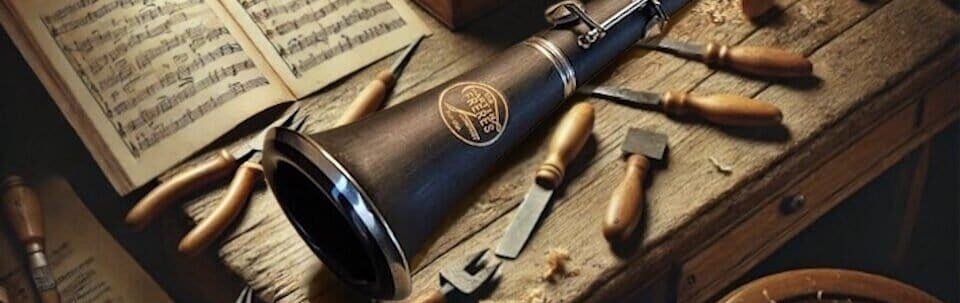
Clarinet collectors are drawn to instruments for their history, sound, rarity, and craftsmanship. They seek unusual materials like wood, metal, ivory, and crystal, enjoy the thrill of rare finds, and often restore instruments through careful cleaning, pad work, and crack stabilization. Collectors trade knowledge in clubs, forums, and archives, and beginners should document provenance, store instruments safely, and consult specialists before major restoration.
Why People Collect Clarinets: Motivations and Psychology
Clarinet collectors often start as players who fall in love with the instrument's voice, then discover its rich history. Many are motivated by a mix of nostalgia, craftsmanship appreciation, and the intellectual puzzle of tracing provenance. Each clarinet becomes a physical story about its maker, its era, and the musicians who once played it.
Some collectors focus on tonal variety, seeking instruments that offer colors modern clarinets cannot easily reproduce. Others are driven by rarity and the thrill of the hunt, tracking obscure makers, limited runs, or experimental designs. For many, the collection becomes a curated museum that connects personal identity to musical and industrial history.
Psychologically, collecting clarinets satisfies several needs at once: mastery of a niche subject, social recognition within a knowledgeable community, and the calming ritual of research and restoration. Unlike purely decorative antiques, clarinets can be played, so collectors also enjoy the sensory reward of sound and feel under the fingers.
The Appeal of Vintage Clarinets
Vintage clarinets attract collectors because they embody specific historical playing styles and manufacturing methods. Instruments from the late 19th and early 20th centuries often have different bore designs, keywork ergonomics, and tonal concepts compared with modern models, giving them a distinct voice that suits period repertoire and historically informed performance.
For many players, a well-restored vintage clarinet by makers such as Buffet Crampon, Selmer, or smaller French and German workshops offers a darker, more flexible tone. Collectors appreciate how these instruments reveal the evolution of the clarinet from simple 13-key systems to complex Boehm and Oehler designs with refined intonation and mechanism.
Vintage instruments also carry cultural and personal stories. A clarinet with a regimental stamp, a conservatory label, or a shop engraving can be traced to specific schools, orchestras, or regions. Catalogs, trade journals, and early advertisements help collectors place each instrument in a timeline of design trends and musical taste.
Rare Finds and Hidden Gems: Unusual Materials and Designs
Clarinet collectors often seek unusual materials and experimental designs that never became mainstream. These rare finds include metal clarinets from American makers, crystal instruments from French workshops, and hybrid designs that combine wood with metal bells or barrels. Such pieces highlight how makers responded to changing tastes and technical challenges.
Hidden gems can also be found among student or military models that were produced in large numbers but rarely preserved in top condition. A seemingly ordinary clarinet might reveal rare keywork variants, unusual bore tapers, or transitional systems that bridge older and newer designs. Careful inspection of stamps, serial numbers, and construction details often turns a modest purchase into a research treasure.
Collectors also value prototypes and short-lived models that show a maker testing new ideas. These might feature extra trill keys, alternative register venting, or adjustable mechanisms. Even if such designs were abandoned, they document the experimentation that shaped modern clarinets and give collectors a tangible link to innovation.
Material Characteristics and Rarity (Wood, Metal, Ivory, Crystal)
Clarinet collectors pay close attention to materials because they affect tone, stability, and rarity. The most common wood is African blackwood (grenadilla), prized for its density and resistance to moisture. Earlier instruments may use boxwood, cocobolo, or rosewood, which offer lighter weight and a warmer visual appearance but can be more fragile or prone to warping.
Metal clarinets, often made of nickel silver or brass with silver plating, became popular in early 20th century American school bands. While many were inexpensive student models, some high quality metal clarinets offer excellent projection and a bright, focused tone. Collectors value them for their durability and as artifacts of band history.
Ivory and bone appear on some 19th century clarinets, usually as rings, ferrules, or mouthpieces. Complete ivory clarinets are extremely rare and subject to strict legal controls. Crystal clarinets, associated with French makers such as those in Paris, fascinate collectors for their transparency and unique timbre but require careful handling to avoid cracks and chips.
Rarity is not only about the base material but also about combinations and finishes. Silver keywork on exotic hardwood, gold plating, or unusual ring materials can indicate special orders or high grade models. Collectors document these details carefully, since they influence both historical interest and market value.
Restoration and Preservation: Step-by-Step Best Practices
Safe restoration starts with minimal intervention and detailed documentation. Before any work, collectors photograph the clarinet from all angles, note every stamp and engraving, and record measurements of the bore, tone holes, and keywork. This baseline helps preserve historical information even if later repairs alter some features.
Initial cleaning should be dry and non-invasive. Use a soft brush to remove dust from tone holes and key posts, then a clean microfiber cloth to wipe exterior surfaces. Avoid aggressive metal polishes or solvents, especially on plated keys, ivory rings, or crystal bodies, which can scratch or chemically damage the surface.
Next, assess pads, corks, and springs. Many collectors replace only what is necessary to make the instrument playable, keeping original parts in labeled bags for archival purposes. When possible, match historical pad types, such as bladder pads on older instruments, to maintain authentic response and appearance.
For wood preservation, maintain stable humidity and apply only light bore oil if appropriate and not contraindicated by a restorer. Never force stuck tenons or keys. Instead, gently warm the joint with your hands and use a small amount of cork grease. If resistance persists, stop and consult a specialist to avoid cracking or bending.
Crystal and ivory require special care. Clean crystal with slightly damp, lint free cloths and avoid sudden temperature changes. Ivory should not be soaked; use dry cleaning methods and keep documentation of any work for legal and ethical reasons. For both materials, any crack repair should be left to experienced restorers familiar with conservation grade adhesives.
Historical Significance and Notable Makers (including Martin Freres)
From the early 19th century to the early 20th century, clarinet making shifted from small artisanal workshops to larger, catalog driven firms. Makers in Paris, Markneukirchen, and American centers like Elkhart published detailed catalogs that now serve as key references for collectors. These documents list models, key systems, and materials, helping date and identify instruments accurately.
Milestones include the spread of the Boehm system in France and later worldwide, the development of the Oehler system in German speaking regions, and the standardization of A and B flat clarinets for orchestral use. Firms such as Buffet Crampon, Selmer, and numerous regional makers refined bore designs and keywork layouts, leaving a wide range of collectible instruments.
Martin Freres played a notable role in the French clarinet trade, producing instruments that appear in period catalogs and dealer listings. Collectors encounter Martin Freres clarinets in various grades, often marked with model names or decorative stamps that reflect their intended market. These instruments help document how French workshops served both domestic and export demand.
Museum holdings, such as those at the Musée de la Musique in Paris, the National Music Museum in the United States, and regional collections in Germany and the UK, provide comparative examples. Auction records from major houses and specialist dealers also help establish typical price ranges and confirm the existence of rare models or materials.
Concise Historical Timeline for Collectors
In the early 19th century, many clarinets still used simple systems with fewer keys and boxwood bodies. By mid century, Boehm and related systems spread in France, while German makers developed their own multi ring, multi key systems. Late 19th century catalogs show increasing standardization of pitch, bore, and keywork.
From roughly 1890 to 1930, industrialization and export trade expanded production. Makers offered full product lines from student to professional models, often with clear catalog distinctions. The early 20th century also saw experiments with metal and unusual materials, along with improvements in pad technology and tuning stability that collectors now study closely.
Types of Clarinet Collections: How Collectors Focus Their Interests
Clarinet collectors rarely try to acquire every possible instrument. Instead, they define a focus that reflects their interests and resources. Some build maker focused collections, concentrating on one brand or workshop across different decades to trace design evolution and production quality changes.
Others prefer system based collections, such as Boehm, Oehler, Albert, or simple system clarinets, to compare fingerings, acoustics, and repertoire suitability. This approach appeals to performers who want to play period appropriate instruments for Mozart, Weber, or early jazz, and to teachers who demonstrate system differences to students.
Material focused collections highlight wood species, metal, ivory, or crystal examples, while geography focused collections emphasize instruments from specific regions like France, Germany, the United States, or Central Europe. Some collectors specialize in auxiliary clarinets such as E flat, alto, bass, or even rarer sizes like C or basset clarinets.
There are also documentation heavy collections that prioritize complete provenance, original cases, mouthpieces, and accessories. These collections function as research archives, supporting scholarship on trade routes, music education history, and performance practice. The chosen focus helps guide purchasing decisions and restoration priorities.
Community, Events, and Trade: Where Collectors Connect
Clarinet collectors connect through a mix of online and in person communities. Specialist forums, social media groups, and email lists allow members to share photos, ask identification questions, and compare restoration experiences. These spaces often host detailed discussions of serial numbers, catalog scans, and maker stamp variations.
In person events include clarinet festivals, woodwind conferences, and instrument fairs where collectors can try instruments, meet restorers, and attend lectures on historical topics. Universities and conservatories sometimes host exhibitions that bring together private collections and museum holdings, giving collectors a chance to study rare instruments up close.
Trade occurs through reputable dealers, auction houses, and peer to peer sales. Many collectors prefer to buy from specialists who provide detailed descriptions, high resolution photos, and clear return policies. Some communities maintain informal reference lists of trusted repairers and sellers, which helps newcomers avoid misrepresented instruments or unsafe restorations.
Valuation, Documentation, and Archival References
Valuing a clarinet collection involves more than checking recent auction prices. Collectors consider maker reputation, model rarity, condition, originality of parts, and documented provenance. An instrument with a clear history, such as ownership by a known player or inclusion in a historical ensemble, often commands a premium.
Documentation starts with detailed photographs, written descriptions, and measurements. Record serial numbers, all visible stamps, keywork layout, bore dimensions at several points, and any repairs or modifications. Keep digital and printed copies of invoices, appraisals, and correspondence with restorers or previous owners to build a traceable history.
Archival references are important. Use maker catalogs, trade journals, and museum databases to confirm model names and production periods. Some institutions publish online catalogs of their clarinet holdings, which collectors can compare with their own instruments. Auction archives from major houses provide realized prices and condition notes that help calibrate expectations.
Provenance Checking Tips for Collectors
When assessing provenance, start by verifying that stamps, serial numbers, and logos match known examples from the claimed period. Look for consistency in engraving style, font, and placement. Cross check these details against catalog illustrations and museum or archive photographs whenever possible.
Be cautious of instruments with mixed parts or recent rebranding. A bell or barrel from a different maker might indicate later repair or an attempt to enhance perceived value. Ask sellers for any paperwork, previous appraisals, or correspondence. When in doubt, consult independent experts who can compare your instrument with documented reference pieces.
How to Start and Curate Your Own Clarinet Collection
Starting a clarinet collection begins with defining a focus and budget. Decide whether you are most interested in playing characteristics, historical systems, specific makers, or rare materials. This clarity helps you avoid scattered purchases and directs your research toward catalogs, recordings, and scholarly articles that match your goals.
Begin with a small number of representative instruments rather than many low quality examples. A well chosen vintage Boehm clarinet, a contrasting system or era, and perhaps one unusual material piece can already provide rich comparison. As your knowledge grows, refine your criteria and upgrade or trade instruments to align with your evolving interests.
Curating a collection means planning storage, documentation, and display. Use instrument stands or padded cases that support the clarinet without stressing joints. Label each instrument with a catalog number linked to a digital record that includes photos, measurements, and historical notes. Consider how you might share the collection through lectures, recordings, or local exhibitions.
Checklist for Evaluating Instruments In Person or Online
When evaluating a clarinet, examine the body for cracks, warping, and previous repairs. Check tenon fit and look for signs of over sanding or poorly replaced corks. Inspect tone holes for chips, uneven undercutting, or obvious reaming that might affect tuning and response.
Study the keywork layout, metallurgy, and wear. Are keys straight, posts secure, and springs intact? Does the metal appear original, or are there mismatched keys from another instrument? Note the bore shape and measurements at the upper joint, lower joint, and bell, which can reveal design intent and later modifications.
Ask for clear photos of stamps, serial numbers, and any maker labels inside the case. For online purchases, request playing tests or sound samples when possible. Clarify the return policy in writing so you can have the instrument inspected by a trusted technician before committing long term.
Care, Troubleshooting, and Common Restoration Challenges
Routine care for collectible clarinets focuses on stability and gentle handling. Maintain room humidity around 40 to 55 percent, avoid rapid temperature changes, and swab the bore after playing. Store instruments horizontally or in well fitted cases to reduce stress on tenons and keywork.
Common issues with vintage clarinets include cracked wood, warped barrels, stuck tenons, seized keys, brittle pads, and loose or failed solder joints on metal components. Collectors should perform basic diagnostic checks but avoid aggressive interventions that could lower value or compromise future professional restoration.
For minor troubleshooting, use a leak light or thin LED to check pad sealing, gently apply key oil to pivot points, and use a small amount of cork grease on dry tenons. If a tenon is stuck, do not twist forcefully; instead, seek a technician who can safely release it using controlled heat and specialized tools.
Cracks, especially near tone holes or sockets, require expert attention. Temporary measures like wrapping with tape or using household glues can cause long term damage and complicate later repairs. Similarly, bent keys, broken springs, and solder failures on metal clarinets should be handled by experienced woodwind or metal specialists.
Instrument Anatomy Focus for Collectors
Collectors pay special attention to the bore, which shapes the clarinet's acoustic character. Measuring bore diameter at several points helps identify design families and detect later alterations. Subtle differences in taper between the upper and lower joints can indicate specific maker philosophies or production periods.
Keywork layout and metallurgy reveal both ergonomics and quality. Note the number and placement of rings, spatulas, and trill keys, as well as whether keys are solid nickel silver, plated brass, or another alloy. Tone hole placement, size, and undercutting influence tuning and response and can show whether an instrument has been reworked.
Tenon fit, barrel and bell variations, and ligature design also matter. Some historical clarinets have multiple barrels for different pitch standards, while bells may vary in flare and length. Original ligatures, especially those with unique designs or maker stamps, add to completeness and can be of interest in their own right.
When To Stop and Call a Professional
Stop DIY work immediately if you encounter resistance when disassembling, visible cracks opening or spreading, or keywork that feels loose at the posts. Do not attempt to fill cracks, straighten keys, or adjust tone holes on your own, as these tasks require specialized tools and training.
Seek a professional restorer when dealing with rare materials like ivory or crystal, complex historical key systems, or instruments with significant provenance. A qualified technician can propose a conservation minded plan that balances playability with preservation, often using reversible methods that respect the instrument's historical integrity.
Key Takeaways
- Clarinet collectors blend musical passion with historical research, focusing on makers, systems, materials, or regions to shape coherent collections.
- Safe restoration emphasizes documentation, minimal intervention, and timely referral to qualified specialists, especially for rare materials and serious structural issues.
- Provenance, archival references, and careful valuation help protect both historical integrity and financial investment while supporting scholarship and performance.
- Well curated collections benefit players, teachers, and researchers by providing access to diverse tonal palettes and tangible evidence of clarinet evolution.
FAQs
What is clarinet collectors?
Clarinet collectors are individuals or institutions that acquire, study, and preserve clarinets for their historical, musical, or aesthetic value. Their collections may focus on specific makers, systems, eras, or materials, and often support performance, teaching, or research related to clarinet history and design.
How do collectors verify the age and maker of a clarinet?
Collectors verify age and maker by examining stamps, serial numbers, engraving styles, and construction details, then comparing them with maker catalogs, museum examples, and auction records. They also consider keywork layout, bore design, and materials, which often match known patterns from specific workshops and time periods.
What are the rarest materials used in clarinets and why are they valuable?
Some of the rarest clarinet materials are crystal, full or extensive ivory, and certain exotic hardwoods used in limited runs. These materials are valuable because they are scarce, visually striking, and often linked to specific makers or eras. Legal and ethical considerations, especially with ivory, also influence how collectors handle and value such instruments.
How should I store and care for a vintage clarinet to preserve its condition?
Store a vintage clarinet in a stable environment with 40 to 55 percent humidity, away from direct heat or sunlight. Keep it in a well fitted case or padded stand, swab the bore after playing, and avoid sudden temperature changes. Schedule periodic checkups with a qualified technician to monitor pads, corks, and structural integrity.
Where can I buy, sell, or trade vintage clarinets safely?
You can buy, sell, or trade vintage clarinets through reputable specialist dealers, established auction houses, and trusted online communities focused on woodwinds. Look for sellers who provide detailed photos, clear descriptions, return policies, and references. Many collectors also network at clarinet festivals and instrument fairs to arrange private trades.
When should I seek a professional restorer versus DIY cleaning?
DIY work should be limited to gentle cleaning, basic swabbing, and light lubrication of key pivots. Seek a professional restorer if you encounter cracks, stuck joints, bent keys, failing solder joints, or rare materials like ivory and crystal. Professional intervention is also recommended for instruments with significant historical or monetary value.
How do collections benefit players and researchers?
Clarinet collections give players access to diverse tonal palettes and historically appropriate instruments for specific repertoire. Researchers use collections to study design evolution, maker practices, and performance traditions. Collections can support recordings, lectures, and exhibitions that deepen understanding of clarinet history for both specialists and the wider musical community.
Related Posts: