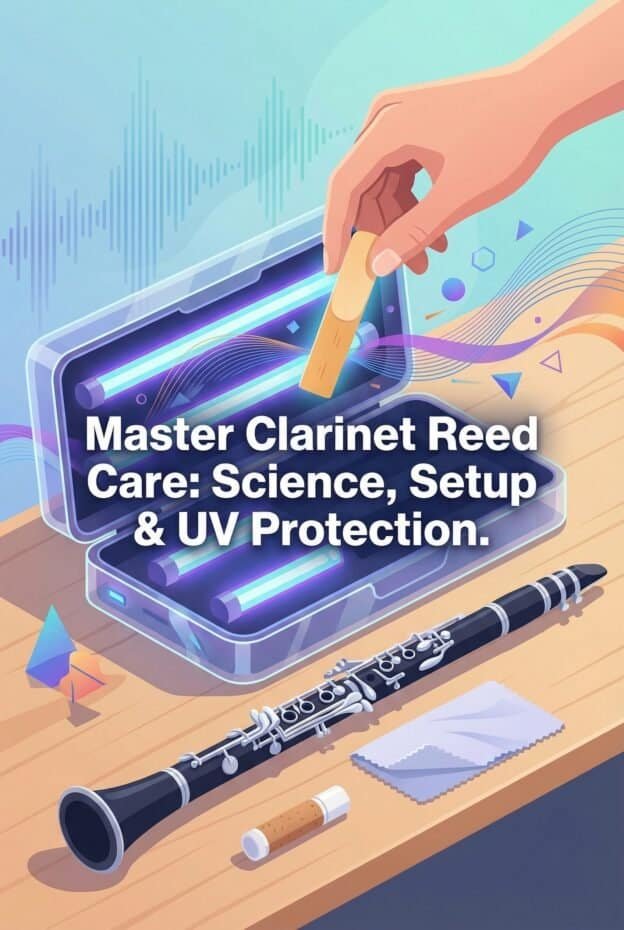
A clarinet reed storage case with UV protection uses controlled humidity and UV light, usually UV-C, to reduce microbial growth and stabilize cane moisture. This helps prevent mold, warping, and premature reed failure. You extend reed life by rotating reeds, letting them dry between use, and storing them in a UV and humidity controlled case.
Why a Clarinet Reed Storage Case with UV Protection Matters
Clarinet reeds are thin, organic pieces of cane that react quickly to moisture, temperature, and contamination. A clarinet reed storage case with UV protection creates a more stable, hygienic environment than a basic plastic reed guard or leaving reeds on the mouthpiece. That stability directly affects tone, response, and reed lifespan.
Every time you play, saliva, food particles, and airborne microbes coat the reed surface. If the reed then sits in a closed, damp case or on the mouthpiece, bacteria and mold can grow. UV-C light in a reed case helps disrupt microbial DNA, reducing growth and odor while humidity control minimizes warping and cracking.
For students, band directors, and professionals, this means fewer unusable reeds, less guesswork when selecting a reed for performance, and lower long-term costs. A good UV reed case supports a consistent setup, so your embouchure and air do not have to compensate for constantly changing reed behavior.
Typical players can extend usable reed life by 30-60% when combining UV storage with proper humidity control and rotation compared to storing reeds loose in a case or on the mouthpiece.
Hygiene is another key reason these cases matter. Shared rehearsal spaces, marching band environments, and frequent doubling increase exposure to microbes. While UV cases are not medical sterilizers, they can reduce microbial load on reeds between sessions, which is especially valuable for teachers and players who practice many hours per week.
How UV Light Affects Reeds: The Science Behind Sterilization and Limitations
UV-C light, typically in the 254 nm range, damages the DNA and RNA of bacteria, mold, and some viruses, preventing them from reproducing. In a clarinet reed storage case, short UV-C cycles target the reed surface where saliva and moisture collect, helping keep the cane cleaner between uses.
UV light does not make reeds stronger or improve their cut. Its main role is microbial control. The cane itself is relatively stable under short, controlled UV exposure, but long, intense exposure can dry or weaken the outer fibers. Quality reed cases limit exposure time and intensity to avoid damaging the reed.
Reed anatomy helps explain where UV matters most. The tip and rails are extremely thin and flexible. Microbial buildup here can change vibration and response. The heart and belly control core resistance and tone color. If mold penetrates or stains these areas, the reed often feels dull or stuffy even if it looks intact at a glance.
Most UV reed cases use timed cycles, often 3 to 10 minutes, after you close the lid. This is enough to reduce surface microbes but not enough to fully sterilize like a medical device. Players should still avoid sharing reeds and should not rely on UV to make an unsafe reed safe to share.
Many consumer UV reed cases use UV-C LEDs rated around 260-280 nm with cycle times of 3-5 minutes, targeting a 90% or greater reduction in common surface bacteria under ideal conditions.
Limitations are important. UV light cannot reverse structural damage, remove deep stains, or fix a reed that has softened or delaminated. It also does not replace basic hygiene like rinsing the mouth before playing. Think of UV as a helpful extra layer of protection, not a cure-all.
Humidity, Temperature and Cane: Finding the Sweet Spot for Reed Longevity
Cane is a natural, fibrous material that swells when wet and shrinks when dry. Rapid swings in humidity or temperature cause the reed to warp, crack, or develop internal stress. A clarinet reed storage case with UV protection often includes humidity control to keep the reed in a stable range between sessions.
Most clarinet reeds stay healthiest around 45-60 percent relative humidity at room temperature. Below about 35 percent, the reed can dry out, leading to tip chipping, micro-cracks, and a brittle feel. Above about 70 percent, the reed may swell, feel waterlogged, and become a breeding ground for mold and mildew.
Different parts of the reed react differently. The thin tip and rails respond fastest to humidity swings, often curling or flattening. The heart and back respond more slowly but hold structural memory. If the back warps, the reed may no longer seal properly on the mouthpiece table, causing leaks and unstable attacks.
Some UV reed cases incorporate passive humidity control using sponge pads or gel packs, while higher-end units use adjustable humidifiers and built-in hygrometers. The goal is not to keep reeds wet, but to keep them near a stable, moderate humidity so they do not cycle between extremes every day.
Reeds stored between 45-60% relative humidity often last 20-40% longer and show less warping compared to reeds stored in uncontrolled environments with swings below 30% or above 75%.
Temperature interacts with humidity. Hot cars, band rooms near radiators, or direct sunlight can accelerate drying and stress. Even with a good case, avoid leaving your reeds in extreme heat or cold. A stable room environment plus a humidity controlled case gives the reed the best chance to stay flat, responsive, and crack free.
Features to Look for in a UV Reed Storage Case (and What They Do)
When choosing a clarinet reed storage case with UV protection, focus on features that directly protect cane and improve daily use. The most important are UV system design, humidity control, reed support surface, capacity, and power options. Each feature affects reed health, convenience, and long-term cost.
UV system design includes the type of UV source (LED vs tube), wavelength, and cycle timing. LED systems typically run cooler, last longer, and are more impact resistant. Look for automatic shutoff when the lid opens, and a clearly indicated cycle length so you know how long the reeds are treated.
Humidity control ranges from simple vents to integrated humidifiers. Entry-level UV cases may not include humidity regulation, so you may need a separate reed humidifier. Mid and high-end models often include replaceable humidity packs or reservoirs plus a hygrometer so you can monitor levels at a glance.
The reed support surface is critical. Reeds should lie flat against a glass, acrylic, or precision machined plate, or rest in well-shaped channels that keep the table flat. Spring clips or magnetic plates can help maintain contact. Avoid cases where reeds rattle or only touch at a few points, as this encourages warping.
Capacity and layout affect practicality. Band directors and doubler players may prefer 8-16 reed capacity, sometimes with separate sections for clarinet and saxophone. Soloists or students might prioritize a compact 4-6 reed case that fits in a pocket of the clarinet case. Check whether the case fits your preferred reed box sizes and cuts.
Power options matter if you travel. Some UV reed cases use USB charging with internal batteries, while others plug into the wall. Battery powered units are convenient for rehearsals and gigs, but you must remember to charge them. Check estimated cycle counts per charge and whether the unit can operate while plugged in.
Step-by-Step: How to Use and Maintain a UV-Protected Reed Case
Using a clarinet reed storage case with UV protection effectively requires a consistent routine. The goal is to let reeds dry enough to avoid swelling, then store them flat in a controlled environment where UV and humidity work together to preserve the cane. Follow these steps daily and weekly.
Daily reed handling and storage routine
After playing, gently wipe excess moisture from the reed with a clean, lint free cloth or the back of your hand. Avoid squeezing the tip. Place the reed on a flat, clean surface for 5-10 minutes to air dry slightly. This short drying period reduces the risk of trapping excess moisture in the case.
Open your UV reed case and place each reed flat in its slot or against the plate, table side down. Make sure the tip does not catch on edges. Close the lid fully so the UV cycle can start. Allow the full programmed cycle to run without opening the case so the UV light can reach the reed surfaces.
Store the case at room temperature away from direct sunlight, heaters, or damp practice spaces. Avoid stacking heavy objects on top of the case, which can warp the lid or reed plate. If your case includes humidity packs, glance at any built in hygrometer to confirm it is in the target range.
Weekly and monthly maintenance steps
Once a week, inspect the inside of the case for residue, dust, or water spots. With the power off and UV source cool, wipe interior surfaces gently with a soft cloth slightly dampened with a mild, non alcohol soap solution. Avoid touching the UV LEDs or tubes directly. Let the case air dry fully before use.
Check humidity elements weekly. If you use replaceable humidity packs, follow the manufacturer's guidelines for recharging or replacing them, often every 2-4 weeks. For sponge or reservoir systems, ensure there is no standing water or mold. Replace any element that shows discoloration or odor.
Monthly, inspect the UV system. Confirm indicator lights function and that the cycle starts and stops as expected. If your case uses replaceable UV bulbs, note the recommended replacement interval, often 6-12 months of regular use. A dim or flickering UV source should be replaced to maintain effectiveness.
Common Problems & Troubleshooting (Reeds and Case Issues)
Even with a good clarinet reed storage case with UV protection, problems can occur. Recognizing symptoms early helps you decide whether to adjust your routine, replace humidity elements, or retire a reed. Focus on reed warping, odors, loss of response, and visible damage as key diagnostic clues.
Warping or uneven response usually shows as a reed that plays well one day and poorly the next, or that leaks on one side. Inspect the reed against a flat glass surface. If light shows under one rail or the back, humidity swings or uneven drying may be the cause. Verify your case humidity and daily drying time.
A strong, musty, or sour odor from the case or reeds suggests microbial growth despite UV cycles. Check whether the UV cycle is actually running, and inspect humidity packs or sponges for mold. Clean the case interior thoroughly, replace any contaminated elements, and discard reeds with visible mold or deep stains.
Loss of response, especially in the tip area, can result from micro-cracks or fiber fatigue. If a reed feels suddenly soft, mushy, or unresponsive even after drying, it may have absorbed too much moisture or aged beyond recovery. UV light cannot fix this. Mark the reed as practice only or retire it.
Case issues include UV lights not turning on, condensation inside the lid, or inconsistent humidity readings. For power problems, check cables, switches, and any child safety locks. For condensation, reduce added water in humidifiers and allow reeds to air dry slightly longer before closing the case.
If multiple reeds crack at the heel or along the rails, inspect the reed slots or plate for sharp edges or debris. A small chip in the plate or a grain of sand can stress the cane. Clean carefully and, if needed, lightly smooth rough spots with very fine, non shedding material, taking care not to alter the plate surface.
Player Practices: Reed Rotation, Break-In, Drying, and Performance Prep
A clarinet reed storage case with UV protection works best when combined with smart player habits. Reed rotation, gradual break in, proper drying, and organized performance prep all reduce stress on the cane and make your case features more effective. Treat reeds as a small, managed inventory, not disposable items.
Use a rotation system with at least 3-5 reeds in active use. Number your reeds in pencil on the back. On each practice day, play a different reed from the set, giving each one time to rest and recover between sessions. This rest period allows internal moisture to equalize and extends structural life.
Break in new reeds gradually. On day one, play a new reed for 5-10 minutes of gentle long tones and scales, then store it in your UV case. Increase playing time over several days before using it in full rehearsals or performances. This slow approach lets the fibers settle without sudden stress.
Drying technique matters. Avoid rubbing the tip with cloths or paper, which can fray fibers. A light wipe along the back and heel is enough. Let the reed rest tip up or flat on a clean surface for a few minutes before placing it in the case. This prevents trapping pooled moisture at the heart.
For performance prep, identify 2-3 reeds from your rotation that feel most stable. Play test them in the same environment and temperature as the performance if possible. Store these in your UV and humidity controlled case until just before the event, then avoid unnecessary switching unless a reed clearly fails.
Band directors can teach students to log reed use and rotation. Simple notes like date first played, total weeks in use, and any issues help track patterns. Over time, you will see how long reeds typically last in your environment when stored in a UV case, which guides purchasing and practice planning.
Comparing Options: Budget Cases, Mid-Range Units, and Pro Humidified/UV Systems
Clarinet reed storage solutions with UV protection range from simple, compact units to advanced humidified systems. Choosing the right level depends on your playing schedule, climate, and budget. Comparing budget, mid range, and professional options clarifies which features are important for your situation.
Budget UV reed cases usually offer basic UV-C LED treatment for 4-6 reeds with minimal or no humidity control. They appeal to students or casual players who mainly want cleaner reeds and a flat storage surface. These cases often rely on ambient room humidity and may not include a hygrometer.
Mid range units typically add passive humidity control using replaceable packs or integrated reservoirs plus a simple humidity indicator. Capacity may increase to 8-12 reeds, and build quality improves with more secure latches and better reed plates. These cases suit serious students, college players, and band directors.
Professional humidified/UV systems combine precise humidity regulation, digital hygrometers, and programmable UV cycles. Some allow you to set target humidity levels, adjust cycle frequency, and monitor internal conditions. They often hold 12 or more reeds and use high quality materials for long term stability.
Consider your climate. In very dry regions, humidity control is almost as important as UV. In humid coastal or tropical areas, mold prevention and UV become critical. A player in Arizona might prioritize a pro humidified case, while a player in a temperate region might be well served by a mid range UV and humidity unit.
Cost effectiveness comes from matching features to need. If you go through several boxes of reeds per month, even a higher priced case can pay for itself through extended reed life and fewer emergency replacements. For occasional players, a simpler UV case plus mindful storage habits may be enough.
History & Legacy: Reed Care, Storage Evolution, and Martin Freres' Role
Reed storage has evolved from simple paper sleeves to sophisticated humidified and UV equipped cases. Early clarinetists often kept reeds in wooden boxes or cloth wraps, relying on room conditions and experience. As concert halls and travel increased, players sought more predictable solutions to protect their fragile cane.
By the early 20th century, catalogs from European and American makers featured metal and hard rubber reed cases designed to keep reeds flat and protected from physical damage. Some included felt or cork linings and simple vents to reduce condensation, but humidity and hygiene were still largely unmanaged.
Later, humidified reed cases and reed humidors appeared, often borrowed from cigar storage concepts. These used sponges, wicks, or small reservoirs to maintain moderate moisture. Only in recent decades did UV technology become compact and affordable enough to appear in personal reed cases for clarinet and saxophone players.
From Martin Freres archives: Early 1900s clarinet accessory listings show simple metal reed holders and leather pouches promoted as protection against breakage during travel. While humidity and microbial control were not yet central themes, the emphasis on flat, secure storage laid groundwork for later innovations in reed care.
Martin Freres, known for its clarinets and accessories, reflected these trends in historic catalogs and promotional materials. Period documents highlight the importance of protecting reeds from crushing and warping inside instrument cases, a concern that modern UV and humidity controlled cases address with far greater scientific precision.
Today, reed storage combines traditional goals of flatness and physical protection with new priorities: microbial control, humidity stability, and data informed design. UV reed cases represent the latest step in a long line of efforts to give clarinetists reliable, predictable reeds from practice room to stage.
Buying Checklist and Practical Recommendations
Before purchasing a clarinet reed storage case with UV protection, use a simple checklist to match features to your needs. Clarify how many reeds you typically keep in rotation, your local climate, and how often you travel. This helps you avoid overbuying or choosing a case that lacks critical functions.
Key questions: Does the case use UV-C LEDs or bulbs, and is the cycle clearly indicated? Is there any humidity control, and can you see current humidity levels? How many reeds fit, and do the slots or plate support your reed sizes? What power source does it use, and is it practical for your routine?
For most advancing students and serious amateurs, a mid range UV case with passive humidity control and at least 6-8 reed capacity offers a strong balance of cost and performance. In very dry or very humid climates, prioritize models with more precise humidity regulation and a reliable hygrometer.
Professionals, college majors, and band directors who manage many reeds or multiple instruments may benefit from a larger, pro level humidified/UV system. The ability to monitor and adjust humidity, combined with strong construction, can reduce emergency reed failures and stabilize setups across busy schedules.
Once you choose a case, commit to a consistent routine: air dry reeds briefly, store them flat, run UV cycles fully, monitor humidity weekly, and clean the interior monthly. Combine this with a numbered rotation system and gradual break in, and you will see clearer patterns in reed behavior and lifespan.
Track outcomes in a simple log: date first used, storage method, and date retired for each reed. Over several months, compare average reed life before and after using your UV case. Many players find they use fewer reeds per year, experience fewer sudden failures, and enjoy more consistent tone and response.
Key Takeaways
A clarinet reed storage case with UV protection reduces microbial growth and, when combined with humidity control, significantly extends reed life and stability.
Optimal reed storage humidity is typically 45-60 percent, with short UV-C cycles used as a hygiene aid, not a replacement for basic cleaning and rotation.
Consistent routines for drying, rotation, case cleaning, and humidity monitoring matter as much as the specific case model you choose.
FAQ
What is a clarinet reed storage case with UV protection?
A clarinet reed storage case with UV protection is a specialized container that holds reeds flat while using UV-C light and often humidity control to reduce microbial growth and stabilize cane moisture. This combination helps prevent mold, warping, and premature reed failure, leading to more consistent tone and longer reed life.
How does UV light help keep reeds clean and is UV-C safe for cane?
UV-C light damages the DNA of bacteria and mold on the reed surface, limiting their ability to reproduce and reducing odors. Short, controlled UV-C cycles used in reed cases are generally safe for cane and do not significantly weaken the reed, provided exposure times follow the manufacturer's guidelines.
What humidity level should I store clarinet reeds at?
Most clarinet reeds store best around 45-60 percent relative humidity at room temperature. This range helps prevent excessive drying, which can cause cracking, and excessive moisture, which can lead to swelling and mold. A reed case with humidity control and a hygrometer helps you stay within this target range.
How often should I rotate or replace my reeds when using a UV case?
Rotate between at least 3-5 reeds, using a different reed each practice day so each one rests between sessions. Even with a UV case, most players replace reeds after several weeks of regular use, or sooner if they show warping, cracking, or a noticeable loss of response that does not improve with drying.
Can UV storage cases damage reeds or mouthpieces?
Properly designed UV storage cases use short, controlled UV-C cycles that are unlikely to damage reeds or mouthpieces. Problems arise only if exposure is excessive or if the case traps too much moisture. Follow the manufacturer's instructions, avoid leaving reeds in constant UV light, and allow brief air drying before storage.
Do I need to clean my UV reed case and how?
Yes, you should clean your UV reed case regularly. With the power off, wipe the interior gently with a soft cloth slightly dampened with mild, non alcohol soap solution, avoiding direct contact with UV LEDs or tubes. Let the case air dry completely before use, and replace any humidity elements that show discoloration or odor.