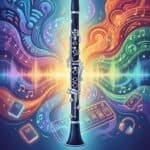
The clarinet in acid jazz functions as both melodic voice and textural color – using breathy tone, bends, flutter-tongue, and effects it can provide sultry solos, rhythmic stabs, and ambient lines that bridge jazz, funk, and electronic elements. With the right mouthpiece, mic, and vocabulary, it can sit comfortably beside Rhodes, synths, and drum machines.
Introduction: Why the Clarinet Fits Acid Jazz
The clarinet fits acid jazz because it can sound smoky and intimate at low volume, then cut through a dense groove when pushed. Its wide dynamic range, flexible pitch, and vocal-like articulation let it slide between lead lines, background textures, and rhythmic riffs without changing instruments or setups mid-set.
For players used to classical or straight-ahead jazz, acid jazz offers a new context: repetitive, loop-based grooves, strong backbeats, and layered textures. Clarinet can double synth hooks, answer vocal lines, or provide atmospheric pads through effects. The key is adapting tone, time feel, and gear to work with amplified rhythm sections and electronic production.
For bandleaders and producers, clarinet adds an organic, human edge to programmed beats and samples. Its acoustic attack, breath noise, and pitch flexibility contrast nicely with quantized drums and static synths, helping tracks feel more alive without losing the tight, danceable pulse that defines acid jazz.
What Is Acid Jazz? (Origins, Style, and Key Elements)
Acid jazz grew from late 1980s UK club culture, especially London nights where DJs like Gilles Peterson blended rare groove, soul, funk, and jazz records. Labels such as Talkin Loud and Acid Jazz Records helped define the sound, combining live bands with DJ aesthetics, samples, and extended dance-friendly grooves.
Stylistically, acid jazz sits between jazz-funk and early house. You hear syncopated bass lines, breakbeat-influenced drum patterns, Rhodes or Wurlitzer keyboards, horn stabs, and occasional rap or soul vocals. Repetition is central: riffs loop for long stretches while soloists improvise over a relatively static harmony.
Key elements that matter for clarinetists include strong backbeats, often on 2 and 4, and bass lines that lock tightly with kick drum patterns. Harmony tends to favor extended chords, like minor 9s and dominant 13s, but changes move slowly. This gives clarinet players room to explore timbre, rhythm, and motivic development rather than fast chord chasing.
Over the 1990s, acid jazz influenced nu-jazz and broken beat scenes in cities like London and Berlin. Acts such as The Brand New Heavies, Incognito, and Jamiroquai brought the sound into mainstream awareness, while underground producers pushed more electronic textures. Clarinet remained a niche color, but its potential in these groove-based settings is significant.
History & Archive References: Clarinet Moments in Acid Jazz
Clarinet has never been a dominant acid jazz instrument, but it appears in key recordings and live sets where bandleaders wanted a smoky, old-school timbre alongside modern grooves. In the late 1980s and early 1990s, some London session players brought clarinet into horn sections for intros, bridges, and softer breakdowns.
Listen for clarinet-like reed colors in projects around the Gilles Peterson and Talkin Loud circles. While many credits list generic “reeds” or “woodwinds,” the darker, more focused sound on certain tracks suggests clarinet or bass clarinet doubling sax parts. Producers often used these colors to soften the attack of brass-heavy arrangements.
By the late 1990s and early 2000s, nu-jazz and broken beat artists in Europe and Japan began experimenting more openly with clarinet. Some live recordings from small clubs in Paris, Berlin, and Tokyo show clarinetists using clip-on mics and light effects to blend with DJs and laptop performers, creating hybrid sets that foreshadowed later electro-jazz projects.
Archival live sets from artists in the extended acid jazz family sometimes feature guest clarinetists during acoustic segments. For example, certain bootleg recordings from London venues in the early 1990s include clarinet on intros and outros, playing unison lines with flute or muted trumpet before the full band enters with a heavier groove.
As broken beat and nu-jazz developed, clarinet often appeared on more experimental tracks that blurred genre lines. Producers would sample short clarinet phrases, then loop and process them, treating the instrument like a texture source rather than a traditional solo voice. This approach is highly relevant for modern clarinetists working with producers or in DAW-based projects.
Compared with trumpet or saxophone, clarinet's acid jazz footprint is modest but distinctive. Where it appears, it often marks intimate sections: late-night intros, deep-groove breakdowns, or textural interludes. Studying these uses can help modern players design parts that feel authentic to the style while still fresh.
Clarinet Anatomy & Tone: Features That Translate to Acid Jazz
Clarinet anatomy shapes how it works in groove-based music. The cylindrical bore produces a focused, centered tone with strong projection in the clarion register. In acid jazz, this helps the instrument cut through electric bass, drums, and keys without sounding harsh if the player controls brightness and articulation.
Smaller-bore clarinets often give a denser, more concentrated sound that can pierce a mix, useful for funk stabs and rhythmic riffs. Larger-bore instruments tend to sound broader and more spread, which can be ideal for warm, breathy lines and pads. Players can choose based on whether they want presence or blend as their primary role.
The mouthpiece and chamber design strongly affect how the clarinet sits in an amplified band. A medium-open tip with a medium chamber often gives a good compromise: enough edge to project, but still capable of a round, dark sound. Very closed classical mouthpieces can feel too restrained, while extremely open jazz pieces may become too bright under close miking.
Clarinet keywork allows fast alternation between registers, which is valuable for acid jazz riffs that jump octaves. The throat tones and chalumeau register can sound almost like a muted trumpet or vintage synth when played softly and processed with reverb or delay, giving producers a wide palette from a single instrument.
Players can adjust tone for acid jazz by experimenting with embouchure flexibility and voicing. Slightly relaxed embouchure, more oral cavity space, and warmer air support can create a drier, less orchestral sound. This helps the clarinet sit closer to Rhodes and electric bass rather than floating above them like a classical soloist.
Think of the clarinet as a multi-register synth. The low register offers woody, intimate tones for intros and breakdowns. The middle register provides clear, vocal-like lines for melodies. The upper register can deliver piercing accents and climactic phrases. Acid jazz arrangements can exploit these contrasts within a single track.
Techniques & Effects: Playing Approaches for Acid Jazz
Acid jazz favors strong time feel and consistent tone over virtuosic runs. Clarinetists should focus on locked-in eighth notes, ghosted articulations, and repeated motifs. Practice playing simple two- or four-note riffs with metronome and drum loops until they feel as solid as a rhythm guitar part.
Breathy tone is a key color. Use slightly less embouchure pressure, more air, and softer attacks to introduce controlled air noise. This works well in low and middle registers for sultry melodies over Rhodes chords. Producers often compress and reverb this sound to create lush pads from simple lines.
Pitch bends and slides help the clarinet match vocal and guitar inflections. Use finger slides between adjacent notes, half-holing, and subtle embouchure adjustments to scoop into targets. In acid jazz, keep bends tasteful and rhythmically placed, often at the end of phrases or on longer notes in breakdowns.
Extended techniques such as flutter-tongue, growls, and multiphonics become powerful when used sparingly. A short flutter-tongued swell into a chorus, or a growled accent on a backbeat, can add grit without overwhelming the groove. Always check how these sounds translate through microphones and effects before a gig.
Effects open another dimension. Common choices include delay, reverb, chorus, and mild overdrive. Delay synced to tempo can turn simple riffs into complex textures. Short slapback delays work well for funk stabs, while longer dotted-eighth delays suit ambient lines. Start with subtle settings so the acoustic character of the clarinet remains recognizable.
Wah and filter effects can mimic talkbox or synth textures. Using an expression pedal to sweep a filter while sustaining notes lets the clarinet function like a lead synth. This works especially well in call-and-response with keyboards or guitar, but requires careful practice to coordinate fingers and foot movements.
Arranging & Roles: Where the Clarinet Sits in a Groove-Based Band
In an acid jazz band, clarinet can occupy several roles: lead melody, secondary horn, rhythmic texture, or ambient pad. The arrangement should assign clear functions per section so the instrument does not compete with vocals, guitar, or synths. Think in terms of layers: rhythm, harmony, melody, and color.
As a lead voice, clarinet often works best in intros, breakdowns, and bridges. Use the low and middle registers for themes that can later be echoed by vocals or other instruments. When the full band enters, shift to higher register lines or counter-melodies to avoid masking the main hook.
In a horn section, clarinet can double alto sax or trumpet an octave below or above, thickening stabs and riffs. Its more focused attack can add definition to chord hits on 2 and 4. Arrange parts so clarinet either reinforces the root or third of chords, or adds color tones like 9ths and 13ths.
As a rhythmic texture, clarinet can play short, syncopated figures that interlock with guitar and keys. Think of it as a percussive element: tight, dry articulations, minimal vibrato, and repeated patterns. This role is especially effective in choruses where the groove needs extra energy without adding more harmonic movement.
For ambient pads, use long tones with gentle vibrato, processed through reverb and delay. Play simple chord tones or scale fragments, leaving plenty of space. Producers can record these lines and loop them, building evolving textures underneath solos or vocal sections without cluttering the mix.
When arranging sets, consider clarinet stamina and contrast. Avoid writing continuous high-register parts over loud grooves for long stretches. Alternate between featured moments and supportive roles so the instrument remains fresh to the listener and comfortable for the player throughout a 60-90 minute performance.
Notable Players & Recordings to Study (discography + timestamps)
Because clarinet is a minority voice in acid jazz, it helps to study adjacent genres where similar techniques apply. Some modern jazz and nu-jazz recordings feature clarinet in groove-heavy contexts that share DNA with acid jazz, especially in European and Japanese scenes.
Look for projects where clarinetists collaborate with DJs or electronic producers. These recordings often showcase close-miked clarinet, subtle effects, and loop-based structures. Pay attention to how players shape phrases to fit drum machine patterns and sampled bass lines rather than traditional swing or bebop feels.
Study live recordings where clarinet appears in mixed horn sections. Note how arrangers use clarinet for specific colors: low-register unisons with tenor sax, high-register answers to trumpet, or soft pads behind vocal verses. Time-stamp sections where clarinet steps forward, then transcribe both the notes and the rhythmic placement.
For broken beat and nu-jazz, focus on tracks that feature woody, breathy reed textures. Even when the instrument is not explicitly credited as clarinet, the sound can guide your tone goals. Listen for moments where the reed line locks with syncopated kick and snare patterns, often around the 2:30 to 4:00 mark in extended tracks.
Producers and bandleaders can also study older soul-jazz and jazz-funk records with clarinet or bass clarinet. Many of the phrasing and arranging concepts transfer directly to acid jazz: short motifs, riff-based solos, and strong backbeat articulation. Use these as models when writing parts for modern groove bands.
Choosing and Modifying a Clarinet for Acid Jazz (breath, mouthpiece, reeds, and pickups)
You do not need a special clarinet for acid jazz, but certain setups make life easier. A reliable Bb clarinet with stable intonation and comfortable keywork is the baseline. If you own multiple instruments, choose the one with the most even response across registers, since amplification will reveal inconsistencies.
Mouthpiece choice is critical. Many players prefer a slightly more open tip and a medium chamber compared with their classical setup. This combination allows a fuller, more flexible sound at medium-loud dynamic levels without excessive effort. Test mouthpieces with a clip-on mic to hear how brightness and projection change in a PA context.
Reeds should balance response and stability. Strengths in the 2.5 to 3 range often work well for groove-based playing, depending on mouthpiece. Softer reeds can make bends and breathy tone easier but may sound thin when close-miked. Harder reeds provide core and pitch stability but can feel stiff for extended sets.
For amplification, many players use clip-on condenser microphones that attach to the bell or barrel. These allow freedom of movement and consistent sound. Some choose internal pickups or contact mics, but these often require more EQ to sound natural. Test several options with your band or producer before committing.
Effects chains usually start with a preamp or pedal that provides basic gain control and EQ. From there, add delay, reverb, and modulation as needed. Keep the signal path simple at first: clarinet mic into preamp, then into a multi-effects unit or a small pedalboard, then to the mixer or audio interface.
Breath control matters more than raw volume. In close-miked settings, playing too loudly can overload the mic and produce harsh transients. Practice playing with a strong core sound at moderate dynamic levels, letting the PA or recording engineer handle overall loudness while you focus on color and articulation.
Maintenance & Troubleshooting for Gigging/Effected Clarinets
Regular maintenance becomes more important when you play in clubs and amplified settings. Smoke, sweat, and humidity can accelerate wear on pads and corks. Wipe down the exterior after each set, and swab the bore thoroughly to remove moisture that can cause sticky pads and mold.
Pad and moisture management should be part of your routine. Use cigarette paper or pad cleaning paper to dry sticky pads, especially in the upper joint. Avoid playing long sets without swabbing, as accumulated moisture can lead to water in tone holes and sudden squeaks during quiet sections.
Cork care matters when you frequently attach and remove clip-on mics or barrels. Apply cork grease sparingly but regularly to prevent cracking. If you use a barrel with integrated pickup, check the tenon fit often, since extra weight can stress the cork and affect alignment.
Microphone and pickup hygiene is easy to overlook. Wipe foam windscreens and mic bodies with a slightly damp cloth after gigs, then let them dry fully. This reduces odor and bacteria buildup, especially in smoky or crowded venues. Avoid spraying cleaners directly on electronics; apply to cloth first.
Reed rotation is important on loud stages. Keep at least 4-6 playable reeds in a case, and rotate them across rehearsals and gigs. High humidity and strong air conditioning can warp reeds quickly. A small reed case with humidity control can extend reed life and keep response consistent from night to night.
To protect your clarinet from stage conditions, avoid leaving it on stands near monitors or subwoofers, where vibration can cause it to fall. Use a stable stand and keep the instrument cased during long breaks. In outdoor or hot club settings, allow the clarinet to cool gradually after sets to prevent cracking.
Troubleshooting: Integrating Clarinet with Electronics and PA Systems
Feedback is a common problem when miking clarinet in clubs. Start by placing monitors in front of you, not behind, and keep the mic gain as low as possible while still getting a healthy signal. Use EQ to cut frequencies where feedback occurs, often in the 1.5 kHz to 3 kHz range.
Mic placement affects both tone and feedback risk. Clip-on mics near the bell capture warmth and low frequencies but may miss some upper-register clarity. Placing the mic slightly above the bell or near the barrel can yield a more balanced sound. Experiment with angles that avoid direct airflow, which can cause pops.
Signal loss or noise often comes from faulty cables or loose connections. Use high-quality, short cables from mic to preamp or wireless pack. Secure cables to your stand or belt to prevent strain on connectors. If you hear crackling, swap cables and check each connection point before assuming the mic has failed.
Unwanted noise from key clicks and breath can become exaggerated with close miking. Adjust your technique to lighten finger pressure and smooth key motion. Use a slightly less bright EQ curve, rolling off some high frequencies around 6-8 kHz to reduce mechanical noise without dulling the tone.
Inconsistent intonation through the PA can result from monitoring issues. If you only hear yourself in wedges or side fills, pitch perception may be skewed. Ask for a bit of your acoustic sound in the monitor mix, or use in-ear monitors when possible. Always tune with the full band playing, not in isolation.
When using clip-on mics versus stand-mounted condensers, remember that clip-ons provide consistency as you move, while stand mics offer a more natural sound if you can stay in position. For club gigs with limited space, clip-ons are usually more practical, but test both options in rehearsal to understand their differences.
Practice Routines & Exercises to Build an Acid Jazz Vocabulary
Building an acid jazz vocabulary starts with rhythm. Practice simple one- and two-bar riffs over drum loops at various tempos. Use a metronome or DAW to create patterns with strong backbeats, then play repeated motifs, focusing on micro-timing: slightly behind or ahead of the beat to find the pocket.
Limit your note choices at first. Choose a single chord, like A minor 9, and improvise using only 3-5 notes of the scale. Learn how many rhythmic variations you can create without changing pitch. This trains you to think like a rhythm section player rather than a bebop soloist.
Work on call-and-response phrasing. Record a short riff, then answer it with a variation. In acid jazz, listeners respond well to recognizable motifs that evolve gradually. Practice developing a two- or three-note idea over 2-3 minutes, changing rhythm, register, and articulation while keeping the core shape.
Transcribe lines from acid jazz, nu-jazz, and groove-based recordings, even if they are played by sax, trumpet, or guitar. Focus on contour and rhythm more than exact notes. Adapt these phrases to clarinet, adjusting for register and fingerings, then practice them in multiple keys.
Design a 6-week practice plan with weekly goals. Week 1-2: lock in eighth-note feel and basic riffs over one or two chords. Week 3-4: add bends, slides, and breathy tone, plus simple effects if available. Week 5-6: practice full 2-3 minute solos over backing tracks, aiming for clear structure and dynamic shape.
Set measurable outcomes. For example, aim to create two signature sounds: one ambient, with long tones and effects, and one funk-oriented, with tight stabs and syncopation. Record yourself weekly to track progress, and adjust your practice focus based on what you hear in playback.
Live Performance and Studio Tips (mic'ing, DI, effects chains, collaboration)
For live performance, keep your setup simple and reliable. A typical chain might be: clip-on mic into a small preamp or interface, then into the mixer. If you use pedals, place a clean preamp or DI first, followed by delay, reverb, and modulation. Label cables and pedals clearly to speed up soundchecks.
Onstage mic placement should prioritize consistency. Attach clip-on mics securely to the bell or barrel, checking that they do not interfere with keywork. Do a quick soundcheck playing both soft and loud, across registers, so the engineer can set gain and EQ that work for your full dynamic range.
In the studio, engineers may prefer stand-mounted condensers for a more natural sound. Position the mic 12-18 inches from the instrument, aimed between the bell and upper joint. Use a second, closer mic if you want more breath and key noise for intimate passages, then blend to taste in the mix.
Effects chains in recording can be more elaborate than live. You might record a dry clarinet track, then re-amp it through pedals or software effects. This allows precise control over delay times, reverb tails, and modulation without committing during tracking. Communicate with the producer about your desired sonic role in each section.
Collaboration is central to acid jazz. Work closely with drummers, bassists, and keyboardists to shape grooves. Ask to rehearse specific sections where clarinet is featured, experimenting with different rhythmic placements and textures. Producers may want you to record multiple layers: lead lines, harmonies, and textural overdubs.
During gigs, stay flexible. Club acoustics and PA quality vary widely. Have a minimal backup plan, such as playing acoustically with reduced effects if technical issues arise. Strong time feel, clear tone, and good listening will carry you even when gear does not behave perfectly.
Further Resources, Internal Links, and Next Steps
To deepen your work with clarinet in acid jazz, study broader groove-based clarinet traditions, including soul-jazz, funk, and nu-jazz. Many phrasing and tone concepts transfer directly. Explore resources on clarinet tone production, articulation, and extended techniques, then adapt them to loop-based and electronic contexts.
Producers and bandleaders can benefit from learning basic clarinet acoustics and mic techniques. Understanding how bore, mouthpiece, and reed choices affect tone will help you capture and mix clarinet more effectively. Experiment with layering clarinet over existing beats and tracks to discover roles that suit your project.
Set concrete next steps: choose one or two recordings to transcribe, design a simple effects chain for live use, and schedule a rehearsal with rhythm section players to test your new vocabulary. Over time, you can develop a personal clarinet voice that feels at home in acid jazz and related styles.
Key Takeaways
- Clarinet fits acid jazz by offering both melodic focus and textural warmth, especially when tone and articulation are adapted to strong backbeats and loops.
- Mouthpiece, reed, and mic choices shape how clarinet sits in amplified mixes; test setups in real band or DAW contexts, not just in a practice room.
- Practice groove, repetition, and motif development to build a 2-3 minute acid jazz solo vocabulary that supports the track rather than competing with it.
- Simple, reliable effects chains and consistent mic placement help avoid feedback and noise issues in clubs and small venues.
- Regular maintenance and thoughtful reed rotation are important when playing in humid, loud, and crowded environments typical of acid jazz gigs.
FAQ
What is clarinet in acid jazz?
Clarinet in acid jazz refers to using the instrument within groove-based, club-oriented jazz that blends funk, soul, and electronic elements. It typically serves as a smoky lead voice, rhythmic texture, or ambient color, often close-miked and sometimes processed with delay, reverb, or mild distortion to sit with drums, bass, and keys.
How can I make my clarinet sound right for acid jazz?
Focus on a warm, slightly breathy tone, strong time feel, and clear articulation on backbeats. Use a mouthpiece and reed setup that allows flexibility at medium-loud dynamics. Practice simple riffs over drum loops, experiment with subtle bends and slides, and, if possible, test your sound through a mic and PA or DAW to adjust brightness and effects.
Which clarinet mouthpieces and reeds work best for groove-based genres?
Many players prefer a medium-open tip mouthpiece with a medium chamber for groove-based music, paired with reeds around strength 2.5 to 3. This combination usually offers enough projection and edge to cut through a band while still allowing a round, controlled sound. Always test setups in amplified contexts, not just acoustically.
Do I need a pickup or mic to play clarinet in a club/electronic setting?
In most club and electronic settings, you need some form of amplification. A clip-on condenser mic is a common choice because it provides consistent sound as you move. Pickups and contact mics are options but often require more EQ to sound natural. Work with the venue or band engineer to choose what fits the space and music.
How do I practice improvisation specifically for acid jazz?
Practice over static or slowly changing grooves, focusing on rhythm and motif development rather than fast chord changes. Limit yourself to small note groups and explore many rhythmic variations. Use drum loops or backing tracks, work on call-and-response phrases, and aim to build 2-3 minute solos that evolve gradually without overcrowding the texture.
What are good recordings to study for clarinet in acid jazz?
Because clarinet is rare in classic acid jazz, study adjacent nu-jazz, broken beat, and groove-based jazz recordings that feature clarinet or similar reed textures. Focus on how players phrase over loops, interact with drum machines and electric bass, and use tone and effects. Then apply those concepts to acid jazz grooves in your own projects.
Related Posts: