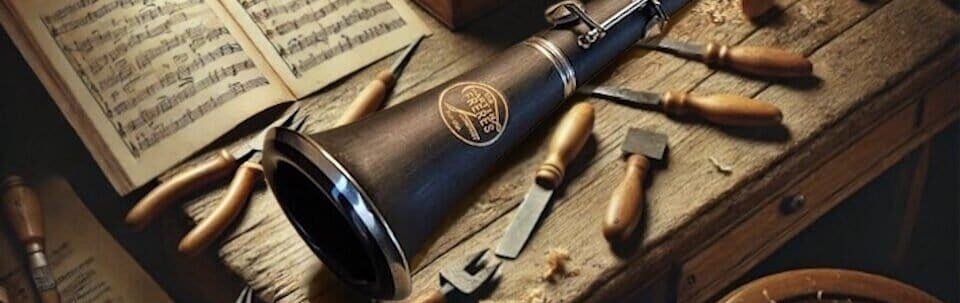
The Clarinet in Ska Jazz is a niche but expressive voice that blends jazz phrasing and Caribbean rhythmic upstrokes – offering bright attack, agile runs across registers, and an improvisational role that complements ska's offbeat pulse.
Historical roots: Jamaican ska shaped by mento, jazz, and R&B horn traditions
Technique differences: sharper articulation, offbeat placement, tighter time feel
Recommended gear: focused mouthpiece, medium reeds, optional subtle amplification
What Is the Clarinet in Ska Jazz?
The clarinet in ska jazz is the use of clarinet as a lead or section horn in ska-influenced jazz settings, often alongside trumpet, trombone, and saxophone. It draws on jazz language but locks into ska's offbeat guitar and piano patterns. Players use bright, projecting sounds, crisp articulation, and concise melodic hooks that sit tightly in the groove.
Unlike traditional swing or bebop contexts, ska jazz clarinet often emphasizes short riffs, call-and-response figures, and ensemble lines that support the rhythm section. Solos tend to be rhythmically driven and motif based. The clarinet's wide range and agility make it ideal for weaving countermelodies above vocals and brass while still cutting through amplified bands.
Typical ska tempos range from about 120 to 180 BPM, with many classic first-wave ska tracks sitting near 140 BPM. Clarinetists should be comfortable articulating clean offbeats at 8th-note and 16th-note subdivisions at these speeds.
A Brief History: How Ska and Jazz Converged
Ska emerged in late 1950s Jamaica as sound system bands blended mento, American rhythm and blues, and jazz horn writing. The Skatalites, featuring players like Don Drummond and Tommy McCook, drew heavily from swing and bebop phrasing. Their recordings for Studio One helped define ska's horn-driven sound that later evolved into rocksteady and reggae.
Jazz's influence in Jamaica came through radio broadcasts from New Orleans, New York, and Miami, plus touring bands. Horn players absorbed the language of artists such as Louis Armstrong, Charlie Parker, and Dizzy Gillespie. They adapted jazz-style riffs, blues-based harmony, and improvisation to ska's distinctive offbeat guitar and piano patterns.
Mento & calypso (pre-1950s) – acoustic folk and dance music with clarinet occasionally present
Ska (late 1950s to mid-1960s) – fast, horn-heavy dance music with strong jazz influence
Rocksteady (mid-1960s) – slower, more vocal focused, tighter horn parts
Reggae (late 1960s onward) – deeper groove, sparser horn use, more studio experimentation
Clarinet had a major role in early New Orleans jazz, swing, and popular dance bands, but it was less common in Jamaican studio sessions. Saxophone and trombone dominated. Still, some mento and hotel bands in Kingston and tourist centers used clarinet in dance sets that mixed calypso, standards, and light jazz, showing that the instrument was present even if under-documented.
Later, ska revival and ska jazz projects in the United States, United Kingdom, and Japan began to reintroduce clarinet more deliberately. Bandleaders interested in vintage jazz colors and klezmer or Balkan influences discovered that clarinet could bridge Caribbean rhythms with jazz and world-music phrasing, leading to a small but growing body of ska jazz clarinet work.
Field Note – Martin Freres archive insight: Period photographs and programs from mid-20th century Caribbean hotel bands in the Martin Freres collection show clarinetists doubling saxophone parts in mixed dance repertoires. While not strictly ska, these ensembles hint at how clarinetists in the region navigated jazz, calypso, and early Jamaican popular styles side by side.
Archival resources such as Smithsonian Folkways, the British Library Sound Archive, and the National Library of Jamaica hold early ska and mento recordings that clarify how horns functioned in these bands. By comparing these with New Orleans and swing-era clarinet recordings, modern players can infer stylistic approaches that adapt well to ska jazz contexts.
The Clarinet's Acoustic and Anatomical Advantages for Ska
Clarinet design gives it several advantages for ska jazz. Its cylindrical bore and single reed mouthpiece allow quick response and clear articulation. The instrument's four main registers – chalumeau, throat tones, clarion, and altissimo – each offer distinct colors that can be used for riffs, backgrounds, and solos in a ska mix.
The chalumeau register (low E to around written F sharp) provides a darker, woody tone that can double trombone or baritone sax lines. Throat tones and lower clarion (around G to B above the staff) give a speaking, vocal quality ideal for melodic hooks. Upper clarion and altissimo can cut through guitars and drums with a bright, trumpet-like edge.
Modern keywork lets clarinetists execute fast chromatic passages and wide interval leaps, both useful for ska horn lines that outline chords or echo vocal phrases. The left-hand pinky cluster and right-hand side keys are particularly important for agile ska riffs, so players should practice clean transitions in those areas at dance-band tempos.
Instrument material also affects ska performance. Grenadilla wood clarinets typically offer rich tone and nuanced dynamics, while plastic or composite instruments often provide greater durability and stability in humid outdoor conditions common at festivals and club gigs. Many ska players choose plastic clarinets for touring and street performances.
Mouthpiece geometry strongly shapes attack and projection. A medium to medium-open tip with a moderate facing length often balances clarity and flexibility. A more focused chamber can help the sound punch through amplified guitars and drums. Jazz-style mouthpieces designed for strong projection usually suit ska better than very dark, orchestral designs.
A typical B-flat clarinet covers written E3 to C7, giving more than 3 octaves of usable range. Ska horn parts often sit between written G4 and C6, but clarinetists can exploit the extra low and high notes for fills and dramatic register shifts.
Because ska relies on tight rhythmic interplay, response speed matters as much as tone. A well-adjusted clarinet with level pads, smooth key action, and correctly vented tone holes will speak cleanly on repeated staccato upstrokes. Instrument anatomy and regulation directly affect how reliably you can execute ska's demanding rhythmic figures.
Technique and Rhythm: Playing Ska's Upstroke on Clarinet
Ska rhythm centers on the offbeat, often described as the guitar or piano “skank” on beats 2 and 4 or on the offbeat 8th notes. Clarinetists must internalize this feel so that accents, stabs, and riffs reinforce the groove. The challenge is to maintain relaxed technique while placing notes slightly ahead of or right on the offbeat.
Articulation is sharper and more percussive than in many jazz contexts. Tongue strokes are short and focused, often “t” or “d” syllables near the tip of the reed. Practice alternating long and short notes at medium tempos, accenting the offbeats while keeping the airflow steady. The tongue should release the sound rather than choke it.
To adapt jazz technique, clarify your subdivision. Use a metronome set to half notes or beats 2 and 4, then clap or tongue only the offbeat 8ths. Once this feels natural, move to simple scales and arpeggios, playing only on the offbeats. This helps align your clarinet articulation with the drummer's hi-hat and guitarist's upstrokes.
Breath support remains important. Even though notes are short, the airstream must be continuous between attacks. Think of the tongue as a valve interrupting a steady flow, not as the source of the sound. This approach reduces fatigue and squeaks during fast passages, especially in the clarion register where many ska lines sit.
A practical goal is to play clean offbeat 8th-note staccato patterns at 140 BPM for 16 bars without loss of tone. Advanced players can aim for 16th-note syncopations at 120 BPM for 8-bar phrases with stable pitch and articulation.
Rhythmic patterns in ska often use anticipations and delayed resolutions. Practice simple two-bar motifs that start on the “and” of 4 and resolve on beat 2 of the next bar. Use chord tones of I and V chords first, then add passing tones. This builds the habit of landing strong notes in time while still sounding syncopated.
Section playing is another key skill. When doubling trumpet or saxophone lines, match articulation length and accent shape. Record rehearsals and listen for whether the clarinet either disappears or sticks out awkwardly. Adjust tongue length, dynamic level, and vibrato to blend while still providing the clarinet's characteristic clarity.
Improvisation Strategies for Ska Jazz Clarinetists
Ska jazz improvisation blends jazz vocabulary with a stronger focus on rhythm and motif development. Many ska progressions use simple functional harmony, such as I – IV – V, ii – V – I, or minor-key variants. Clarinetists can rely on chord tones, blues scales, and mixolydian modes, but should prioritize rhythmic interest over dense harmonic substitutions.
Start by limiting yourself to 3 or 4 notes per chord, often the 1, 3, 5, and flat 7. Create short rhythmic cells that repeat with slight variation. For example, a two-beat pattern on the offbeats can be shifted, truncated, or inverted across a chorus. This approach suits dance music and keeps solos memorable for listeners.
Because ska often features strong horn riffs, solos should connect to those themes. Quote fragments of the main riff, then extend them into new directions. This creates continuity between ensemble and solo sections. Clarinet's agility makes it easy to answer trumpet or sax phrases with quick, high-register responses or echoing lines.
Use register changes as a dramatic tool. Moving a simple motif from chalumeau to clarion or altissimo can create excitement without adding harmonic complexity. Practice playing the same 2-bar idea in three different octaves, keeping articulation and time feel consistent. This prepares you to react quickly during live solos.
Rhythmic displacement is especially effective. Take a common jazz lick and shift it so it starts on the “and” of 2 or 4 instead of the downbeat. Practice with a metronome and backing tracks, listening for how the phrase locks with the drummer's snare and hi-hat. Over time, this builds an instinctive sense of ska phrasing.
Transcription remains one of the best learning tools. Study solos from ska and ska jazz recordings, but also from New Orleans clarinetists and swing players. Focus on how they use space, repeated motifs, and blues inflections. Then adapt those ideas to ska grooves, adjusting articulation and note length to fit the style.
Gear and Setup: Mouthpieces, Reeds, and Amplification
For ska jazz, clarinetists typically want a setup that offers quick response, clear articulation, and enough projection to balance electric guitars and drums. A medium or medium-open tip mouthpiece with a moderate facing often provides this balance. Very closed tips can feel stuffy at high volumes, while extremely open tips may be harder to control on fast offbeats.
Reed choice affects both tone and reliability. Many players find medium to medium-hard reeds (around strength 2.5 to 3.5, depending on brand and mouthpiece) give enough resistance for a centered sound without slowing response. Softer reeds can feel easy at first but may cause pitch instability and chirps during aggressive articulation.
Ligatures that hold the reed securely without excessive pressure help maintain consistent response. Metal, fabric, and synthetic ligatures can all work; the key is even contact and a stable feel. Experiment in rehearsal, not on stage, to find a combination that supports your embouchure and articulation style.
Amplification is sometimes necessary, especially in loud clubs or outdoor festivals. Clip-on microphones attached to the bell or barrel can provide a natural sound while allowing movement. Some players use small contact pickups, but these can emphasize key noise and require careful EQ. Work with your sound engineer to avoid feedback and maintain a clear, warm tone.
In mixed horn sections, consider how your gear choice affects blend. A very bright, edgy mouthpiece might cut through but clash with trumpet and sax timbres. Aim for a sound that is present but not shrill. Record rehearsals from the audience perspective to judge how your tone sits in the overall mix.
Spare reeds, a backup ligature, and basic repair items such as cork grease and a small screwdriver should always be in your case. Ska gigs often involve quick changeovers and tight schedules. Having reliable gear and backups reduces stress and lets you focus on groove and interaction with the band.
Maintenance and Care for Ska-Ready Clarinets
Regular maintenance is critical for clarinetists who gig frequently with ska bands. Moisture, temperature swings, and long sets can quickly expose small leaks or mechanical issues. A simple daily routine helps keep the instrument responsive for fast offbeat articulation and stable tuning in loud environments.
After each session, swab the bore thoroughly from bell to barrel, then gently dry the mouthpiece with a separate swab or soft cloth. Remove the reed, wipe it carefully, and store it in a ventilated reed case. Leaving a reed on the mouthpiece between sets can warp the reed and promote bacterial growth.
Check tenon corks regularly for dryness or compression. Apply a small amount of cork grease when assembly feels tight or squeaky, but avoid over-greasing. Loose tenons can cause leaks and instability, especially noticeable during rapid staccato passages in the clarion register that are common in ska horn lines.
Pad inspection should be part of your weekly routine. Look for discoloration, fraying, or sticking, particularly on frequently used keys like the throat tones, side keys, and left-hand pinky keys. Lightly clean tone hole rims with a soft cloth to remove moisture and residue that can cause sticking or slow response.
Reed rotation helps maintain consistent response. Keep at least 3 to 5 reeds in active use, rotating them each rehearsal or gig. Store them flat in a case that allows some airflow. For touring in dry or very humid climates, consider a reed case with humidity control to reduce warping and breakage.
Seasonal regulation by a qualified technician is recommended for busy players. At least once or twice a year, have your clarinet checked for pad seal, spring tension, and key alignment. Small adjustments can make a big difference in how cleanly the instrument speaks on repetitive ska patterns.
Common Troubleshooting Issues and Quick Fixes
Ska clarinetists often face specific performance issues due to the style's aggressive articulation and fast tempos. Squeaks during offbeat staccato, sluggish response, and intonation drift on repeated patterns are common complaints. Understanding the causes and quick remedies helps keep performances smooth.
Squeaks on fast upstrokes often come from a combination of too-soft reeds, unstable embouchure, and tongue placement too far back on the reed. Try a slightly stronger reed, focus on firm but flexible corners, and aim the tongue closer to the tip of the reed with very small motions. Practice slow staccato, then gradually increase tempo.
Sluggish articulation can result from heavy key action or sticky pads. Lightly clean pad surfaces and tone hole rims, and check that springs provide enough tension for quick closure. If keys feel uneven or noisy, schedule a tech visit. In the short term, simplify lines and focus on clean time rather than maximum speed.
Intonation issues on repeated patterns, especially in the throat tones and upper clarion, may stem from embouchure fatigue or reed imbalance. Use long-tone warmups before gigs, including crescendo and diminuendo exercises on problem notes. If a reed consistently plays sharp or flat in one area, adjust or replace it rather than fighting it on stage.
Humidity and temperature swings at outdoor festivals can cause wood instruments to swell or contract, affecting tuning and response. Allow extra warmup time, avoid leaving the clarinet in direct sun, and swab more often between sets. For extreme conditions, some players use a plastic instrument as a backup to protect wooden clarinets.
On-stage emergencies require quick thinking. If a pad suddenly sticks, gently close and open the key several times or use a small piece of cigarette paper or pad paper to absorb moisture. If a spring comes out of place, a small screwdriver or even a paperclip can sometimes reseat it until proper repair is possible.
Notable Recordings, Players, and Archive References
Because clarinet in ska jazz is a niche area, recordings are scattered across genres and eras. Listening widely helps build a stylistic foundation. Start with first-wave ska bands such as The Skatalites, even though clarinet is rare, to understand horn roles, voicings, and rhythmic phrasing that you can adapt to clarinet.
New Orleans and swing clarinetists like Sidney Bechet, Benny Goodman, and Barney Bigard provide models for strong melodic lines and rhythmic drive. While not ska, their approach to phrasing and articulation translates well to ska grooves when you adjust note length and accent placement to match the offbeat feel.
Some modern ska and ska jazz ensembles experiment with clarinet as a featured voice. Regional bands in the United States, Europe, and Japan have used clarinet for klezmer-inflected lines, Balkan-inspired melodies, or vintage jazz colors within ska frameworks. Seek out live recordings, festival videos, and independent releases that showcase these crossovers.
Archival collections are valuable for research. Smithsonian Folkways holds mento and early Jamaican recordings that show how clarinet and other reeds functioned in Caribbean dance bands. The British Library Sound Archive and the National Library of Jamaica contain radio broadcasts, live tapes, and studio sessions that document the evolution from mento to ska, rocksteady, and reggae.
When studying these recordings, focus on horn section roles: unison lines, harmonized riffs, background pads, and call-and-response with vocals. Then imagine how clarinet could either double existing parts or add a contrasting color. Transcribe short phrases and adapt them to clarinet-friendly keys and registers.
Build a focused playlist of 8 to 12 tracks that combine ska, early reggae, New Orleans jazz, and swing clarinet. Rotate through this list daily, alternating between passive listening, active transcription, and play-along practice. Over time, you will internalize phrasing and rhythmic habits that support authentic ska jazz clarinet playing.
Where to Learn, Practice, and Join the Ska Jazz Community
Developing skill with clarinet in ska jazz requires both individual practice and community engagement. Start locally by connecting with ska, reggae, and jazz bands in your area. Many groups welcome horn players who can read charts, improvise, and commit to the style's rhythmic feel. Sitting in at jams and open mics builds experience quickly.
Online, look for forums, social media groups, and video channels dedicated to ska, ska jazz, and Caribbean music. Share recordings, ask for feedback on your sound and phrasing, and study performances from bands around the world. Clarinetists can also benefit from general jazz and New Orleans clarinet communities, then adapt lessons to ska contexts.
Practice routines should target specific ska skills. Allocate time for offbeat articulation drills, scale patterns in common ska keys (such as B-flat, E-flat, F, and G), and transcription of short horn riffs. Use backing tracks or drum loops that emphasize the skank and one-drop patterns so your time feel aligns with authentic grooves.
Workshops and festivals sometimes offer ska or Caribbean music sessions where horn players can learn directly from experienced bandleaders and arrangers. Attend when possible, bringing questions about horn voicings, chart reading, and improvisation. Live feedback in ensemble settings accelerates your understanding of how clarinet fits into ska arrangements.
Document your progress with recordings and notes. Keep a practice journal tracking tempos, articulation goals, and new licks or patterns you have mastered. Over weeks and months, this record shows concrete improvement in upstroke clarity, rhythmic placement, and improvisational vocabulary, reinforcing motivation and focus.
Key Takeaways
Clarinet in ska jazz is a niche but powerful role that combines jazz language with ska's offbeat rhythmic engine, demanding crisp articulation and strong time.
Understanding ska's history from mento to reggae, and jazz's influence on Jamaican horn writing, helps clarinetists make stylistically informed choices.
Appropriate gear, consistent maintenance, and targeted practice on upstroke articulation and syncopated phrasing lead to reliable performance at dance-band tempos.
Listening to archival recordings and modern ska jazz projects, then transcribing and adapting horn lines, builds a practical improvisation and section-playing toolkit.
FAQ
What is Clarinet in Ska Jazz?
Clarinet in ska jazz refers to using the clarinet as a lead or section horn in ska-influenced jazz settings. It blends jazz phrasing and improvisation with ska's offbeat rhythmic patterns, often emphasizing bright tone, sharp articulation, and concise melodic hooks that support danceable grooves.
How does clarinet technique differ when playing ska versus traditional jazz?
In ska, clarinetists use shorter, more percussive articulation, tighter rhythmic placement, and stronger emphasis on offbeat accents than in many jazz styles. Solos tend to be more motif-based and rhythmically driven, and section parts focus on tight unison or harmonized riffs that lock with guitar and drum patterns.
What mouthpiece and reed setups work best for a punchy ska clarinet sound?
A medium or medium-open tip mouthpiece with a moderate facing and a focused chamber usually works well for ska. Pair it with medium to medium-hard reeds that provide enough resistance for a centered, projecting tone while still allowing quick response for fast offbeat staccato patterns.
Are there notable ska recordings that feature clarinet parts I can study?
Clarinet is relatively rare in classic ska, so study early Jamaican ska and mento recordings for horn roles, then adapt parts to clarinet. Combine this with New Orleans and swing clarinet recordings to learn phrasing and articulation that you can reshape for ska grooves and horn arrangements.
How should I maintain my clarinet if I gig regularly with ska bands?
Swab the instrument after each set, rotate and properly store reeds, and check pads and tenon corks weekly. Schedule professional regulation at least once or twice a year. In humid or outdoor conditions, monitor moisture more closely and consider a durable backup instrument for demanding festival or touring schedules.